
Japanese grammar · ≈ JLPT N5 · Beginner 1
〜ています~te imasu
action in progress
Use 「〜ています」 for an action happening now; the action is still underway.
- Pattern
- 〜ています
- Romaji
- ~te imasu
- JLPT (approx.)
- ≈ N5
- Course level
- Beginner 1
- Theme
- Directions & Requests
How it works
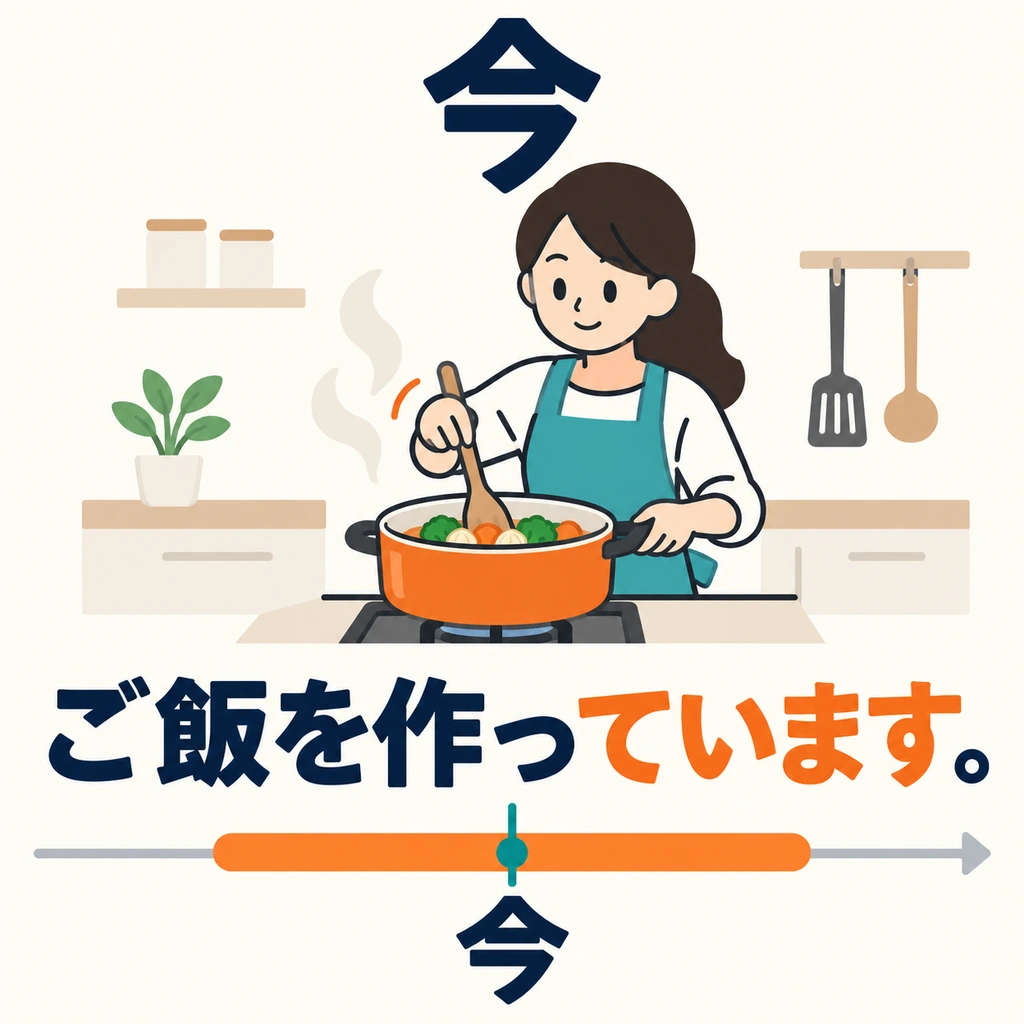
Look at the action in the pot: cooking has started and is still happening. 「今」 on the timeline falls within that action.
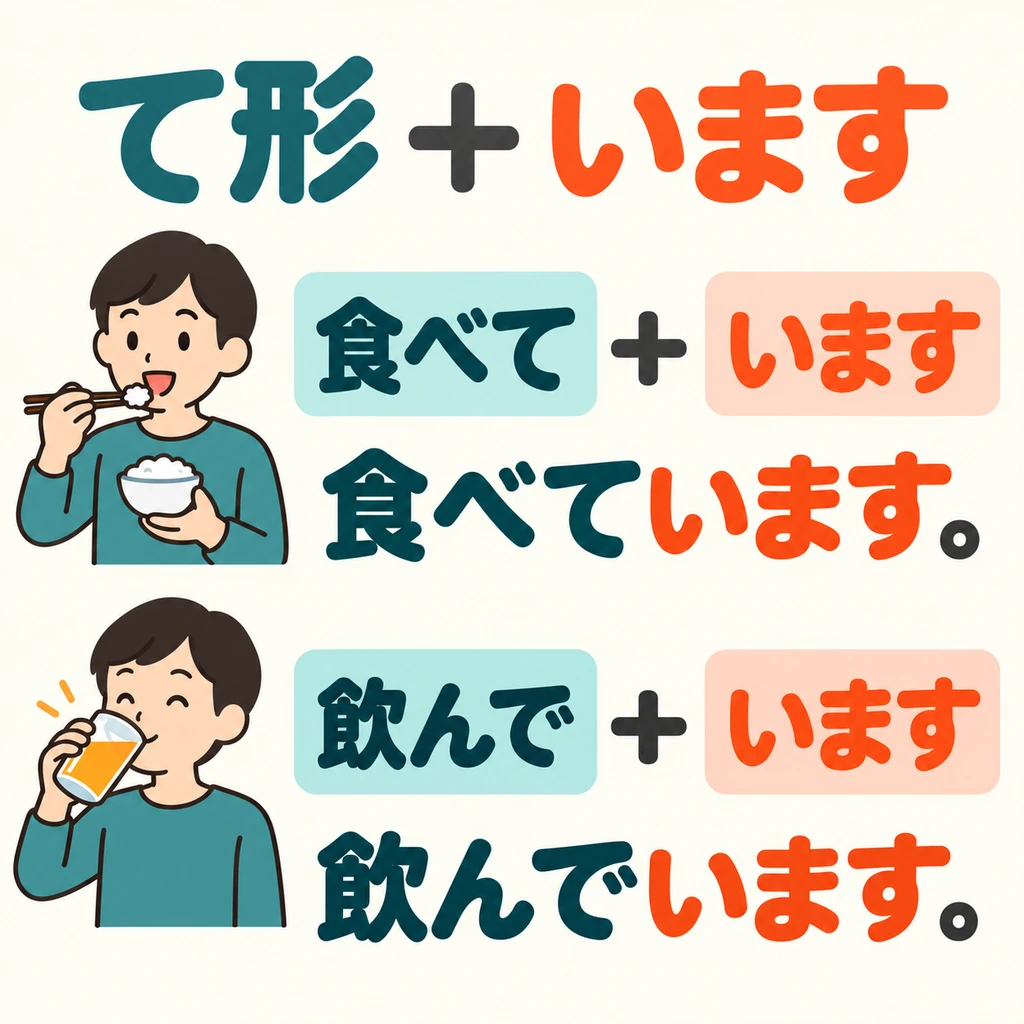
To describe an action happening now, add 「います」 directly to the verb’s て形 you have learned.
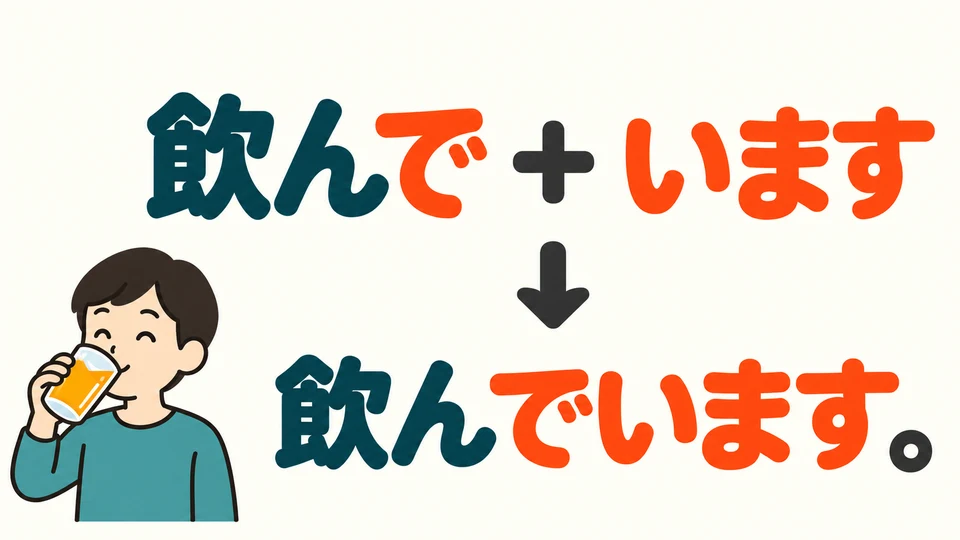
The て形 is 「飲んで」. Keep 「で」 when adding います: 飲んでいます。
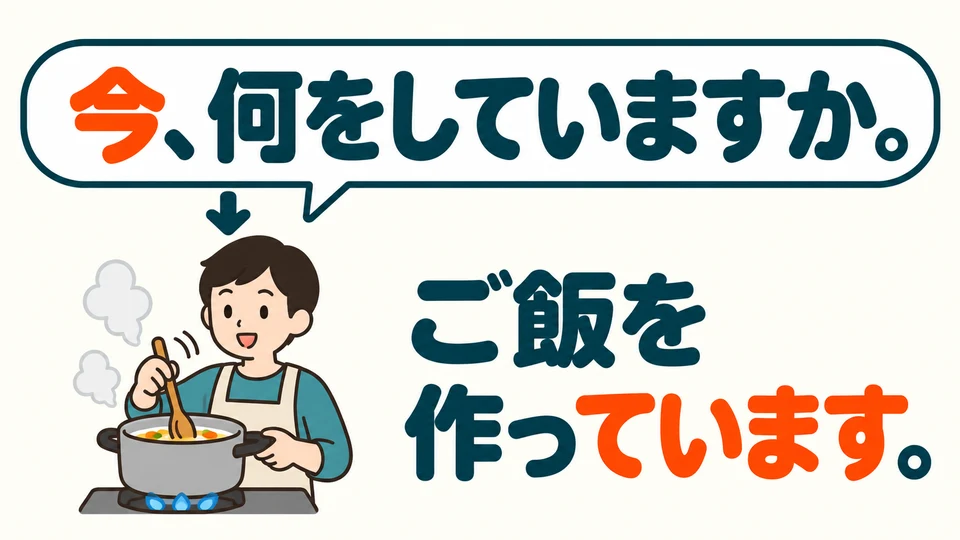
To ask what someone is doing now, use 「今、何をしていますか」. Look at the cooking picture and try answering.
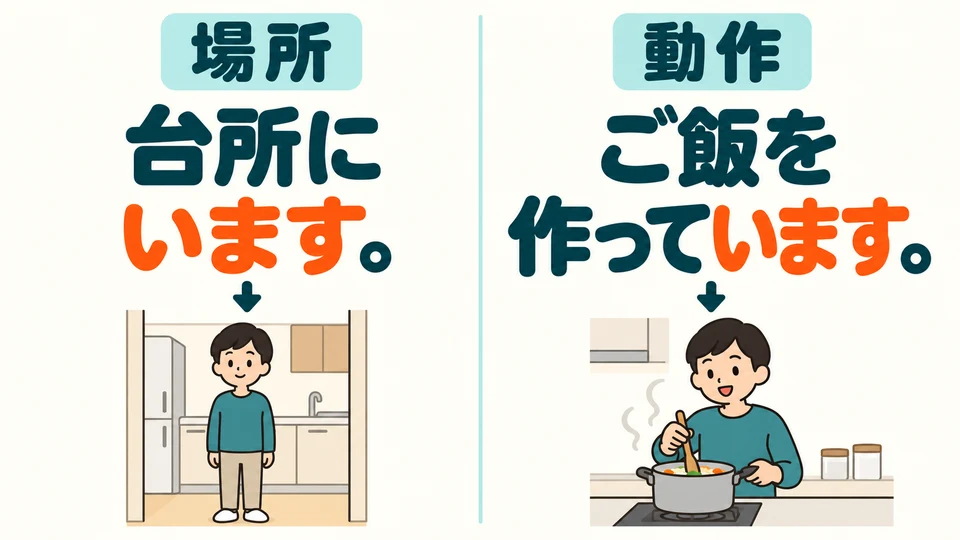
「います」 can tell us where a person is. Here, 「います」 after a verb’s て形 shows that an action is in progress.
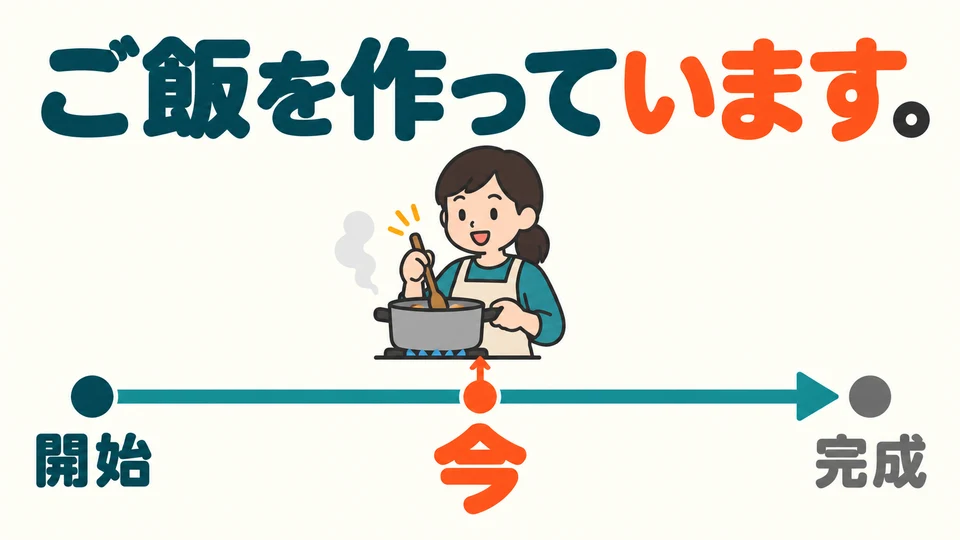
In the example, 「ご飯を作っています」 means the meal is being cooked now. The cooking is still underway; it does not mean the meal is already ready.
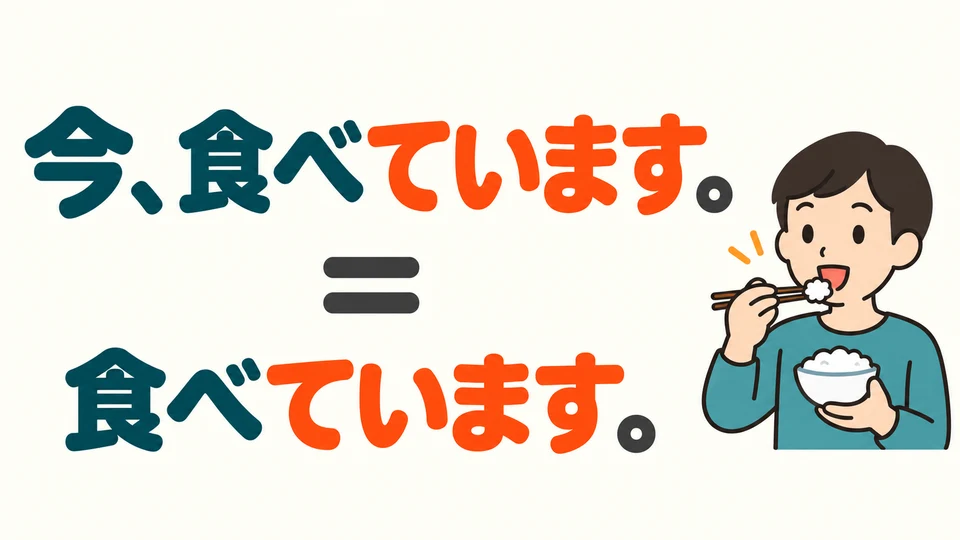
「食べています」 already means “is eating.” Even without 「今」, the sentence can describe an action happening now.
Example sentences
- ご飯gohanをo作っtsukuてteいます。imasu
I'm cooking a meal.
- 友達tomodachiとto一緒isshoにni
In a conversation

- A今、何をしていますか。
A: What are you doing now?
- B今日の料理を作って
Check yourself
Which sentence is correct?
- 今日の料理を作っています。
- 今日の料理を作りています。
- 今日の料理を作ています。
- 今日の料理を作るています。
Show answer
Answer: A 今日の料理を作っています。
Which sentence is correct?
- ジュースを飲んでいます。
- ジュースを飲みています。
- ジュースを飲みますいます。
- ジュースを飲むています。
Show answer
Answer: A ジュースを飲んでいます。
Which sentence is correct?
- テーブルを飾っています。
- テーブルを飾りています。
- テーブルを飾ています。
- テーブルを飾るています。
Show answer
Answer: A テーブルを飾っています。
More grammar in this theme
- 〜ていますaction in progress