JPEdLab iconJPEdLab
Save history

Create an account and play

Explore first, then save your progress whenever you are ready. No email address is required.

Start free
  1. Japanese grammar
  2. JLPT N5 grammar
  3. 〜は〜にいます

〜は〜にいます~ wa ~ ni imasu

Wa ni imasu (〜は〜にいます) means “where a person or animal is”.

私わたしwatashiはわwa今駅いまえきimaekiのno南側みなみがわminamigawaにniいます。いますimasu

I am on the south side of the station now.

Use 〜は〜にいます to say where a person or animal is, including when they are sitting still.

In the course›

How it works

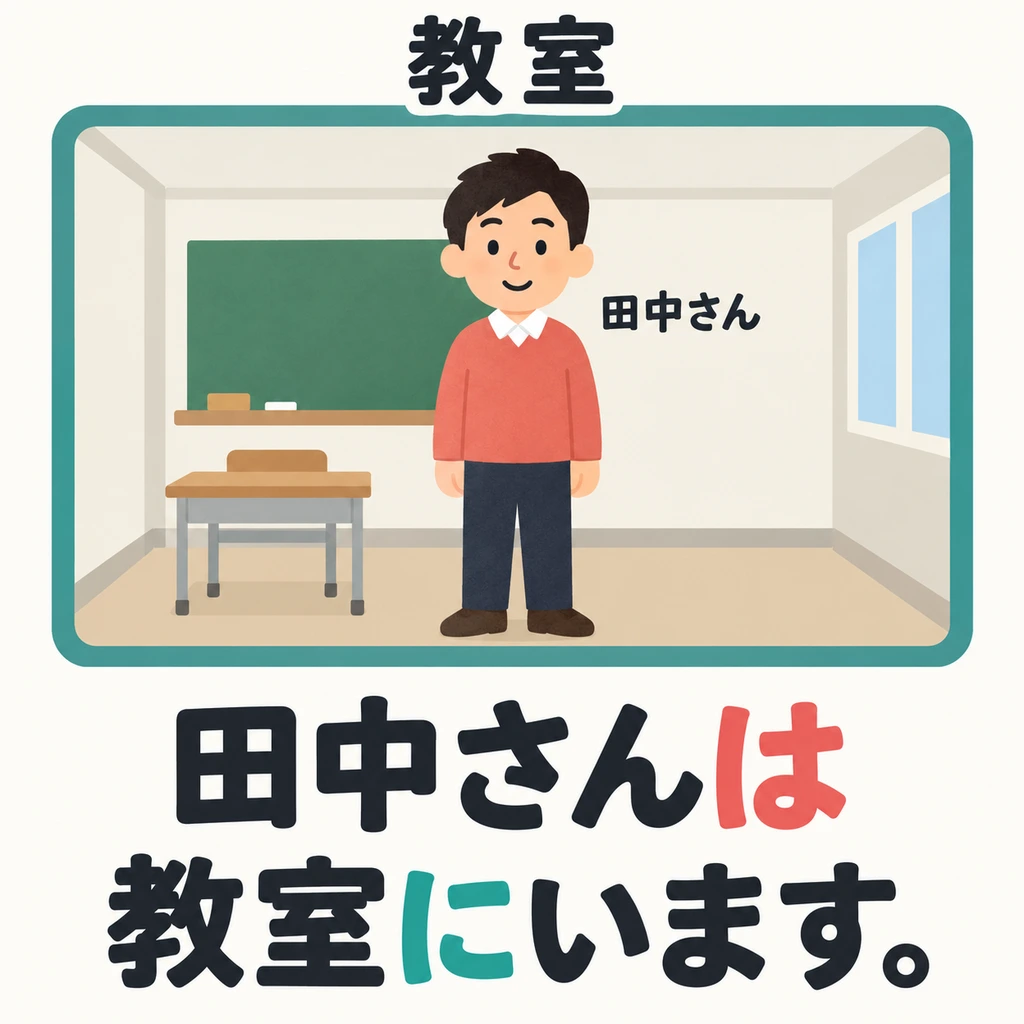
  1. Where is Mr. Tanaka? Find the classroom in the picture, then use this pattern to tell someone where he is.
    Where is Mr. Tanaka? Find the classroom in the picture, then use this pattern to tell someone where he is.

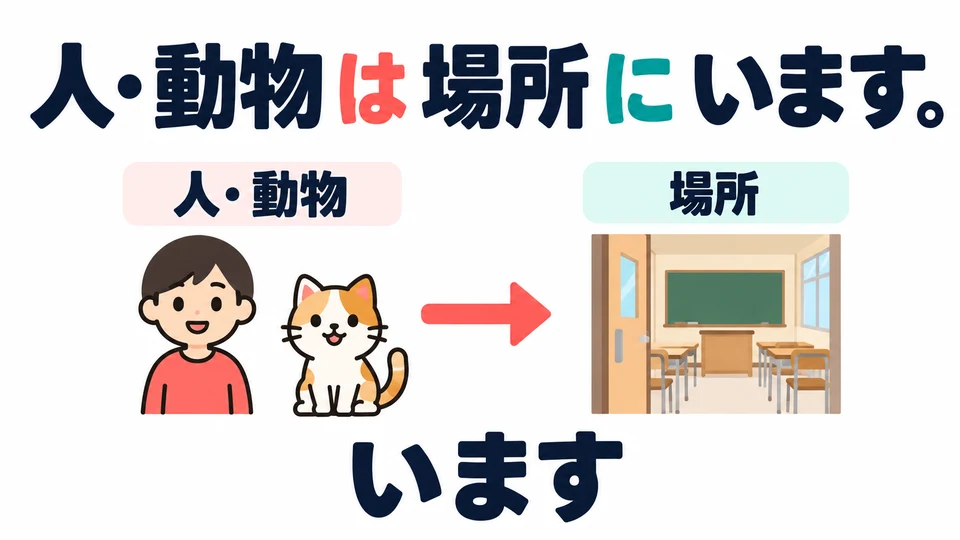
  2. Use 「います」 to say where a person or animal is. Mention the person or animal first, then the place.
    Use 「います」 to say where a person or animal is. Mention the person or animal first, then the place.

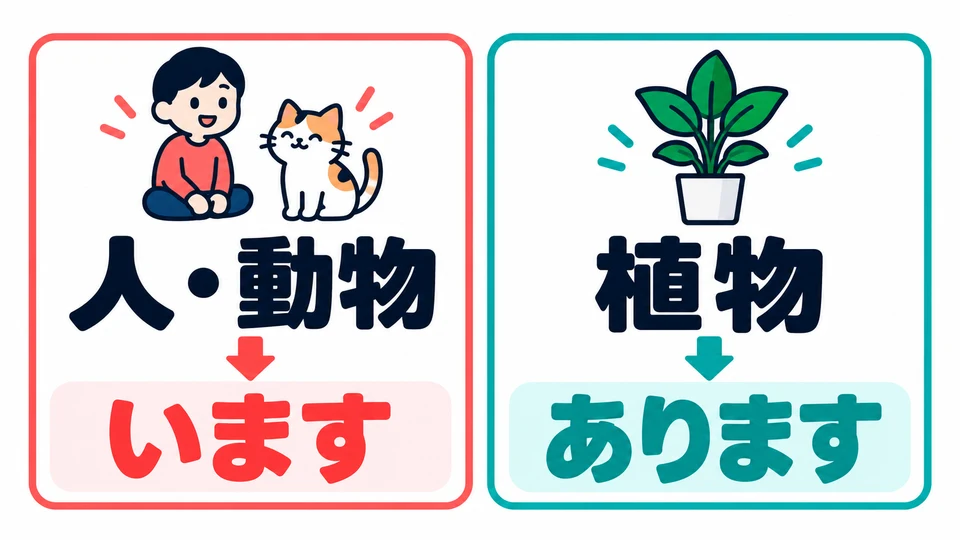
  3. Not all living things take 「います」. For the location of plants, we usually use 「あります」.
    Not all living things take 「います」. For the location of plants, we usually use 「あります」.

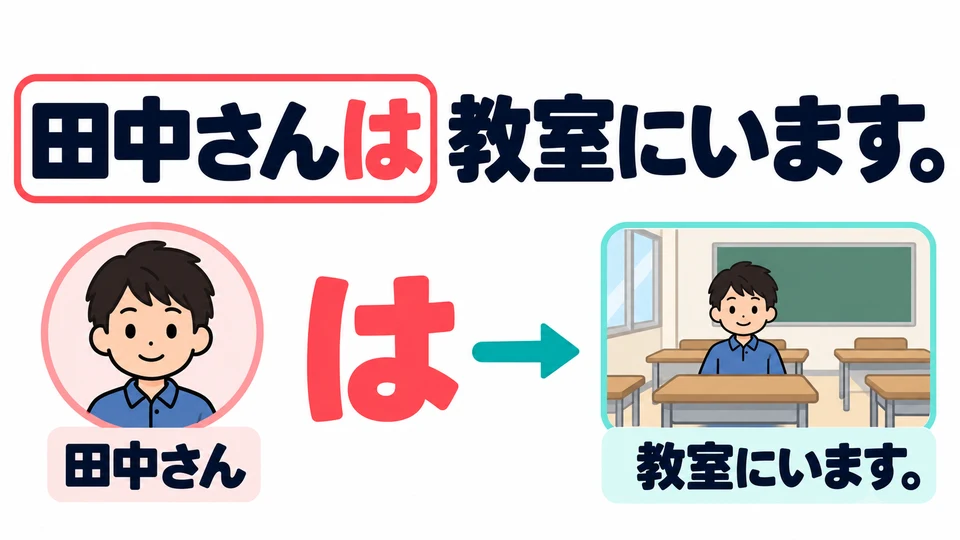
  4. 「は」 introduces the person or animal we are talking about. The rest of the sentence tells us where they are.

    「は」 introduces the person or animal we are talking about. The rest of the sentence tells us where they are.

  5. 「に」 comes right after the place and marks where the person or animal is. Remember to include it.
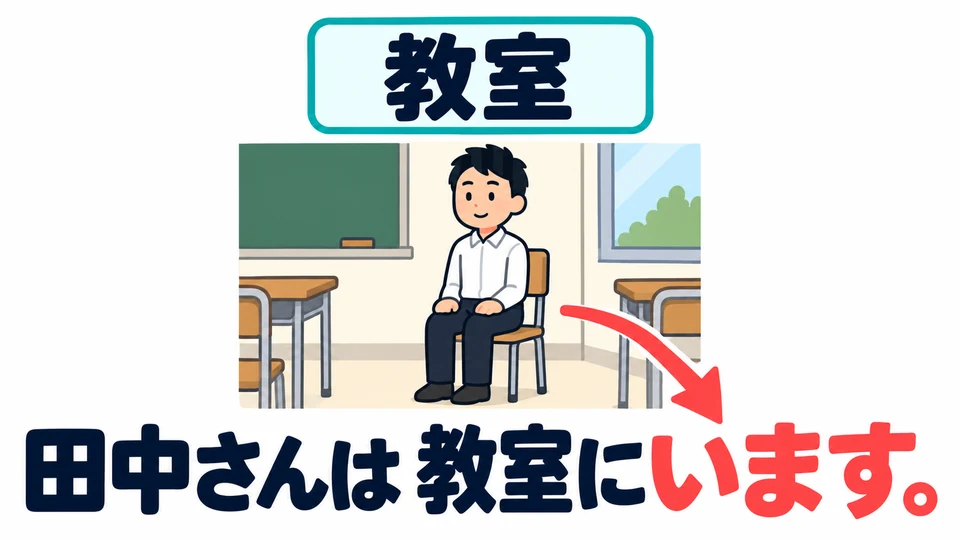
    「に」 comes right after the place and marks where the person or animal is. Remember to include it.

  6. 「います」 means a person or animal is somewhere. You can use it even when they are sitting still.
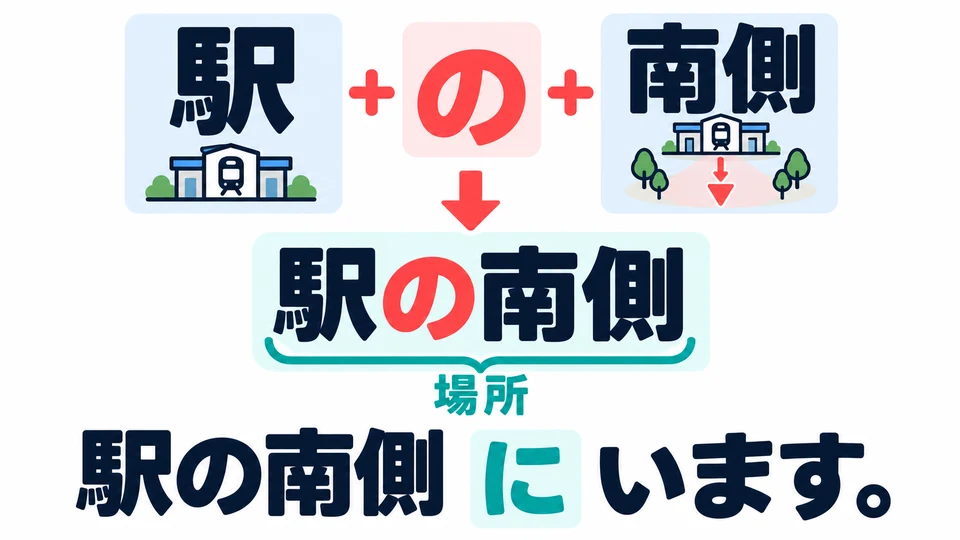
    「います」 means a person or animal is somewhere. You can use it even when they are sitting still.

  7. In the example, 「駅の南側」 is one whole place expression. Link the words with 「の」, then add 「に」.
    In the example, 「駅の南側」 is one whole place expression. Link the words with 「の」, then add 「に」.

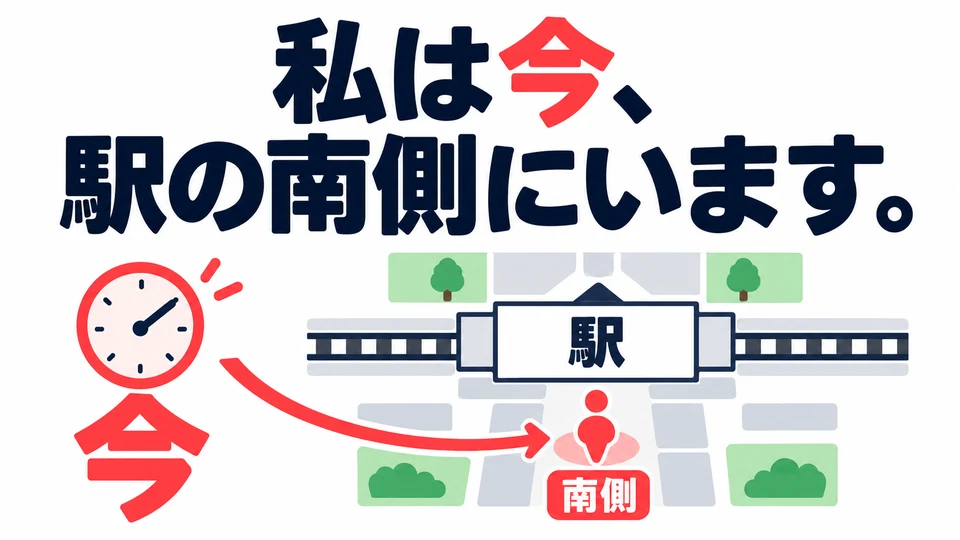
  8. 「今」 shows that this is your location right now. The sentence tells someone where you currently are so they can find you.

    「今」 shows that this is your location right now. The sentence tells someone where you currently are so they can find you.

Example sentences

  • 私わたしwatashiはわwa今駅いまえきimaekiのno南側みなみがわminamigawaにniいます。いますimasu

    I am on the south side of the station now.

  • 私わたしwatashiの

In a conversation

  • A
    今いまどこにいますか。か

    A: Where are you now?

  • B
    今、いま大きいおおきいビルびるの前まえにいます。います

    B: I am in front of a big building now.

Check yourself

  1. Level 1 · Recognise

    Which sentence is correct?

  2. Level 1 · Recognise

    Listen and choose the meaning

  3. Level 2 · Build

    Put the words in order

    I'm now on the south side of the station.

  4. Level 3 · Use

    What goes in the blank?

    私は今、大きいビルの 。

    I'm in front of a tall building now.

More grammar in this theme

  • 〜は〜にいますwhere a person or animal is

More JLPT N5 grammar

Keep practising

Test your Japanese vocabulary12 adaptive questions, freeCheck your pronunciationRead aloud and get a scorePractise verb forms10-question conjugation quizSee the whole courseGrammar, vocabulary and quizzes by theme
no
友達ともだちtomodachi
はわwa
東京とうきょうtoukyou
のno
学校がっこうgakkou
にni
います。いますimasu

My friend is at a school in Tokyo.

  • A
    お父さんおとうさんはわどこにいますか。か

    A: Where is your father?

  • B
    会社かいしゃにいます。います

    B: He is at the office.

  • A
    田中さんたなかさんはわどこにいますか。か

    A: Where is Mr. Tanaka?

  • B
    教室きょうしつにいます。います

    B: He is in the classroom.

  • A
    あそこに友達ともだちがいますよ。よ

    A: There is a friend over there.

  • B
    あ、あ本当ほんとうだ。だ

    B: Oh, you're right.

Beginner 1
Directions & Requests
More quizzesOpen this lesson’s quizzes in the course
〜は〜にありますwhere an object is located
〜に〜があります/いますwhat is present at a place
〜てくださいpolite request to do
〜で〜ますtool or means used
〜方way to do something
どの〜/どれwhich one or which item
〜ていますaction in progress
〜ましょうかoffer or suggestion
まだあります/もうありませんstill left or all gone
誰が〜ますかask who does it
Previous〜は〜にあります
Next〜に〜があります/います
See all 111
〜は〜より〜ですcomparison: more than
もう〜ましたかask if already done
〜はどうですかhow about this option
〜よ/〜ねshare or confirm information
〜に住んでいますsay where you live
〜と〜人で住んでいますwho you live with and how many
〜ています/〜をしていますongoing work or studies
〜が〜人/匹いますcount people or small animals