
Japanese grammar · ≈ JLPT N5 · Beginner 1
もう〜ましたかmou ~ mashita ka
ask if already done
Use もう〜ましたか to ask whether an action has been completed by now; まだです means it is not done yet.
How it works
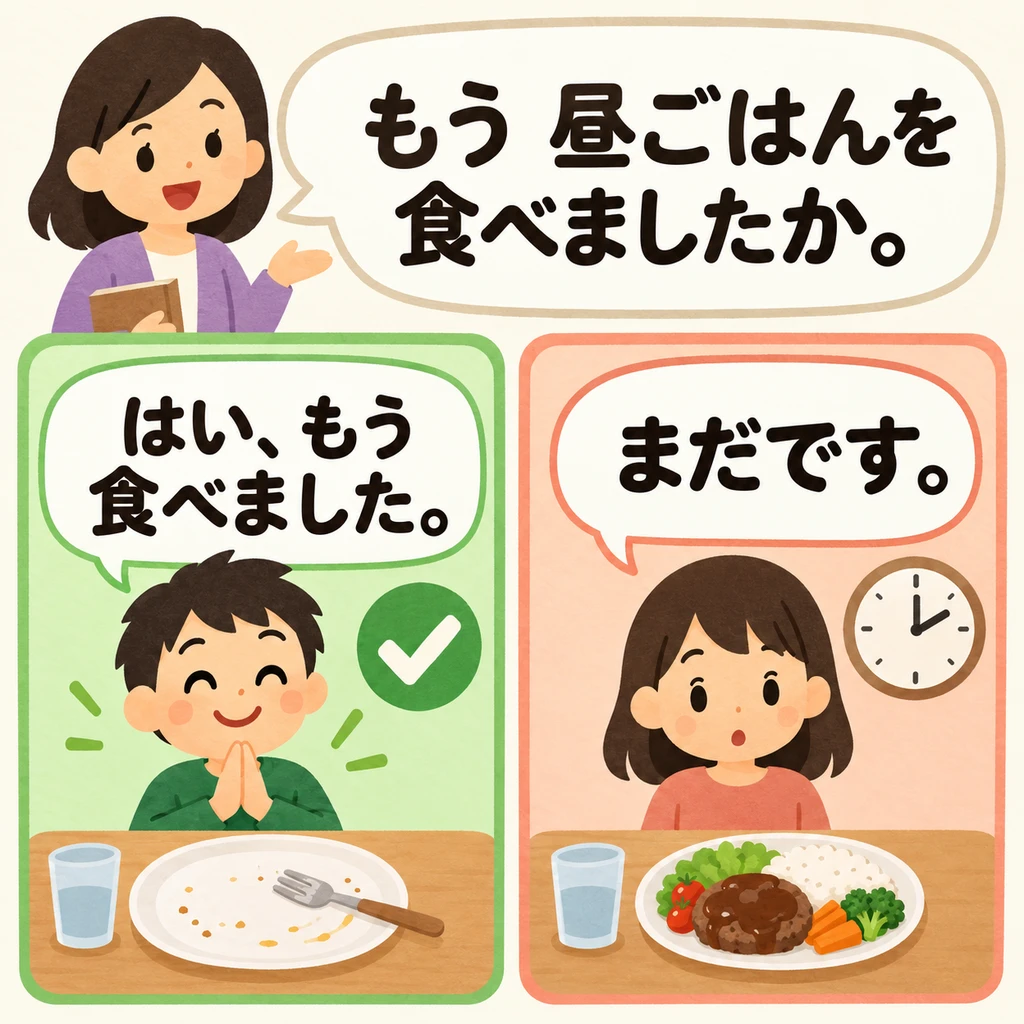
Look at the two plates. Who has already eaten lunch? You can ask using 「もう」.
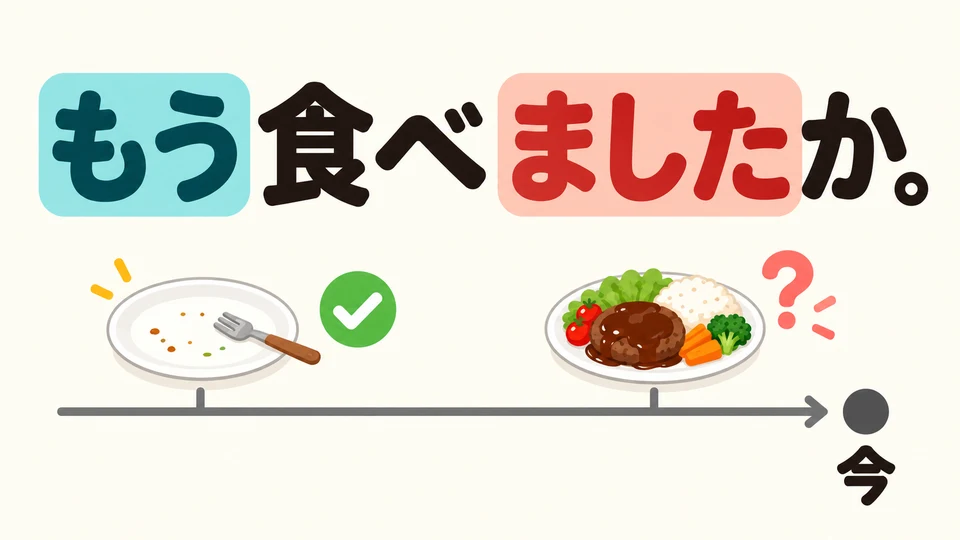
「もうVましたか」 asks whether an action has already been completed by now.
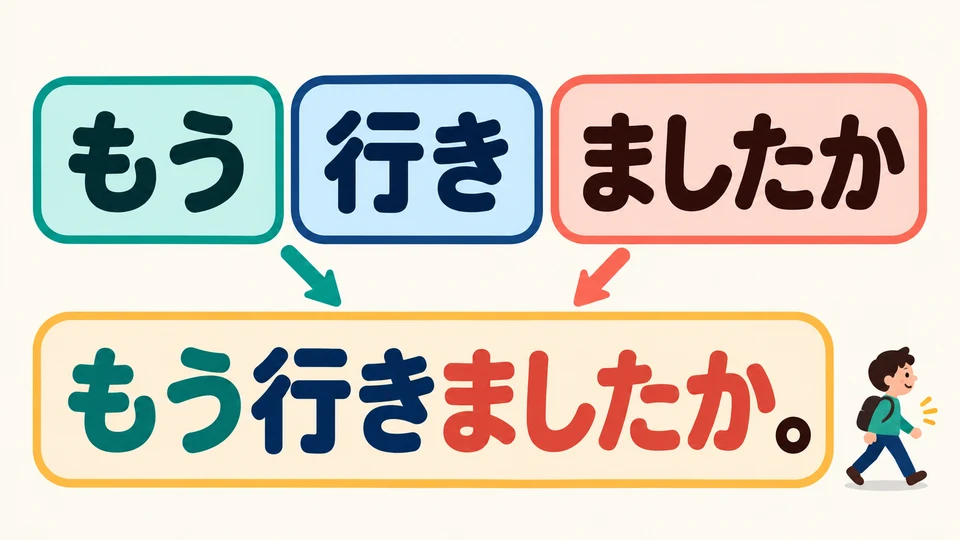
Put 「もう」 before the verb and end with 「ましたか」, as in 「もう行きましたか」.
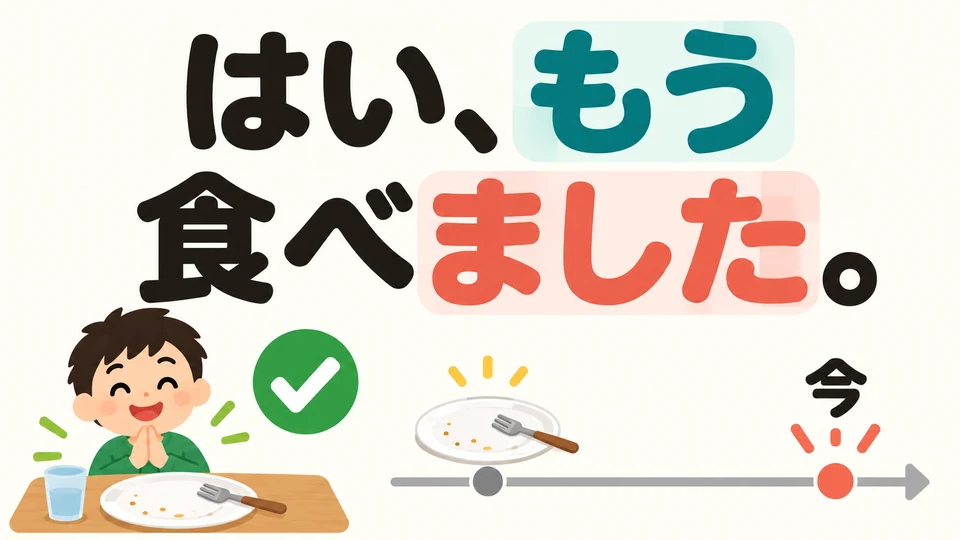
If you have already eaten, answer 「はい、もう食べました」 to show the action is complete.
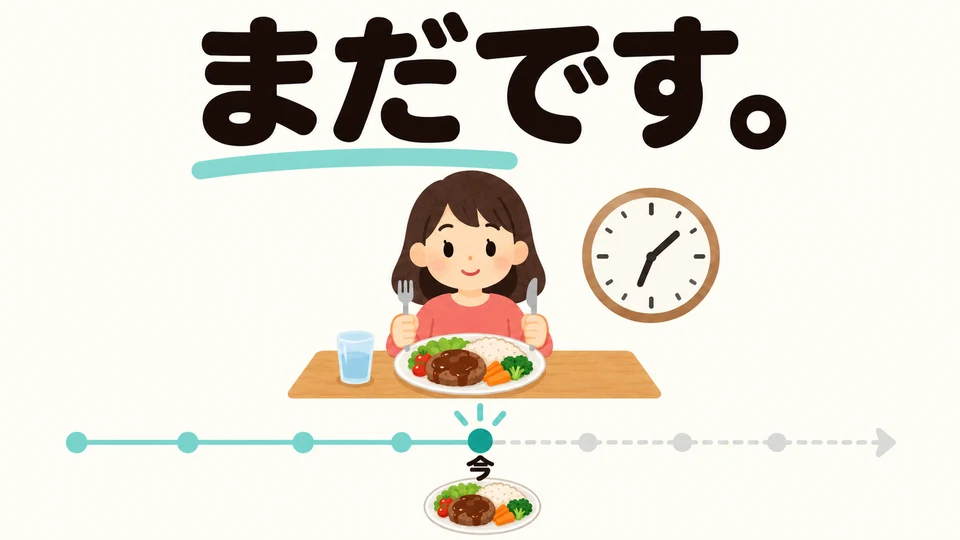
If you have not eaten yet, answer 「まだです」. It means the action is not complete yet.
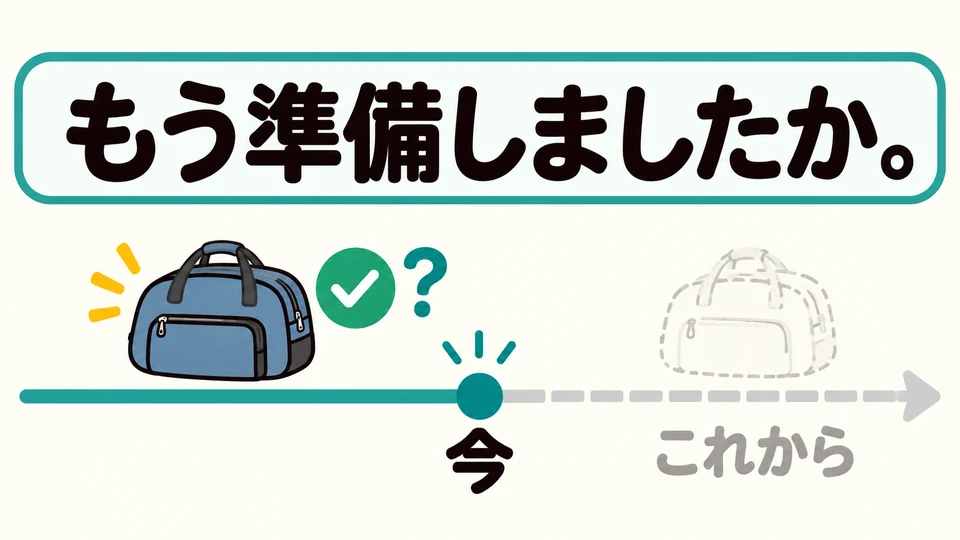
「もう準備しましたか」 asks whether you have finished preparing, not whether you will prepare next.
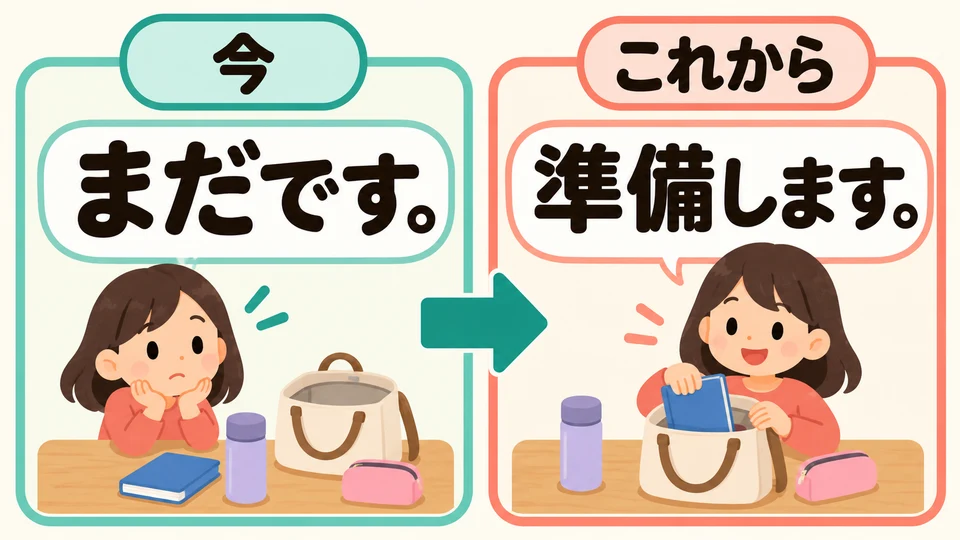
「まだです」 means “not finished yet,” not that you will never do it.
Example sentences
- もうmou行きましたikimashitaか。ka
Have you already gone?
- もうmou準備junbiしましたshimashitaか。ka
Have you already prepared?
In a conversation

- Aもう行きましたか。
A: Have you already gone?
- Bまだです。
B: Not yet.
- Aもう準備しましたか。
A: Have you already prepared?
Check yourself
Level 1 · Recognise
Which sentence is correct?
Level 1 · Recognise
Listen and choose the meaning
Level 2 · Build
Put the words in order
Have you already arrived at the station?
Level 3 · Use
What goes in the blank?
昼ごはんは食べましたか。
Have you already had lunch?
More grammar in this theme
- もう〜ましたかask if already done