JPEDLAB iconJPEDLAB
Save history

Create an account and play

Explore first, then save your progress whenever you are ready. No email address is required.

Start free
Read as articleCards
See the whole course›Beginner 1›Appointments

Japanese grammar · ≈ JLPT N5 · Beginner 1

〜よ/〜ね~ yo / ~ ne

share or confirm information

Add 〜よ to share information the listener may not know, and 〜ね to check or invite agreement with something believed.

Start the interactive lessonIllustrated cards, audio and speaking practice

How it works

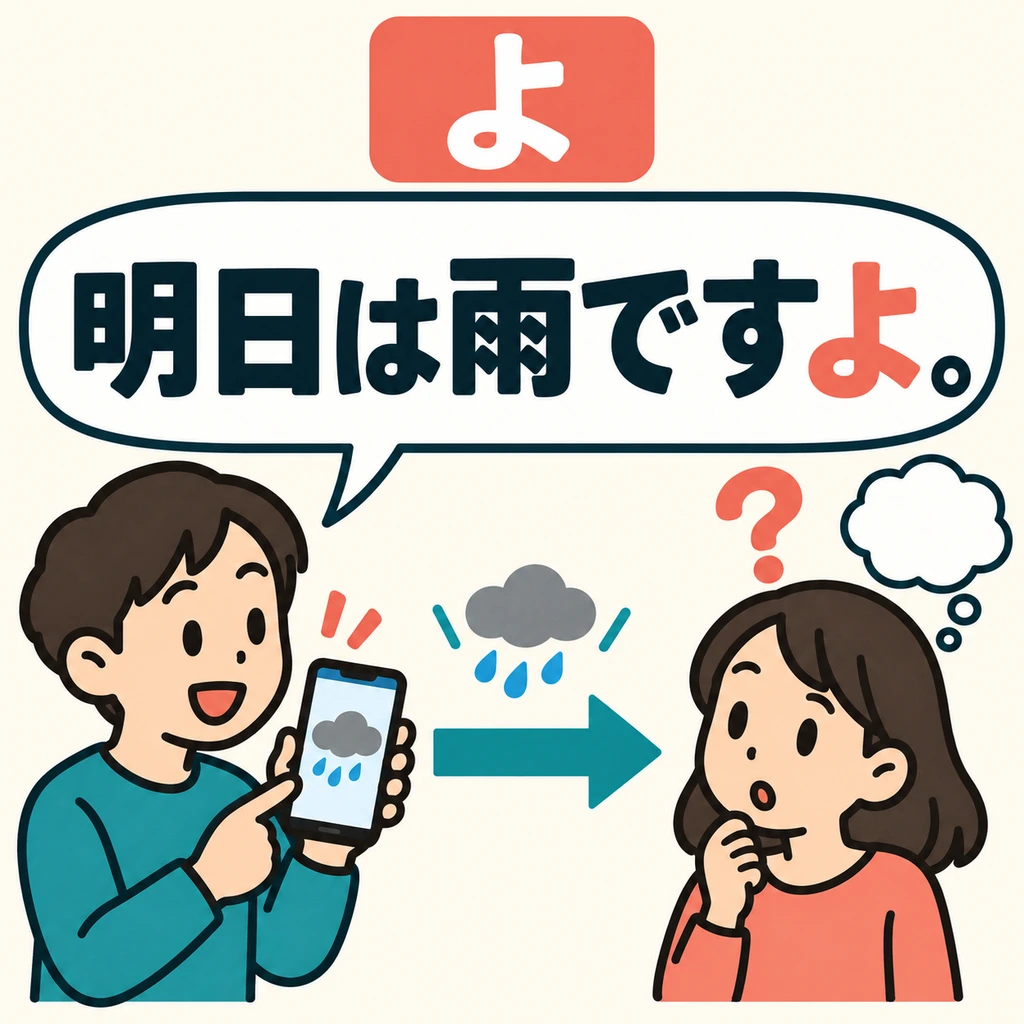
  1. The other person does not yet know tomorrow’s weather. Use 「よ」 to share information you know.
    The other person does not yet know tomorrow’s weather. Use 「よ」 to share information you know.

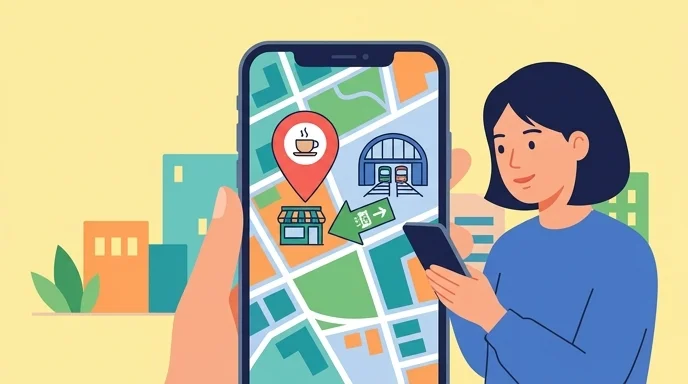
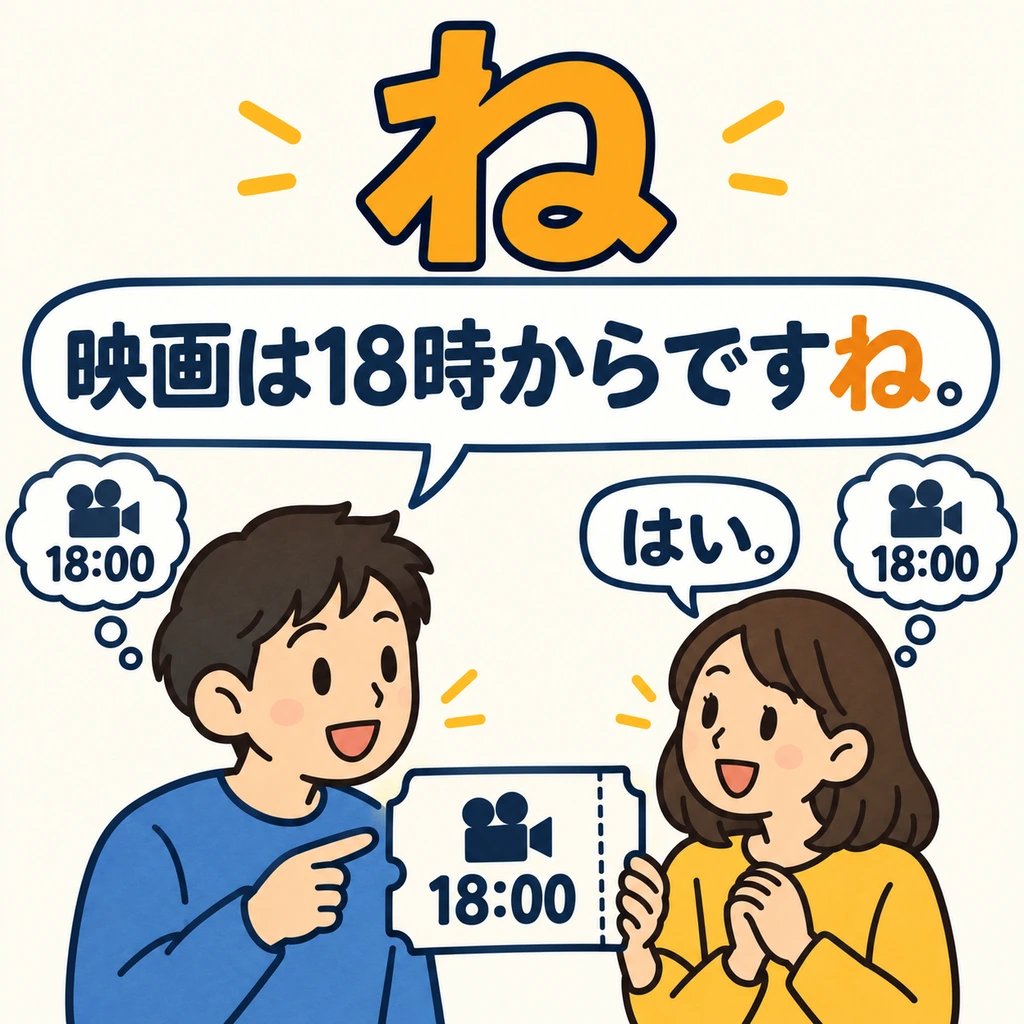
  2. You have heard when the movie starts and want to check that you remember correctly. Use 「ね」 to ask for confirmation.
    You have heard when the movie starts and want to check that you remember correctly. Use 「ね」 to ask for confirmation.

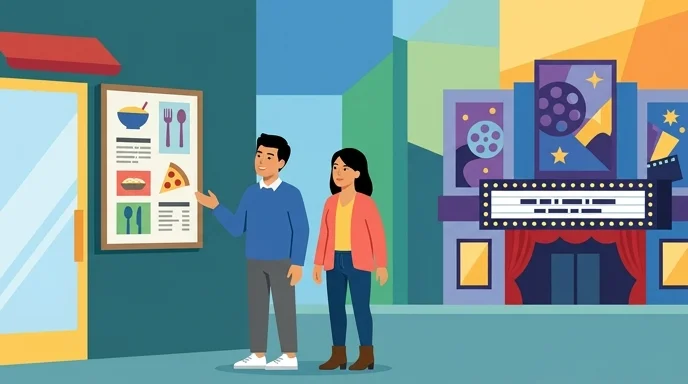
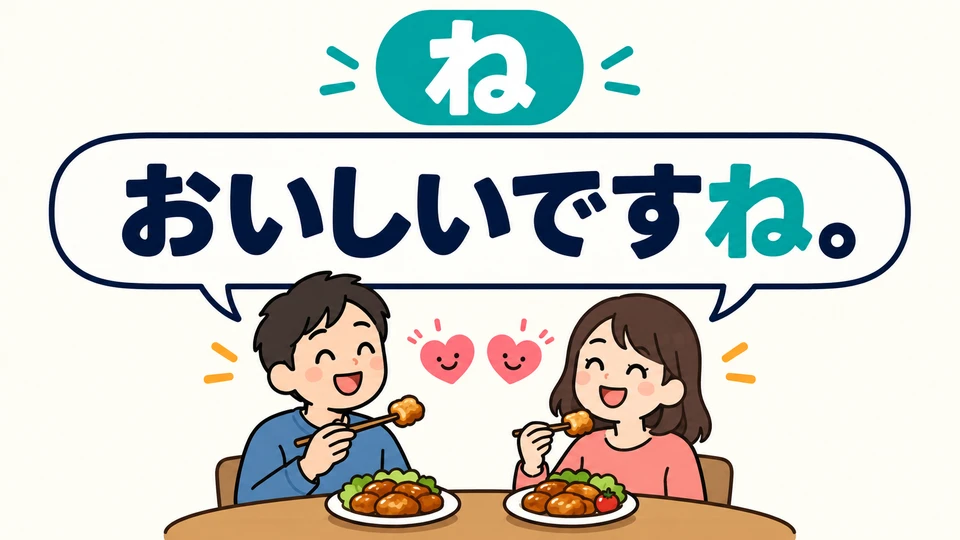
  3. When you are enjoying delicious food together, saying 「おいしいですね」 invites the other person to agree.
    When you are enjoying delicious food together, saying 「おいしいですね」 invites the other person to agree.

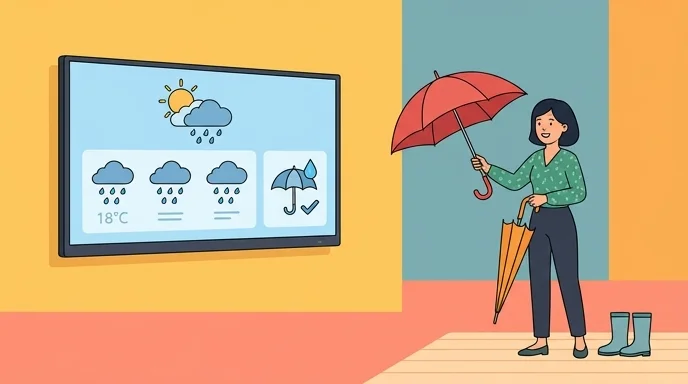
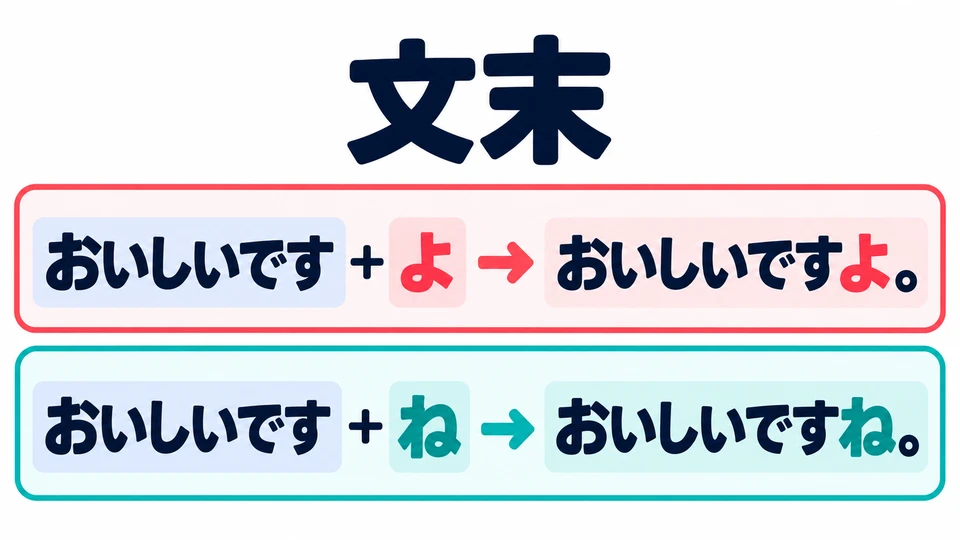
  4. Place 「よ」 and 「ね」 at the end of a complete sentence, as in 「ですよ」 and 「ですね」.
    Place 「よ」 and 「ね」 at the end of a complete sentence, as in 「ですよ」 and 「ですね」.

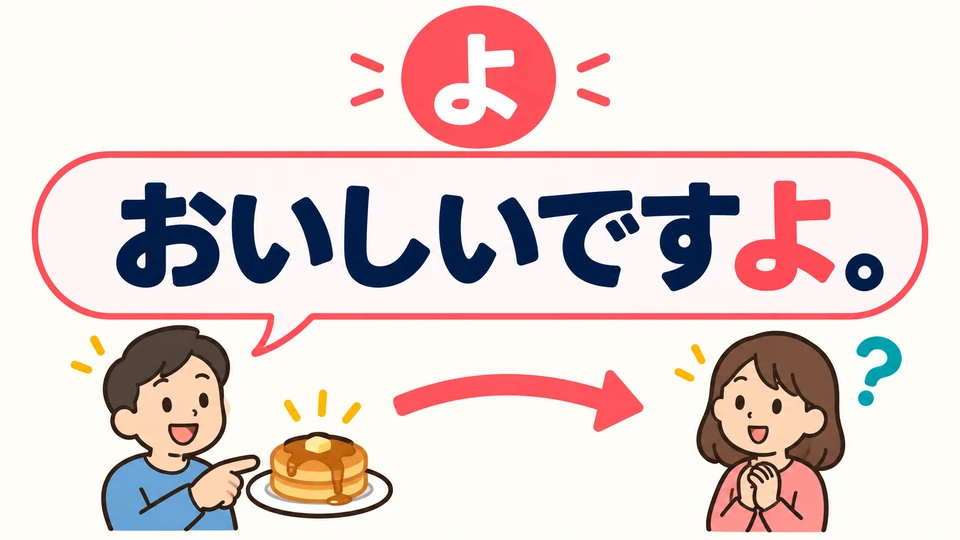
  5. In the pancake example, 「よ」 makes a recommendation: I know they are delicious, and I am sharing that information with you.
    In the pancake example, 「よ」 makes a recommendation: I know they are delicious, and I am sharing that information with you.

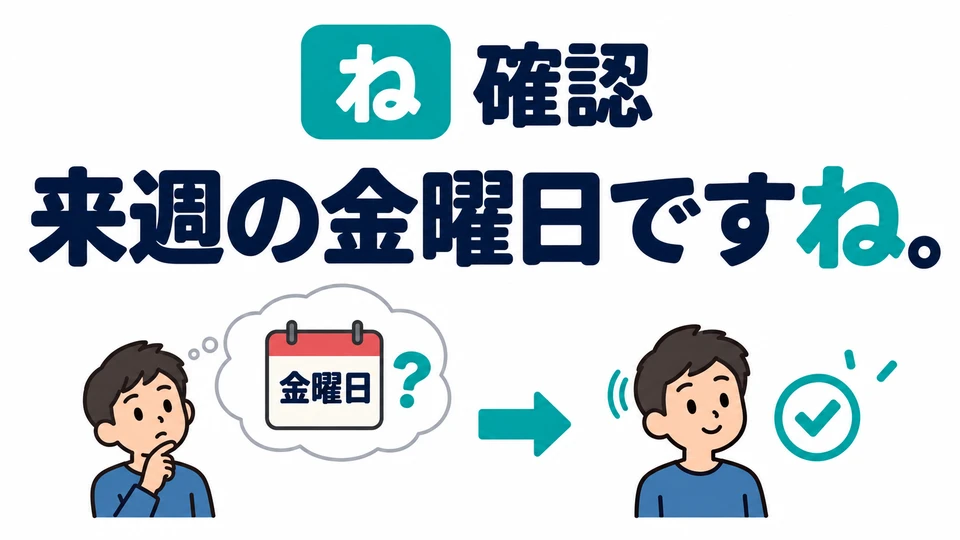
  6. In the Friday example, 「ね」 checks what the speaker already believes. If you do not know the date at all, ask for it first.

    In the Friday example, 「ね」 checks what the speaker already believes. If you do not know the date at all, ask for it first.

Example sentences

  • このkonoお店おみせomiseのnoパンケーキ、ぱんけーきpankeekiおいしいですoishiidesuよ。よyo

    The pancakes at this shop are delicious.

  • 来週らいしゅうraishuuのno

In a conversation

  • A
    明日あすはわ駅前えきまえのカフェかふぇ集合しゅうごうですね。ね

    A: We're meeting at the cafe in front of the station tomorrow, right?

  • B
    はい、はいそうです。東口ですひがしぐちのカフェ

Check yourself

  1. Level 1 · Recognise

    Which sentence is correct?

  2. Level 1 · Recognise

    Listen and choose the meaning

  3. Level 2 · Build

    Put the words in order

    We're meeting at the cafe in front of the station tomorrow, right?

  4. Level 3 · Use

    What goes in the blank?

    Bカフェは入口の近くで 。

    Cafe B is near the entrance, you know.

More grammar in this theme

  • 〜よ/〜ねshare or confirm information

Keep practising

Test your Japanese vocabulary12 adaptive questions, freeCheck your pronunciationRead aloud and get a scorePractise verb forms10-question conjugation quizSee the whole courseGrammar, vocabulary and quizzes by theme
金曜きんようkinyou
日びbi
ですdesu
ね、ねne
確認かくにんkakunin
します。しますshimasu

It's next Friday, right? I'll check.

かふぇ
です
よ。よ
西口にしぐち
の
カフェかふぇ
じゃありません。じゃありません

B: Yes, that's right. It's the cafe at the East Exit. Not the one at the West Exit.

  • A
    明日あすの集合しゅうごう場所ばしょはわAえーカフェかふぇですね。ね

    A: The meeting place for tomorrow is Cafe A, right?

  • B
    はい、はいそうです。です

    B: Yes, that's right.

    • A
      メニューめにゅーを見ました。みましたオムライスおむらいすとカレーかれーですね。ね

      A: I looked at the menu. It's omelet rice and curry, right?

    • B
      ここのオムライスおむらいすはわおいしいですよ。よ

      B: The omelet rice here is delicious.

    • A
      映画えいがはわ18じゅうはち時じからですね。ね

      A: The movie starts at 6 PM, right?

    • B
      はい。はいターミナルたーみなるで待ちましょう。まちましょう

      B: Yes. Let's meet at the terminal.

    • A
      明日あすの天気てんきはわどうですか。か

      A: How's the weather tomorrow?

    • B
      明日あすはわ雨あめですよ。よかさを持っもって行きましょう。いきましょう

      B: It's going to rain tomorrow. Let's take an umbrella.

    〜ませんか/〜ましょうinvite, suggest, or agree
    〜はちょっと…soft, indirect refusal
    〜で〜がありますevent at a place; something exists
    〜で〜がいちばん〜ですthe most within a range
    〜と〜とどちらが〜ですかwhich of two is more
    〜は〜より〜ですcomparison: more than
    もう〜ましたかask if already done
    〜はどうですかhow about this option
    Previous〜はどうですか