JPEdLab iconJPEdLab
Save history

Create an account and play

Explore first, then save your progress whenever you are ready. No email address is required.

Start free
  1. Japanese grammar
  2. JLPT N5 grammar
  3. 〜ませんか/〜ましょう

〜ませんか/〜ましょう~masen ka / ~mashou

Masen ka (〜ませんか) means “invite, suggest, or agree”.

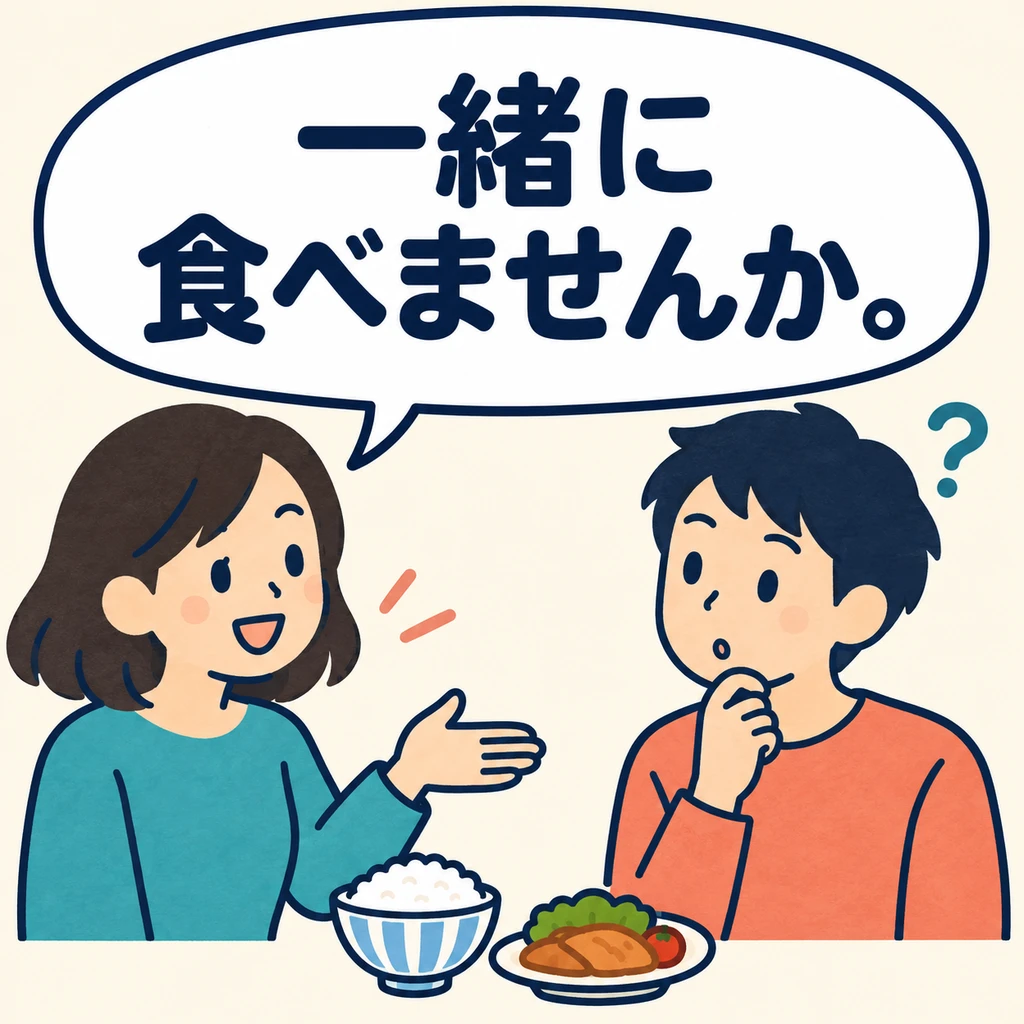
一緒いっしょisshoにniご飯ごはんgohanをo食べませんたべませんtabemasenか。かka

Would you like to eat with me?

Use 「〜ませんか」 to invite someone and 「〜ましょう」 to suggest an action or accept an invitation.

In the course›

How it works

  1. The friend has not yet agreed to eat together. Use 「ませんか」 to invite them and ask if they would like to join.
    The friend has not yet agreed to eat together. Use 「ませんか」 to invite them and ask if they would like to join.

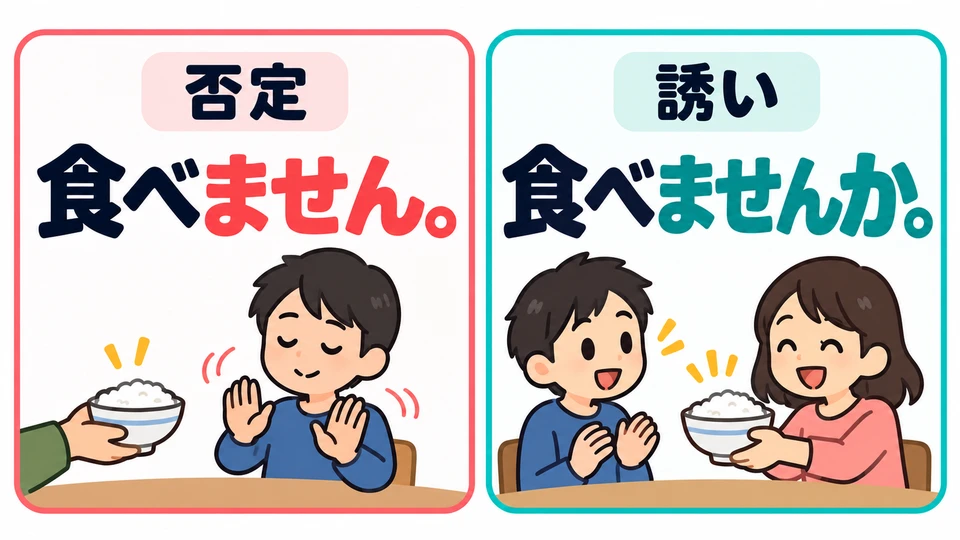
  2. Although it contains 「ません」, this is an invitation to eat, not a statement that someone will not eat.
    Although it contains 「ません」, this is an invitation to eat, not a statement that someone will not eat.

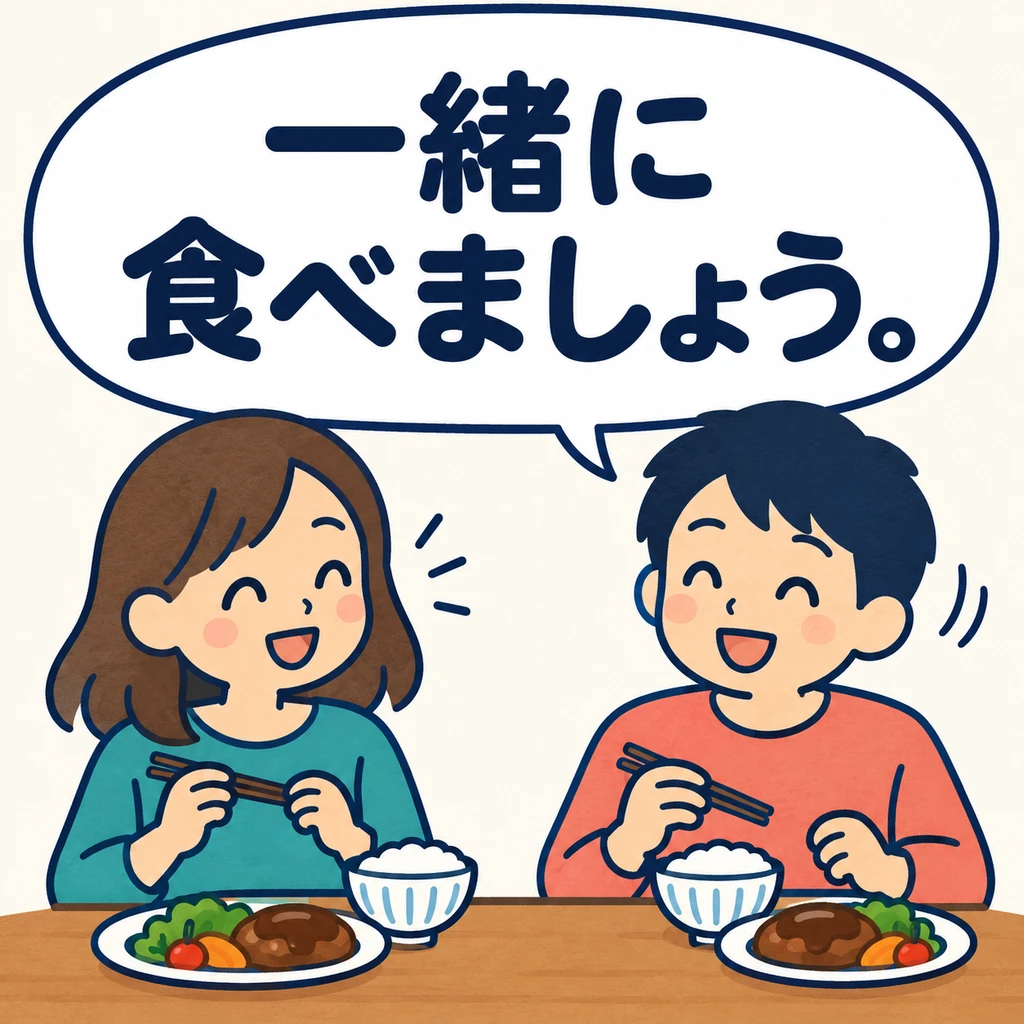
  3. The friend agrees to eat together. In the reply, 「食べましょう」 shows acceptance of the invitation.
    The friend agrees to eat together. In the reply, 「食べましょう」 shows acceptance of the invitation.

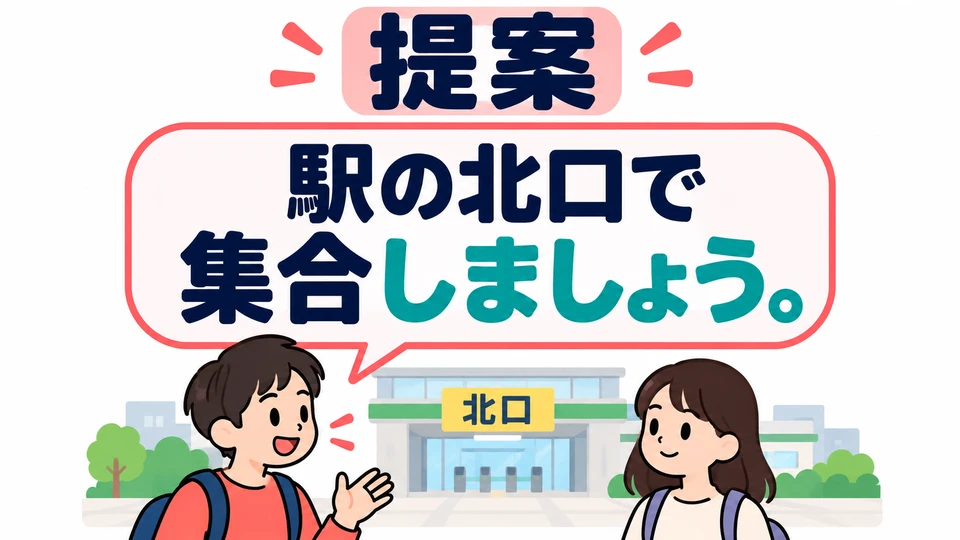
  4. You can also use 「ましょう」 to make a suggestion, such as suggesting a meeting point when planning to meet.
    You can also use 「ましょう」 to make a suggestion, such as suggesting a meeting point when planning to meet.

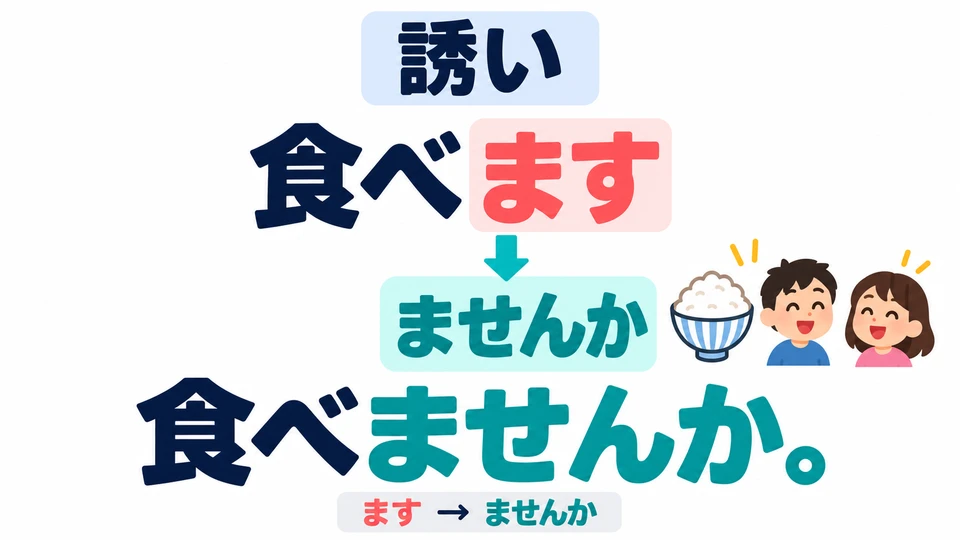
  5. To invite someone, replace the verb ending 「ます」 with 「ませんか」: 食べます→食べませんか.
    To invite someone, replace the verb ending 「ます」 with 「ませんか」: 食べます→食べませんか.

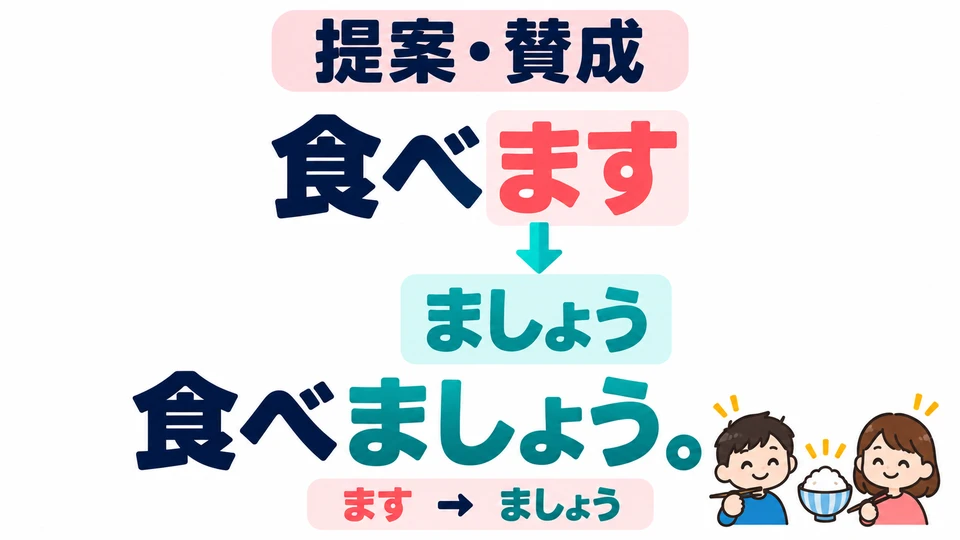
  6. To suggest something or agree, replace 「ます」 with 「ましょう」: 食べます→食べましょう.
    To suggest something or agree, replace 「ます」 with 「ましょう」: 食べます→食べましょう.

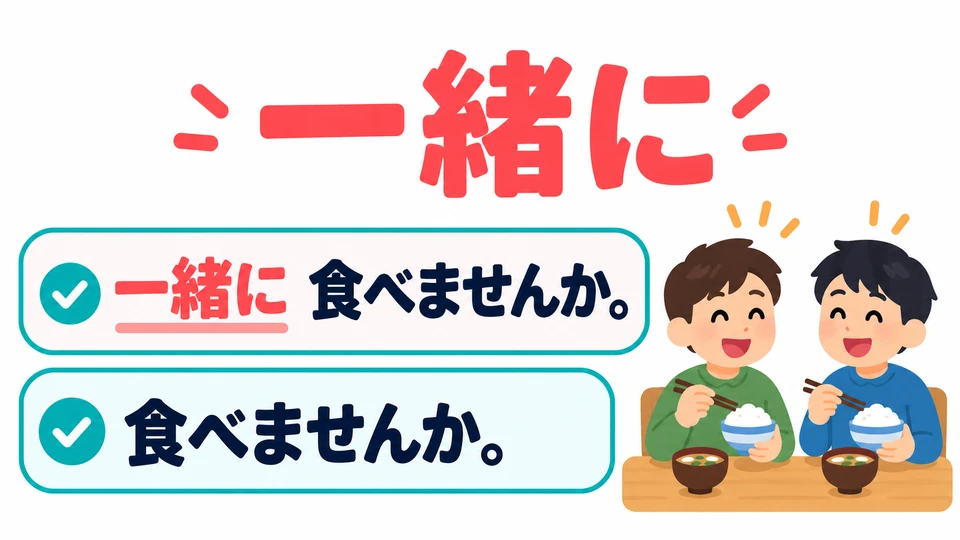
  7. In both sentences, 「一緒に」 emphasizes doing something together. You do not need to say it every time you invite someone.

    In both sentences, 「一緒に」 emphasizes doing something together. You do not need to say it every time you invite someone.

Example sentences

  • 一緒いっしょisshoにniご飯ごはんgohanをo食べませんたべませんtabemasenか。かka

    Would you like to eat with me?

  • 一緒いっしょisshoにniご飯ごはんgohan

In a conversation

  • A
    週末しゅうまつにライブらいぶに行きませんいきませんか。か

    A: Would you like to go to a live concert this weekend?

  • B
    いいですね。ね行きましょう。いきましょう何時なんじからどこですか。

Check yourself

  1. Level 0 · Conjugate

    Change to 〜ませんか to invite someone. ませんか(誘い)

    一緒に昼ご飯を(食べますたべます)。

  2. Level 1 · Recognise

    Which sentence is correct?

  3. Level 1 · Recognise

    Listen and choose the meaning

  4. Level 2 · Build

    Put the words in order

    Won't you go to a live concert this weekend?

  5. Level 3 · Use

    What goes in the blank?

    いいですね。 。何時からですか。

    Sounds good. Let's go. What time does it start?

More grammar in this theme

  • 〜ませんか/〜ましょうinvite, suggest, or agree

More JLPT N5 grammar

Keep practising

Test your Japanese vocabulary12 adaptive questions, freeCheck your pronunciationRead aloud and get a scorePractise verb forms10-question conjugation quizSee the whole courseGrammar, vocabulary and quizzes by theme
を
o
食べましょう。たべましょうtabemashou

Let's eat together.

か

B: That sounds good. Let's go. What time does it start and where is it?

  • A
    午後ごご6ろく時じからです。です駅えきの北口きたぐちで集合しゅうごうしましょう。しましょう

    A: It's from 6 PM. Let's meet at the north exit of the station.

    • A
      今夜、こんやバーばーでお酒おさけを飲みませんのみませんか。か

      A: Would you like to go to a bar for a drink tonight?

    • B
      いいですね。ね何時なんじですか。か

      B: That sounds good. What time?

    • A
      8はち時じからです。です駅前えきまえで会いましょう。あいましょう

      A: It starts at 8:00. Let's meet in front of the station.

    • A
      日曜にちよう日、び美術館びじゅつかんに行きませんいきませんか。か

      A: Would you like to go to the art museum on Sunday?

    • B
      いいですね。ねじゃあ、じゃあ行きましょう。いきましょう午前中ごぜんちゅうですか。か

      B: That sounds good. Well then, let's go. Is it in the morning?

    • A
      はい。はい10じゅう時じに駅えきで会いましょう。あいましょう

      A: Yes. Let's meet at the station at 10:00.

    Beginner 1
    Appointments
    More quizzesOpen this lesson’s quizzes in the course
    〜はちょっと…soft, indirect refusal
    〜で〜がありますevent at a place; something exists
    〜で〜がいちばん〜ですthe most within a range
    〜と〜とどちらが〜ですかwhich of two is more
    〜は〜より〜ですcomparison: more than
    もう〜ましたかask if already done
    〜はどうですかhow about this option
    〜よ/〜ねshare or confirm information
    Next〜はちょっと…
    See all 111
    〜がほしいですwant to have something
    〜が好きです/嫌いですlikes and dislikes
    〜たいです/〜たくないですwant or not want to do
    〜へ〜に行きますgo somewhere to do something
    〜は〜にありますwhere an object is located
    〜は〜にいますwhere a person or animal is
    〜に〜があります/いますwhat is present at a place
    〜てくださいpolite request to do