JPEDLAB iconJPEDLAB
Save history

Create an account and play

Explore first, then save your progress whenever you are ready. No email address is required.

Start free
Read as articleCards
See the whole course›Beginner 1›Days Off

Japanese grammar · ≈ JLPT N5 · Beginner 1

〜が好きです/嫌いです~ ga suki desu / kirai desu

likes and dislikes

Use 「〜が好きです/嫌いです」 to express what you like or dislike, including activities.

Start the interactive lessonIllustrated cards, audio and speaking practice

How it works

  1. When talking about hobbies or choosing food, use these two patterns to express your likes and dislikes.
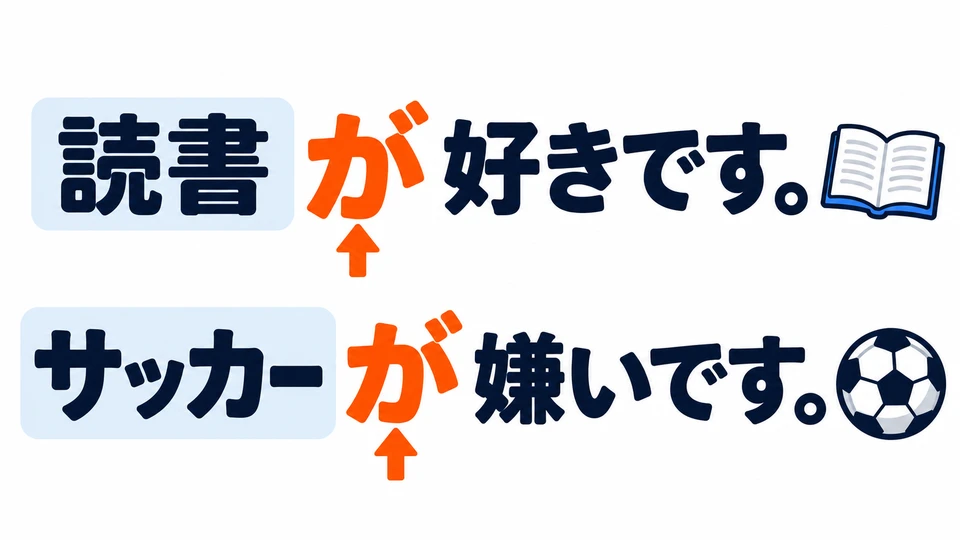
    When talking about hobbies or choosing food, use these two patterns to express your likes and dislikes.

  2. The orange 「が」 in the picture follows the thing you like or dislike and shows what it is.
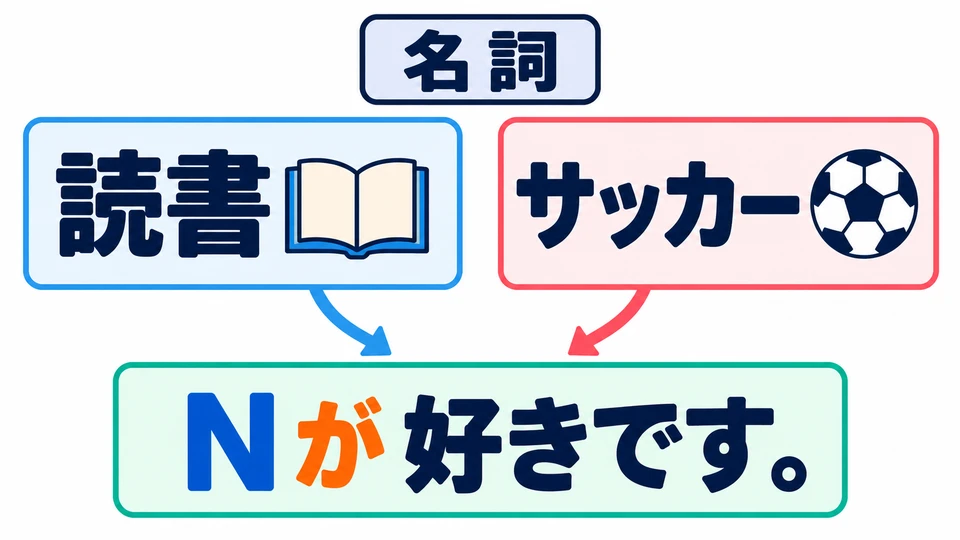
    The orange 「が」 in the picture follows the thing you like or dislike and shows what it is.

  3. Use a noun for the thing you like or dislike. Activity names such as 「読書」 and 「サッカー」 work too.
    Use a noun for the thing you like or dislike. Activity names such as 「読書」 and 「サッカー」 work too.

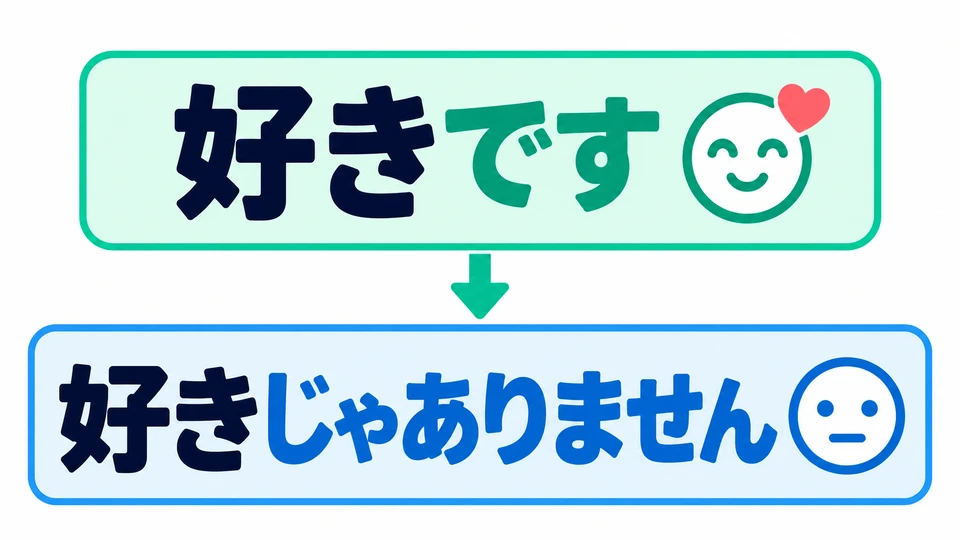
  4. To say you do not like something, change 「好きです」 to 「好きじゃありません」.
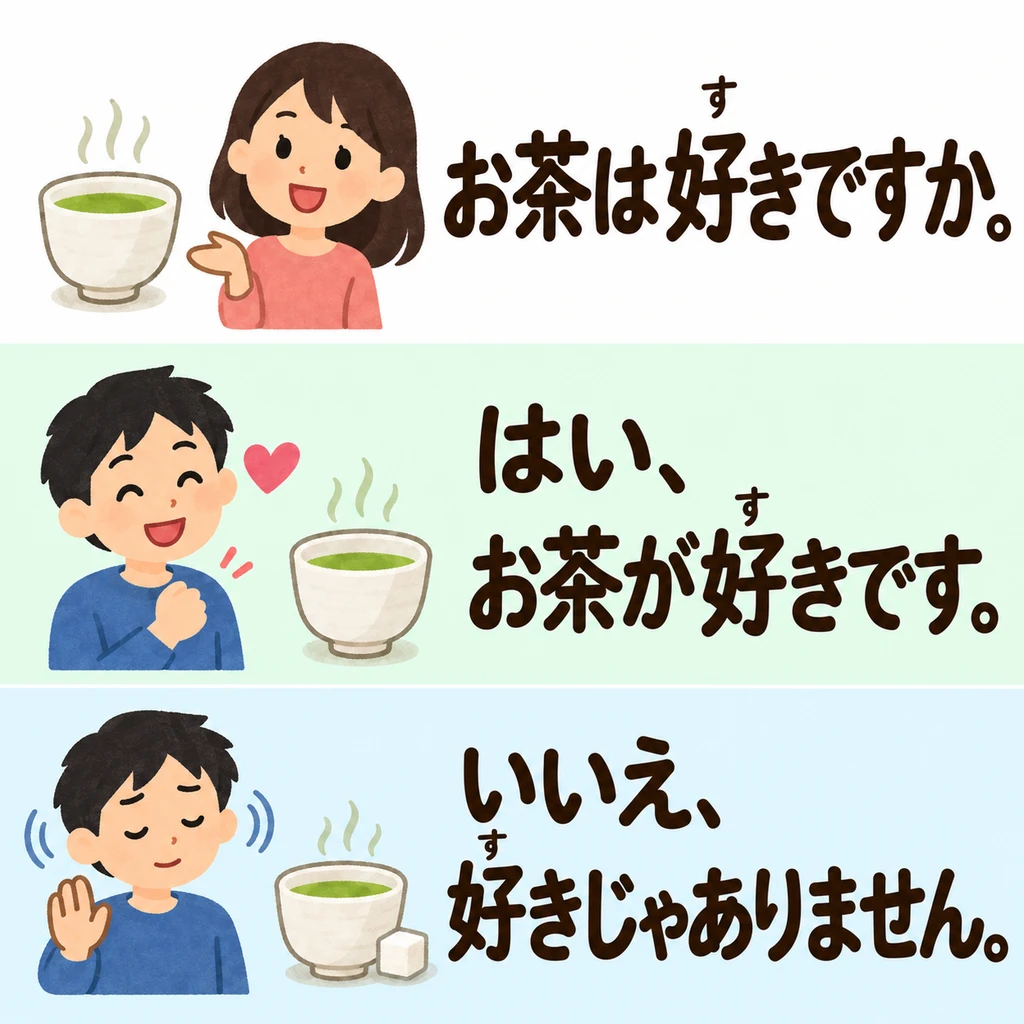
    To say you do not like something, change 「好きです」 to 「好きじゃありません」.

  5. Add 「か」 to ask about likes and dislikes. Answer 「はい」 if you like it and 「いいえ」 if you do not.
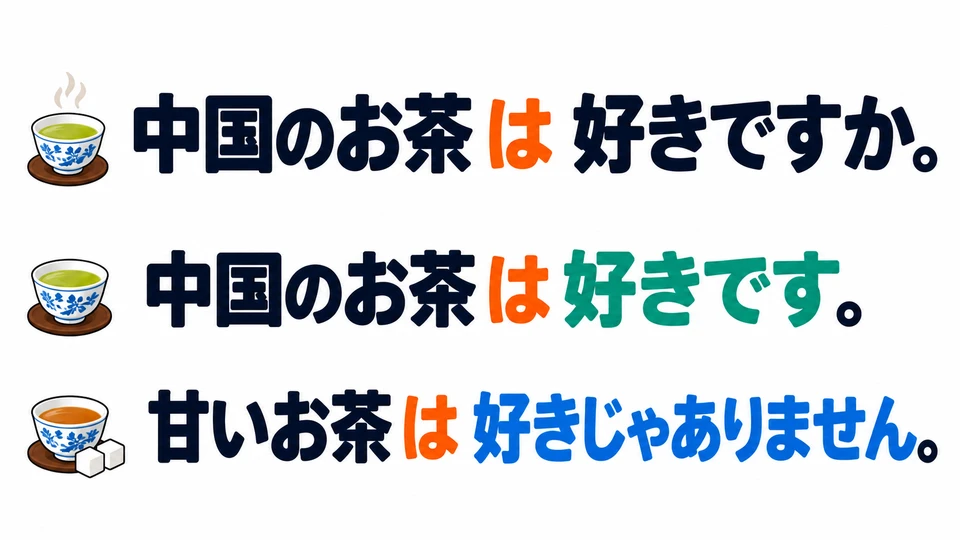
    Add 「か」 to ask about likes and dislikes. Answer 「はい」 if you like it and 「いいえ」 if you do not.

  6. When asking about something specific, use 「は」 to introduce it as the topic. 「は」 is also common when contrasting different things.

    When asking about something specific, use 「は」 to introduce it as the topic. 「は」 is also common when contrasting different things.

  7. 「あまり好きじゃありません」 means “I don’t like it very much” and lets you express your feelings gently.
    「あまり好きじゃありません」 means “I don’t like it very much” and lets you express your feelings gently.

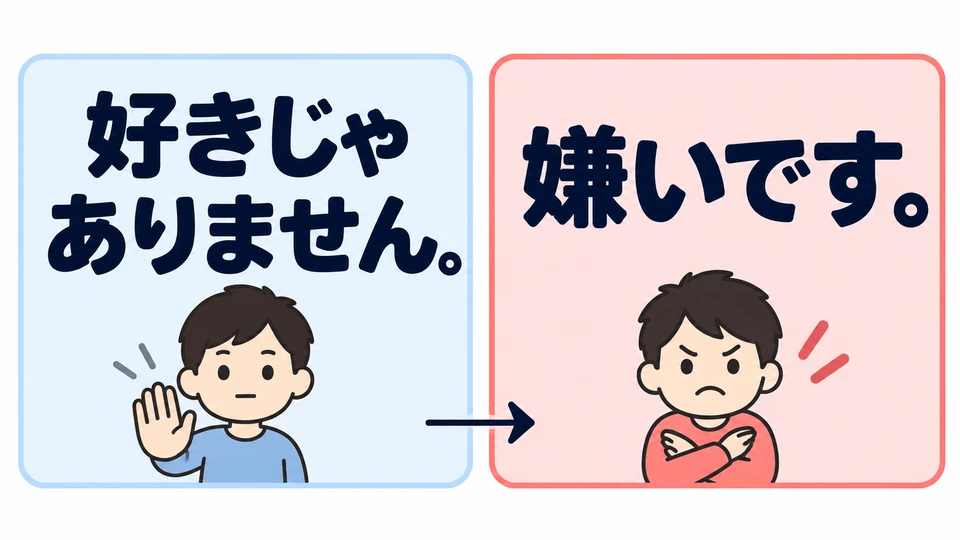
  8. 「好きじゃありません」 simply says you do not like it; 「嫌いです」 expresses dislike more directly.

    「好きじゃありません」 simply says you do not like it; 「嫌いです」 expresses dislike more directly.

Example sentences

  • 読書どくしょdokushoがga好きです。すきですsukidesu

    I like reading.

  • サッカーさっかーsakkaaがga嫌いきらいkiraiです。ですdesu

    I dislike soccer.

In a conversation

  • A
    どんな食べ物たべものが好きですすきですか。か

    A: What kind of food do you like?

  • B
    辛いからい料理りょうりが好きです。すきですでも、もとても辛いからい

Check yourself

  1. Level 1 · Recognise

    Which sentence is correct?

  2. Level 1 · Recognise

    Listen and choose the meaning

  3. Level 2 · Build

    Put the words in order

    I like reading.

  4. Level 3 · Use

    What goes in the blank?

    とても辛い料理 ありません。

    I don't like very spicy food.

More grammar in this theme

  • 〜が好きです/嫌いですlikes and dislikes

Keep practising

Test your Japanese vocabulary12 adaptive questions, freeCheck your pronunciationRead aloud and get a scorePractise verb forms10-question conjugation quizSee the whole courseGrammar, vocabulary and quizzes by theme
料理りょうり
はわ
好きじゃすきじゃ
ありません。ありません

B: I like spicy food. But I don't like very spicy food.

  • A
    どうしてですか。か

    A: Why?

  • B
    体からだが弱いですよわいですから。から

    B: Because my health is weak.

    • A
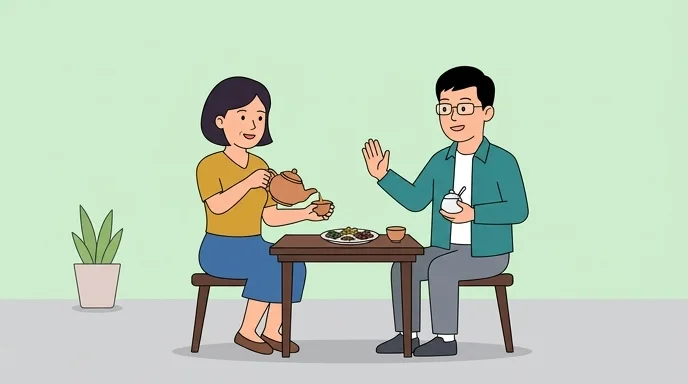
      中国ちゅうごくのお茶おちゃはわ好きですすきですか。か

      A: Do you like Chinese tea?

    • B
      はい、はい中国ちゅうごくのお茶おちゃが好きです。すきです

      B: Yes, I like Chinese tea.

    • A
      甘いあまいお茶おちゃはわ好きですすきですか。か

      A: Do you like sweet tea?

    • B
      いいえ、いいえ甘いあまいお茶おちゃはわ好きじゃすきじゃありません。ありません

      B: No, I don't like sweet tea.

    • A
      読書どくしょはわ好きですすきですか。か

      A: Do you like reading?

    • B
      いいえ、いいえ読書どくしょはわ好きじゃすきじゃありません。ありません

      B: No, I don't like reading.

    • A
      嫌いきらいですか。か

      A: Do you dislike it?

    • B
      はい、はいあまり好きじゃすきじゃありません。ありません

      B: Yes, I don't really like it.

    〜ました/〜ませんでしたpast affirmative and negative
    どこかへ行きましたかask if someone went somewhere
    それからthen; next action
    〜かったです/〜くなかったですpast adjective impression
    〜でした/〜じゃありませんでしたpast state, affirmative or negative
    どうでしたか/どうして〜/〜からですask past impression and reason
    〜がほしいですwant to have something
    〜たいです/〜たくないですwant or not want to do
    〜へ〜に行きますgo somewhere to do something
    Previous〜がほしいです
    Next〜たいです/〜たくないです