〜ました/〜ませんでした~mashita / ~masendeshita
Mashita (〜ました) means “past affirmative and negative”.
I ate a meal with a friend.
Use 「〜ました」 for past actions and 「〜ませんでした」 for actions not done.
In the course
How it works
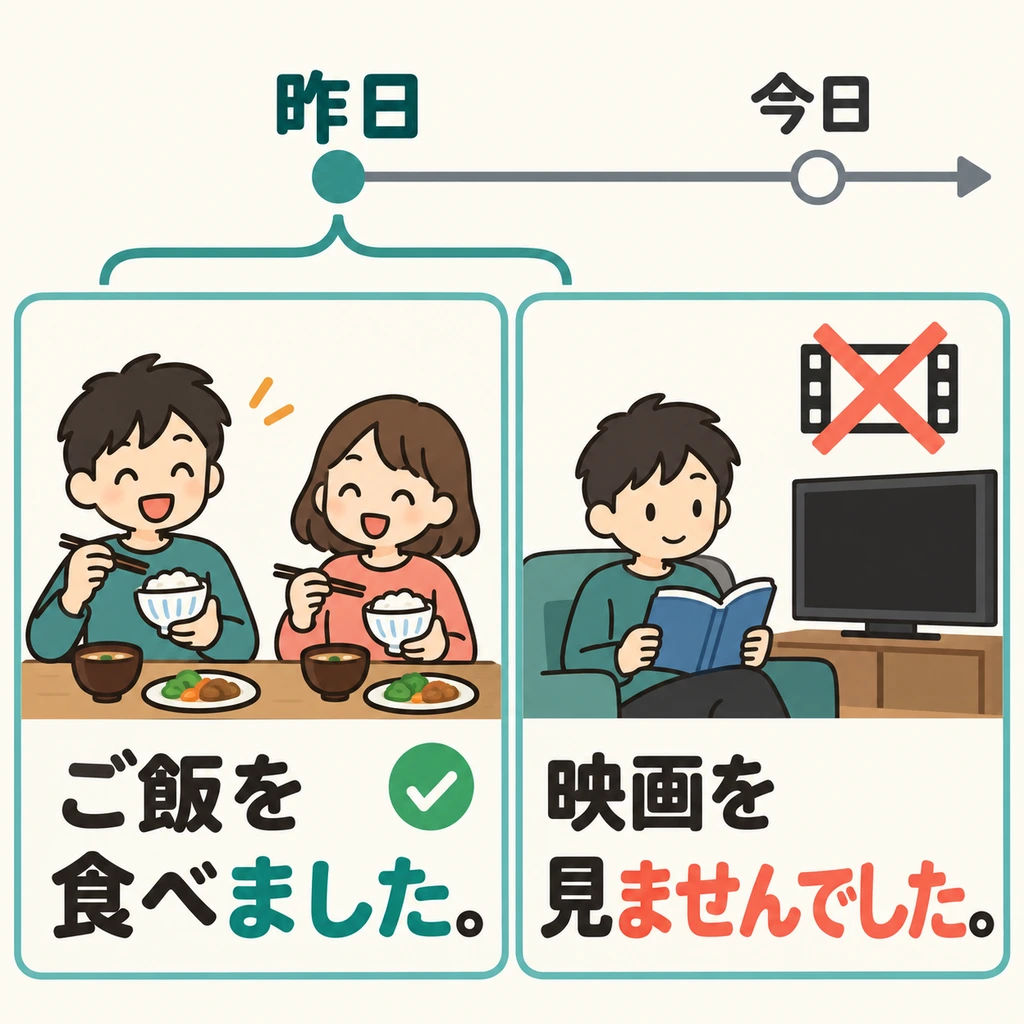
Think back to yesterday: eating a meal and not watching a movie in the picture both refer to the past.
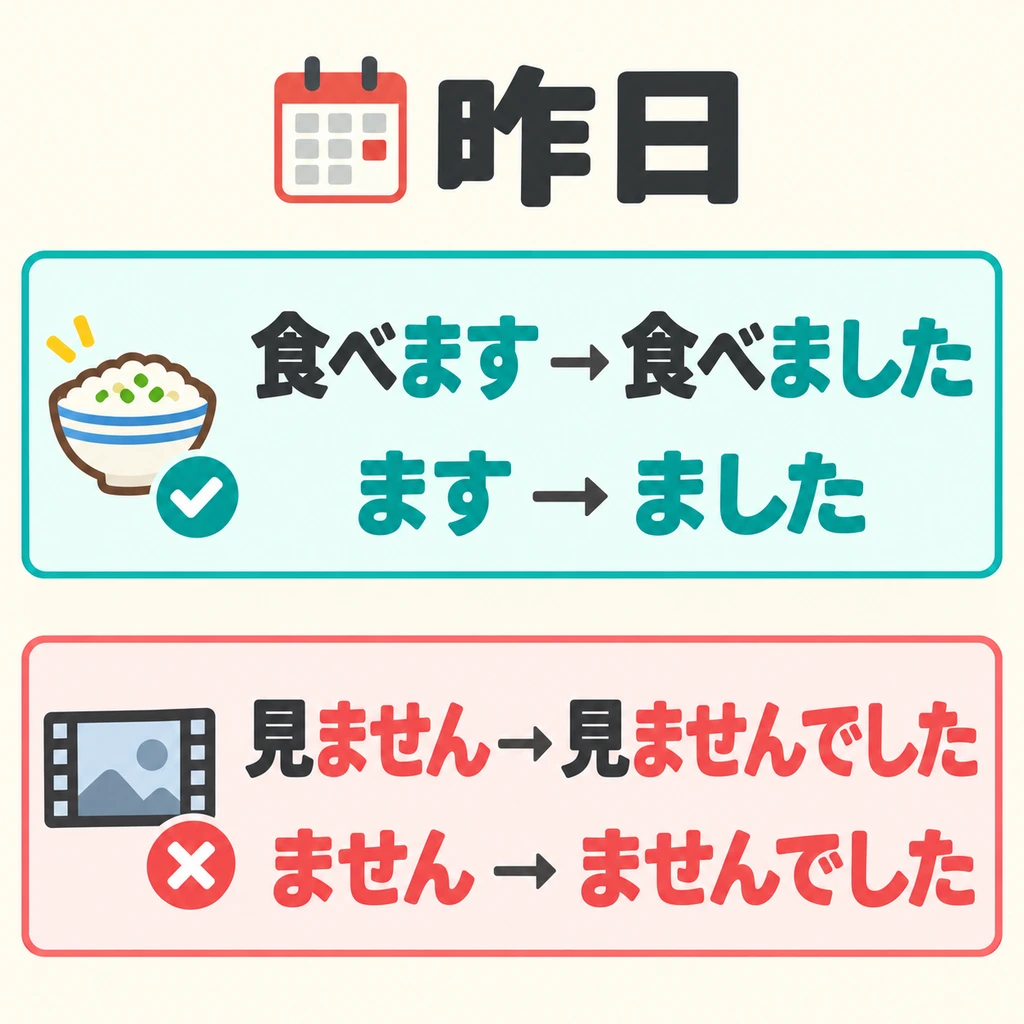
Change the endings ます and ません you have learned to the past forms shown in the picture. The part before the ending stays the same.
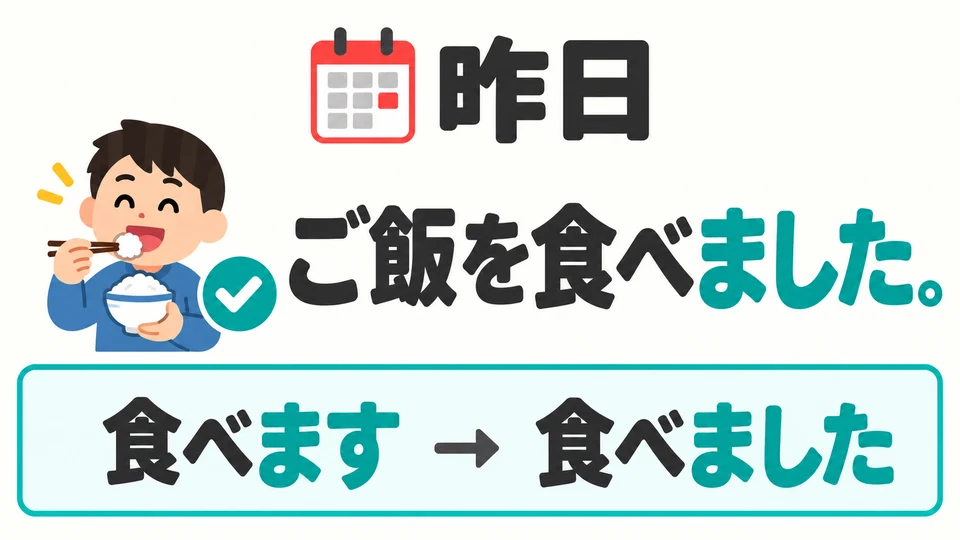
If you ate a meal yesterday, use 「食べました」. ました means you did the action in the past.
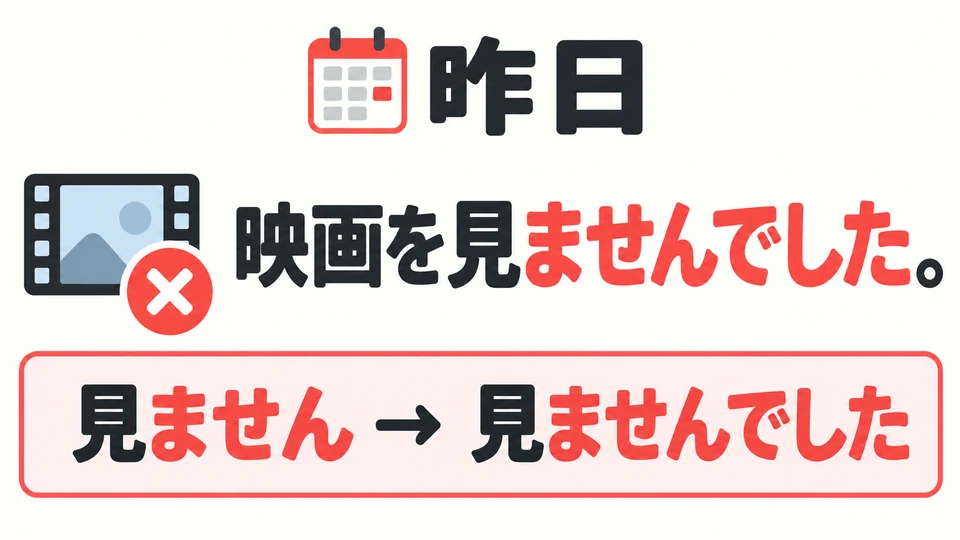
If you did not watch a movie yesterday, use 「見ませんでした」. It means you did not do the action then.
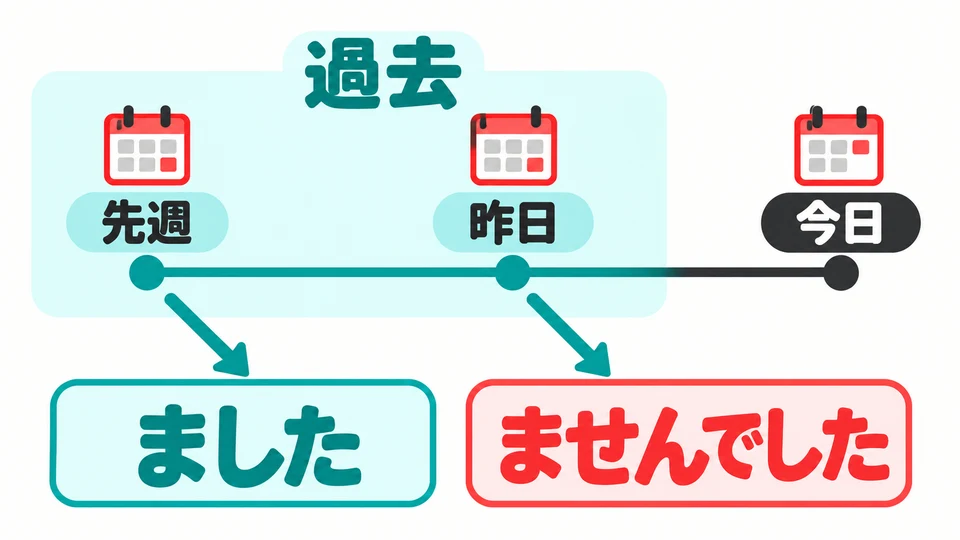
Use the past form to talk about yesterday or last week. Time words tell us which time in the past you mean.
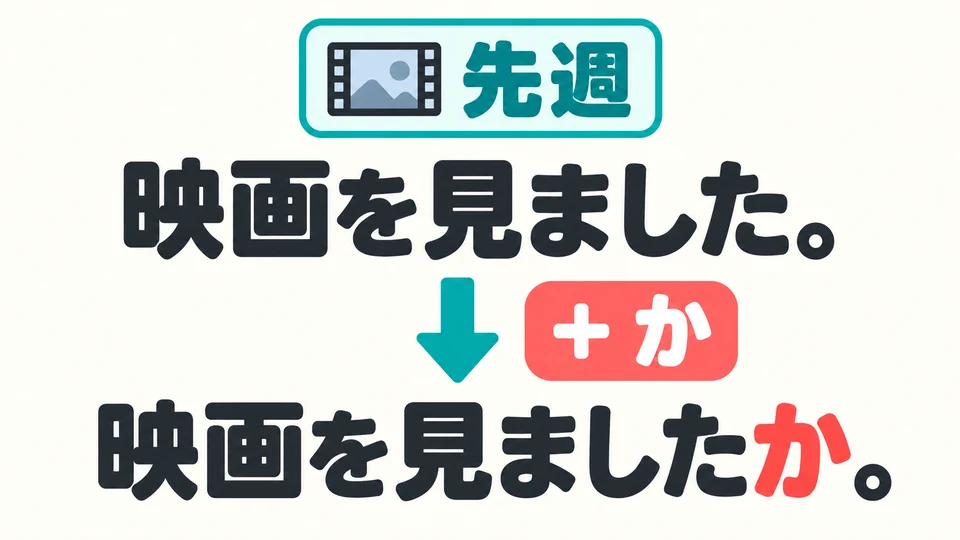
Want to ask if someone watched a movie last week? Add か after 「映画を見ました」 to make a question.
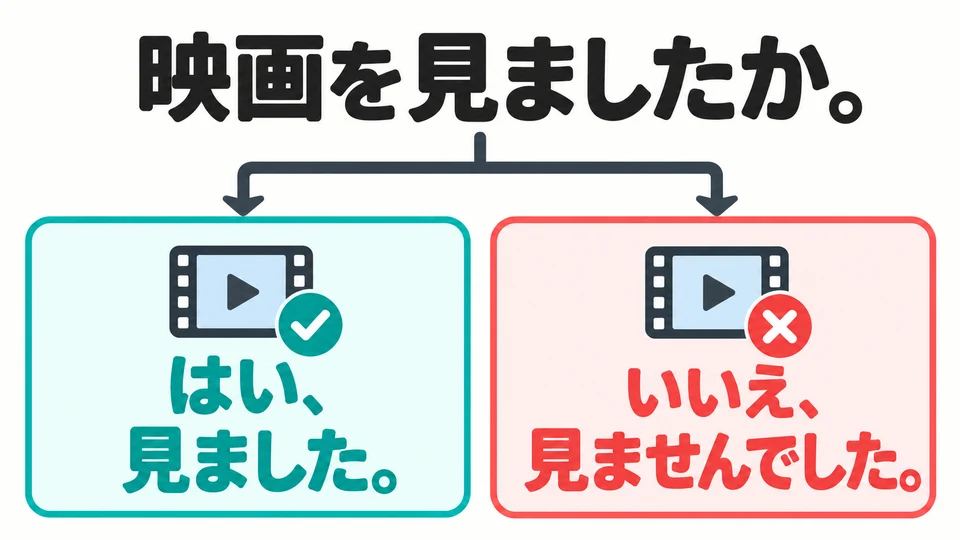
If you watched it then, answer 「はい、見ました」. If you did not, answer 「いいえ、見ませんでした」.
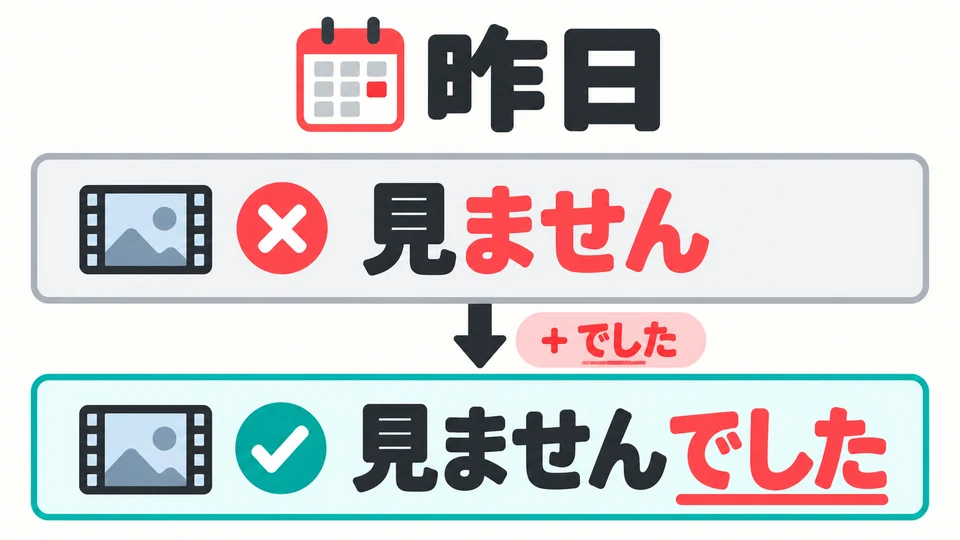
Use ませんでした for an action you did not do in the past. ません alone does not express the past, so remember でした.
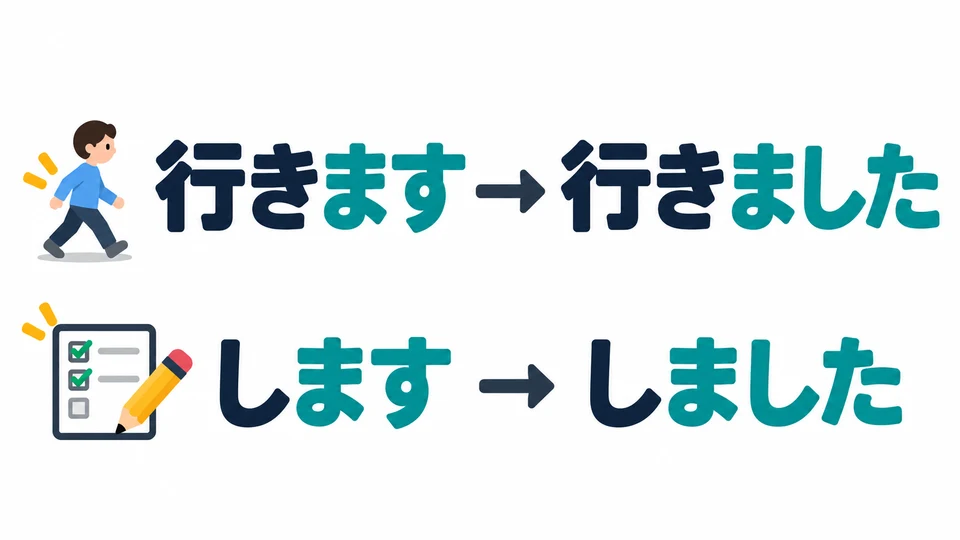
Example sentences
- 友達tomodachiとtoご飯gohanをo食べました。tabemashita
I ate a meal with a friend.
- 昨日kinou映画eigaをo見ませんでした。mimasendeshita
In a conversation

- A昨日、何を食べましたか。
A: What did you eat yesterday?
- B昨日、ステーキを食べました。
B: I ate steak yesterday.

Check yourself
Level 0 · Conjugate
Use 〜ました to say what you did politely. ました(過去)
昨日、友達とご飯を(食べます)。
Level 1 · Recognise
Which sentence is correct?
Level 1 · Recognise
Listen and choose the meaning
Level 2 · Build
Put the words in order
I ate steak yesterday.
Level 3 · Use
What goes in the blank?
正午に昼ご飯を 。
I ate lunch at noon.
More grammar in this theme
- 〜ました/〜ませんでしたpast affirmative and negative