
JPEdLab iconJPEdLab
Save history

Create an account and play

Explore first, then save your progress whenever you are ready. No email address is required.

Start free
  1. Japanese grammar
  2. JLPT N5 grammar
  3. どこかへ行きましたか

どこかへ行きましたかdokoka e ikimashita ka

Dokoka e ikimashita ka (どこかへ行きましたか) means “ask if someone went somewhere”.

週末しゅうまつshuumatsu海うみumiへえe行きました。いきましたikimashita

I went to the sea over the weekend.

Use 「どこかへ行きましたか」 to ask whether someone went somewhere in the past.

In the course›

How it works

  1. To ask whether someone went anywhere yesterday or on a day off, use the question in the picture.

    To ask whether someone went anywhere yesterday or on a day off, use the question in the picture.

  2. 「どこか」 means “somewhere”; the exact place is still unknown. First, ask whether they went anywhere.
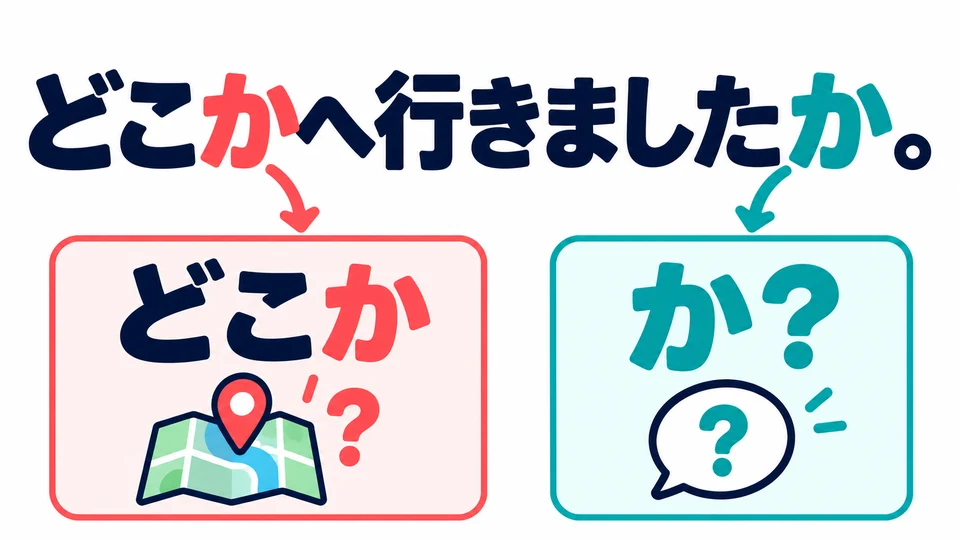
    「どこか」 means “somewhere”; the exact place is still unknown. First, ask whether they went anywhere.

  3. Notice the two 「か」: the first is part of 「どこか」, and the one at the end makes the sentence a question.

    Notice the two 「か」: the first is part of 「どこか」, and the one at the end makes the sentence a question.

  4. If you did go somewhere, answer 「はい」, then say 「博物館へ行きました」 to name the place.
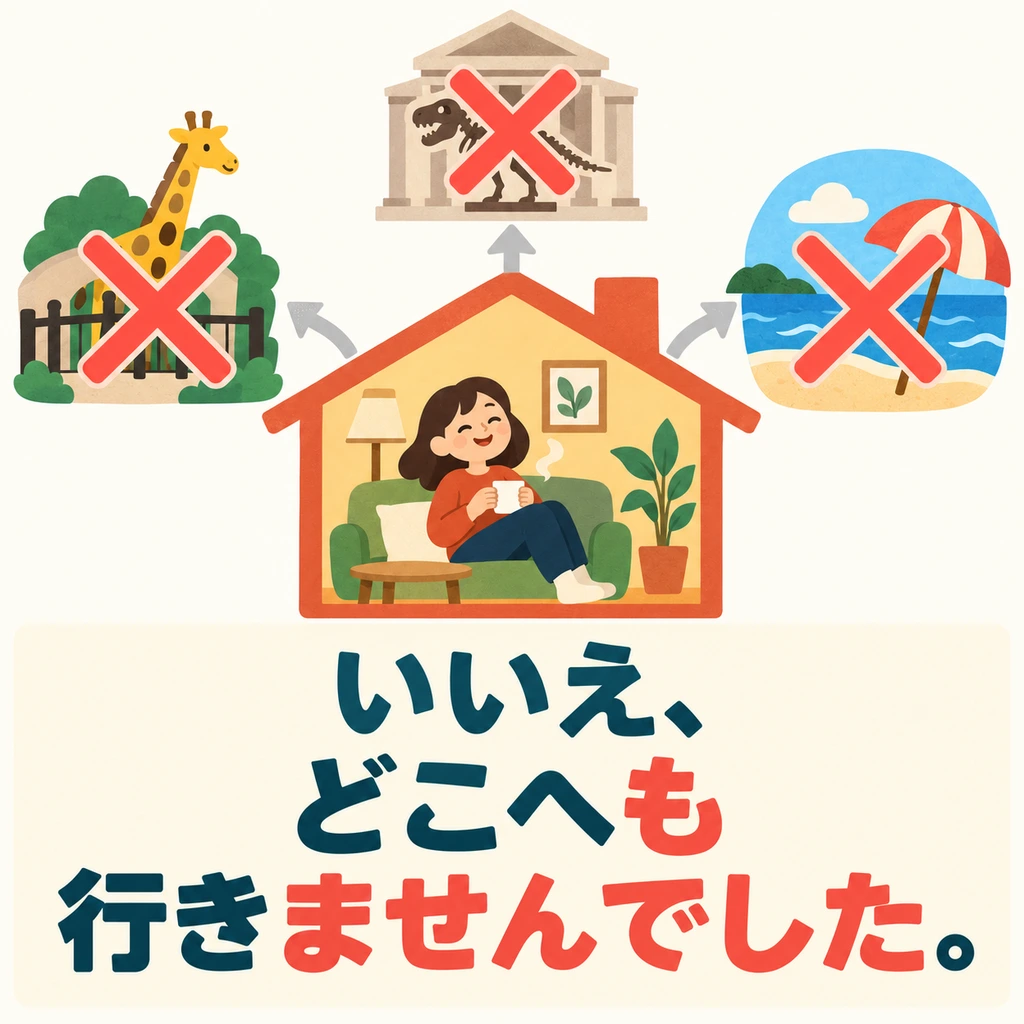
    If you did go somewhere, answer 「はい」, then say 「博物館へ行きました」 to name the place.

  5. Look at the crosses over every destination in the picture. If you went nowhere at all, use 「どこへも」.
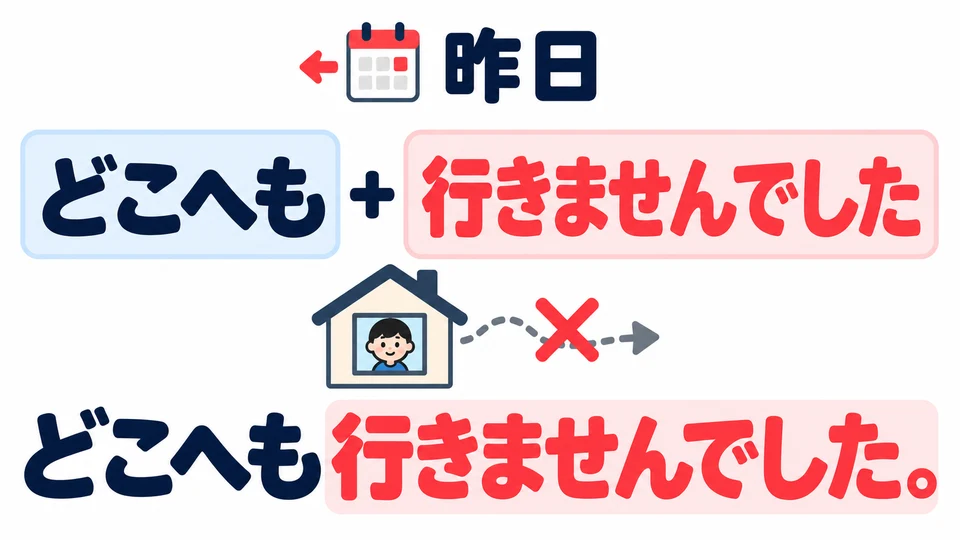
    Look at the crosses over every destination in the picture. If you went nowhere at all, use 「どこへも」.

  6. Use 「どこへも」 with a negative verb. For a past event, such as yesterday, use 「行きませんでした」.
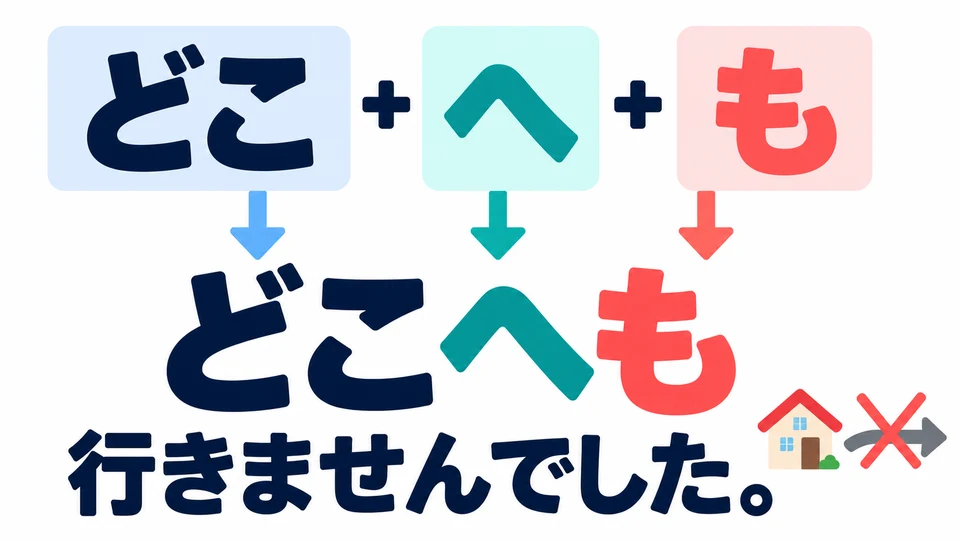
    Use 「どこへも」 with a negative verb. For a past event, such as yesterday, use 「行きませんでした」.

  7. When saying you went nowhere, keep the order 「どこ+へ+も」: 「も」 comes after 「へ」.

    When saying you went nowhere, keep the order 「どこ+へ+も」: 「も」 comes after 「へ」.

Example sentences

  • 週末しゅうまつshuumatsu海うみumiへえe行きました。いきましたikimashita

    I went to the sea over the weekend.

In a conversation

  • A
    先週、せんしゅうどこかへえ行きましたいきましたか。か

    A: Did you go anywhere last week?

  • B
    はい。はい博物館はくぶつかんへえ行きました。いきました

    B: Yes. I went to a museum.

Check yourself

  1. Level 1 · Recognise

    Which sentence is correct?

  2. Level 1 · Recognise

    Listen and choose the meaning

  3. Level 2 · Build

    Put the words in order

    Did you go somewhere last week?

  4. Level 3 · Use

    What goes in the blank?

    週末____(へ)ました。

    I went to the sea on the weekend.

More grammar in this theme

  • どこかへ行きましたかask if someone went somewhere

More JLPT N5 grammar

Keep practising

Test your Japanese vocabulary12 adaptive questions, freeCheck your pronunciationRead aloud and get a scorePractise verb forms10-question conjugation quizSee the whole courseGrammar, vocabulary and quizzes by theme
  • A
    休みやすみの日ひに、にどこかへえ行きましたいきましたか。か

    A: Did you go anywhere on your day off?

  • B
    いいえ、いいえどこへえも行きませんでした。いきませんでした

    B: No, I didn't go anywhere.

  • A
    昨日、きのうどこかへえ行きましたいきましたか。か

    A: Did you go anywhere yesterday?

  • B
    博物館はくぶつかんへえ行きました。いきました

    B: I went to a museum.

  • A
    水曜すいよう日びは、わどこかへえ行きましたいきましたか。か

    A: Did you go anywhere on Wednesday?

  • B
    動物園どうぶつえんへえ行きました。いきました

    B: I went to a zoo.

Beginner 1
Days Off
More quizzesOpen this lesson’s quizzes in the course
〜ました/〜ませんでしたpast affirmative and negative
それからthen; next action
〜かったです/〜くなかったですpast adjective impression
〜でした/〜じゃありませんでしたpast state, affirmative or negative
どうでしたか/どうして〜/〜からですask past impression and reason
〜がほしいですwant to have something
〜が好きです/嫌いですlikes and dislikes
〜たいです/〜たくないですwant or not want to do
〜へ〜に行きますgo somewhere to do something
Previous〜ました/〜ませんでした
Nextそれから
See all 111
〜は〜な町ですdescribe a town with an adjective
場所に〜がありますsomething exists in a place
〜の季節・月は〜です/〜は一年中〜ですdescribe seasonal climate
〜はどうですかask for an impression
〜ませんか/〜ましょうinvite, suggest, or agree
〜で〜がありますevent at a place; something exists
〜で〜がいちばん〜ですthe most within a range
〜と〜とどちらが〜ですかwhich of two is more