JPEDLAB iconJPEDLAB
Save history

Create an account and play

Explore first, then save your progress whenever you are ready. No email address is required.

Start free
Read as articleCards
See the whole course›Beginner 1›My Hometown

Japanese grammar · ≈ JLPT N5 · Beginner 1

場所に〜がありますbasho ni ~ ga arimasu

something exists in a place

Use 「場所に〜があります」 to say buildings, rivers, or objects are in a place.

Start the interactive lessonIllustrated cards, audio and speaking practice

How it works

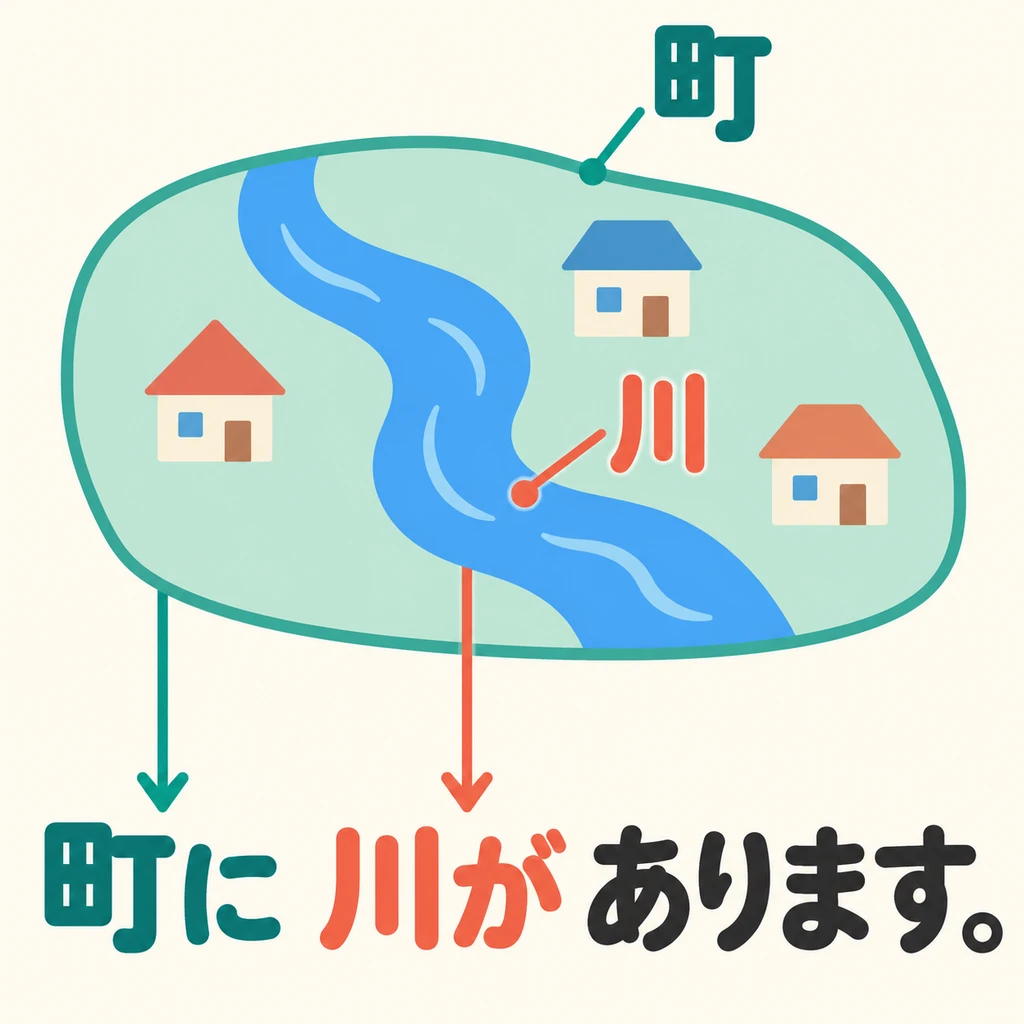
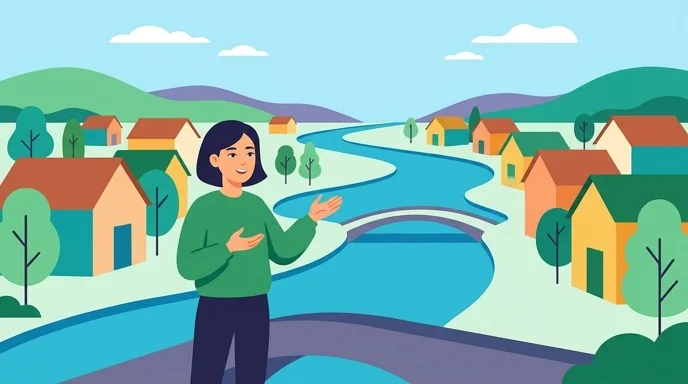
  1. Tell someone what there is in a place. Look at the picture: the green area is the town, 町, and the blue river is inside it.
    Tell someone what there is in a place. Look at the picture: the green area is the town, 町, and the blue river is inside it.

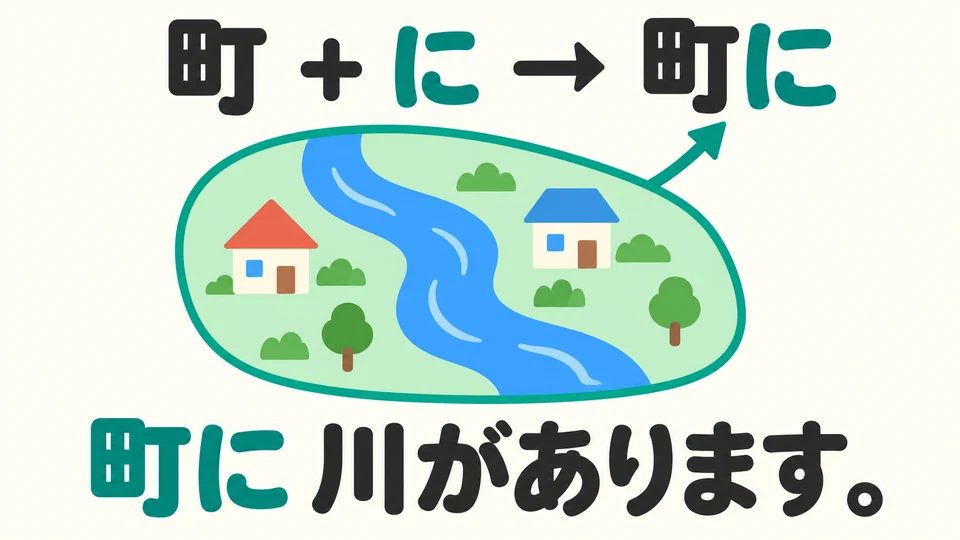
  2. Add 「に」 after the place: 町に. It marks where something exists, telling the listener which area you mean first.
    Add 「に」 after the place: 町に. It marks where something exists, telling the listener which area you mean first.

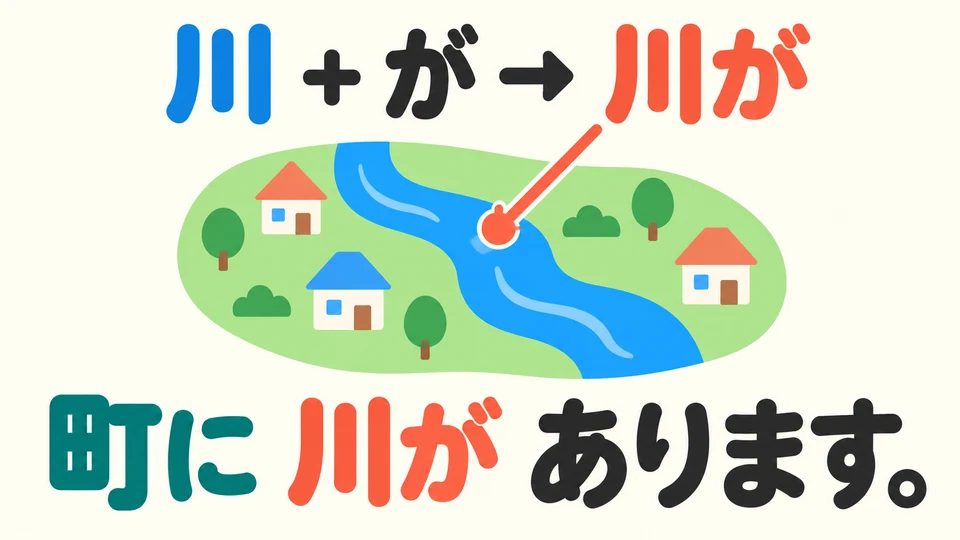
  3. Add 「が」 after the thing: 川が. The thing in the picture is a river. Attach the appropriate particle to the place and to the thing.
    Add 「が」 after the thing: 川が. The thing in the picture is a river. Attach the appropriate particle to the place and to the thing.

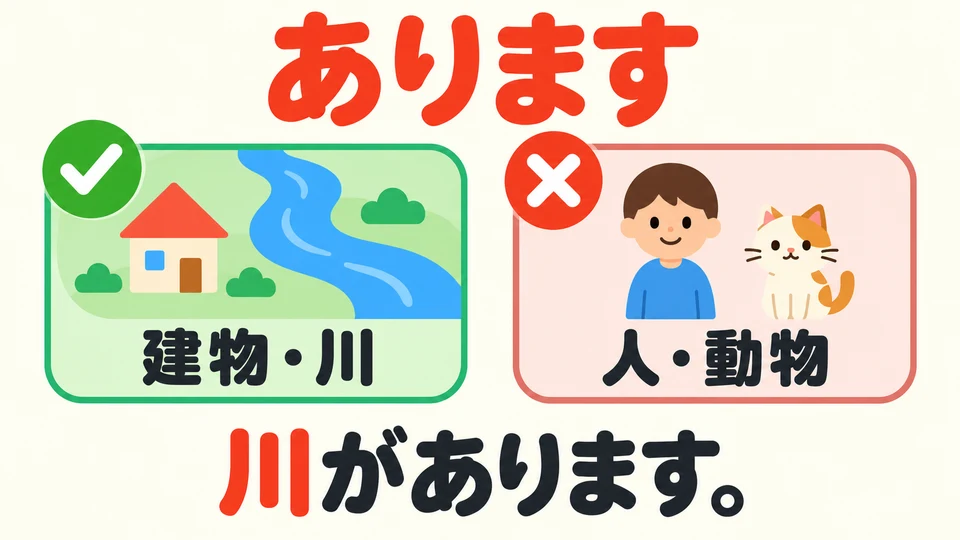
  4. 「あります」 means that something is there or exists. Here it is used for buildings, rivers, and similar things, rather than people or animals.
    「あります」 means that something is there or exists. Here it is used for buildings, rivers, and similar things, rather than people or animals.

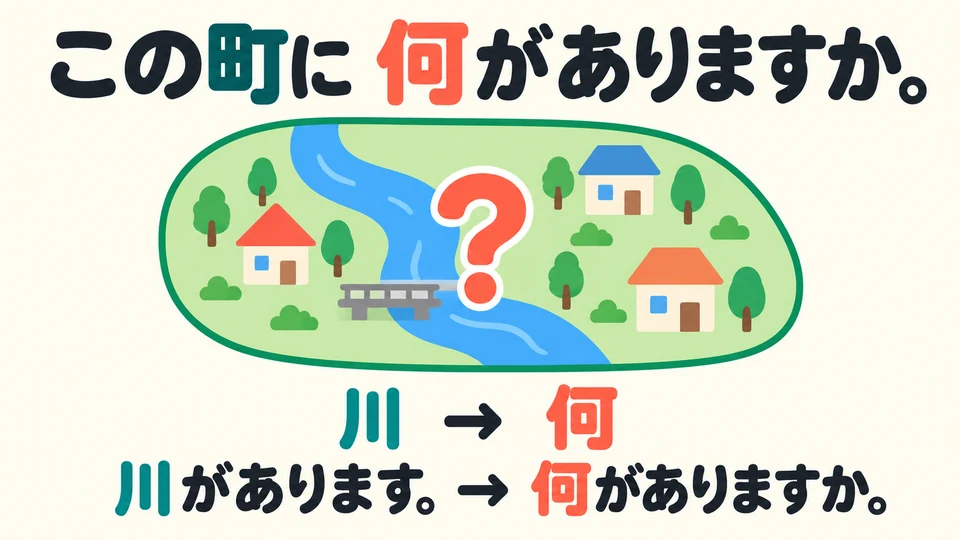
  5. If you do not know what is there, ask 「この町に何がありますか」. Replace the name of the thing with 「何」.
    If you do not know what is there, ask 「この町に何がありますか」. Replace the name of the thing with 「何」.

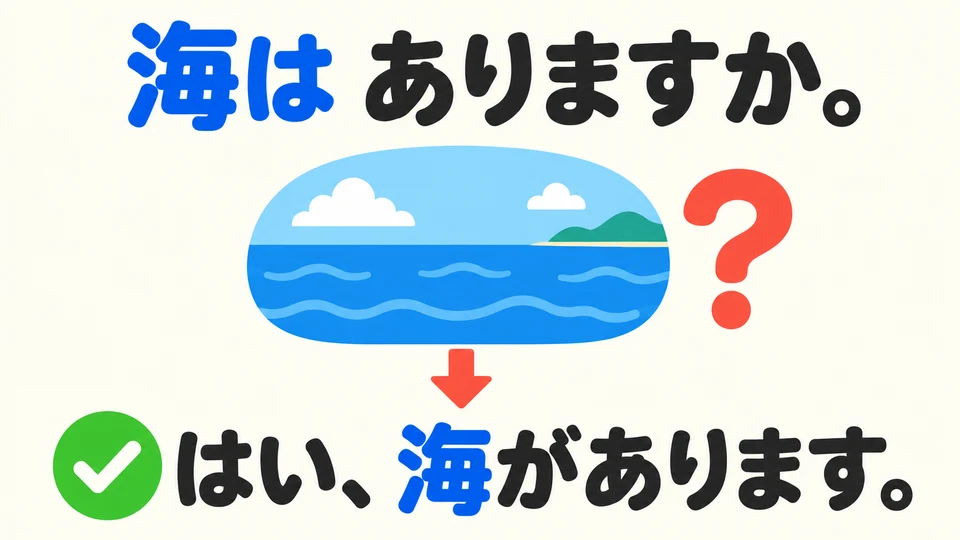
  6. To check whether there is a sea, ask 「海はありますか」. You have already named the thing you are asking about, so you are no longer asking what is there.
    To check whether there is a sea, ask 「海はありますか」. You have already named the thing you are asking about, so you are no longer asking what is there.

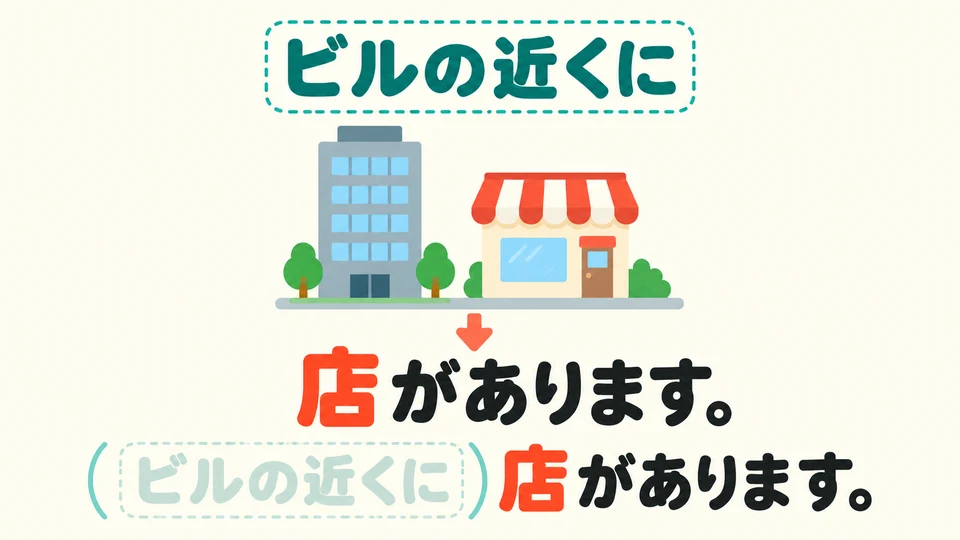
  7. You can omit the place once it is clear. In the answer 「店があります」, the place is still near the building mentioned earlier.
    You can omit the place once it is clear. In the answer 「店があります」, the place is still near the building mentioned earlier.

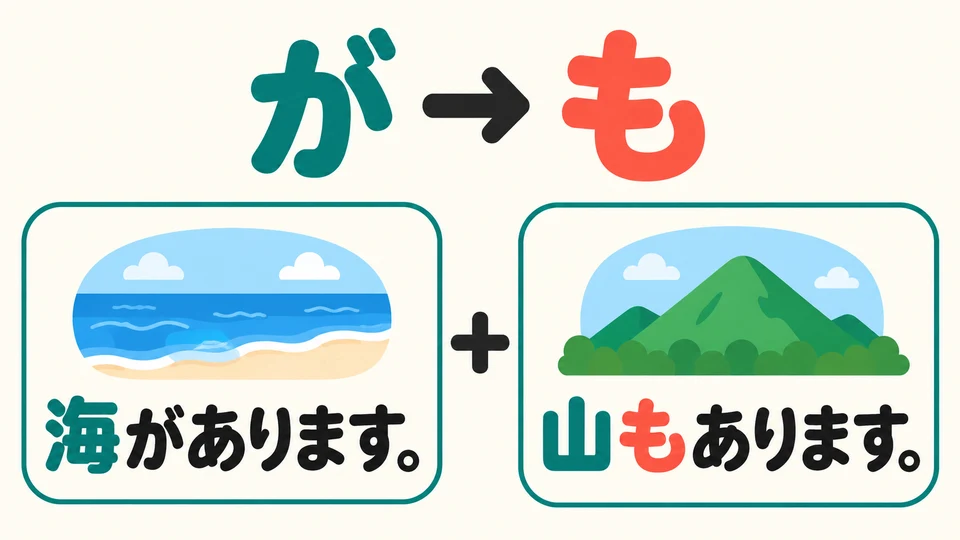
  8. To add another thing, replace 「が」 with 「も」. There is a sea, and there are mountains too: 山もあります.
    To add another thing, replace 「が」 with 「も」. There is a sea, and there are mountains too: 山もあります.

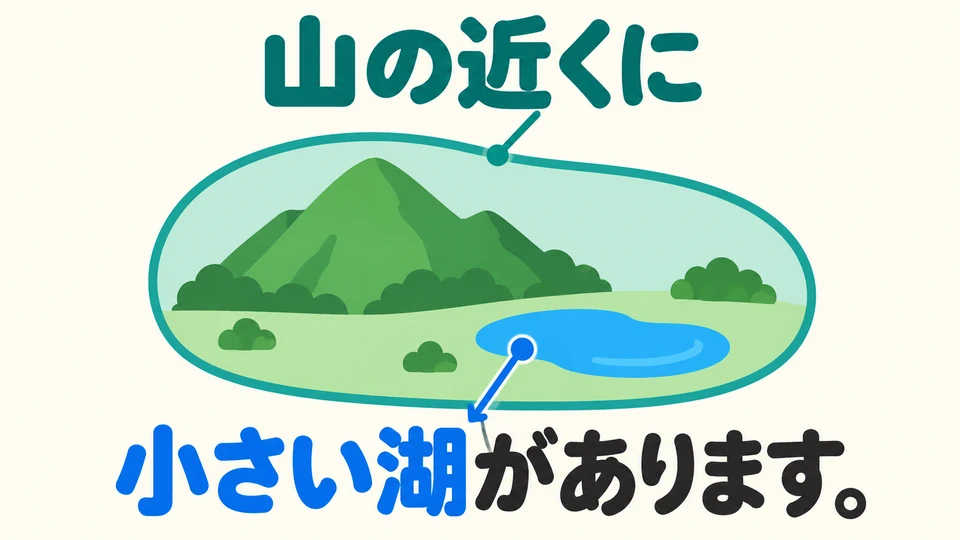
  9. You can make the place more specific: 山の近くに. Follow it with 「小さい湖があります」 to say there is a small lake near the mountain.

    You can make the place more specific: 山の近くに. Follow it with 「小さい湖があります」 to say there is a small lake near the mountain.

Example sentences

  • 浅草あさくさasakusaにni浅草せんそうsensou寺じjiがgaありますarimasu

    There is Senso-ji Temple in Asakusa.

  • そしてsoshiteスカイツリー

In a conversation

  • A
    この町まちに何なにがありますか。か

    A: What is there in this town?

  • B
    お寺おてらとかスーパーすーぱーとかが

Check yourself

  1. Level 1 · Recognise

    Which sentence is correct?

  2. Level 1 · Recognise

    Listen and choose the meaning

  3. Level 2 · Build

    Put the words in order

    There are temples in Kyoto.

  4. Level 3 · Use

    What goes in the blank?

    この町 川があります。

    There is a river in this town.

More grammar in this theme

  • 場所に〜がありますsomething exists in a place
Keep practising

Test your Japanese vocabulary12 adaptive questions, freeCheck your pronunciationRead aloud and get a scorePractise verb forms10-question conjugation quizSee the whole courseGrammar, vocabulary and quizzes by theme
すかいつりー
sukaitsurii
もmo
ありますarimasu

And there is also the Skytree.

あります
よ。よ

B: There are temples, supermarkets, and so on.

  • A
    海うみはわありますか。か

    A: Is there a sea?

  • B
    はい、はい海うみがあります。あります山やまもあります。あります

    B: Yes, there is a sea. There are also mountains.

  • A
    教会きょうかいはわありますか。か

    A: Are there any churches?

  • B
    少しすこしあります。ありますお寺おてらもあります。あります

    B: There are a few. There are also temples.

  • A
    川かわはわありますか。か

    A: Is there a river?

  • B
    はい、はい町まちに川かわがあります。あります

    B: Yes, there is a river in the town.

  • A
    湖みずうみはわありますか。か

    A: Is there a lake?

  • B
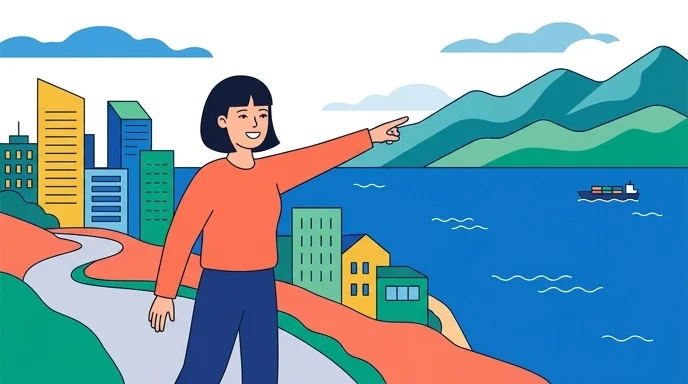
    山やまの近くちかくに小さいちいさい湖みずうみがあります。あります

    B: There is a small lake near the mountains.

  • A
    ビルびるの近くちかくに何なにがありますか。か

    A: What is there near the building?

  • B
    店みせがあります。ありますスーパーすーぱーもあります。あります

    B: There are shops. There are also supermarkets.

〜の北・南・東・西directions relative to a country
〜から〜までどのくらいask travel time or distance
乗り物で行きますmeans of transport
〜は(い/な形容詞)ですdescribe a place with adjectives
〜は〜な町ですdescribe a town with an adjective
〜の季節・月は〜です/〜は一年中〜ですdescribe seasonal climate
〜はどうですかask for an impression
味のことばtaste words: spicy, sweet, sour, bitter
Previous〜は〜な町です
Next〜の季節・月は〜です/〜は一年中〜です