JPEdLab iconJPEdLab
Save history

Create an account and play

Explore first, then save your progress whenever you are ready. No email address is required.

Start free
  1. Japanese grammar
  2. JLPT N5 grammar
  3. 〜の北・南・東・西

〜の北・南・東・西~ no kita / minami / higashi / nishi

No kita / minami / higashi / nishi (〜の北・南・東・西) means “directions relative to a country”.

私わたしwatashiのno国くにkuniはわwa日本にっぽんnipponのno北きたkitaですdesu

My country is north of Japan.

directions relative to a country

In the course›

How it works

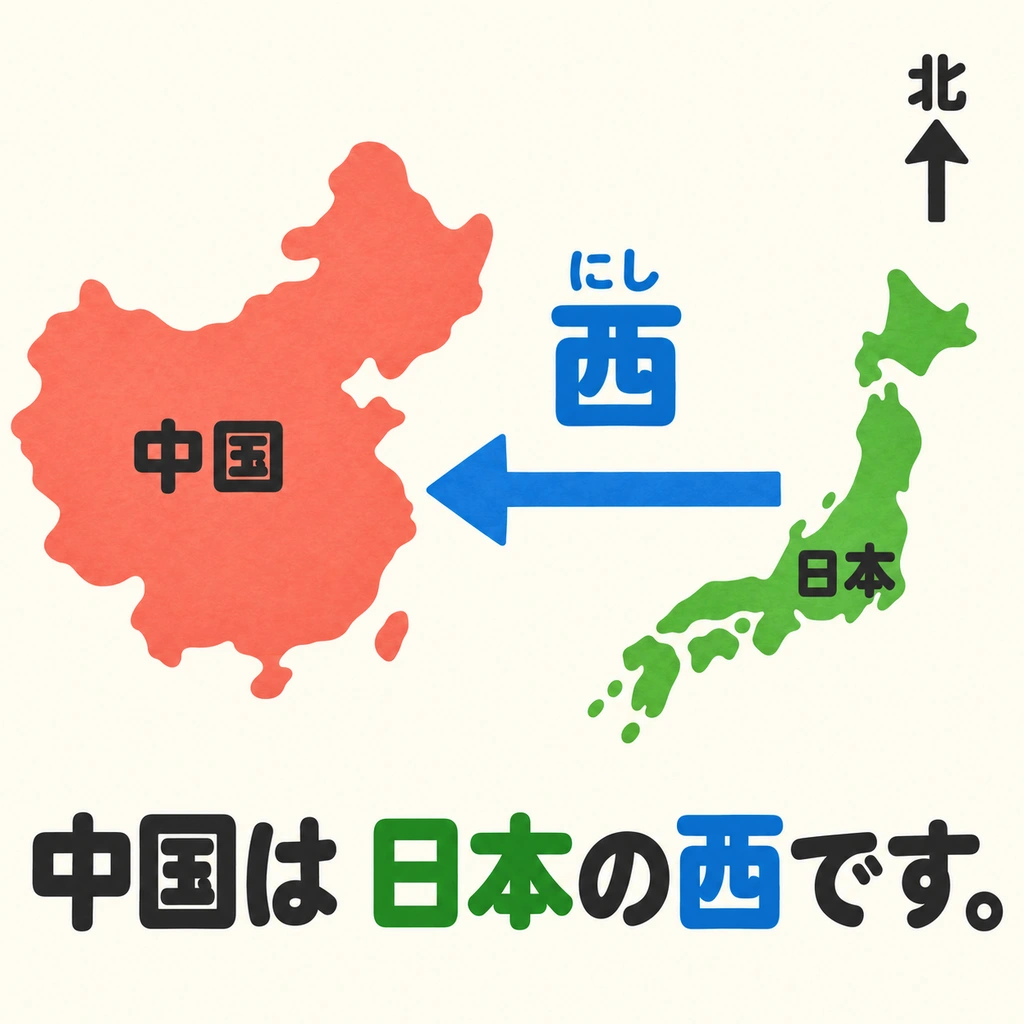
  1. To describe where a country is, you can use another country as a reference. Look at the picture: which side of Japan is China on?
    To describe where a country is, you can use another country as a reference. Look at the picture: which side of Japan is China on?

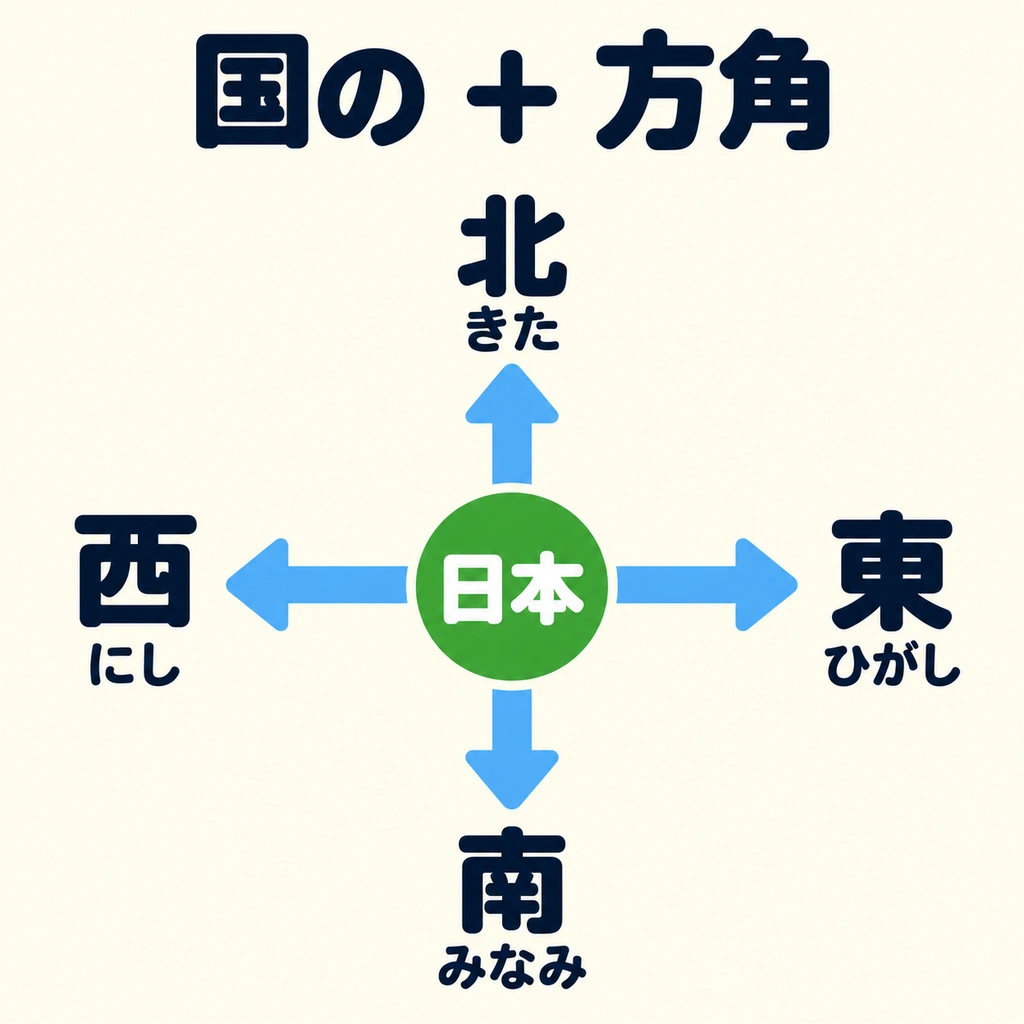
  2. In the picture, north is up, south is down, west is left, and east is right. Use Japan in the center as your reference and follow the arrows to read the directions.
    In the picture, north is up, south is down, west is left, and east is right. Use Japan in the center as your reference and follow the arrows to read the directions.

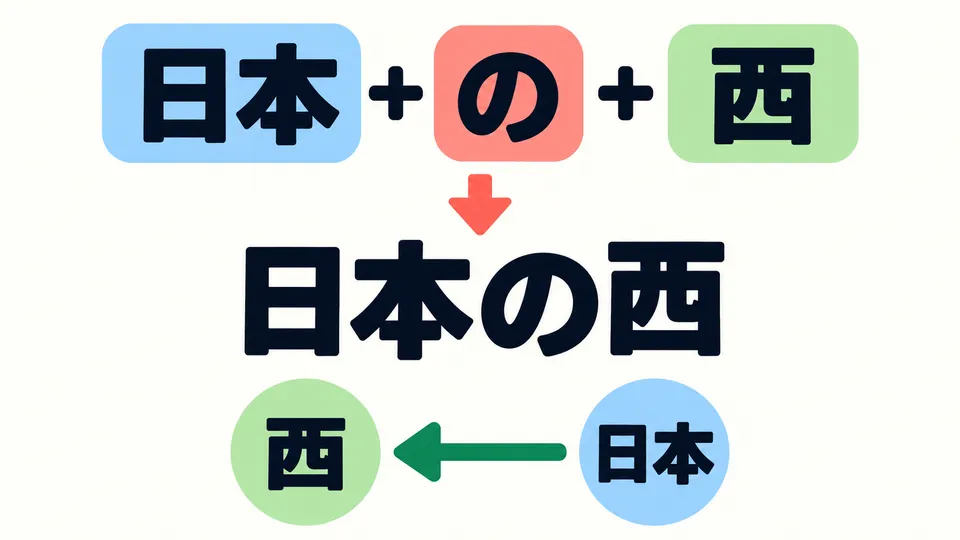
  3. In 「日本の西」, name the reference country first, then link it to the direction with 「の」. It means “west of Japan.”
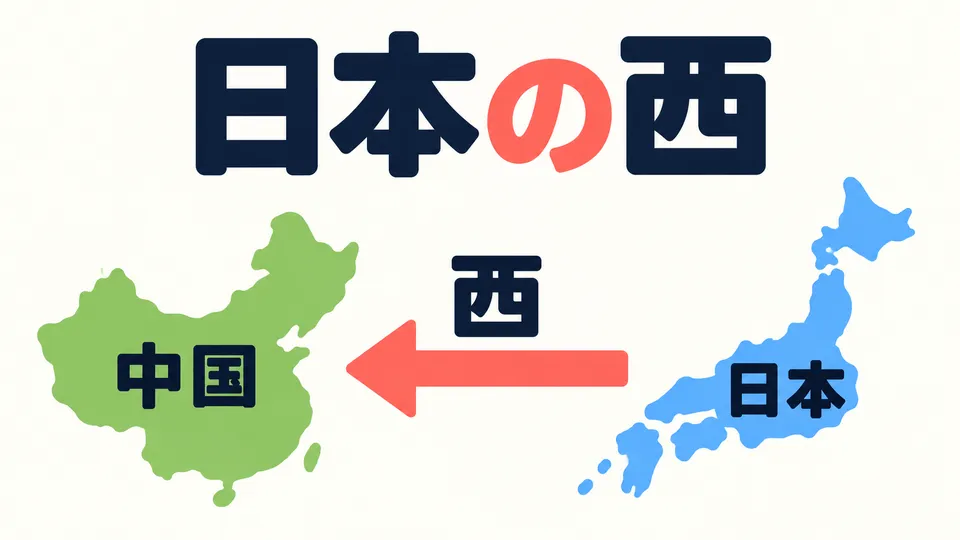
    In 「日本の西」, name the reference country first, then link it to the direction with 「の」. It means “west of Japan.”

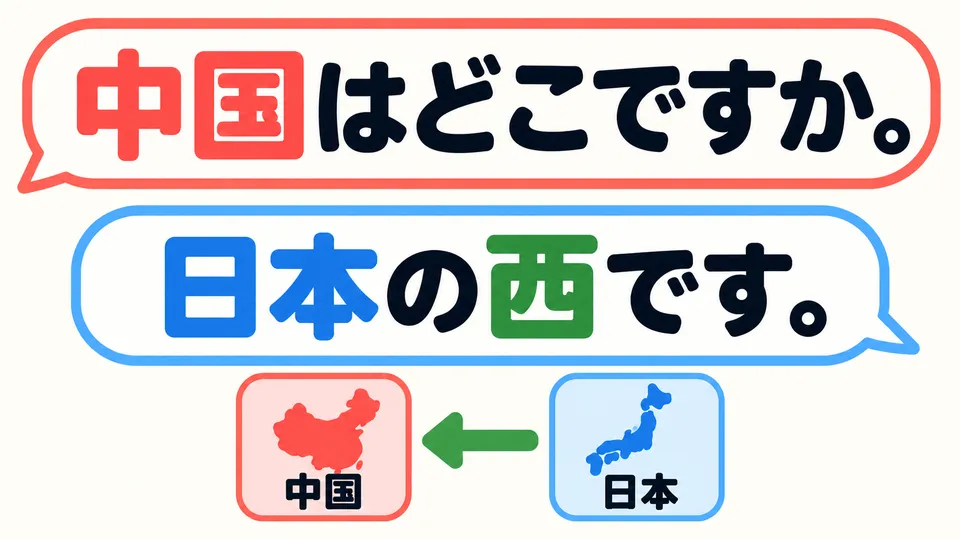
  4. China is west of Japan in the picture. Here, 「日本の西」 describes a relative position; it does not mean that the place belongs to Japan.
    China is west of Japan in the picture. Here, 「日本の西」 describes a relative position; it does not mean that the place belongs to Japan.

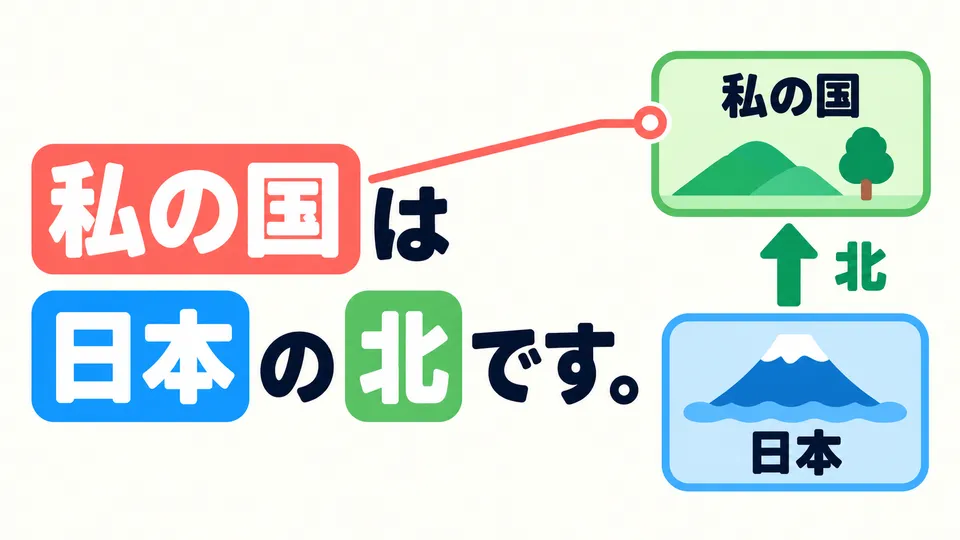
  5. 「私の国は日本の北です」 introduces where your country is. The country you are introducing comes before 「は」.
    「私の国は日本の北です」 introduces where your country is. The country you are introducing comes before 「は」.

  6. If someone asks 「中国はどこですか」, you can answer 「日本の西です」, using a reference country to explain the location.
    If someone asks 「中国はどこですか」, you can answer 「日本の西です」, using a reference country to explain the location.

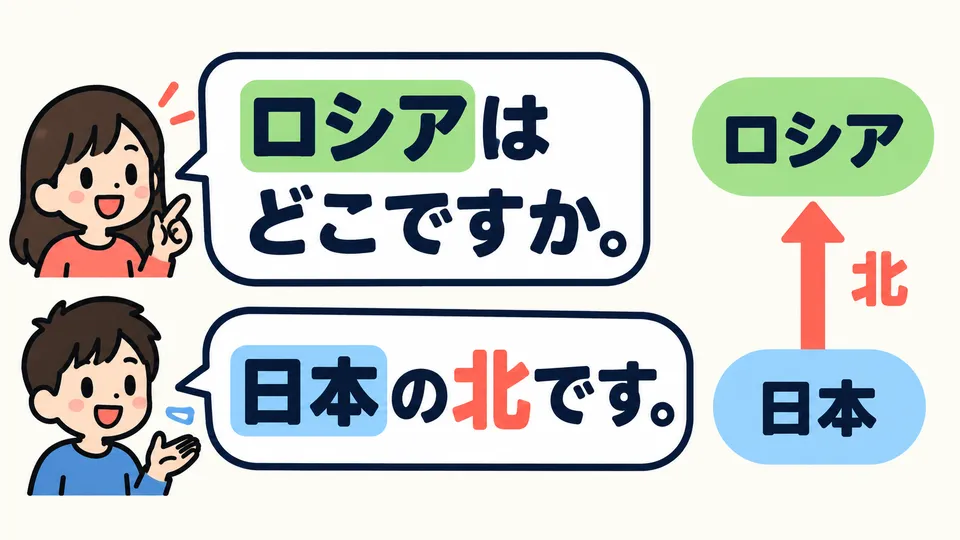
  7. For 「ロシアはどこですか」, answer 「日本の北です」. In the answer, you can leave out the country already mentioned.
    For 「ロシアはどこですか」, answer 「日本の北です」. In the answer, you can leave out the country already mentioned.

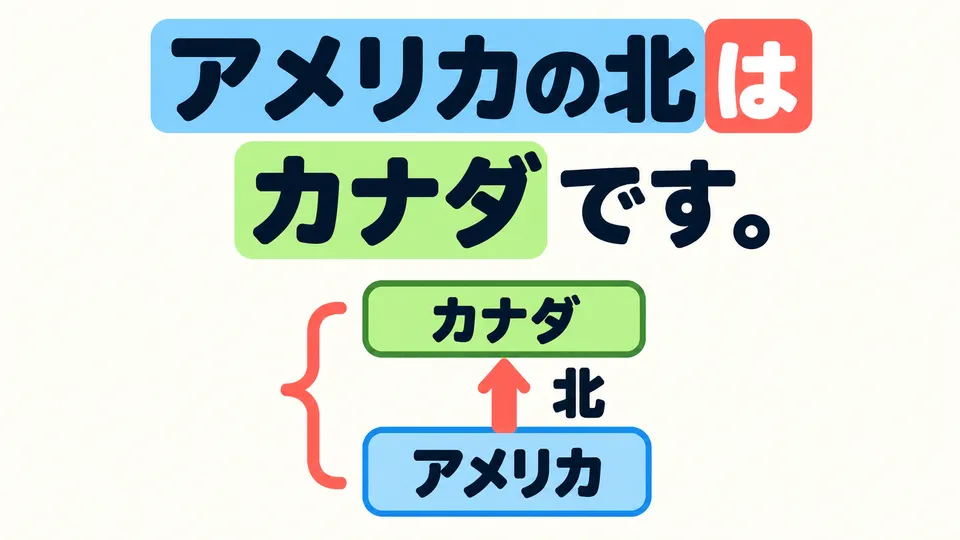
  8. 「アメリカの北はカナダです」 first brings up the area north of the United States, then says that the country there is Canada.

Example sentences

  • 私わたしwatashiのno国くにkuniはわwa日本にっぽんnipponのno北きたkitaですdesu

    My country is north of Japan.

  • アメリカあめりかamerika

In a conversation

  • A
    中国ちゅうごくはわどこですか。か

    A: Where is China?

  • B
    日本にっぽんの西にしです。です

    B: It's west of Japan.

  • A
    ロシアろしあ

Check yourself

  1. Level 1 · Recognise

    Which sentence is correct?

  2. Level 1 · Recognise

    Listen and choose the meaning

  3. Level 2 · Build

    Put the words in order

    My country is north of Japan.

  4. Level 3 · Use

    What goes in the blank?

    ニューヨークはロンドン です。

    New York is west of London.

More grammar in this theme

  • 〜の北・南・東・西directions relative to a country

More JLPT N5 grammar

Keep practising

Test your Japanese vocabulary12 adaptive questions, freeCheck your pronunciationRead aloud and get a scorePractise verb forms10-question conjugation quizSee the whole courseGrammar, vocabulary and quizzes by theme

「アメリカの北はカナダです」 first brings up the area north of the United States, then says that the country there is Canada.

の
no
北きたkita
はわwa
カナダかなだkanada
です。ですdesu

Canada is north of the United States.

はわ
どこ
です
か。か

A: Where is Russia?

  • B
    日本にっぽんの北きたです。です

    B: It's north of Japan.

    • A
      あなたの国くにはわどこですか。か

      A: Where is your country?

    • B
      わたしの国くにはわロシアろしあです。です

      B: My country is Russia.

    • A
      そうですか。か

      A: I see.

    Beginner 1
    My Hometown
    More quizzesOpen this lesson’s quizzes in the course
    〜から〜までどのくらいask travel time or distance
    乗り物で行きますmeans of transport
    〜は(い/な形容詞)ですdescribe a place with adjectives
    〜は〜な町ですdescribe a town with an adjective
    場所に〜がありますsomething exists in a place
    〜の季節・月は〜です/〜は一年中〜ですdescribe seasonal climate
    〜はどうですかask for an impression
    味のことばtaste words: spicy, sweet, sour, bitter
    Next〜から〜までどのくらい
    See all 111
    〜時から〜時まで〜ますdaily routine and time span
    〜や〜などexamples among several items
    〜時にtime when action happens
    何も〜ません/どこへも〜ませんtotal negation: nothing, nowhere
    〜ました/〜ませんでしたpast affirmative and negative
    どこかへ行きましたかask if someone went somewhere
    それからthen; next action
    〜かったです/〜くなかったですpast adjective impression