JPEdLab iconJPEdLab
Save history

Create an account and play

Explore first, then save your progress whenever you are ready. No email address is required.

Start free
  1. Japanese grammar
  2. JLPT N5 grammar
  3. 乗り物で行きます

乗り物で行きますnorimono de ikimasu

Norimono de ikimasu (乗り物で行きます) means “means of transport”.

バスばすbasuでde行きます。いきますikimasu

I'll go by bus.

「バスで行きます」 uses で to say how you travel.

In the course›

How it works

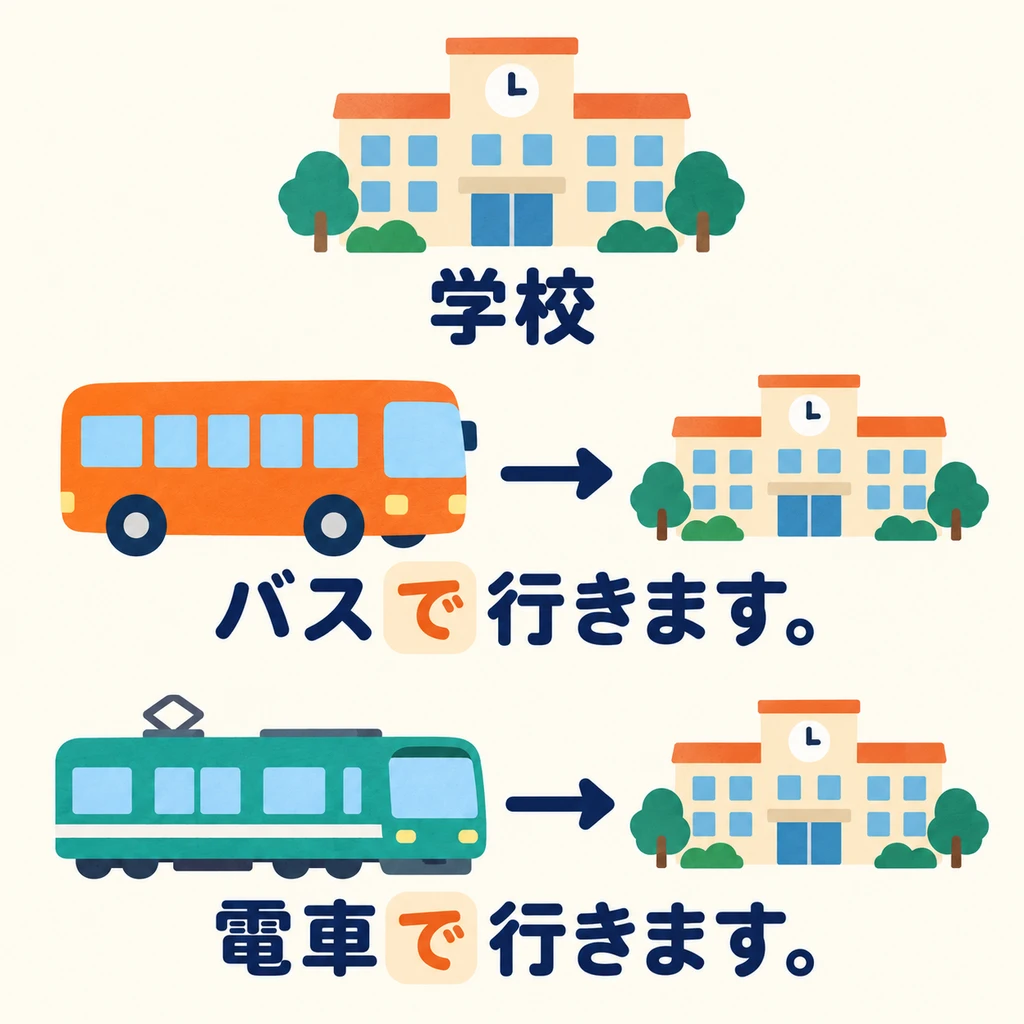
  1. Look at the picture: both people go to the same school, one by bus and one by train. 「で」 tells us how they get there.
    Look at the picture: both people go to the same school, one by bus and one by train. 「で」 tells us how they get there.

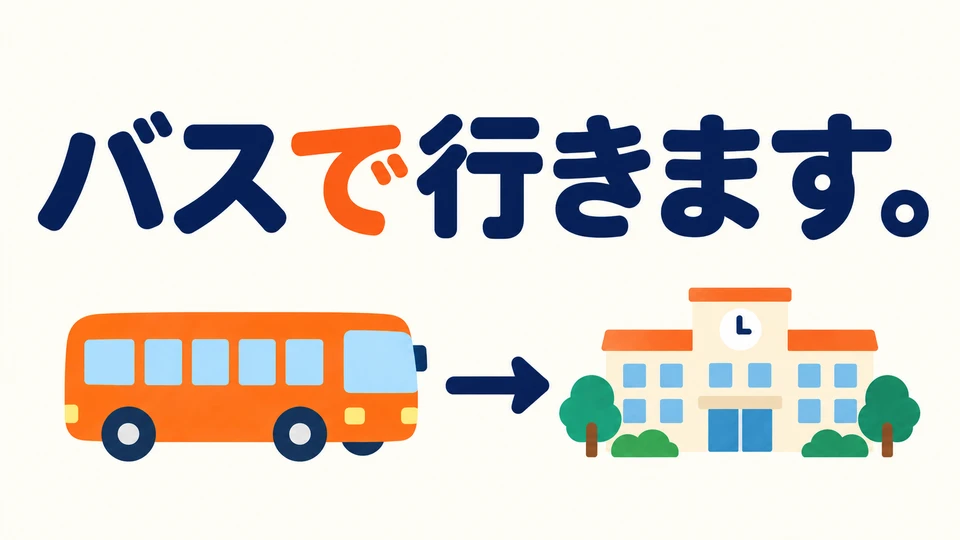
  2. Add 「で」 after the name of a vehicle: バスで行きます。 means “I go by bus.”
    Add 「で」 after the name of a vehicle: バスで行きます。 means “I go by bus.”

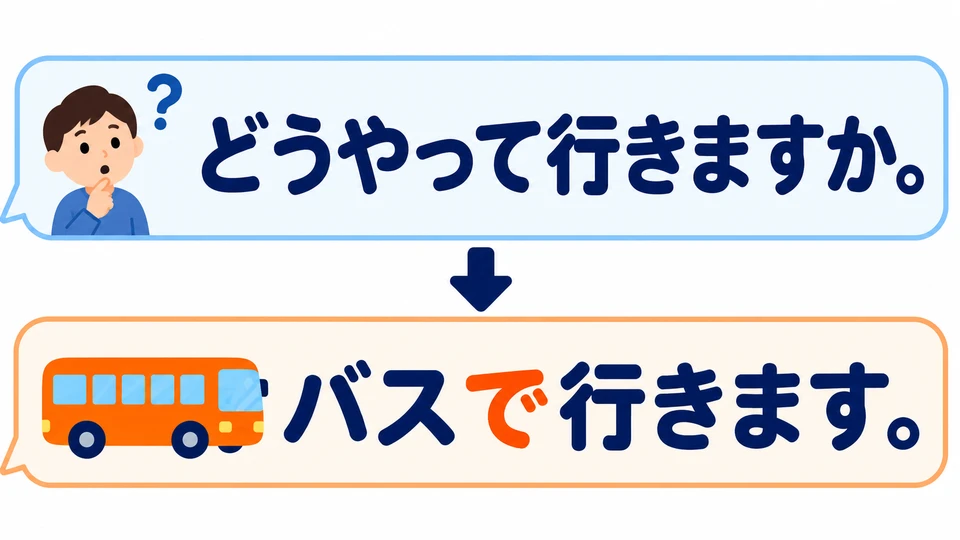
  3. To ask how someone gets there, say 「どうやって行きますか」. Answer with the means of transport.
    To ask how someone gets there, say 「どうやって行きますか」. Answer with the means of transport.

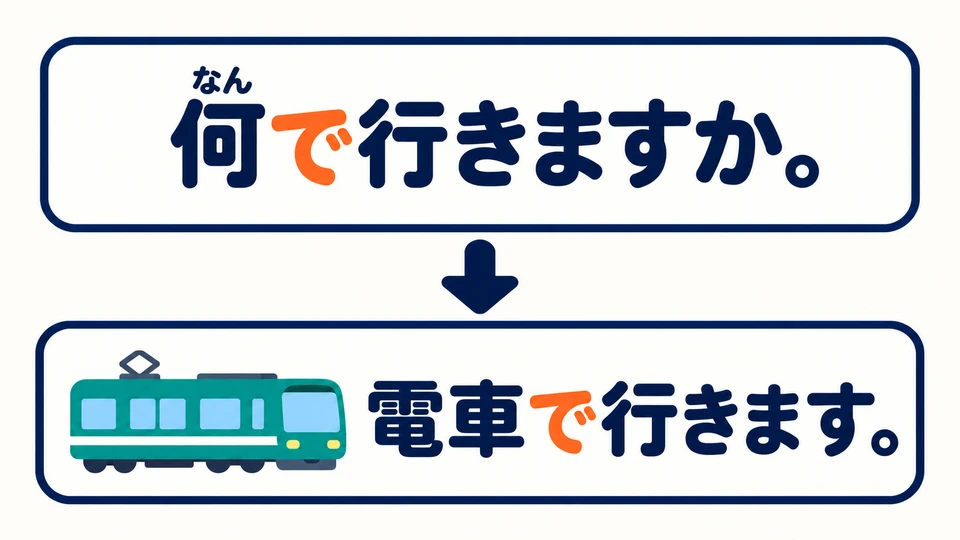
  4. 「何で行きますか」 asks what transport you take. Read 「何」 as なん. You can answer 電車で行きます。
    「何で行きますか」 asks what transport you take. Read 「何」 as なん. You can answer 電車で行きます。

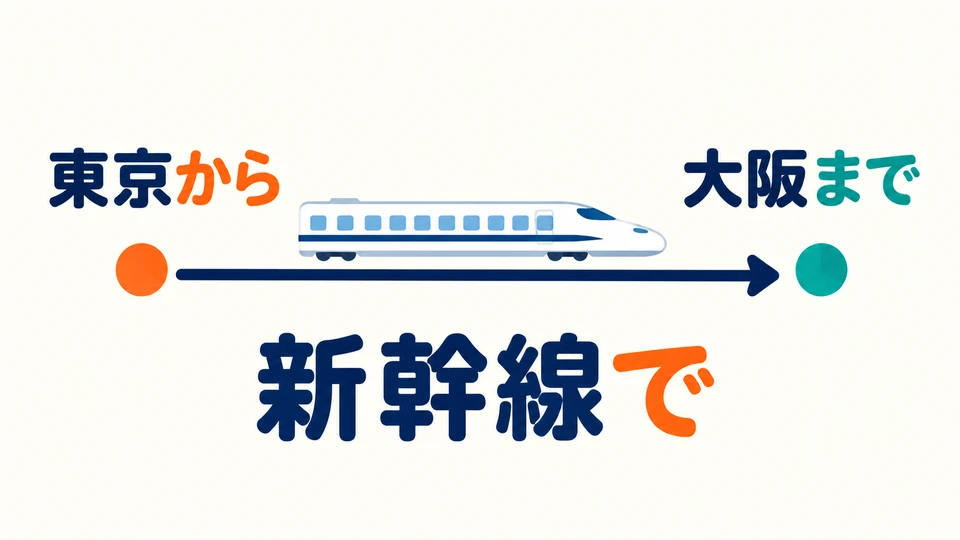
  5. 「東京から大阪まで」 gives the starting point and destination; 「新幹線で」 gives the means of transport.
    「東京から大阪まで」 gives the starting point and destination; 「新幹線で」 gives the means of transport.

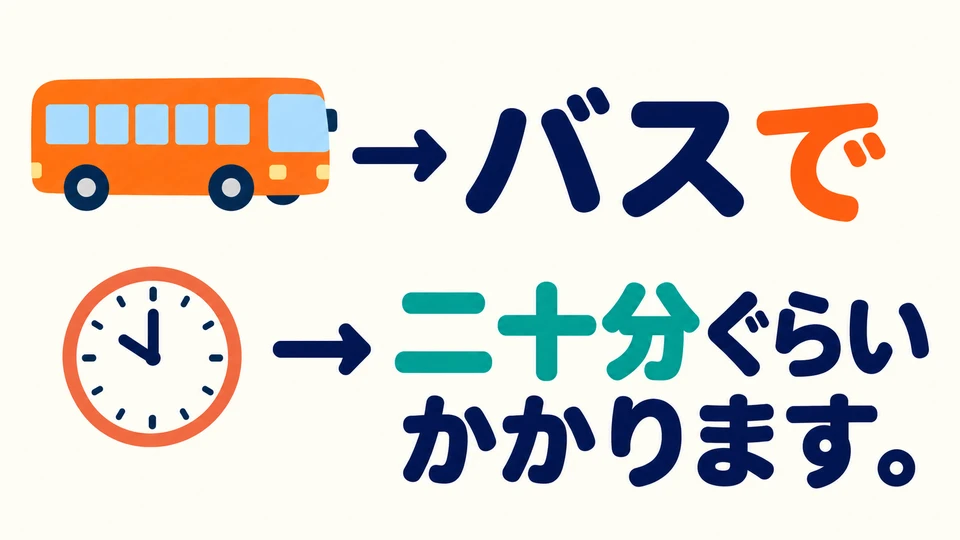
  6. In 「バスで二十分ぐらいかかります」, で marks the means of transport, while 二十分 gives the time needed.
    In 「バスで二十分ぐらいかかります」, で marks the means of transport, while 二十分 gives the time needed.

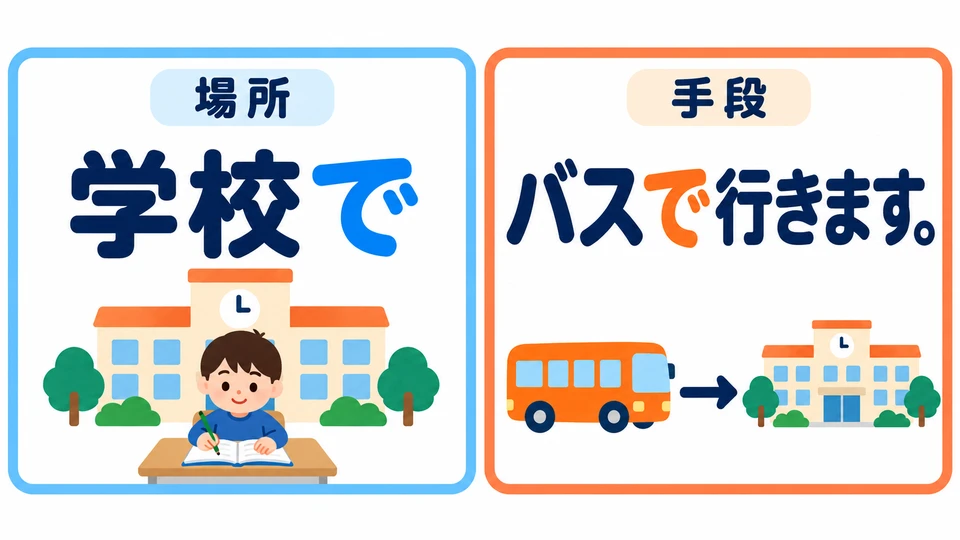
  7. Notice: 「学校で」 indicates where an action happens; 「バスで行きます」 indicates the means of travel.
    Notice: 「学校で」 indicates where an action happens; 「バスで行きます」 indicates the means of travel.

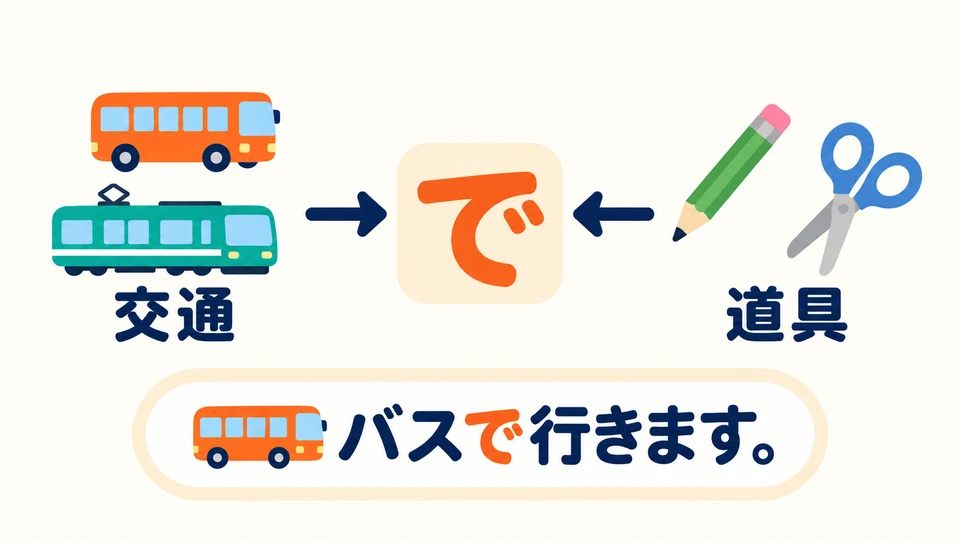
  8. 「で」 can also indicate a tool you use. The key idea is what you use to do something. In this lesson, we focus on transport.

    「で」 can also indicate a tool you use. The key idea is what you use to do something. In this lesson, we focus on transport.

Example sentences

  • バスばすbasuでde行きます。いきますikimasu

    I'll go by bus.

In a conversation

  • A
    大阪おおさかまでどうやって行きますいきますか。か

    A: How are you going to get to Osaka?

  • B
    新幹線しんかんせんで行きます。いきます

    B: I'm going by Shinkansen.

  • A

Check yourself

  1. Level 1 · Recognise

    Which sentence is correct?

  2. Level 1 · Recognise

    Listen and choose the meaning

  3. Level 2 · Build

    Put the words in order

    I'll go by bus.

  4. Level 3 · Use

    What goes in the blank?

    公園へ歩い 行きます。

    I walk to the park.

More grammar in this theme

  • 乗り物で行きますmeans of transport

More JLPT N5 grammar

Keep practising

Test your Japanese vocabulary12 adaptive questions, freeCheck your pronunciationRead aloud and get a scorePractise verb forms10-question conjugation quizSee the whole courseGrammar, vocabulary and quizzes by theme
東京とうきょう
から
大阪おおさか
まで、まで
何なん
で
行きますいきます
か。か

A: How will you get from Tokyo to Osaka?

  • B
    電車でんしゃで行きます。いきます

    B: I'm going by train.

  • A
    いくらかかりますか。か

    A: How much does it cost?

  • B
    一万いちまん円えんぐらいです。です

    B: It's about 10,000 yen.

    • A
      学校がっこうまでどうやって行きますいきますか。か

      A: How do you get to school?

    • B
      バスばすで行きます。いきます

      B: I go by bus.

    • A
      家いえから学校がっこうまでどのくらいかかりますか。か

      A: How long does it take from your house to school?

    • B
      バスばすで二十にじゅう分ふんぐらいかかります。かかります

      B: It takes about twenty minutes by bus.

    • A
      朝、あさ何時なんじに家いえを出ますでますか。か

      A: What time do you leave home in the morning?

    • B
      7しち時じ半はんに出ます。でます

      B: I leave at 7:30.

    • A
      会社かいしゃまで何なんで行きますいきますか。か

      A: How do you get to work?

    • B
      電車でんしゃで行きます。いきますときどきバスばすでも行きます。いきます

      B: I go by train. Sometimes I also go by bus.

    • A
      会社かいしゃまでどのくらいですか。か

      A: How long does it take to get to work?

    • B
      電車でんしゃで三十さんじゅう分ふんぐらいです。です

      B: It's about thirty minutes by train.

    Beginner 1
    My Hometown
    More quizzesOpen this lesson’s quizzes in the course
    〜の北・南・東・西directions relative to a country
    〜から〜までどのくらいask travel time or distance
    〜は(い/な形容詞)ですdescribe a place with adjectives
    〜は〜な町ですdescribe a town with an adjective
    場所に〜がありますsomething exists in a place
    〜の季節・月は〜です/〜は一年中〜ですdescribe seasonal climate
    〜はどうですかask for an impression
    味のことばtaste words: spicy, sweet, sour, bitter
    Previous〜から〜までどのくらい
    Next〜は(い/な形容詞)です
    See all 111
    〜時から〜時まで〜ますdaily routine and time span
    〜や〜などexamples among several items
    〜時にtime when action happens
    何も〜ません/どこへも〜ませんtotal negation: nothing, nowhere
    〜ました/〜ませんでしたpast affirmative and negative
    どこかへ行きましたかask if someone went somewhere
    それからthen; next action
    〜かったです/〜くなかったですpast adjective impression