
Japanese grammar · ≈ JLPT N5 · Beginner 1
〜時に~ ji ni
time when action happens
Use 「〜時に」 after a specific time to say when an action happens.
- Pattern
- 〜時に
- Romaji
- ~ ji ni
- JLPT (approx.)
- ≈ N5
- Course level
- Beginner 1
- Theme
- Daily Life
How it works
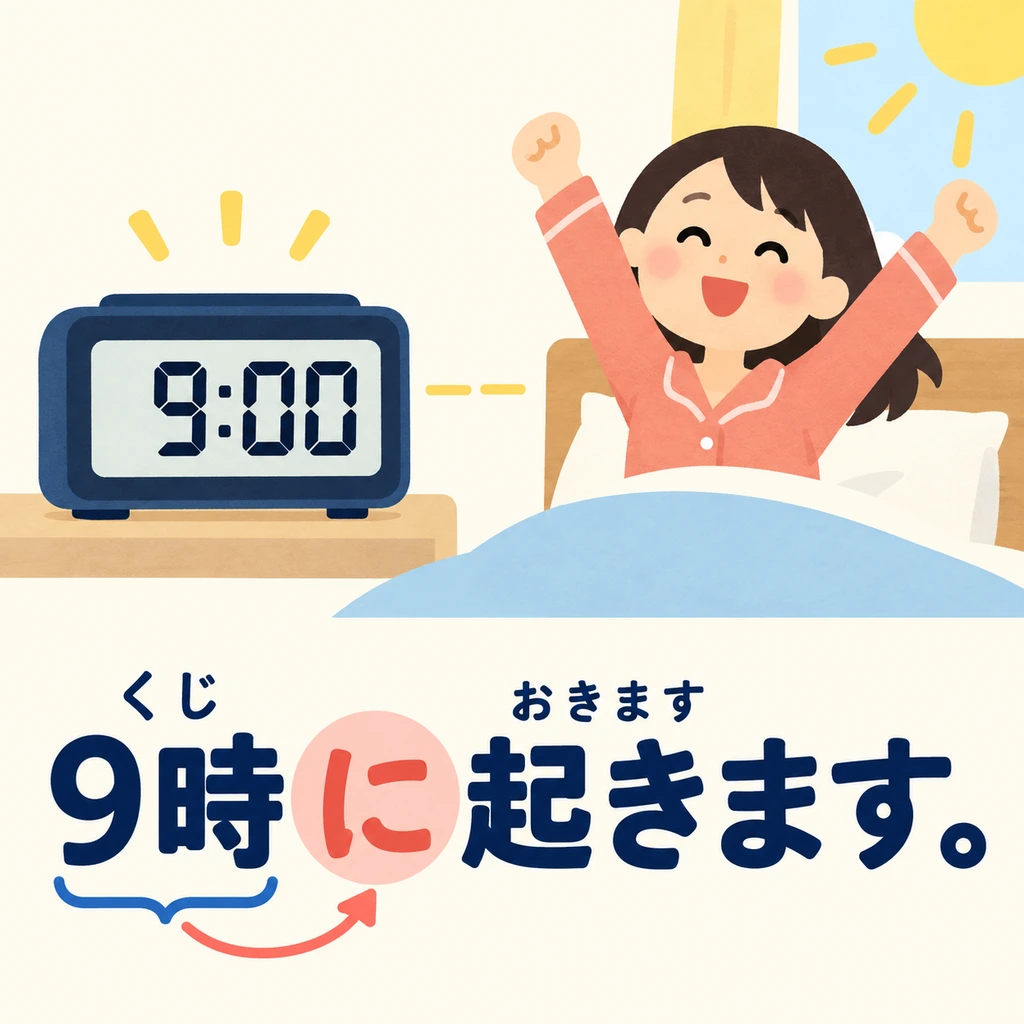
Look at the picture: getting up at nine. 「9時に」 tells us what time the action of getting up happens.
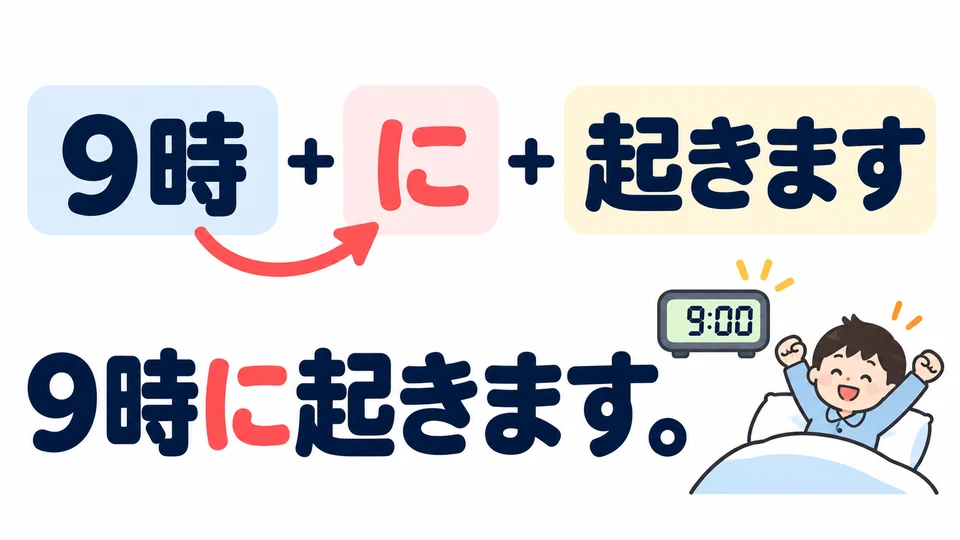
The order is “specific time + に + action.” 「に」 comes right after the time, as in 「9時に起きます」.
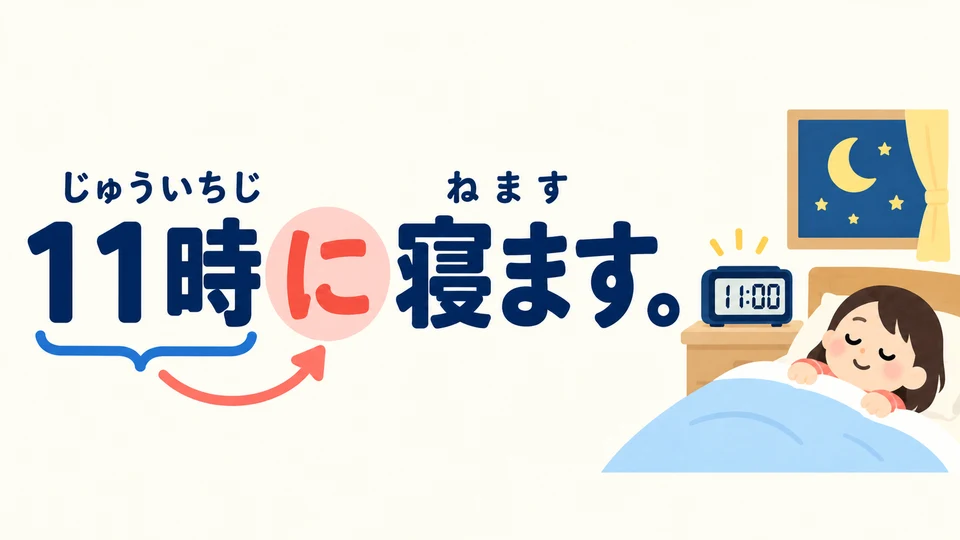
It works the same way for bedtime: 「11時に寝ます」 means going to bed at eleven. Add 「に」 after the time.

To ask what time someone goes to bed, say 「何時に寝ますか」. Here 「何時」 is read 「なんじ」. Answer with a specific time.
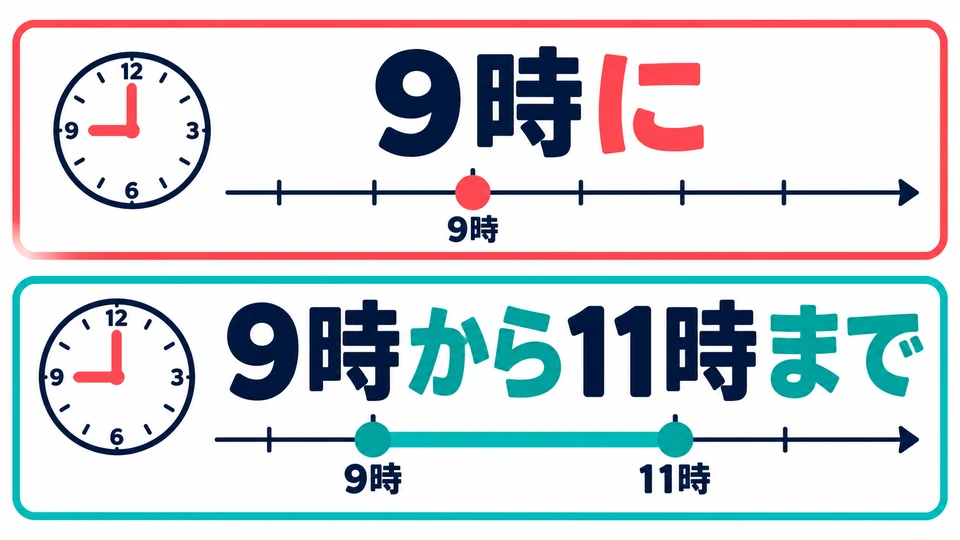
「9時に」 gives the time an action happens; 「から…まで」 gives a time range. First distinguish a point in time from a time range.
Example sentences
- 9ku時jiにni起きますokimasu
I wake up at 9 o'clock.
In a conversation

- Aいつも何時に寝ますか。
A: What time do you usually go to bed?
- B11時に寝ます。
B: I go to bed at 11 o'clock.
- A早いです
Check yourself
Which sentence is correct?
- 毎日、7時に起きます。
- 毎日、7時を起きます
- 毎日、7時を起きますに
- 毎日、7時で起きます
Show answer
Answer: A 毎日、7時に起きます。
Which sentence is correct?
- 11時に寝ます。
- 11時を寝ます
- 11時で寝ます
- 11時に寝ますます
Show answer
Answer: A 11時に寝ます。
Which sentence is correct?
- 7時半に朝ごはんを食べます。
- 7時半を朝ごはんを食べます
- 7時半まで朝ごはんを食べますます
- 7時半で朝ごはんを食べます
Show answer
Answer: A 7時半に朝ごはんを食べます。
More grammar in this theme
- 〜時にtime when action happens