
JPEDLAB iconJPEDLAB
Save history

Create an account and play

Explore first, then save your progress whenever you are ready. No email address is required.

Start free
Read as articleCards
1/8

Look at the picture: getting up at nine. 「9時に」 tells us what time the action of getting up happens.

››

Lesson notes · ≈ JLPT N5 · Beginner 1

〜時に~ ji ni

time when action happens

Use 「〜時に」 after a specific time to say when an action happens.

How it works
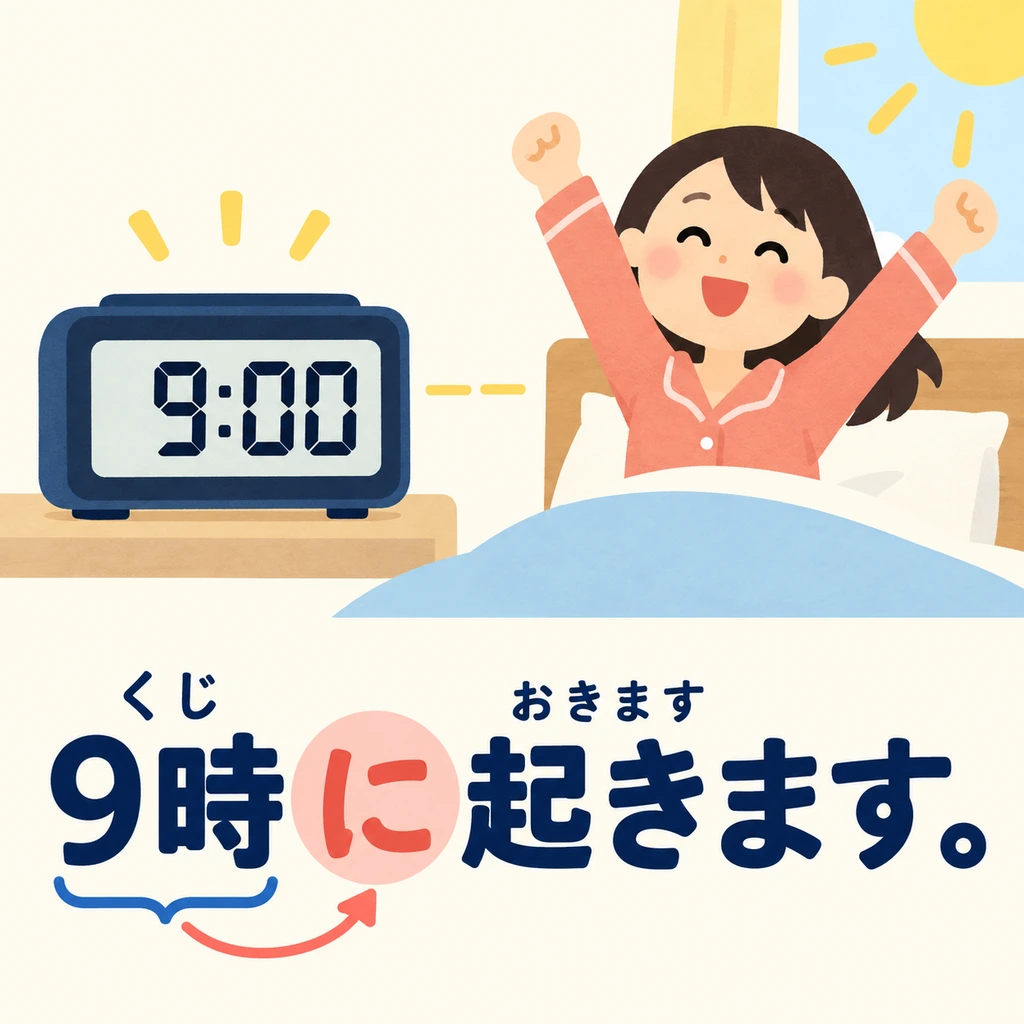
  1. Look at the picture: getting up at nine. 「9時に」 tells us what time the action of getting up happens.
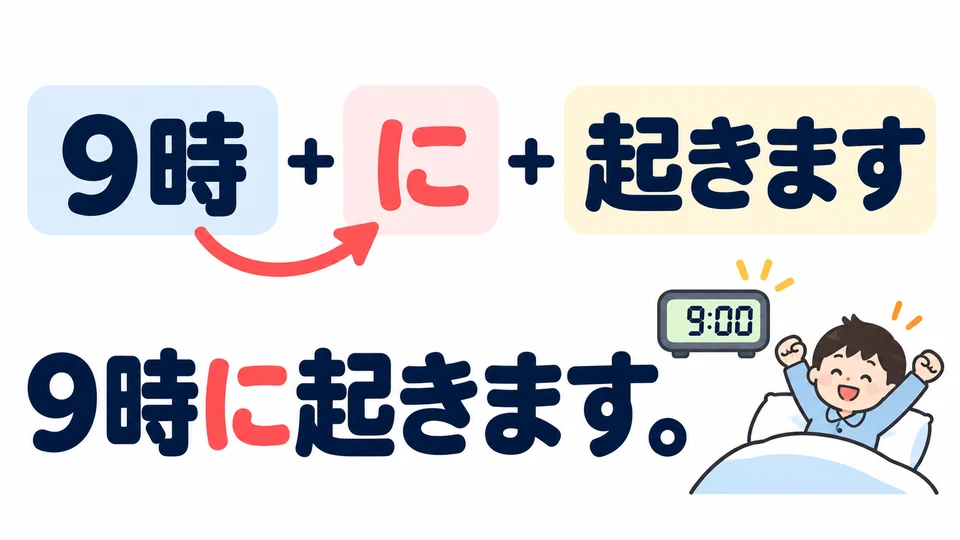
    Look at the picture: getting up at nine. 「9時に」 tells us what time the action of getting up happens.

  2. The order is “specific time + に + action.” 「に」 comes right after the time, as in 「9時に起きます」.
    The order is “specific time + に + action.” 「に」 comes right after the time, as in 「9時に起きます」.

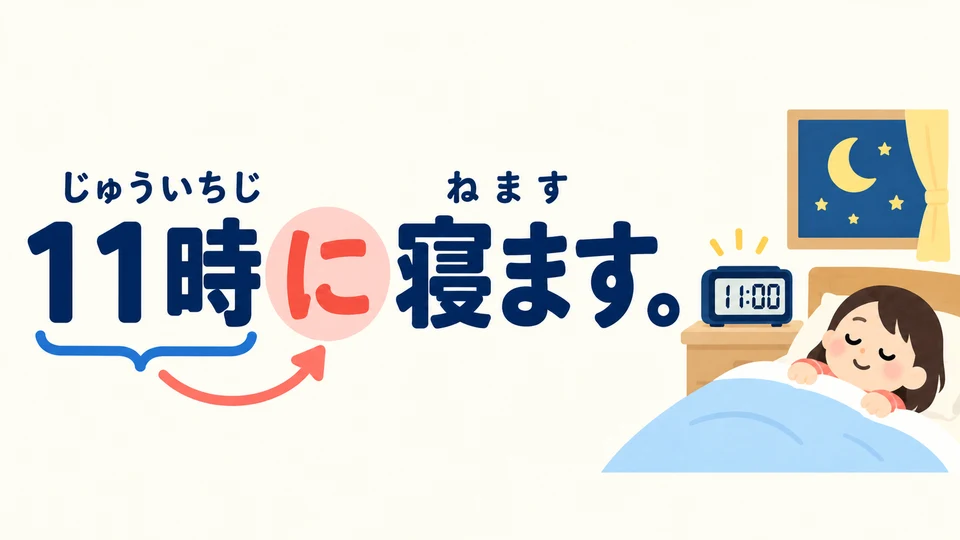
  3. It works the same way for bedtime: 「11時に寝ます」 means going to bed at eleven. Add 「に」 after the time.
    It works the same way for bedtime: 「11時に寝ます」 means going to bed at eleven. Add 「に」 after the time.

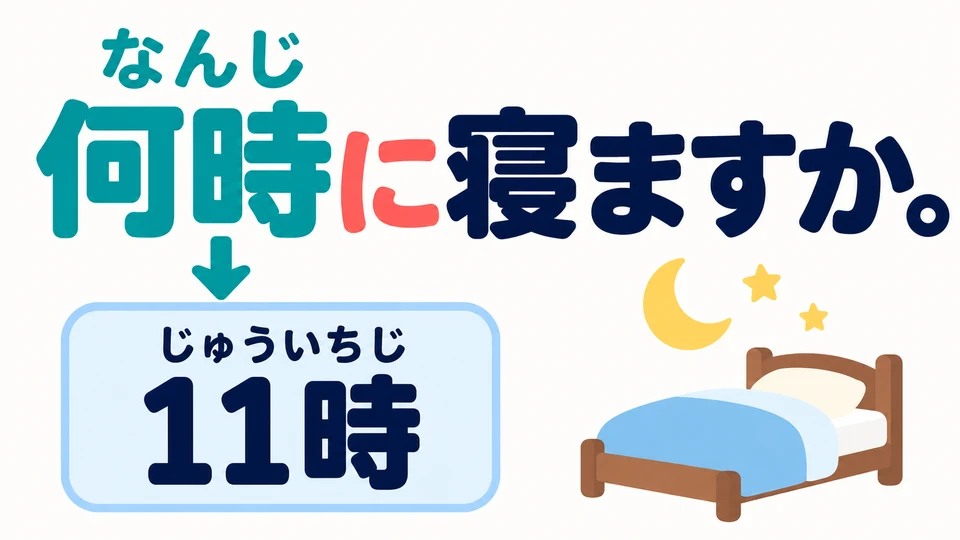
  4. To ask what time someone goes to bed, say 「何時に寝ますか」. Here 「何時」 is read 「なんじ」. Answer with a specific time.
    To ask what time someone goes to bed, say 「何時に寝ますか」. Here 「何時」 is read 「なんじ」. Answer with a specific time.

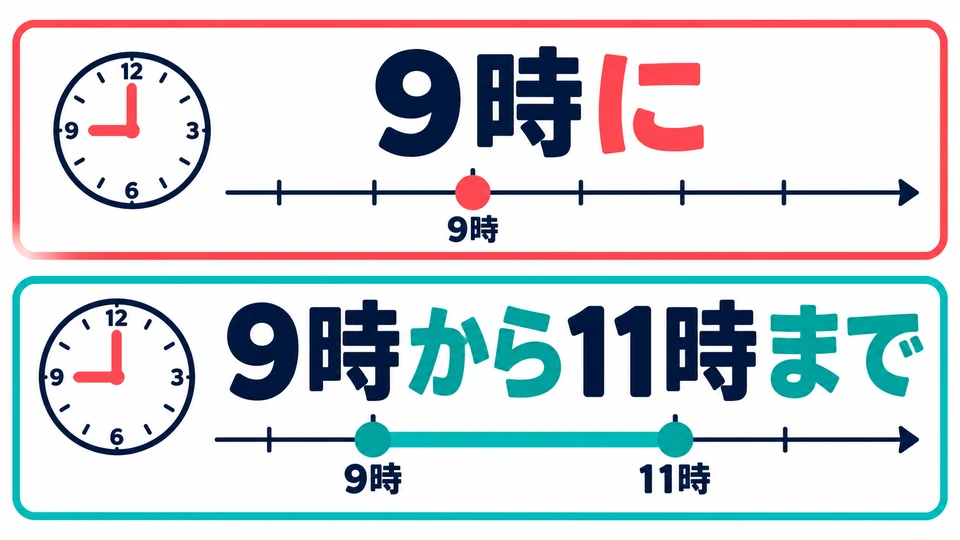
  5. 「9時に」 gives the time an action happens; 「から…まで」 gives a time range. First distinguish a point in time from a time range.

    「9時に」 gives the time an action happens; 「から…まで」 gives a time range. First distinguish a point in time from a time range.

Example sentences

  • 9くku時じjiにni起きますおきますokimasu

    I wake up at 9 o'clock.

In a conversation

  • A
    いつも何時なんじに寝ますねますか。か

    A: What time do you usually go to bed?

  • B
    11じゅういち時じに寝ます。ねます。

    B: I go to bed at 11 o'clock.

  • A
    早いです

Check yourself

  1. Level 1 · Recognise

    Which sentence is correct?

  2. Level 1 · Recognise

    Listen and choose the meaning

  3. Level 2 · Build

    Put the words in order

    I wake up at 7 every day.

  4. Level 3 · Use

    What goes in the blank?

     図書館へ行きます。

    I go to the library at 6.

More grammar in this theme

  • 〜時にtime when action happens

Keep practising

Test your Japanese vocabulary12 adaptive questions, freeCheck your pronunciationRead aloud and get a scorePractise verb forms10-question conjugation quizSee the whole courseGrammar, vocabulary and quizzes by theme
はやいです
ね。ね
何時なんじ
に
起きますおきます
か。か

A: That's early. What time do you wake up?

See the whole course
Beginner 1
Daily Life
〜時〜分tell the clock time
〜から〜までですtime range: from ... to ...
何曜日ですかask the day of the week
〜ますpolite future plan
〜へ行きますdirection or destination
〜で〜ますplace where action happens
〜時から〜時まで〜ますdaily routine and time span
〜や〜などexamples among several items
何も〜ません/どこへも〜ませんtotal negation: nothing, nowhere
Previous〜や〜など
Next何も〜ません/どこへも〜ません