JPEdLab iconJPEdLab
Save history

Create an account and play

Explore first, then save your progress whenever you are ready. No email address is required.

Start free
  1. Course
  2. Beginner 1
  3. 〜時〜分

〜時〜分~ ji ~ fun

Ji fun (〜時〜分) means “tell the clock time”.

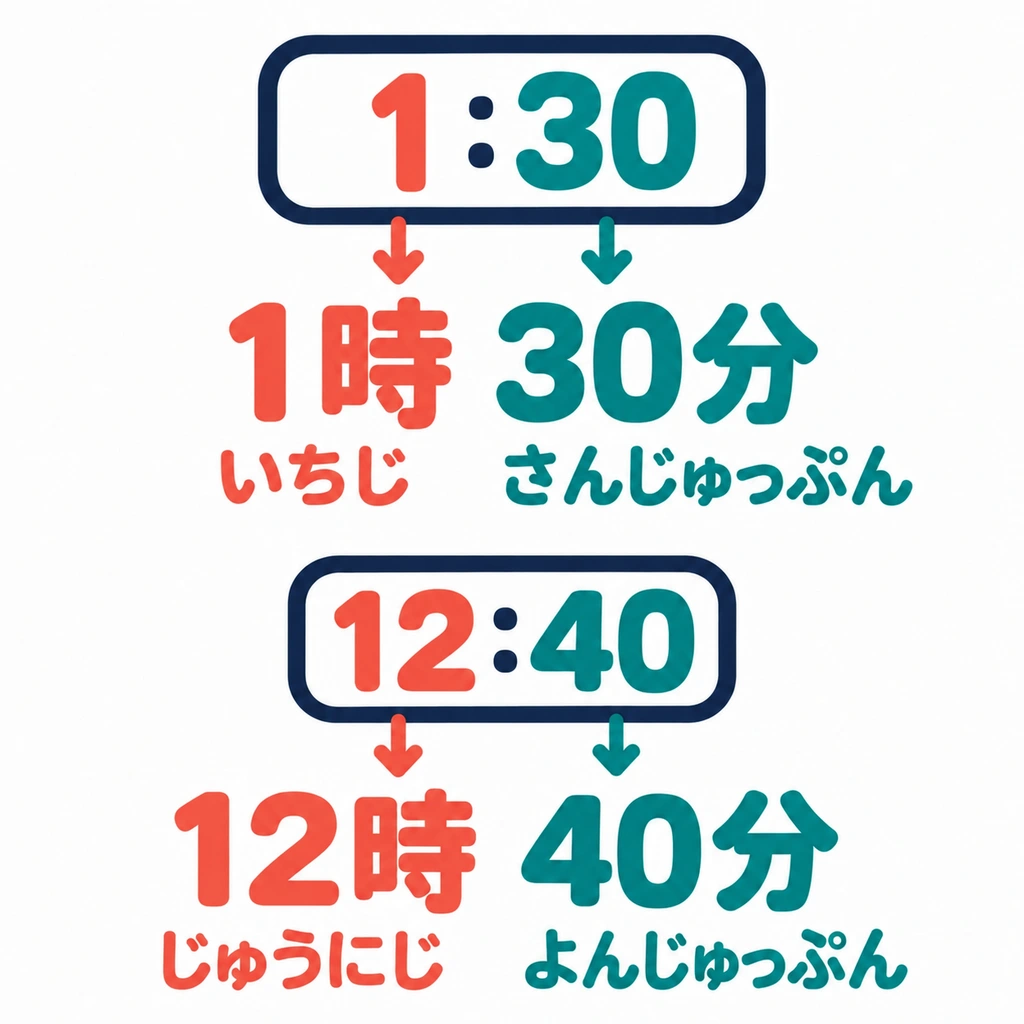
1いちichi時じji30分さんじゅっぷんsanjuppun

One thirty

Use 「〜時〜分」 to state a clock time, saying the hour before the minutes.

In the course›

How it works

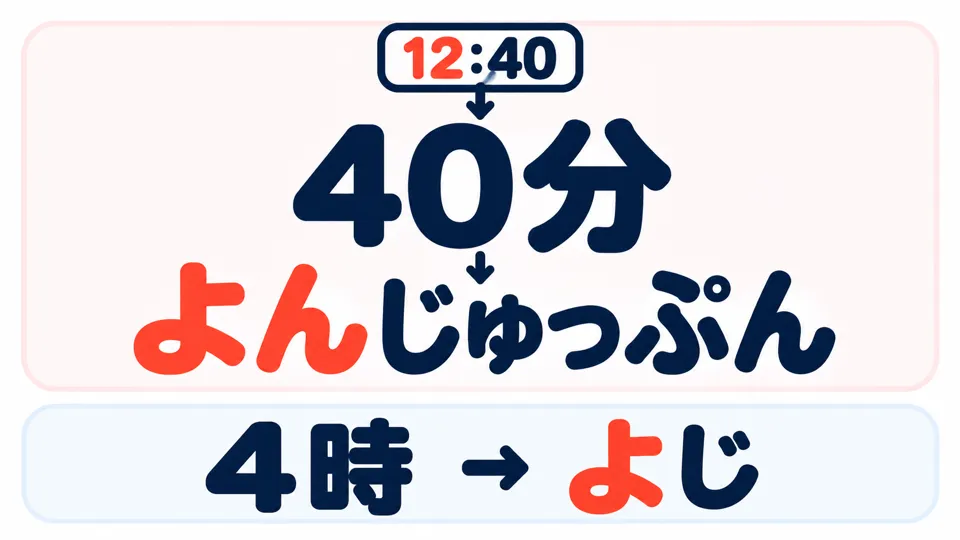
  1. Look at the clock’s numbers: say the hour first, then the minutes. Twelve forty follows the same order.
    Look at the clock’s numbers: say the hour first, then the minutes. Twelve forty follows the same order.

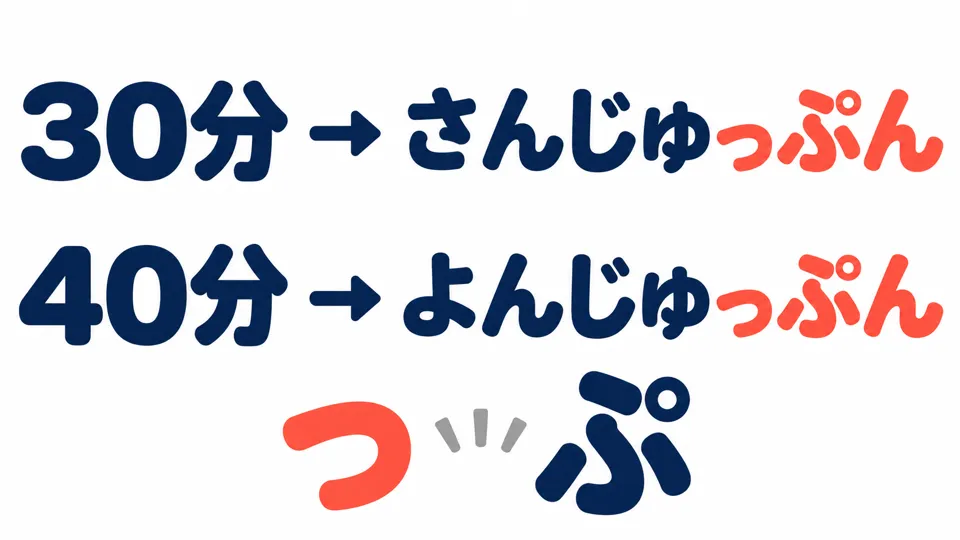
  2. Thirty and forty minutes both end in 「っぷん」. Pay attention to the small 「っ」 and the sound of 「ぷ」.
    Thirty and forty minutes both end in 「っぷん」. Pay attention to the small 「っ」 and the sound of 「ぷ」.

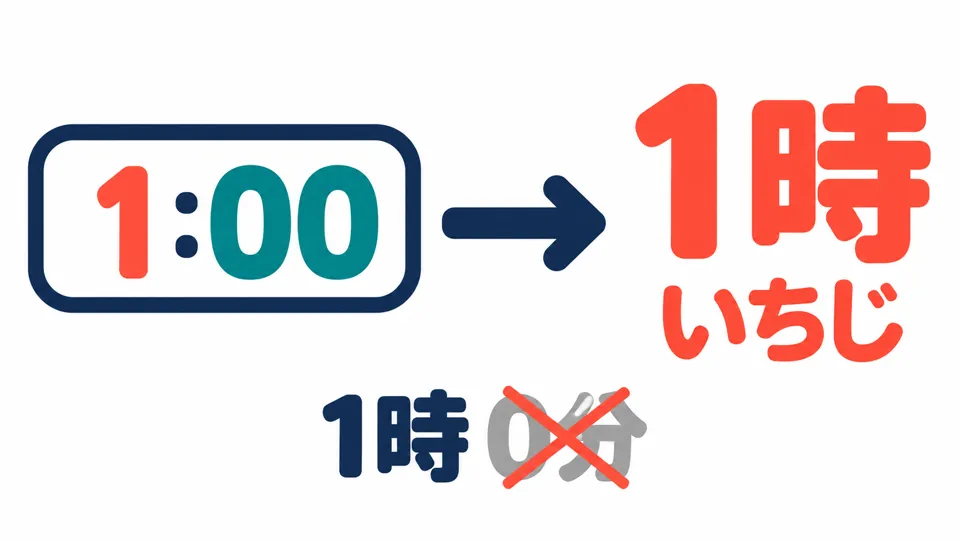
  3. For an exact hour, you can just say 「〜時」. For example, one o’clock is 「1時」; there is no need to add zero minutes.
    For an exact hour, you can just say 「〜時」. For example, one o’clock is 「1時」; there is no need to add zero minutes.

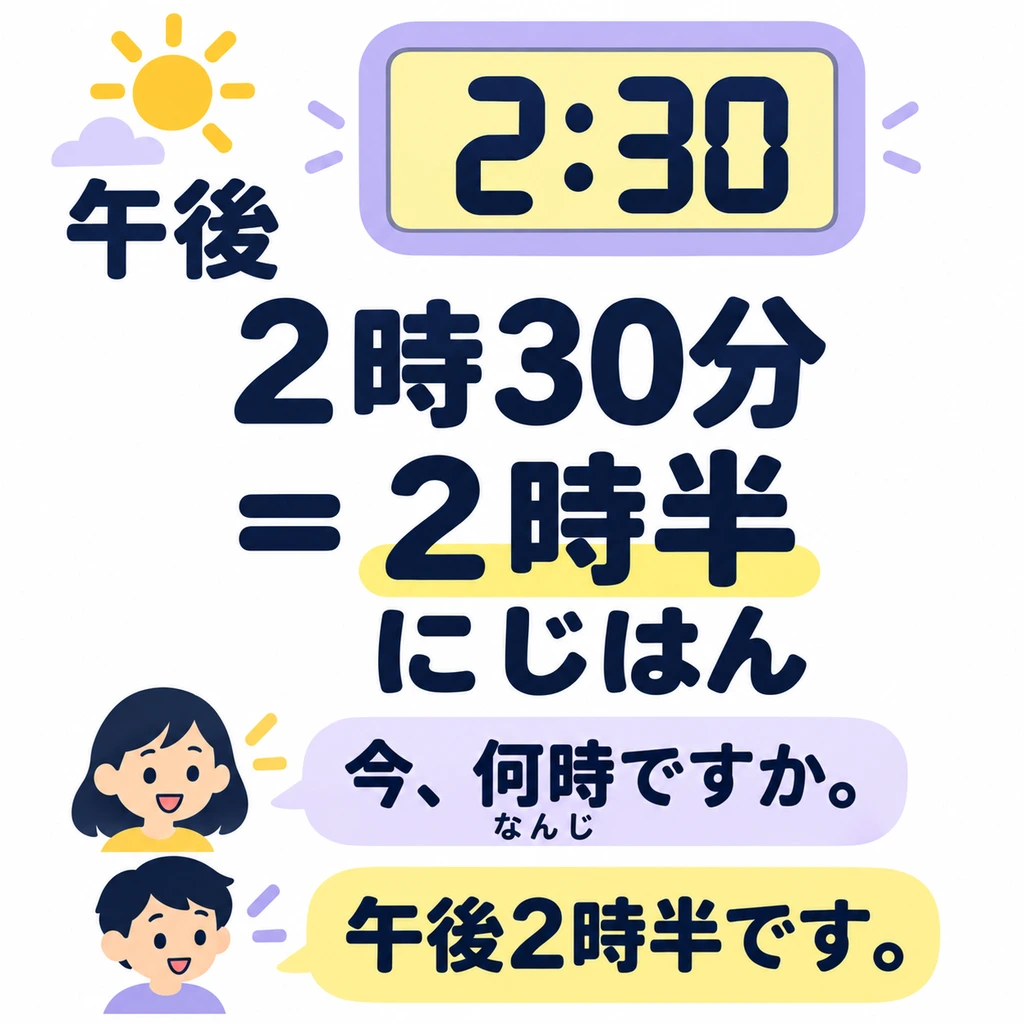
  4. You can replace thirty minutes with 「半」. Both expressions in the picture mean two thirty.
    You can replace thirty minutes with 「半」. Both expressions in the picture mean two thirty.

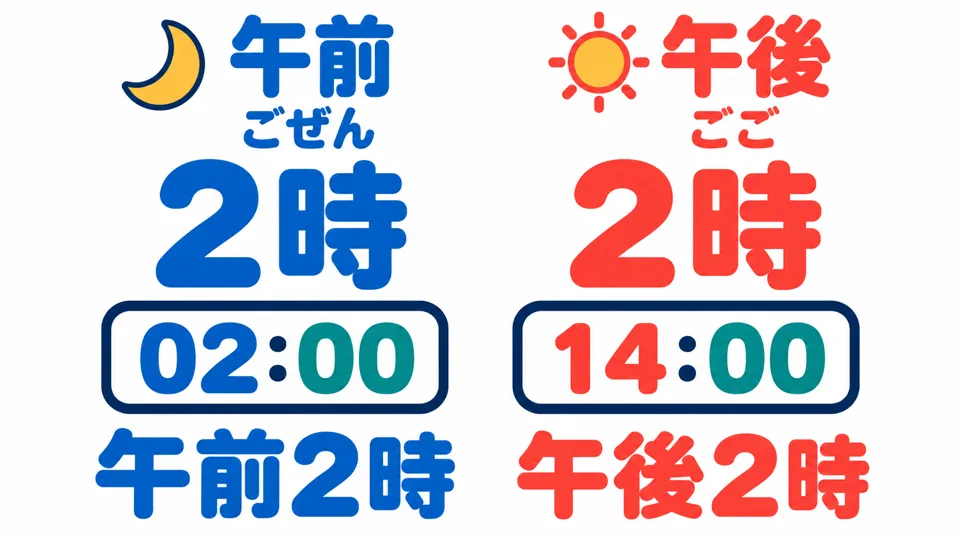
  5. To specify two in the afternoon, put 「午後」 before the time. For the morning, use 「午前」.
    To specify two in the afternoon, put 「午後」 before the time. For the morning, use 「午前」.

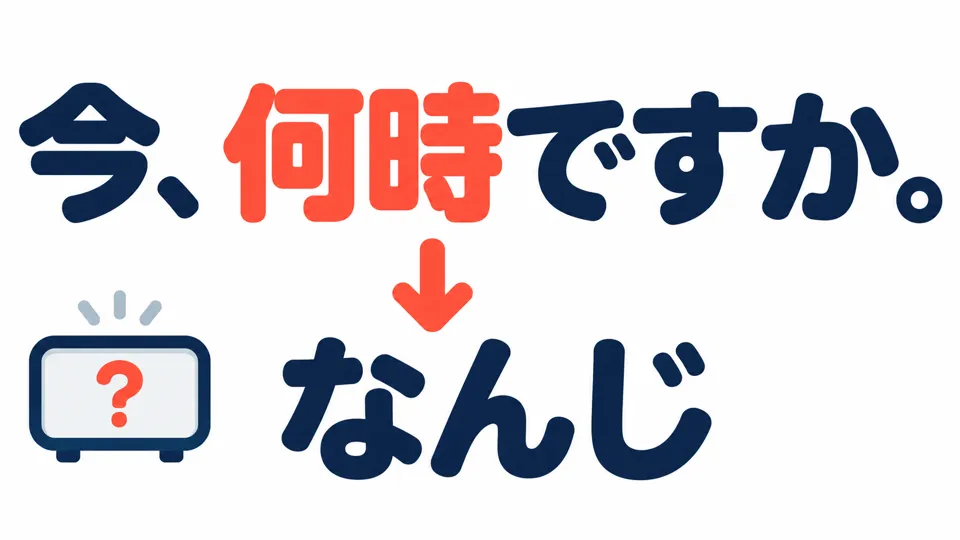
  6. To ask what time it is now, say 「今、何時ですか」. Here, 「何時」 is read 「なんじ」.
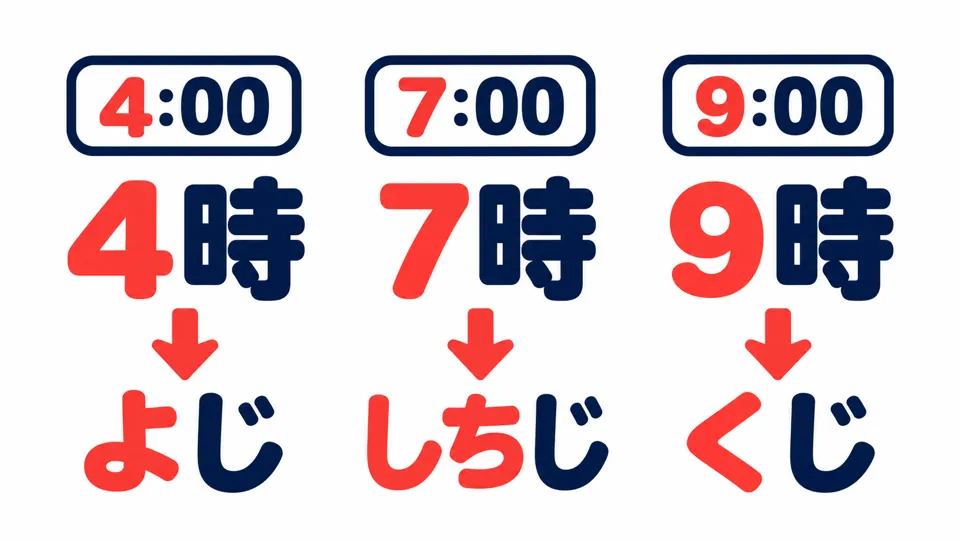
    To ask what time it is now, say 「今、何時ですか」. Here, 「何時」 is read 「なんじ」.

  7. Some hours have special readings: four o’clock is 「よじ」, seven is 「しちじ」, and nine is 「くじ」.
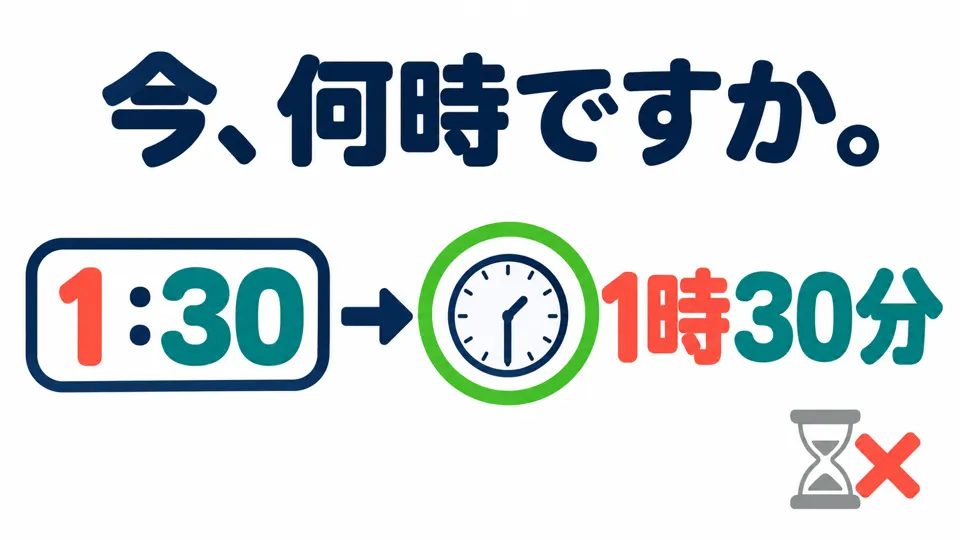
    Some hours have special readings: four o’clock is 「よじ」, seven is 「しちじ」, and nine is 「くじ」.

  8. This pattern gives a clock time and answers “What time is it now?” Do not use it to mean how long something lasts.
    This pattern gives a clock time and answers “What time is it now?” Do not use it to mean how long something lasts.

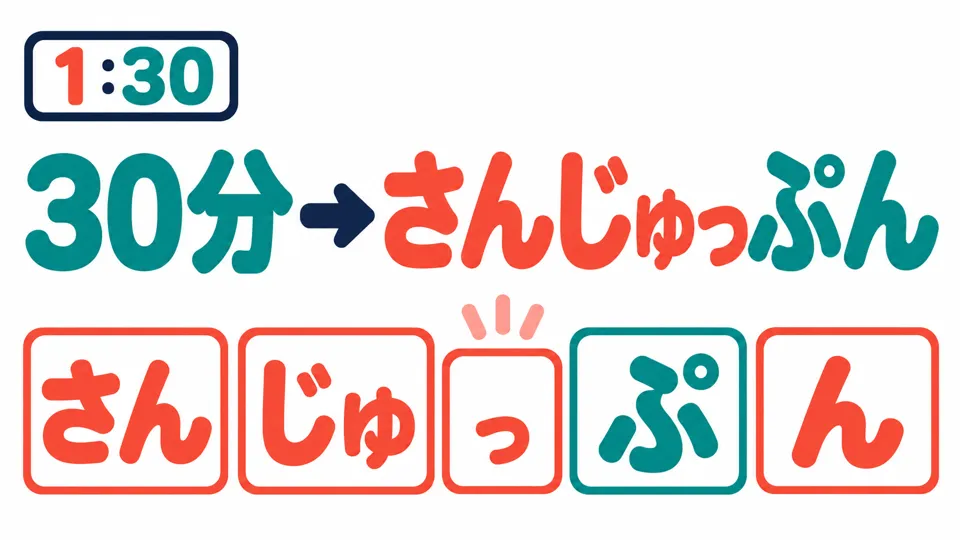
  9. In the example, 「30分」 is read 「さんじゅっぷん」. Pause for one beat at the small 「っ」, then pronounce 「ぷ」.

Example sentences

  • 1いちichi時じji30分さんじゅっぷんsanjuppun

    One thirty

  • 12じゅうにjuuni時じji40分よんじゅっぷんyonjuppun

    Twelve forty

In a conversation
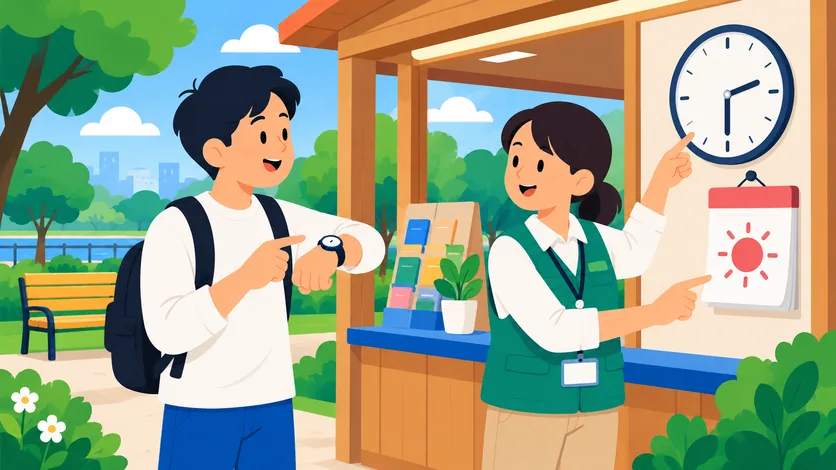
  • A
    今いま何時なんじですか。か

    A: What time is it now?

  • B
    午後ごご2に時じ半はんです。です

    B: It's 2:30 PM.

  • A

Check yourself

  1. Level 1 · Recognise

    Which sentence is correct?

  2. Level 1 · Recognise

    Listen and choose the meaning

  3. Level 2 · Build

    Put the words in order

    It's 2:30 PM now.

  4. Level 3 · Use

    What goes in the blank?

    図書館は午前9時 午後6時までです。

    The library is open from 9:00 AM to 6:00 PM.

More grammar in this theme

  • 〜時〜分tell the clock time

Keep practising

Test your Japanese vocabulary12 adaptive questions, freeCheck your pronunciationRead aloud and get a scorePractise verb forms10-question conjugation quizSee the whole courseGrammar, vocabulary and quizzes by theme

In the example, 「30分」 is read 「さんじゅっぷん」. Pause for one beat at the small 「っ」, then pronounce 「ぷ」.

  • In the example, 「40分」 is read 「よんじゅっぷん」. Here, four is 「よん」, unlike 「よ」 in four o’clock.

    In the example, 「40分」 is read 「よんじゅっぷん」. Here, four is 「よん」, unlike 「よ」 in four o’clock.

  • 今日きょう
    はわ
    何曜なんよう
    日び
    です
    か。か

    A: What day of the week is it today?

  • B
    日曜にちよう日びです。です

    B: It's Sunday.

  • Beginner 1
    Daily Life
    More quizzesOpen this lesson’s quizzes in the course
    〜から〜までですtime range: from ... to ...
    何曜日ですかask the day of the week
    〜ますpolite future plan
    〜へ行きますdirection or destination
    〜で〜ますplace where action happens
    〜時から〜時まで〜ますdaily routine and time span
    〜や〜などexamples among several items
    〜時にtime when action happens
    何も〜ません/どこへも〜ませんtotal negation: nothing, nowhere
    Next〜から〜までです