
Japanese grammar · ≈ JLPT N5 · Beginner 1
何も〜ません/どこへも〜ませんnani mo ~masen / doko e mo ~masen
total negation: nothing, nowhere
total negation: nothing, nowhere
How it works

Shopping, studying, and exercise are all crossed out. 「何もしません」 means doing nothing.
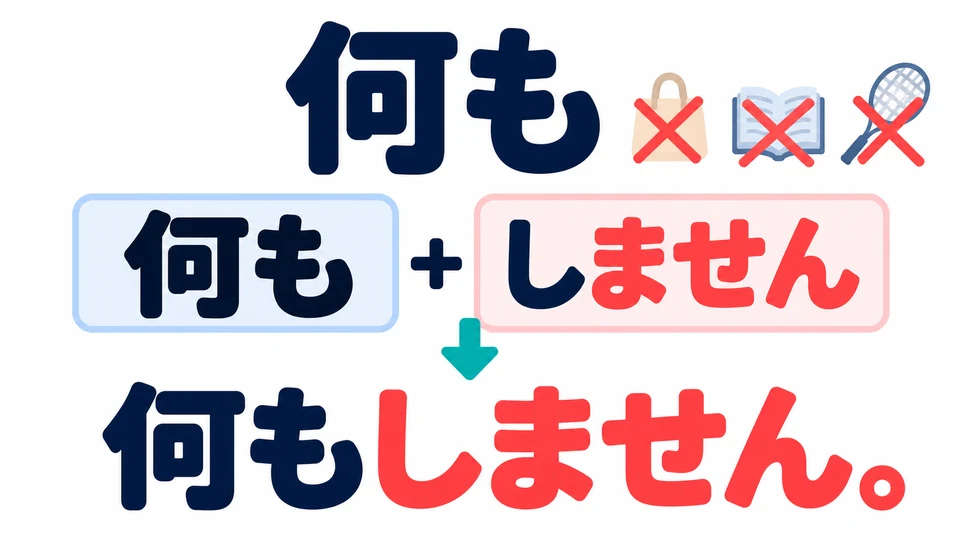
「何も」 rules out all things or activities. The verb that follows must use 「ません」.
No trips to the park, shop, or school. 「どこへも行きません」 means not going anywhere.
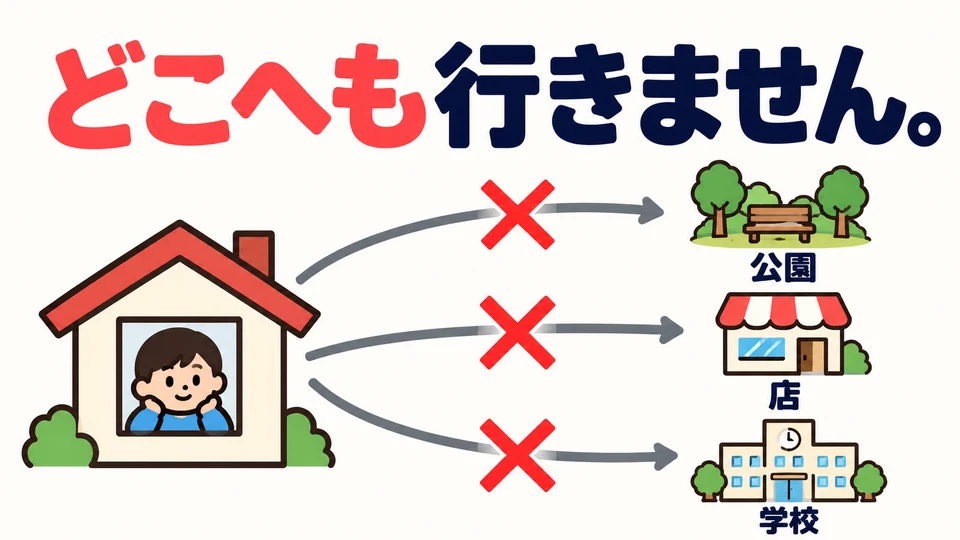
「どこも」 rules out every place, not just one particular destination.
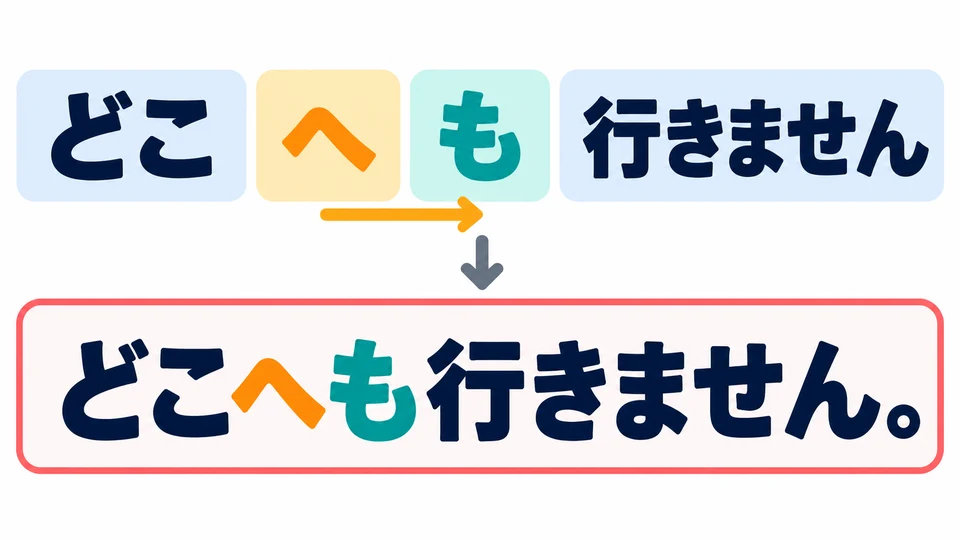
To express a destination, put the particle 「へ」 before 「も」: どこへも行きません。
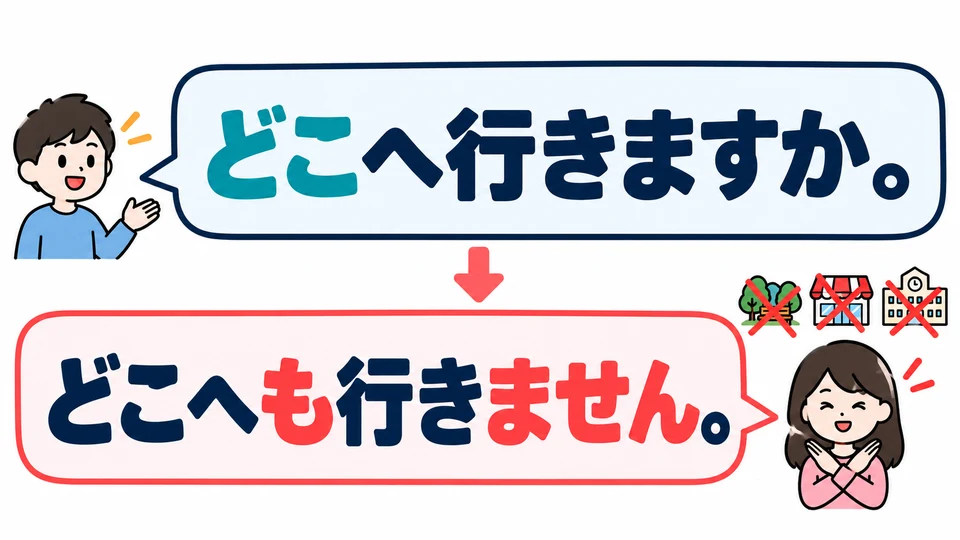
「どこへ行きますか」 asks where you are going. If you are going nowhere, say 「どこへも行きません」.
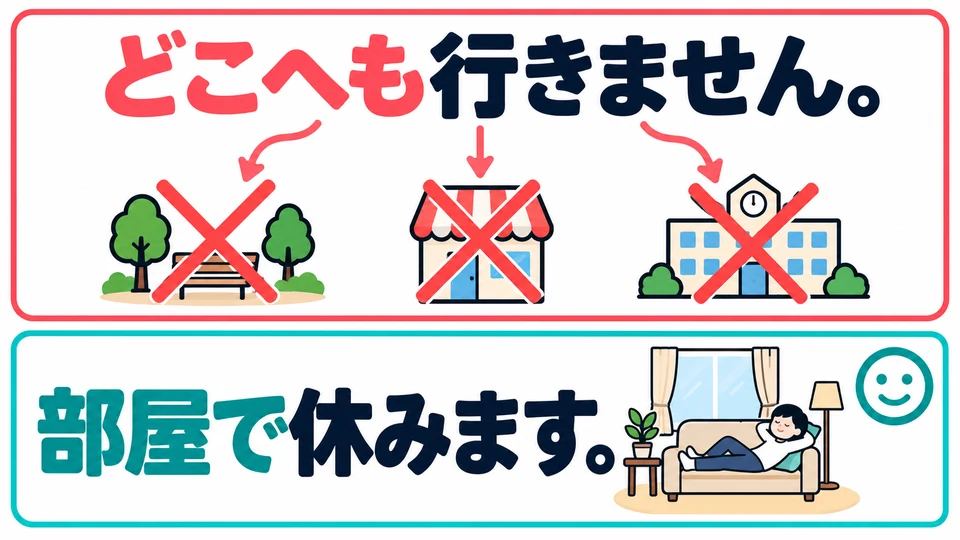
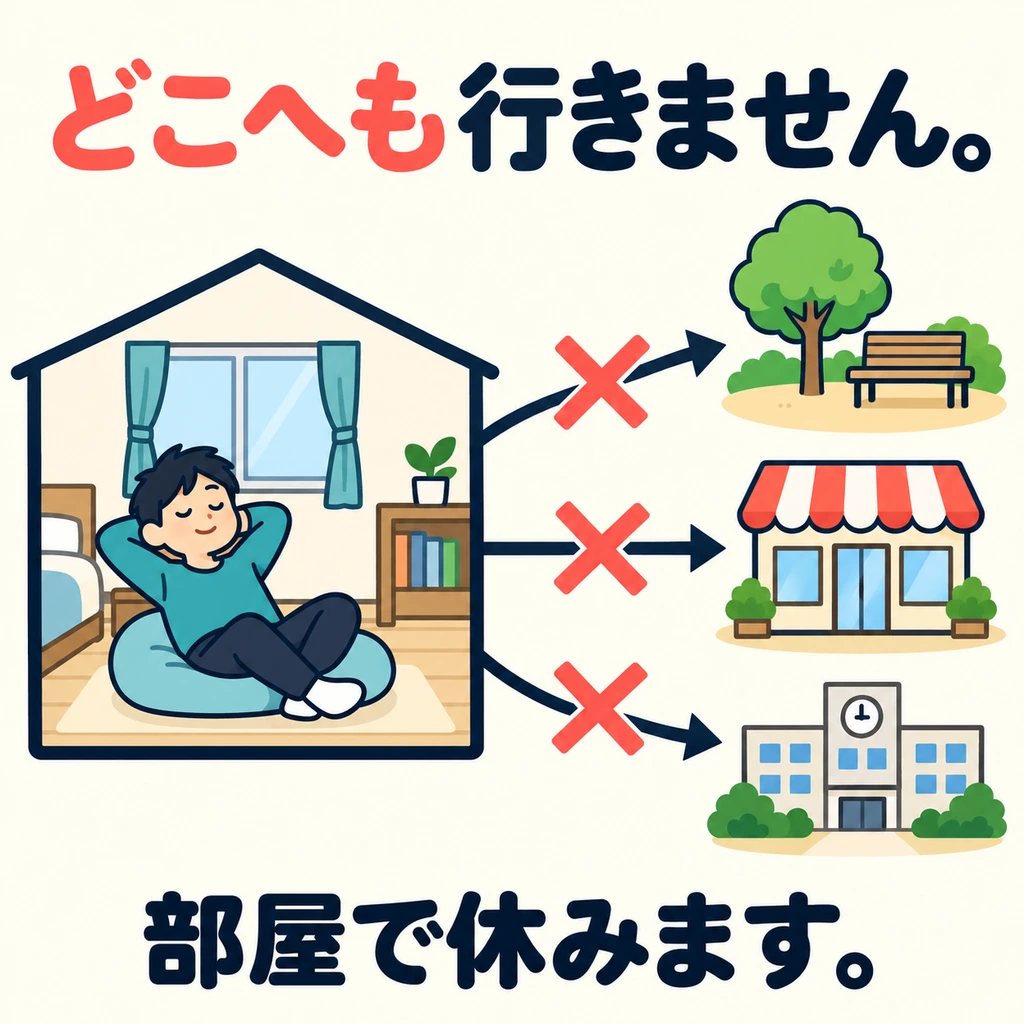
Even if you go nowhere, you can still rest in your room. 「どこへも」 rules out destinations.
Example sentences
- 今日kyouはwa何nanもmoしませんshimasen
I won't do anything today.
In a conversation

- A今日どこへ行きますか。
A: Where are you going today?
- Bどこへも行きません。部屋で休みます。
B: I'm not going anywhere. I'll rest in my room.
Check yourself
Level 1 · Recognise
Which sentence is correct?
Level 1 · Recognise
Listen and choose the meaning
Level 2 · Build
Put the words in order
I do nothing today.
Level 3 · Use
What goes in the blank?
週末は ません。
I won't do anything on the weekend.
More grammar in this theme
- 何も〜ません/どこへも〜ませんtotal negation: nothing, nowhere