JPEdLab iconJPEdLab
Save history

Create an account and play

Explore first, then save your progress whenever you are ready. No email address is required.

Start free
  1. Japanese grammar
  2. JLPT N5 grammar
  3. 何曜日ですか

何曜日ですかnan youbi desu ka

Nan youbi desu ka (何曜日ですか) means “ask the day of the week”.

休みやすみyasumiはわwa日曜にちようnichiyou日びbiです。ですdesu

The day off is Sunday.

Use 「何曜日ですか」 to ask which day of the week it is, and answer with the day’s name.

In the course›

How it works

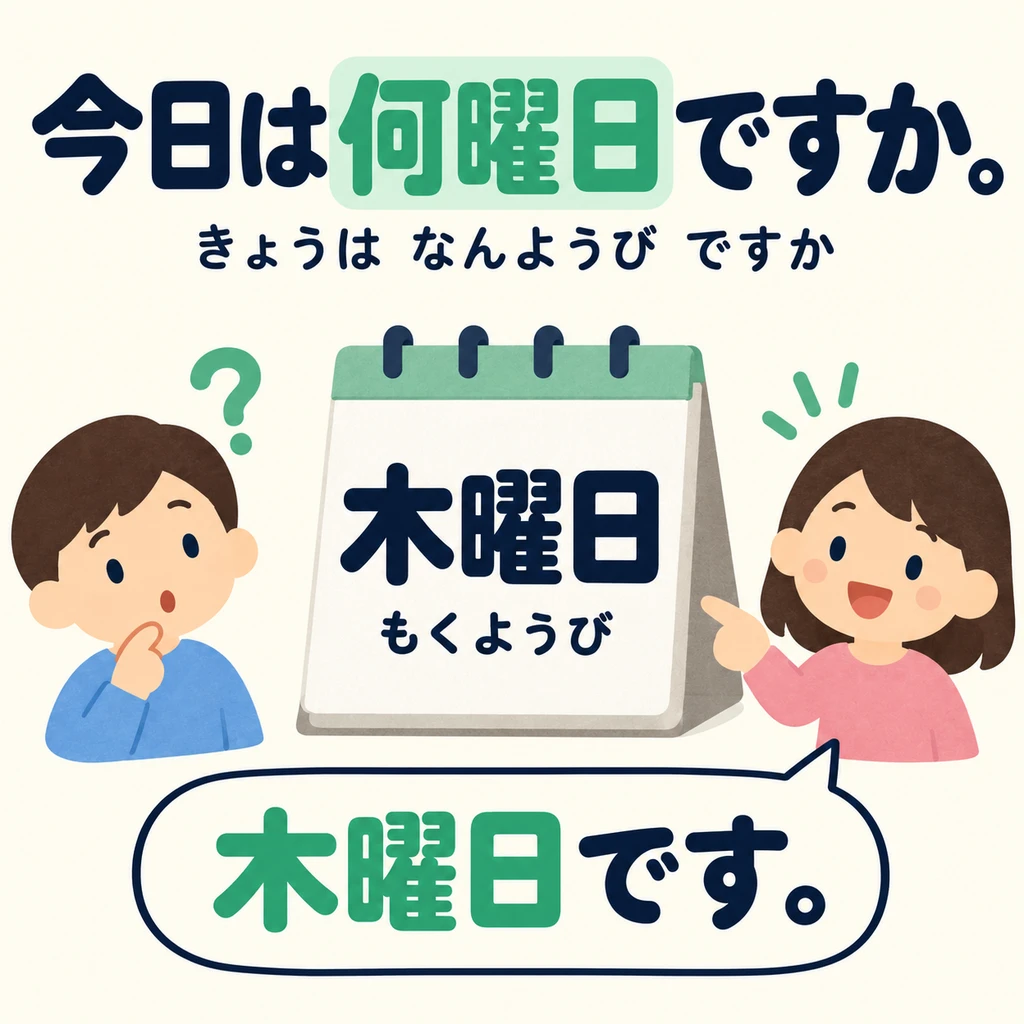
  1. To ask what day of the week it is today, use the question in the picture. Look at the calendar: which day is today?
    To ask what day of the week it is today, use the question in the picture. Look at the calendar: which day is today?

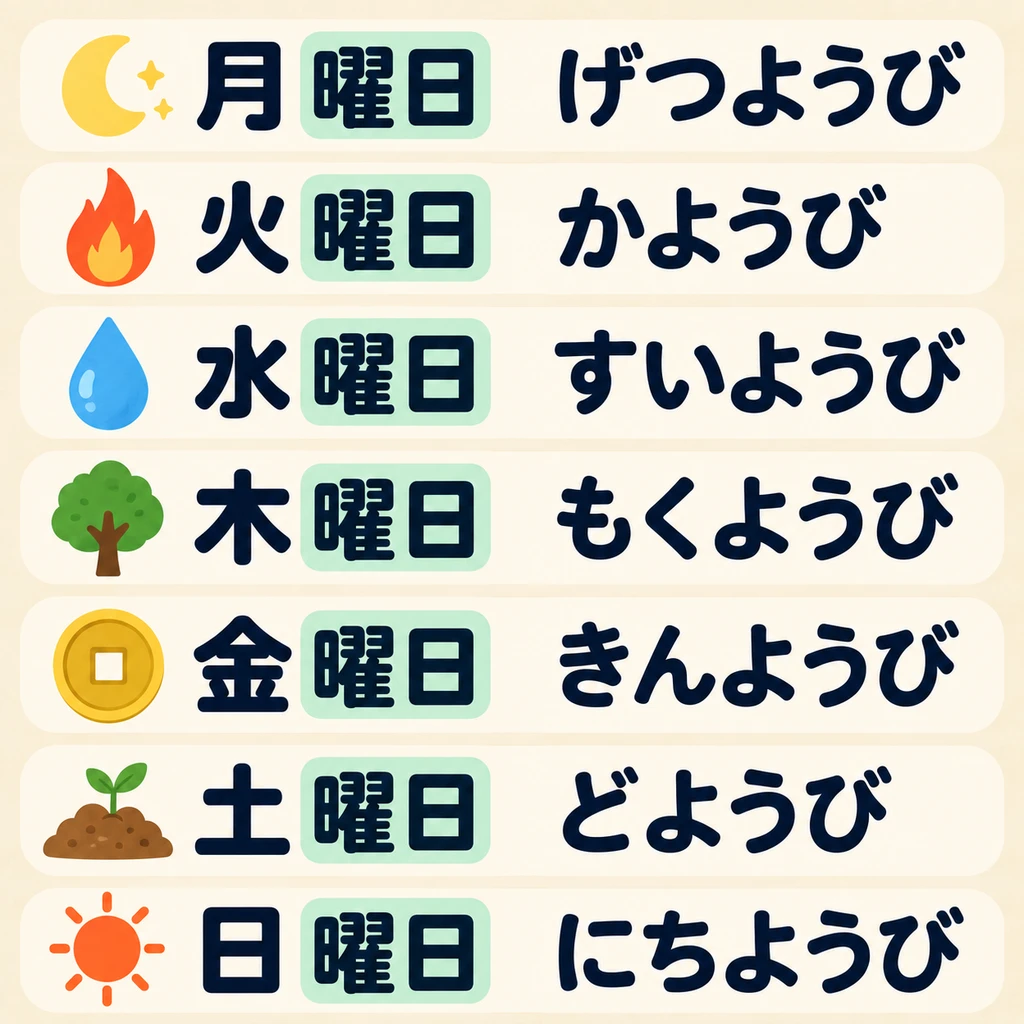
  2. A week has seven days, and their Japanese names all end in 「曜日」. Read them aloud from the picture and find today’s day.
    A week has seven days, and their Japanese names all end in 「曜日」. Read them aloud from the picture and find today’s day.

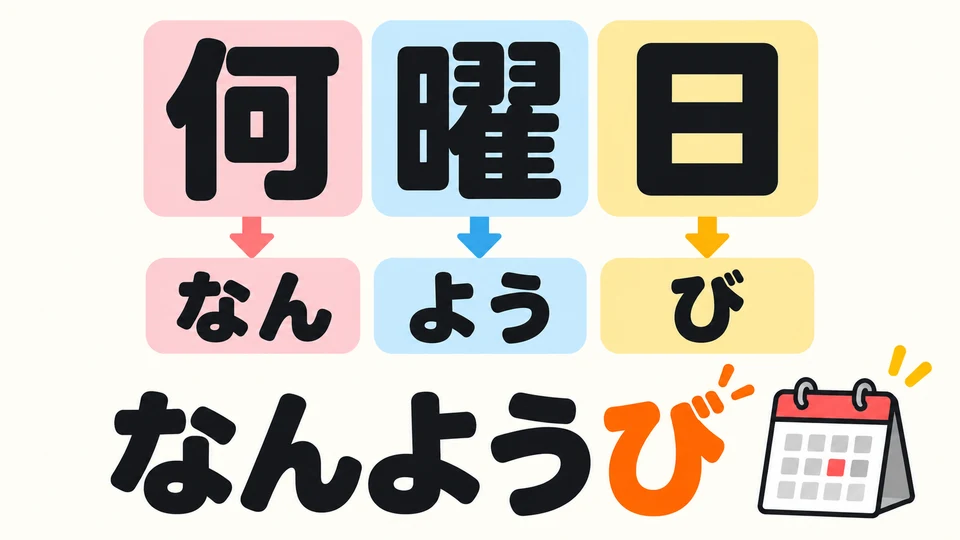
  3. 「何曜日」 is read 「なんようび」. Here, 「何」 is read 「なん」. Notice the final sound is 「び」.
    「何曜日」 is read 「なんようび」. Here, 「何」 is read 「なん」. Notice the final sound is 「び」.

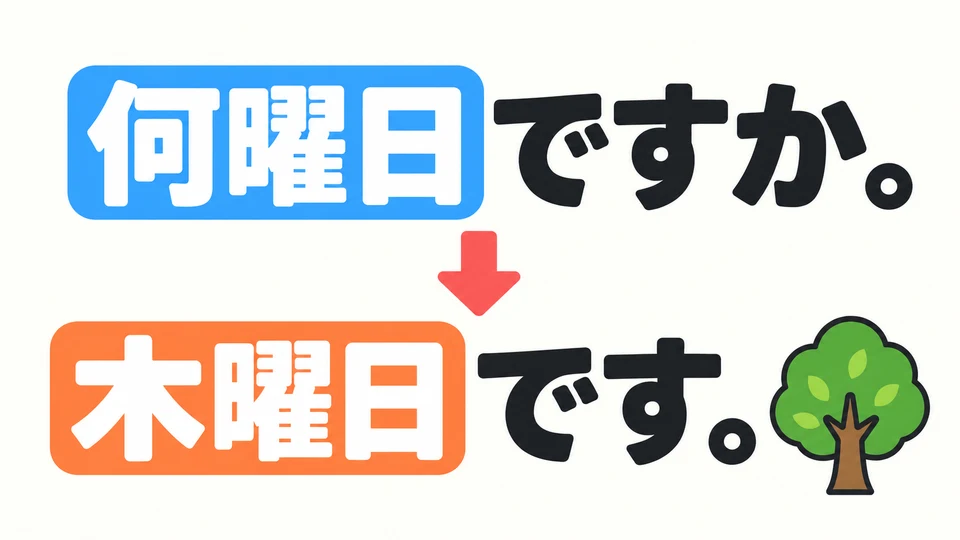
  4. In your answer, replace 「何曜日」 with a specific day. If both people know you mean today, you can just say 「木曜日です」.
    In your answer, replace 「何曜日」 with a specific day. If both people know you mean today, you can just say 「木曜日です」.

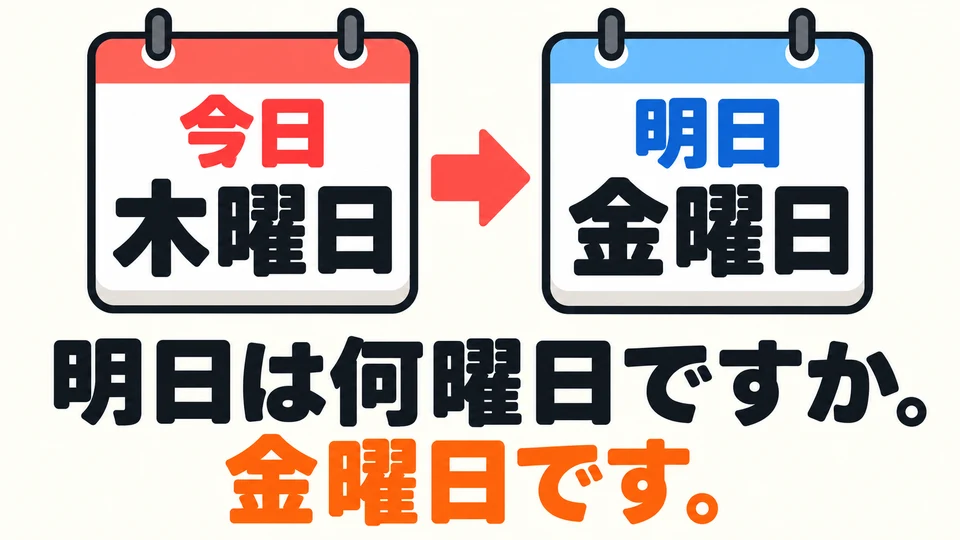
  5. If today is Thursday, tomorrow is Friday. Ask 「明日は何曜日ですか」 and answer 「金曜日です」.
    If today is Thursday, tomorrow is Friday. Ask 「明日は何曜日ですか」 and answer 「金曜日です」.

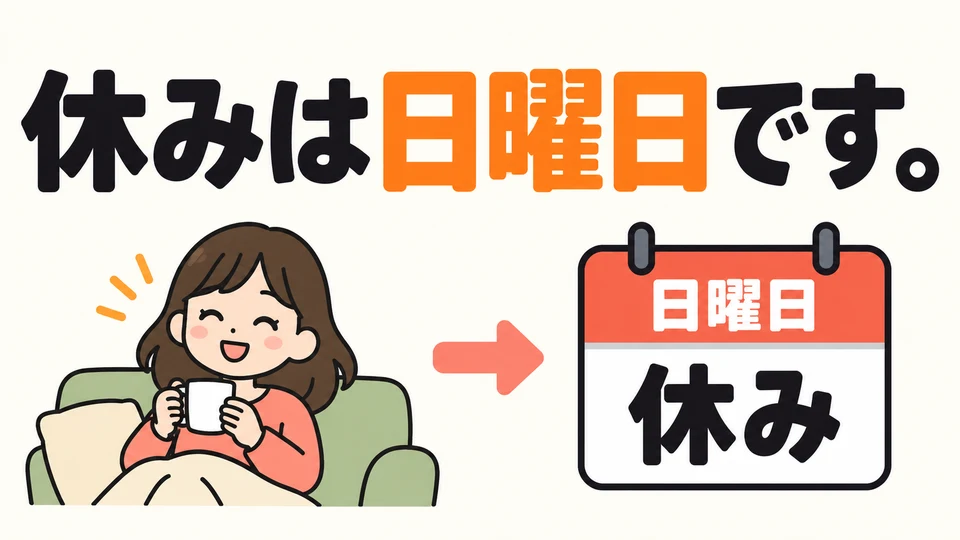
  6. Use a day’s name to say when you have a day off, too. 「休みは日曜日です」 means your day off is Sunday.
    Use a day’s name to say when you have a day off, too. 「休みは日曜日です」 means your day off is Sunday.

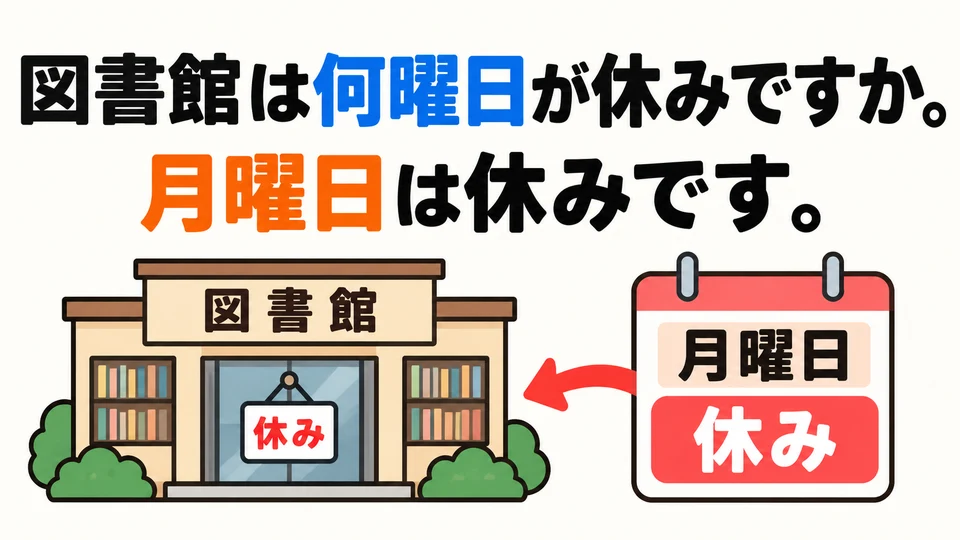
  7. To ask which day the library is closed, say 「図書館は何曜日が休みですか」. Answer 「月曜日は休みです」.
    To ask which day the library is closed, say 「図書館は何曜日が休みですか」. Answer 「月曜日は休みです」.

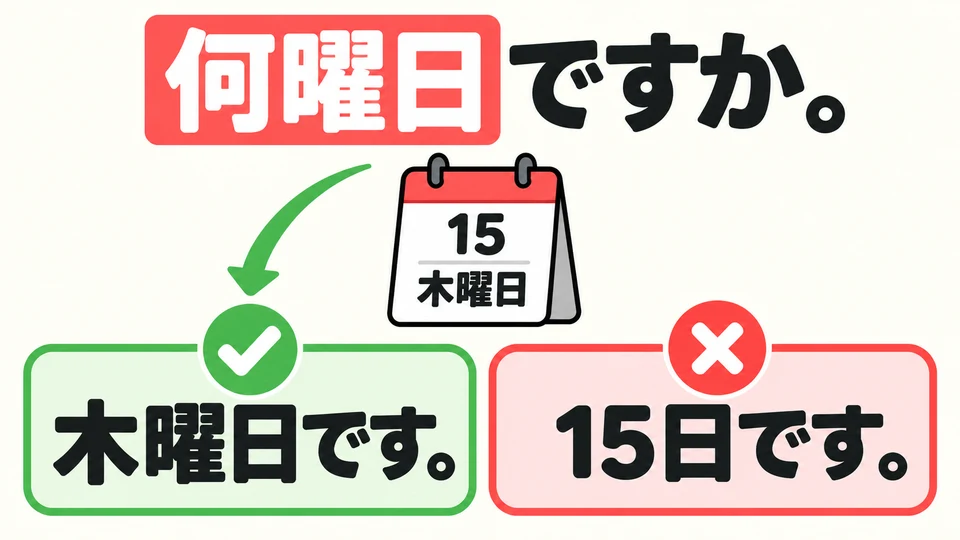
  8. 「何曜日」 asks for the day of the week, not the month or date. Answer with a day’s name, not just a date number.

    「何曜日」 asks for the day of the week, not the month or date. Answer with a day’s name, not just a date number.

Example sentences

  • 休みやすみyasumiはわwa日曜にちようnichiyou日びbiです。ですdesu

    The day off is Sunday.

  • 月曜げつようgetsuyou日びbiです。ですdesu

    It's Monday.

In a conversation

  • A
    今日きょうはわ何曜なんよう日びですか。か

    A: What day is it today?

  • B
    木曜もくよう日びです。です

    B: It's Thursday.

Check yourself

  1. Level 1 · Recognise

    Which sentence is correct?

  2. Level 1 · Recognise

    Listen and choose the meaning

  3. Level 2 · Build

    Put the words in order

    What day is it today?

  4. Level 3 · Use

    What goes in the blank?

     です。

    It's Monday.

More grammar in this theme

  • 何曜日ですかask the day of the week

More JLPT N5 grammar

Keep practising

Test your Japanese vocabulary12 adaptive questions, freeCheck your pronunciationRead aloud and get a scorePractise verb forms10-question conjugation quizSee the whole courseGrammar, vocabulary and quizzes by theme
  • A
    図書館としょかんはわ何曜なんよう日びが休みやすみですか。か

    A: What day is the library closed?

  • B
    月曜げつよう日びはわ休みやすみです。です

    B: It's closed on Mondays.

    • A
      明日あすはわ何曜なんよう日びですか。か

      A: What day is it tomorrow?

    • B
      金曜きんよう日びです。です

      B: It's Friday.

    • A
      学校がっこうはわ明日あすもありますか。か

      A: Is there school tomorrow too?

    • B
      はい、はいあります。あります

      B: Yes, there is.

    Beginner 1
    Daily Life
    More quizzesOpen this lesson’s quizzes in the course
    〜時〜分tell the clock time
    〜から〜までですtime range: from ... to ...
    〜ますpolite future plan
    〜へ行きますdirection or destination
    〜で〜ますplace where action happens
    〜時から〜時まで〜ますdaily routine and time span
    〜や〜などexamples among several items
    〜時にtime when action happens
    何も〜ません/どこへも〜ませんtotal negation: nothing, nowhere
    Previous〜から〜までです
    Next〜ます
    See all 111
    何の〜asking kind or contents
    どこの〜ask where from
    〜を〜くださいpolite request when ordering
    誰の〜ask who owns it
    〜の北・南・東・西directions relative to a country
    〜から〜までどのくらいask travel time or distance
    乗り物で行きますmeans of transport
    〜は(い/な形容詞)ですdescribe a place with adjectives