それからsore kara
Sore kara (それから) means “then; next action”.
Then I watched a movie.
Use それから to tell what happened next in a sequence; it shows order, not cause.
In the course
How it works
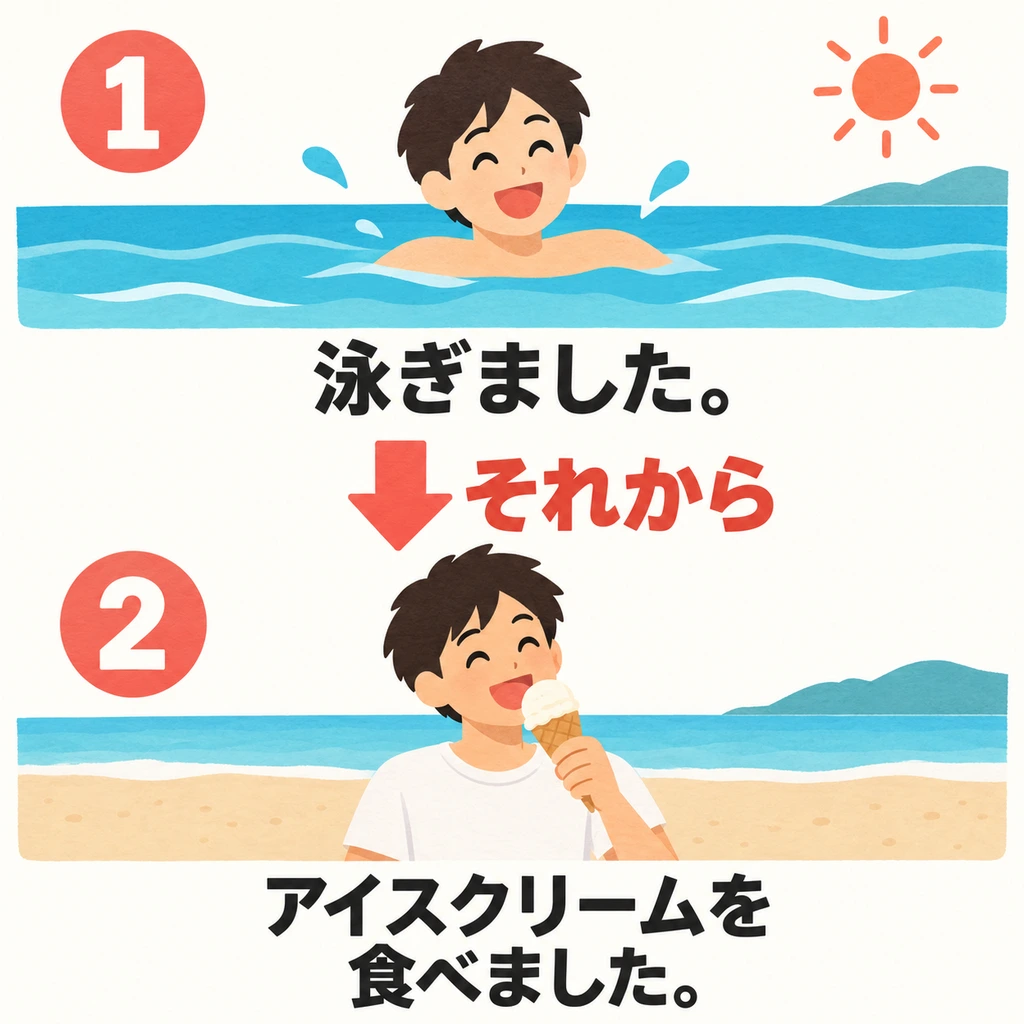
Look at the picture: first swimming, then eating ice cream. The arrow points to the action that happens later.
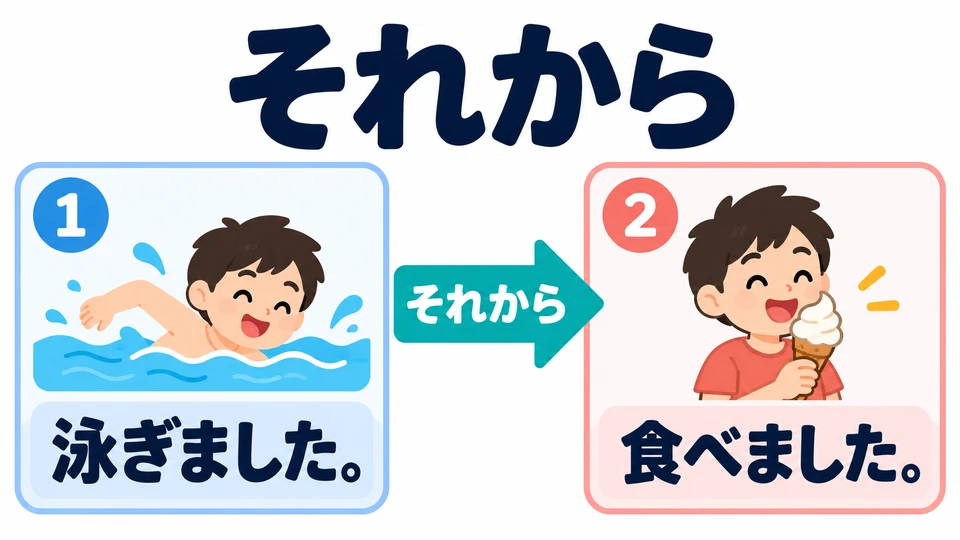
「それから」 means “then” or “after that.” It links actions in the order they happen.
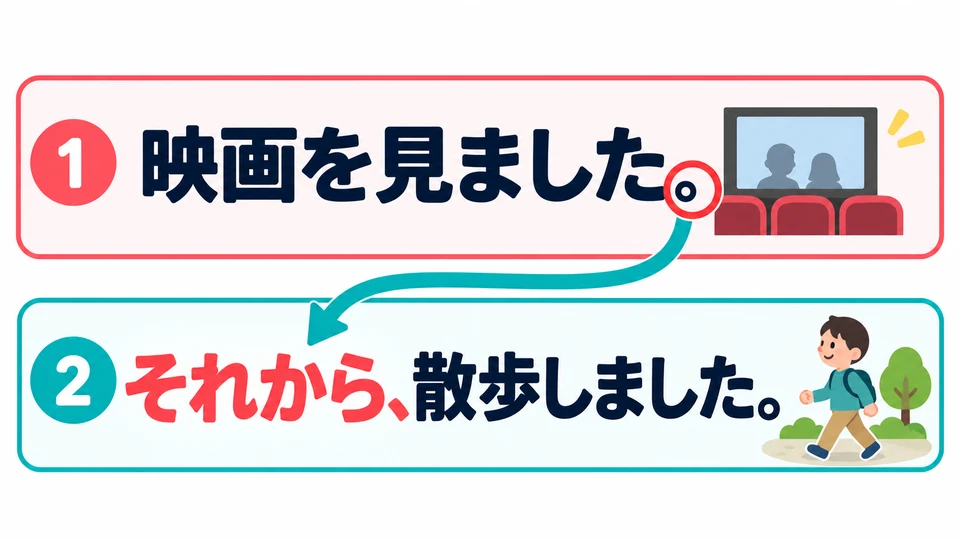
Finish describing the first action, then start with 「それから」 to introduce the next one.
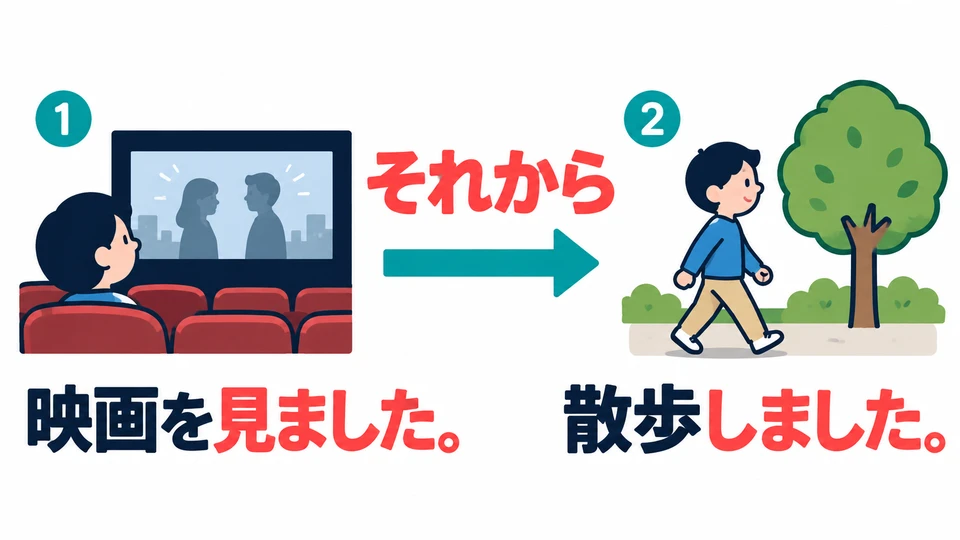
映画を見ました。それから、散歩しました。 First, I watched a movie. Then I went for a walk.
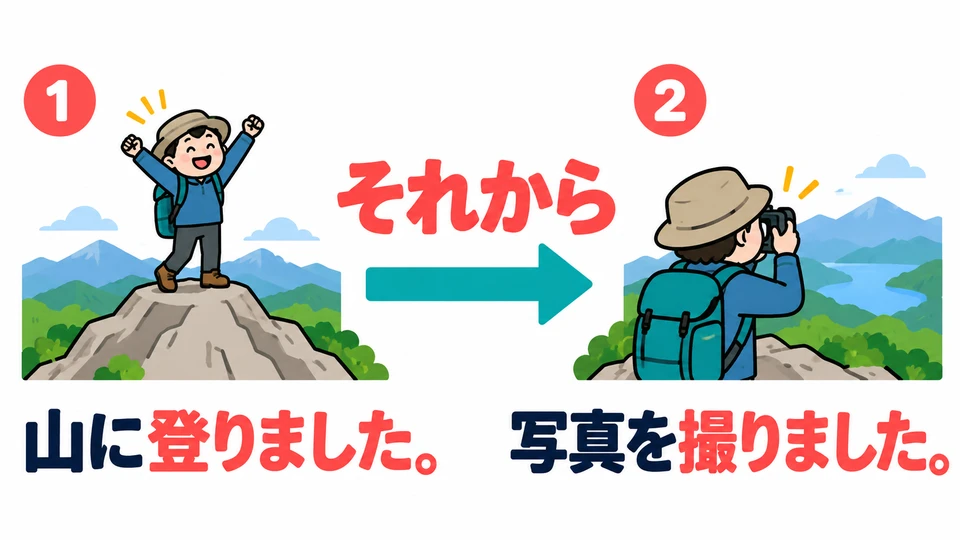
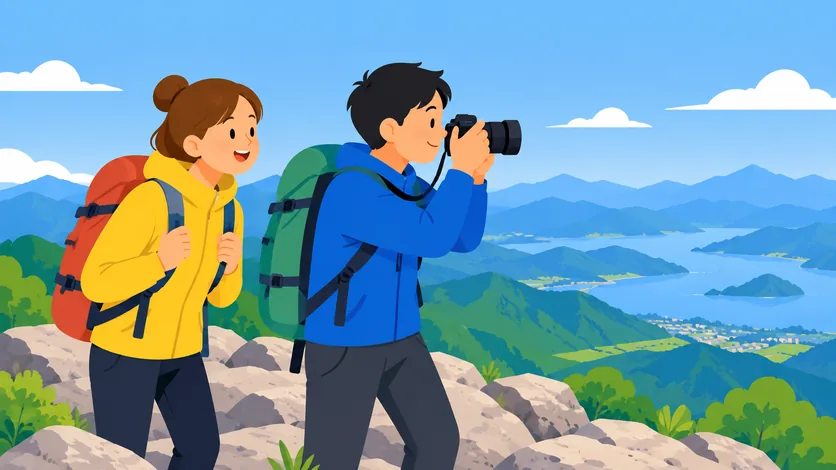
山に登りました。それから、写真を撮りました。 First, I climbed a mountain. Then I took photos.
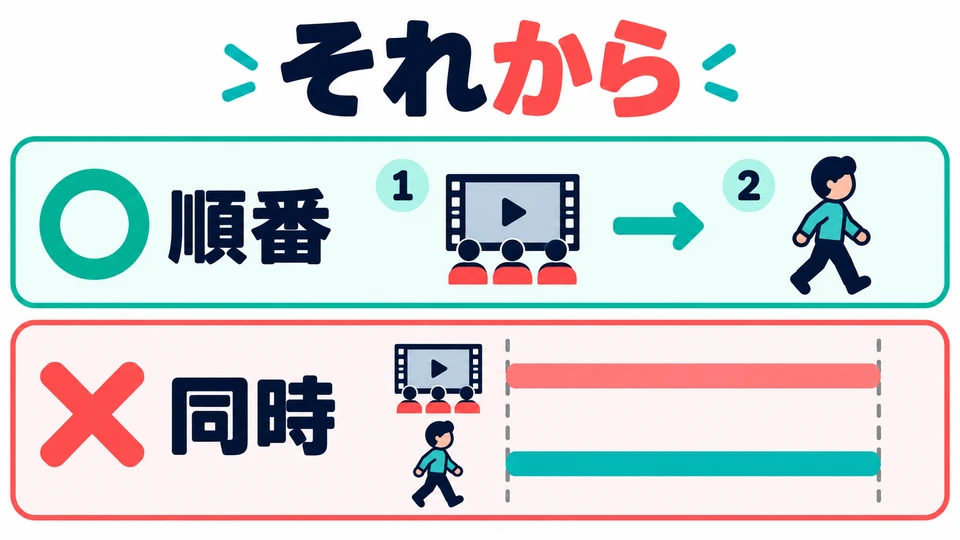
「それから」 emphasizes that one action happens after another. If two actions happen at the same time, this use does not fit.
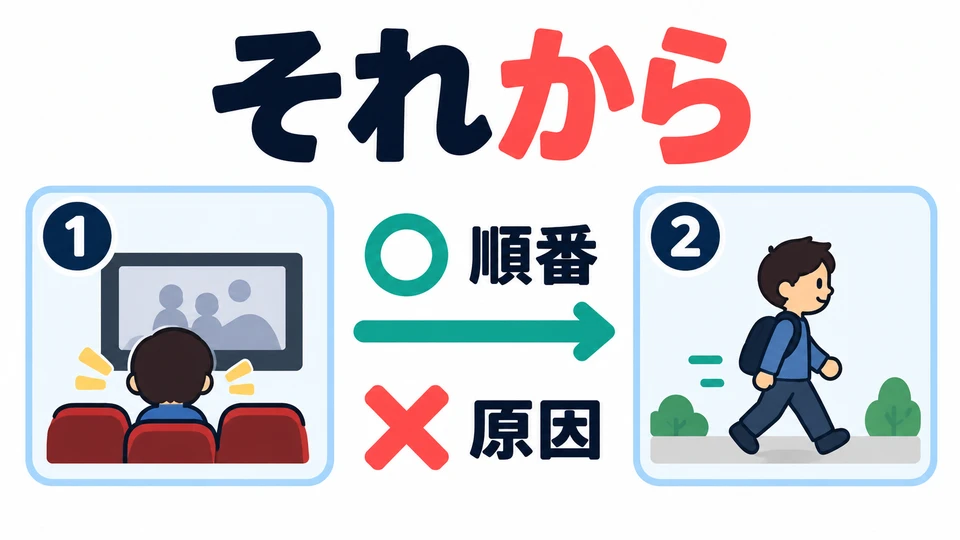
Here, it simply tells us what happened next. A sequence does not mean that the first action caused the next one.
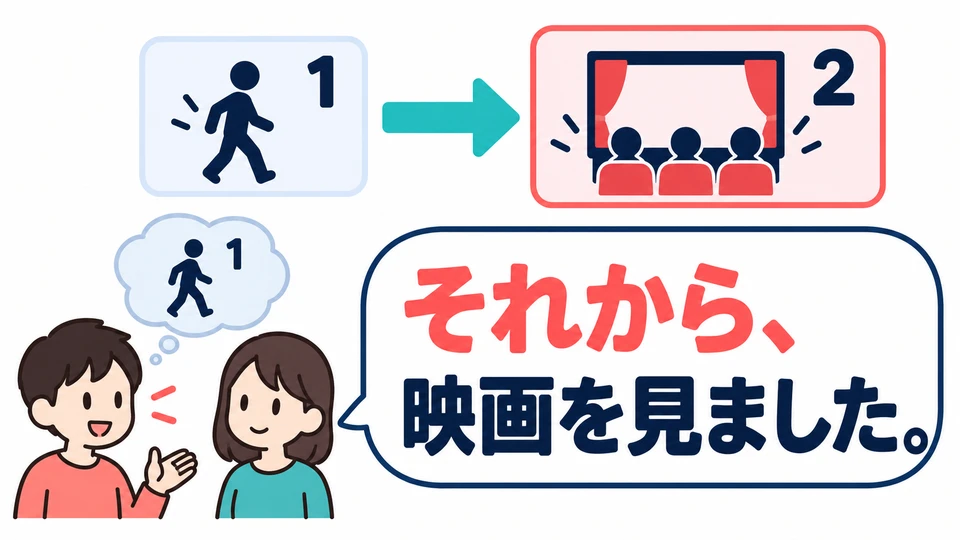
If the listener already knows the previous action, you can continue with 「それから、映画を見ました。」
Example sentences
- それsoreからkara映画eigaをo見ました。mimashita
Then I watched a movie.
- 山yamaにni登りました。noborimashitaそれsoreから、
In a conversation

- A昨日、映画を見ましたか。
A: Did you watch a movie yesterday?
- Bはい、見ました。それから、散歩しました。
B: Yes, I did. Then I took a walk.
Check yourself
Level 1 · Recognise
Which sentence is correct?
Level 1 · Recognise
Listen and choose the meaning
Level 2 · Build
Put the words in order
I watched a movie yesterday. Then I took a walk.
Level 3 · Use
What goes in the blank?
山に登りました 景色の写真を撮りました。
I climbed a mountain. Then I took pictures of the scenery.
More grammar in this theme
- それからthen; next action