JPEDLAB iconJPEDLAB
Save history

Create an account and play

Explore first, then save your progress whenever you are ready. No email address is required.

Start free
Read as articleCards
See the whole course›Beginner 1›Days Off

Japanese grammar · ≈ JLPT N5 · Beginner 1

〜でした/〜じゃありませんでした~deshita / ~ja arimasen deshita

past state, affirmative or negative

Use 「〜でした/〜じゃありませんでした」 for past states of な-adjectives and nouns.

Start the interactive lessonIllustrated cards, audio and speaking practiceTake the quiz
Pattern
〜でした/〜じゃありませんでした
Romaji
~deshita / ~ja arimasen deshita
JLPT (approx.)
≈ N5
Course level
Beginner 1
Theme
Days Off

How it works

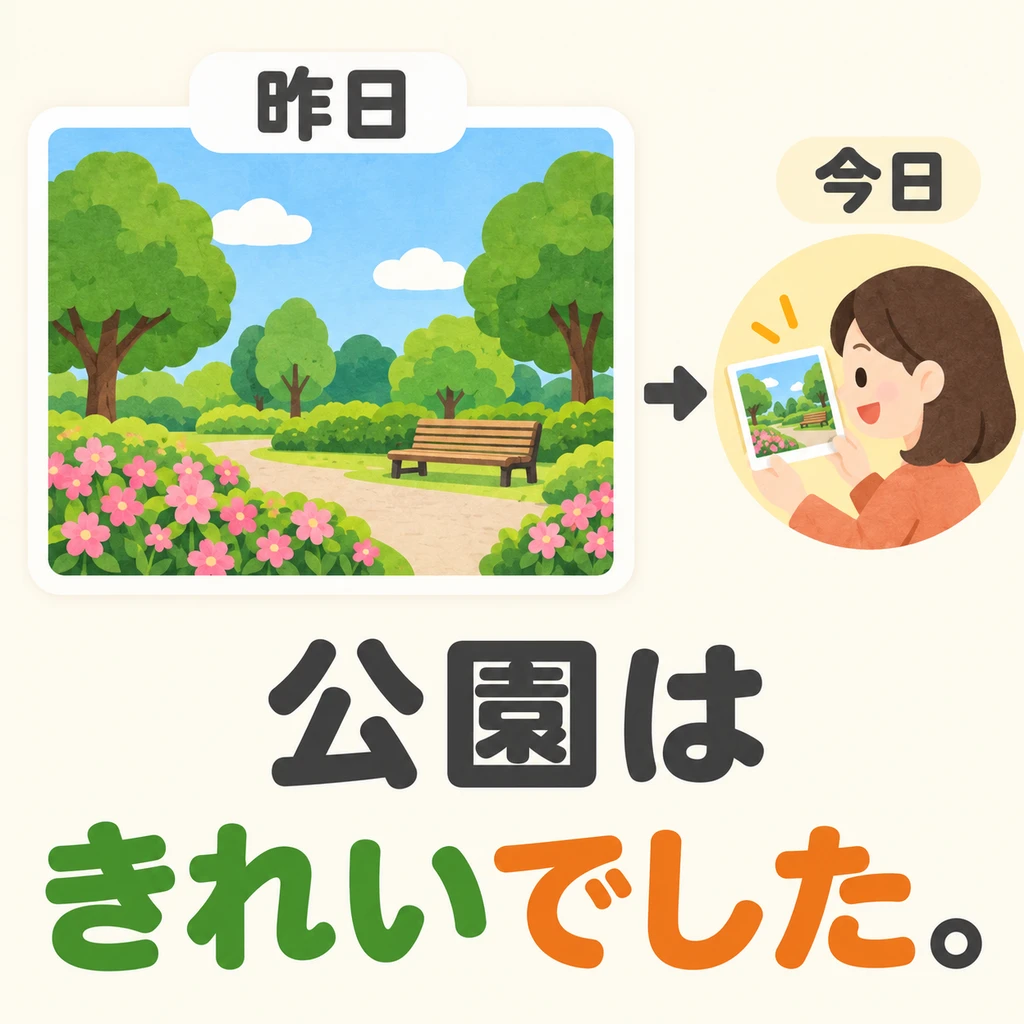
  1. Looking at yesterday’s photo today, use 「でした」 to recall how beautiful the park was then.
    Looking at yesterday’s photo today, use 「でした」 to recall how beautiful the park was then.

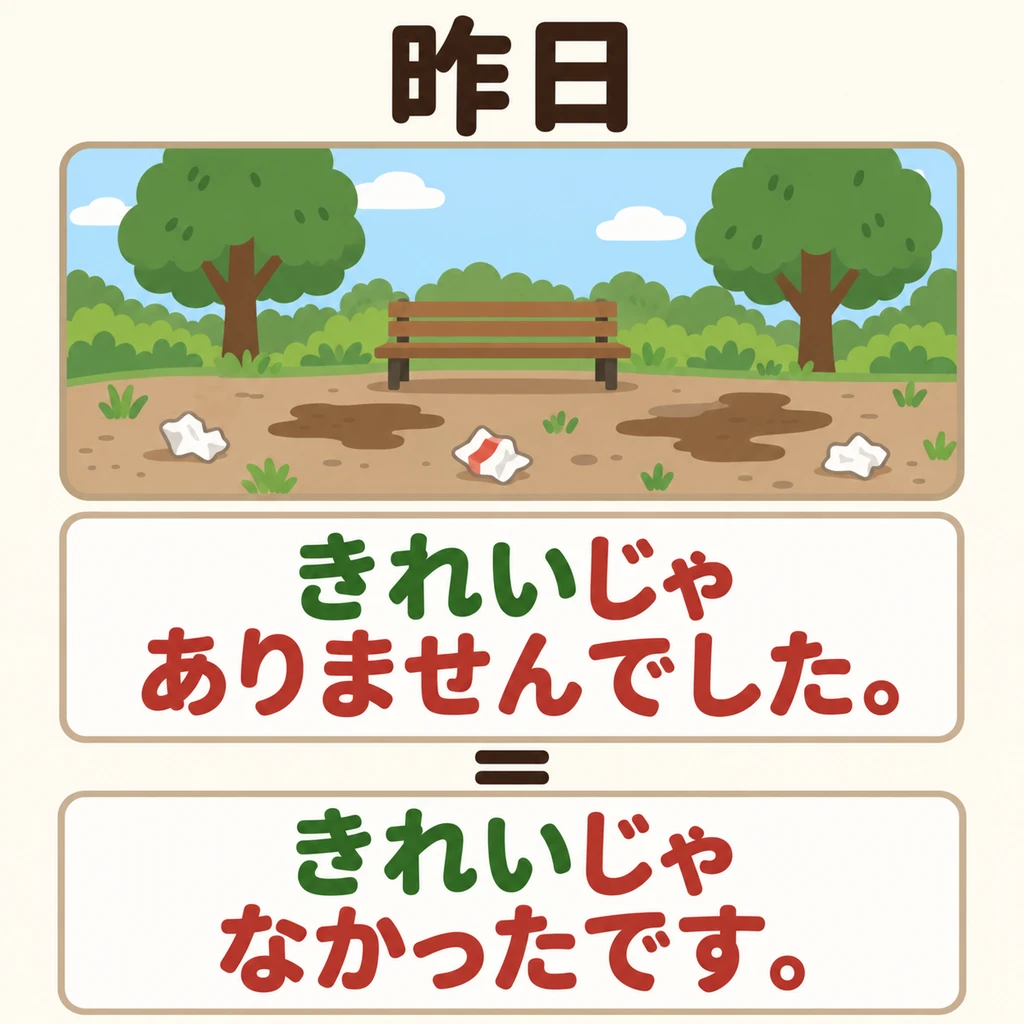
  2. The park wasn’t beautiful yesterday. The two expressions in the picture mean the same thing: both negate a past state.
    The park wasn’t beautiful yesterday. The two expressions in the picture mean the same thing: both negate a past state.

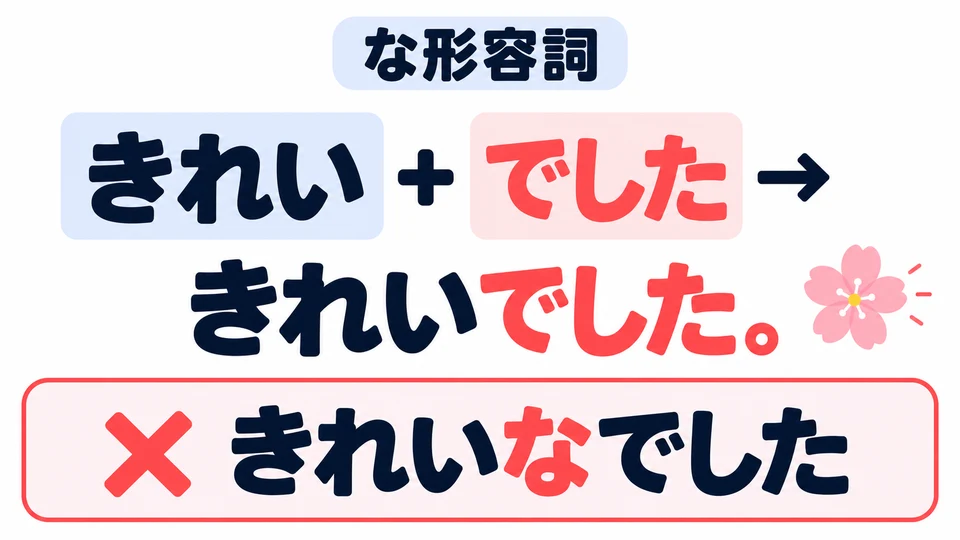
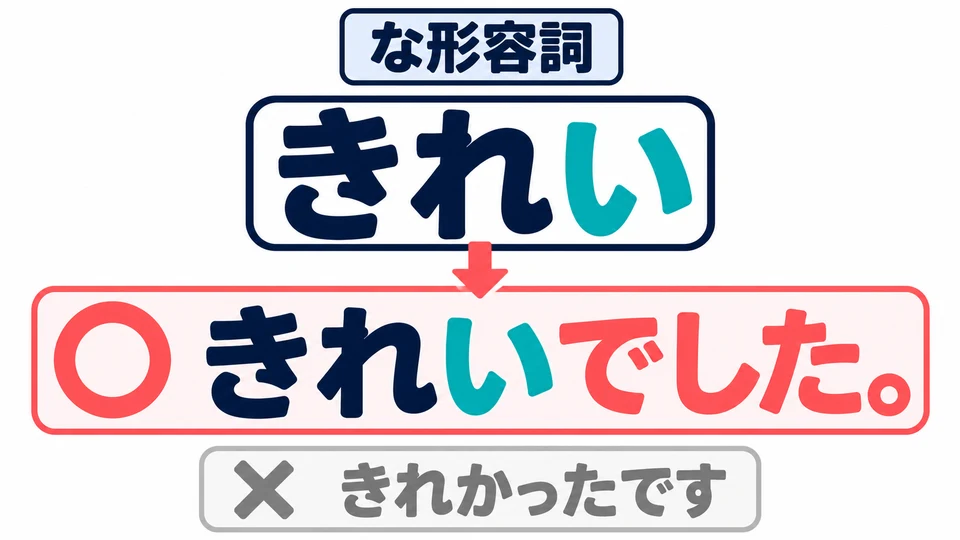
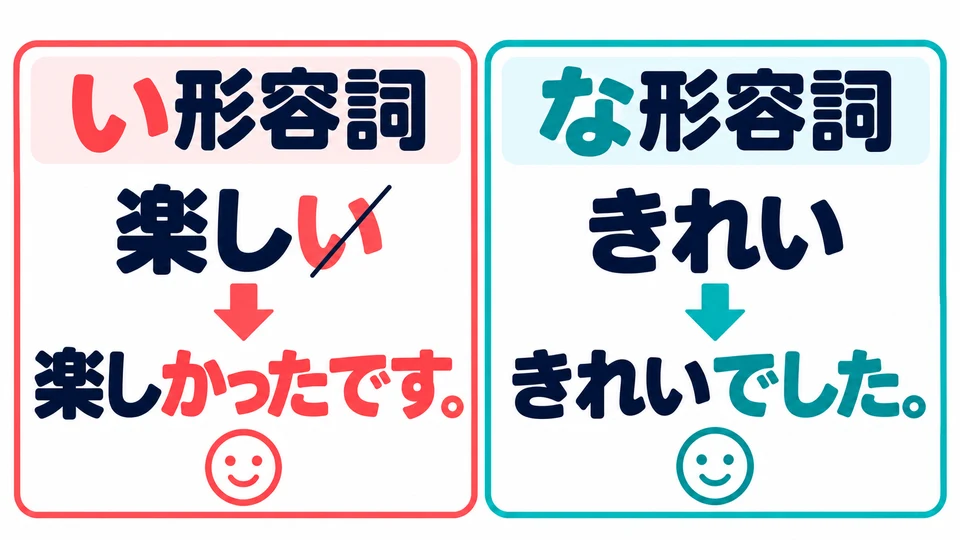
  3. Attach 「でした」 directly to the stem of a な-adjective. Do not add 「な」 in 「きれいでした」.
    Attach 「でした」 directly to the stem of a な-adjective. Do not add 「な」 in 「きれいでした」.

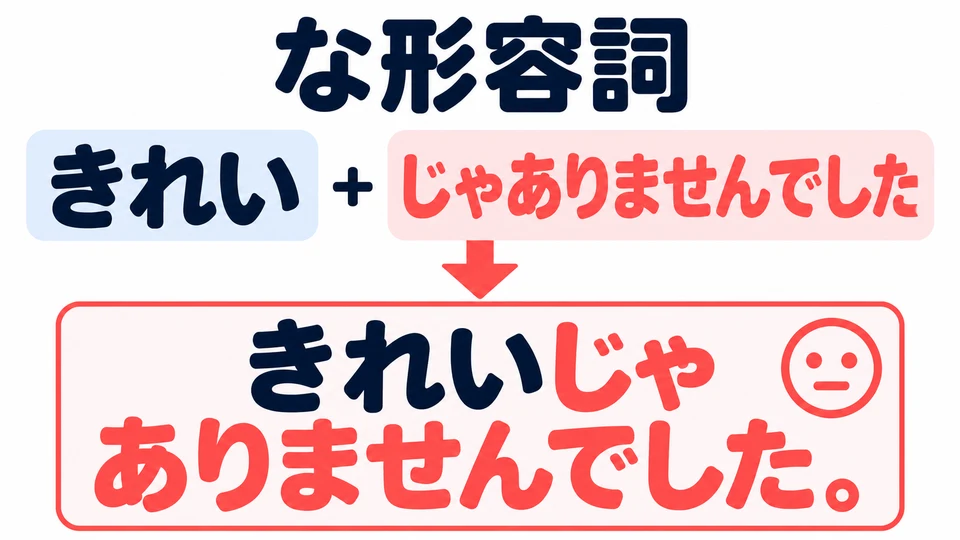
  4. Past negative of a な-adjective: stem + 「じゃありませんでした」. The stem stays unchanged.
    Past negative of a な-adjective: stem + 「じゃありませんでした」. The stem stays unchanged.

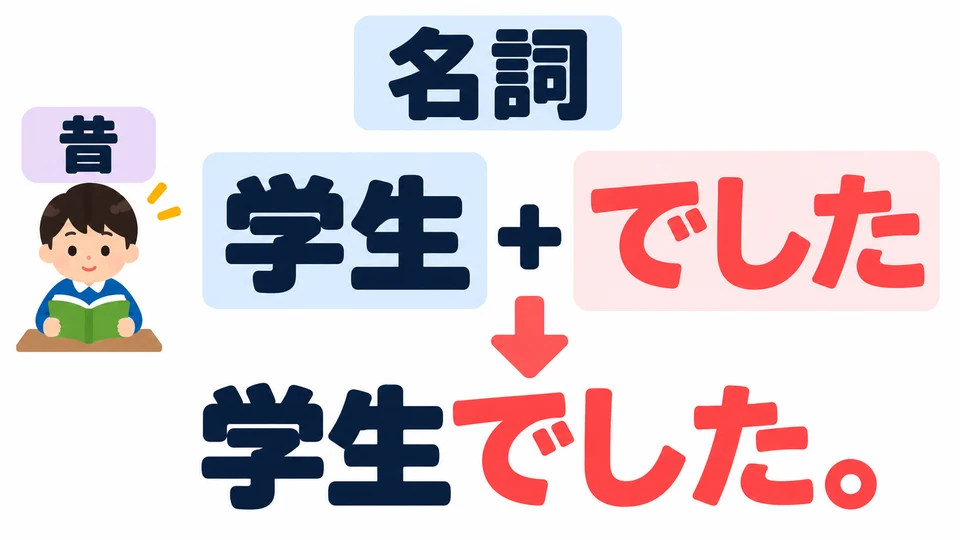
  5. Nouns can also take 「でした」. 「学生でした」 means someone was a student in the past.
    Nouns can also take 「でした」. 「学生でした」 means someone was a student in the past.

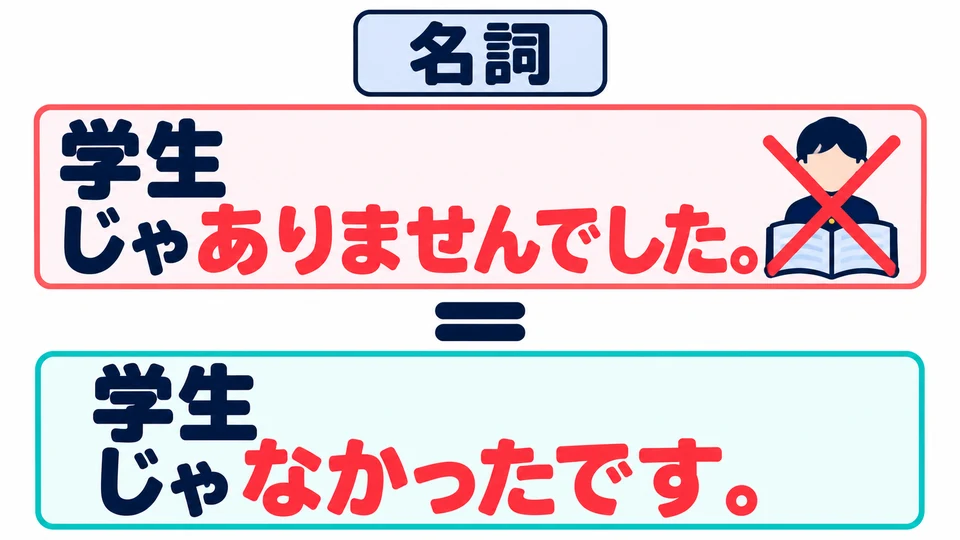
  6. The past negative of a noun uses the same two endings, as in 「学生じゃなかったです」.
    The past negative of a noun uses the same two endings, as in 「学生じゃなかったです」.

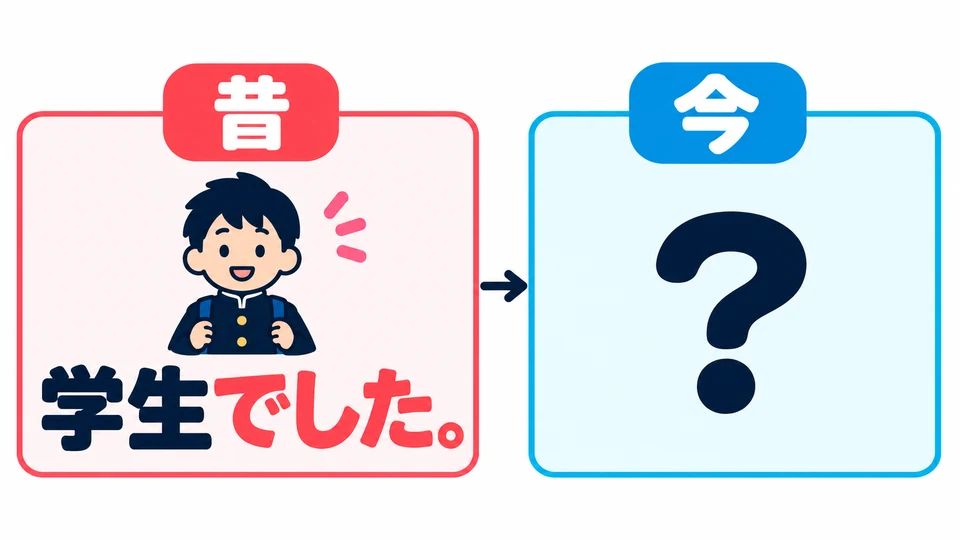
  7. A past form only tells us what things were like then. It alone cannot tell us whether they are the same now.
    A past form only tells us what things were like then. It alone cannot tell us whether they are the same now.

  8. Although 「きれい」 in the examples ends in 「い」, it is a な-adjective. Do not remove the 「い」.

    Although 「きれい」 in the examples ends in 「い」, it is a な-adjective. Do not remove the 「い」.

Example sentences

  • きれいでした。きれいでしたkireideshita

    It was beautiful.

  • 綺麗じゃきれいじゃkireijaありませんでした。ありませんでしたarimasendeshita

    It wasn't beautiful.

In a conversation

  • A
    パリぱりはわどうでしたか。か

    A: How was Paris?

  • B
    楽しかったです。たのしかったですルーブルるーぶる美術館びじゅつかんなどはわ最高さいこうでした。でした

Check yourself

  1. Which sentence is correct?

    1. 上野公園はきれいでした。
    2. 上野公園はきれいかったでした。
    3. 上野公園はきれいだでした。
    4. 上野公園はきれいかった。
    Show answer

    Answer: A 上野公園はきれいでした。

  2. Which sentence is correct?

    1. 東京は安全でした。
    2. 東京は安全かったでした。
    3. 東京は安全だでした。
    4. 東京は安全でしたった。
    Show answer

    Answer: A 東京は安全でした。

  3. Which sentence is correct?

    1. 祭りの会場は賑やかでした。
    2. 祭りの会場は賑やかかったでした。
    3. 祭りの会場は賑やかだした。
    4. 祭りの会場は賑やかでしたでした。
    Show answer

    Answer: A 祭りの会場は賑やかでした。

More grammar in this theme

  • 〜でした/〜じゃありませんでしたpast state, affirmative or negative
Keep practising

Test your Japanese vocabulary12 adaptive questions, freeCheck your pronunciationRead aloud and get a scorePractise verb forms10-question conjugation quizSee the whole courseGrammar, vocabulary and quizzes by theme
Compare with 「楽しかったです」, which you have already learned: い-adjectives and な-adjectives have different past endings.

Compare with 「楽しかったです」, which you have already learned: い-adjectives and な-adjectives have different past endings.

で
も
安全あんぜん
じゃありませんでした。じゃありませんでした

B: It was fun. The Louvre Museum and other places were wonderful. But it wasn't very safe.

  • A
    公園こうえんの写真しゃしんはわどこですか。か

    A: Where is the photo of the park?

  • B
    上野うえの公園こうえんです。上野ですうえの公園こうえんはわきれいでした。きれいでした

    B: It's Ueno Park. Ueno Park was beautiful.

  • A
    日本にっぽんと上海、しゃんはいどちらが賑やかでしたにぎやかでしたか。か

    A: Which was more lively, Japan or Shanghai?

  • B
    上海しゃんはいの南なん京路きんろはわとても賑やかでした。にぎやかでした

    B: Nanjing Road in Shanghai was very lively.

Take the quiz
〜ました/〜ませんでしたpast affirmative and negative
どこかへ行きましたかask if someone went somewhere
それからthen; next action
〜かったです/〜くなかったですpast adjective impression
どうでしたか/どうして〜/〜からですask past impression and reason
〜がほしいですwant to have something
〜が好きです/嫌いですlikes and dislikes
〜たいです/〜たくないですwant or not want to do
〜へ〜に行きますgo somewhere to do something
Previous〜かったです/〜くなかったです
Nextどうでしたか/どうして〜/〜からです