
Japanese grammar · ≈ JLPT N5 · Beginner 1
〜でした/〜じゃありませんでした~deshita / ~ja arimasen deshita
past state, affirmative or negative
Use 「〜でした/〜じゃありませんでした」 for past states of な-adjectives and nouns.
How it works
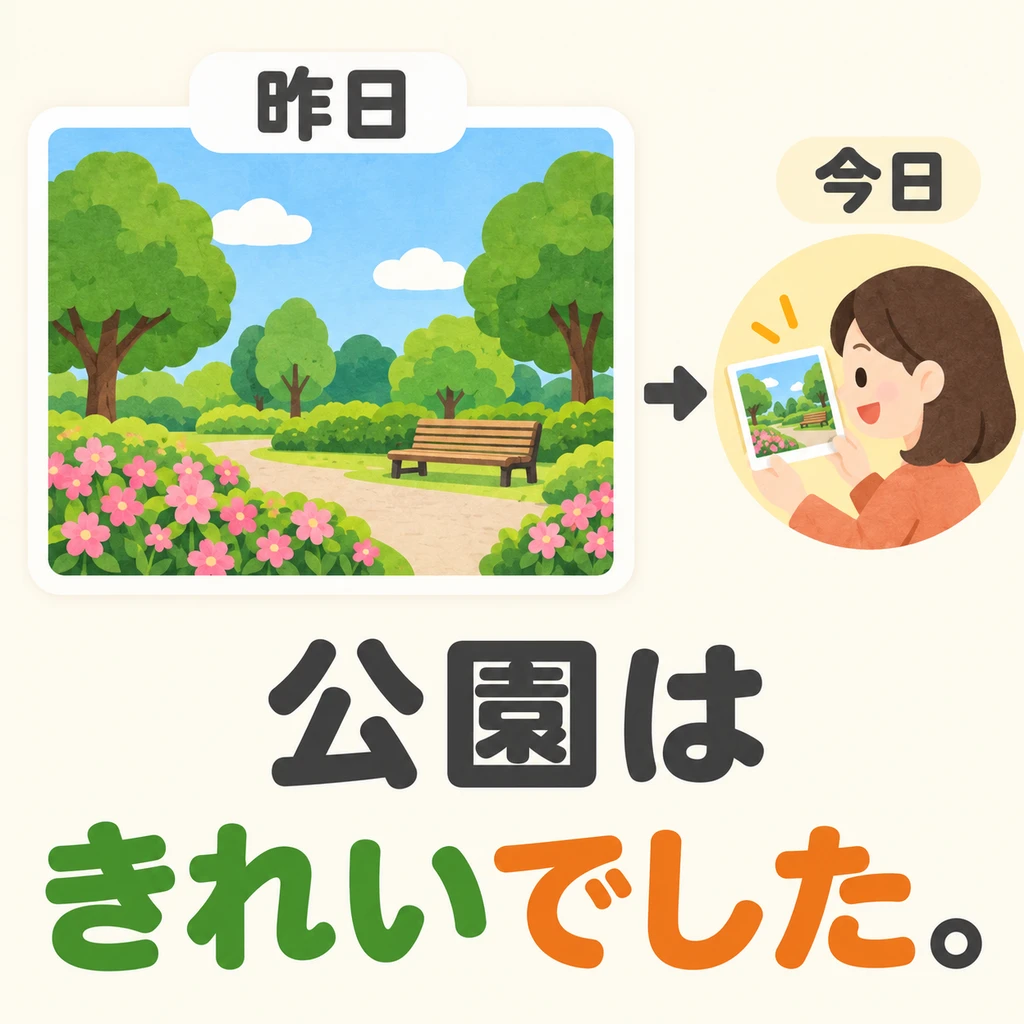
Looking at yesterday’s photo today, use 「でした」 to recall how beautiful the park was then.
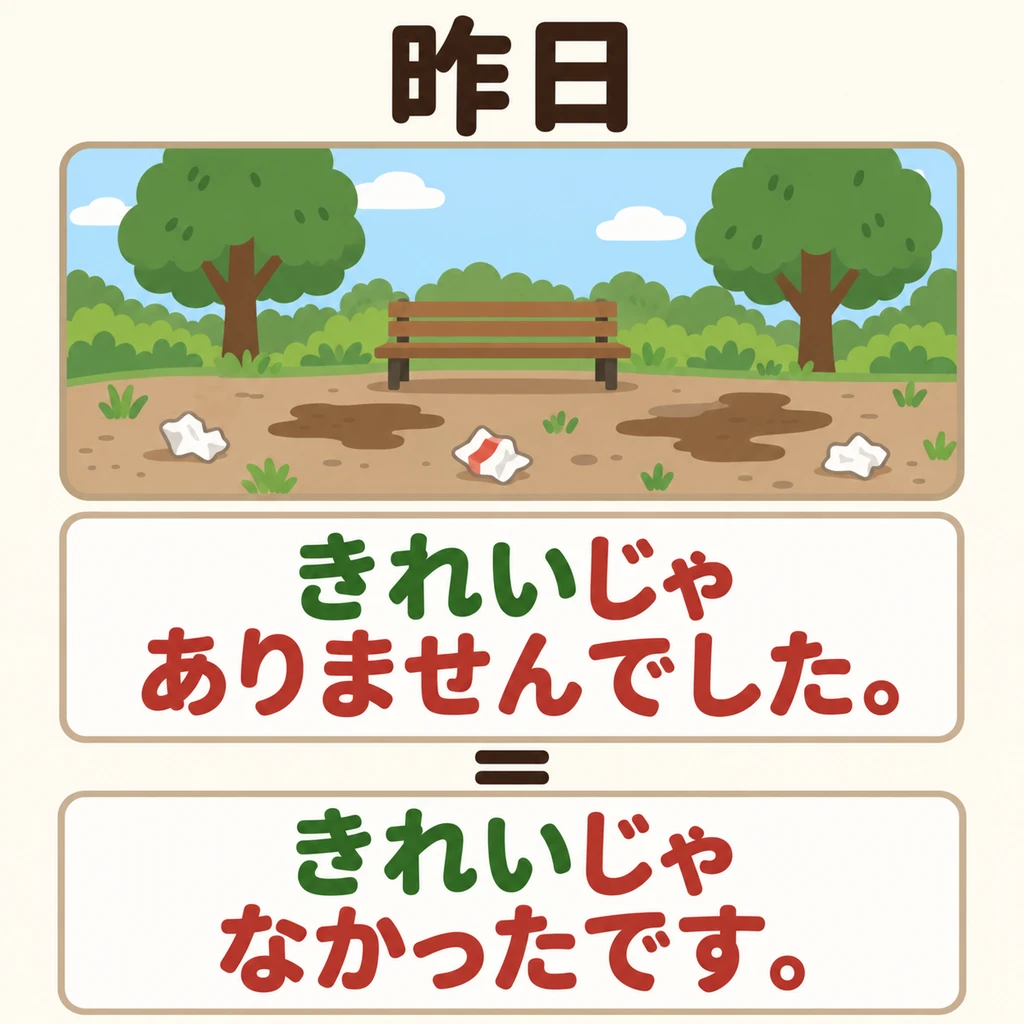
The park wasn’t beautiful yesterday. The two expressions in the picture mean the same thing: both negate a past state.
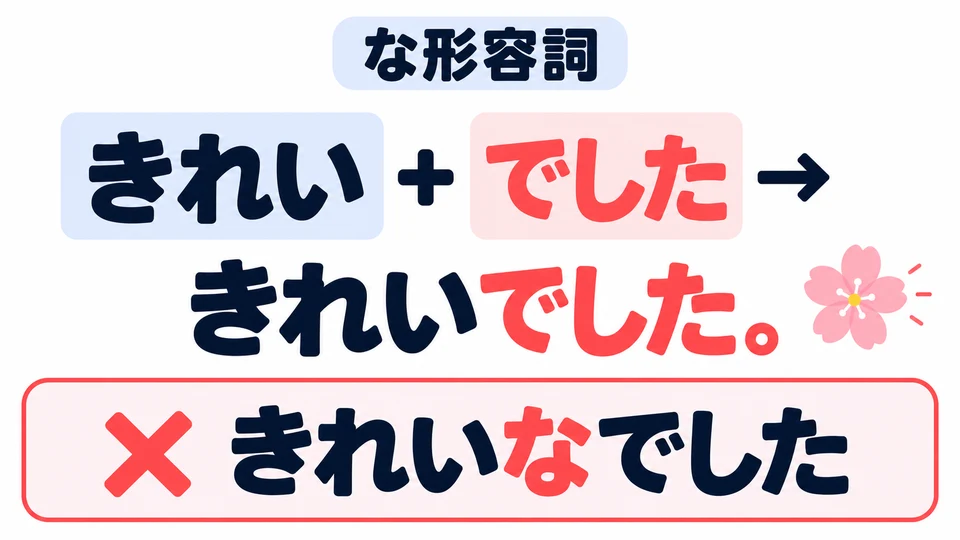
Attach 「でした」 directly to the stem of a な-adjective. Do not add 「な」 in 「きれいでした」.
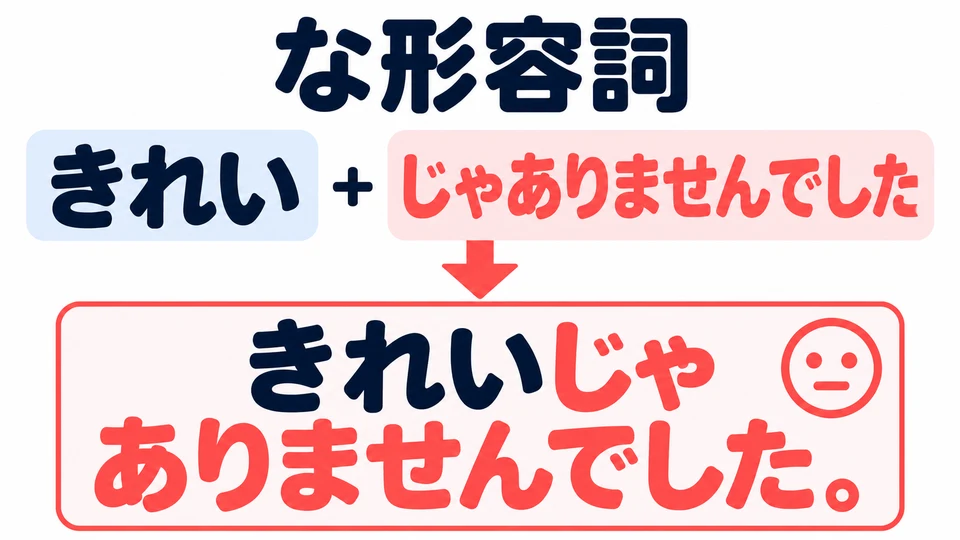
Past negative of a な-adjective: stem + 「じゃありませんでした」. The stem stays unchanged.
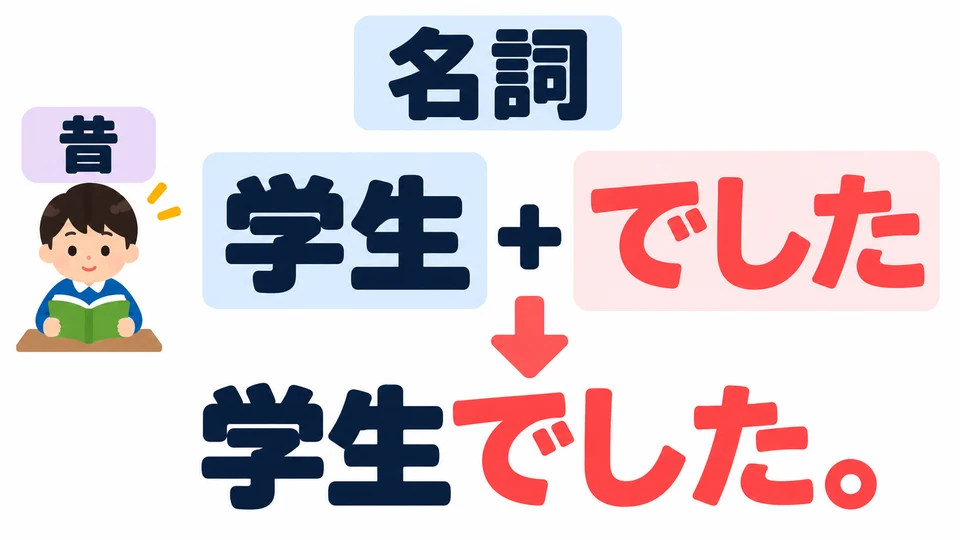
Nouns can also take 「でした」. 「学生でした」 means someone was a student in the past.
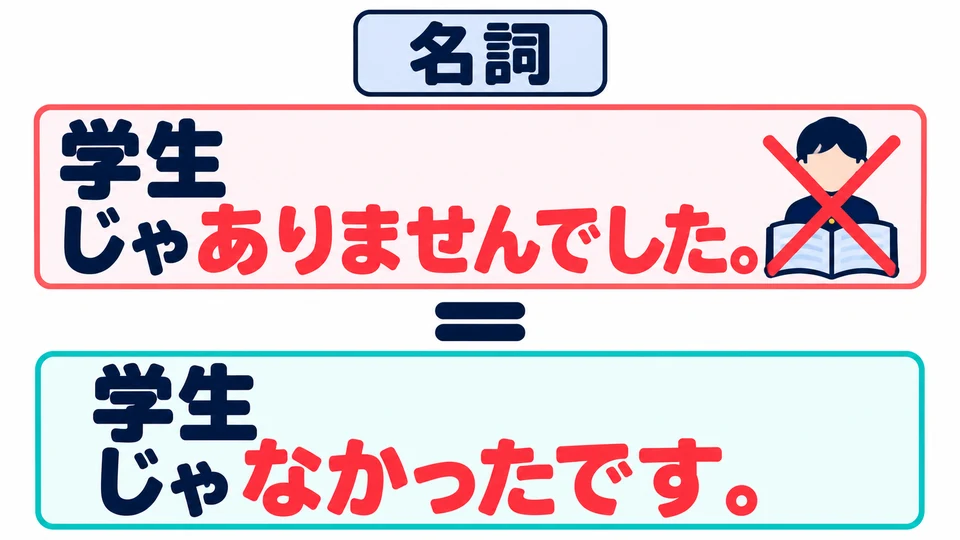
The past negative of a noun uses the same two endings, as in 「学生じゃなかったです」.
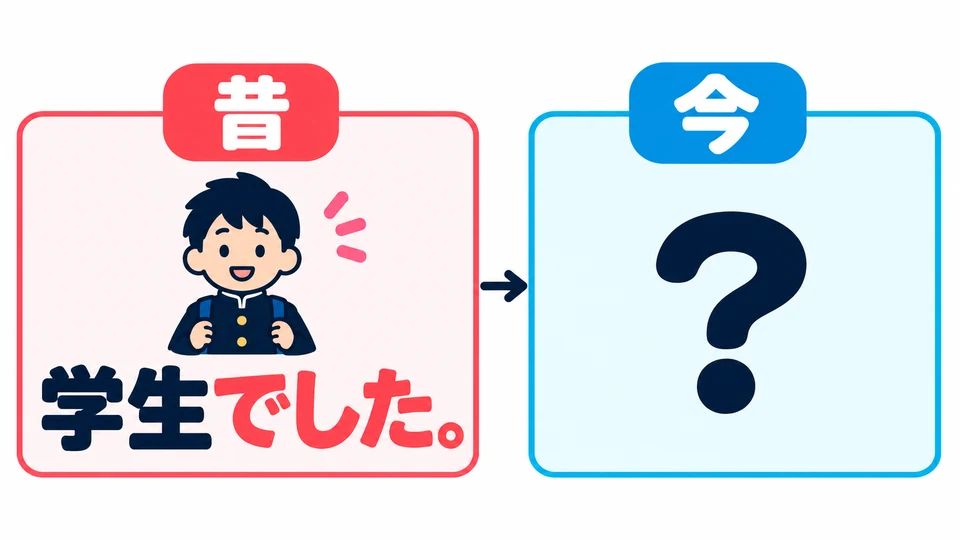
A past form only tells us what things were like then. It alone cannot tell us whether they are the same now.
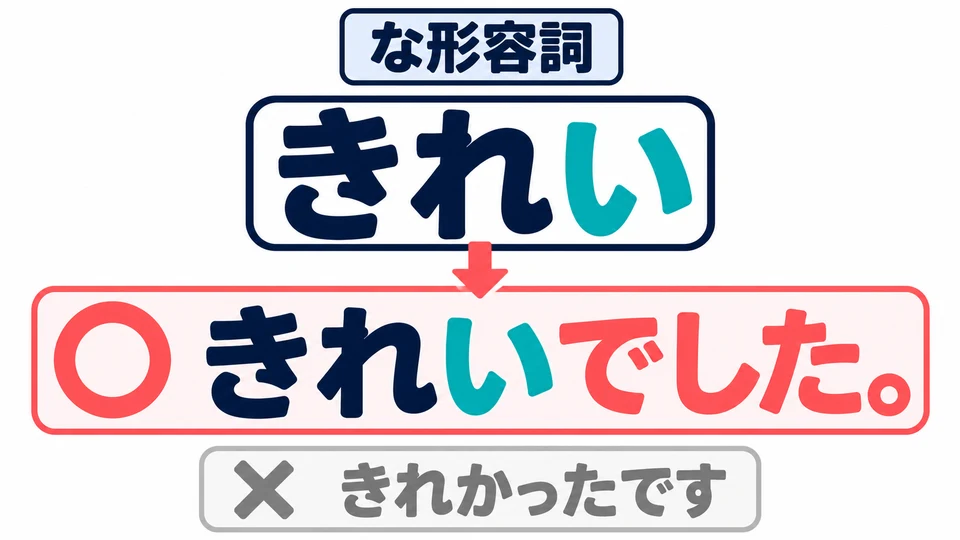
Although 「きれい」 in the examples ends in 「い」, it is a な-adjective. Do not remove the 「い」.
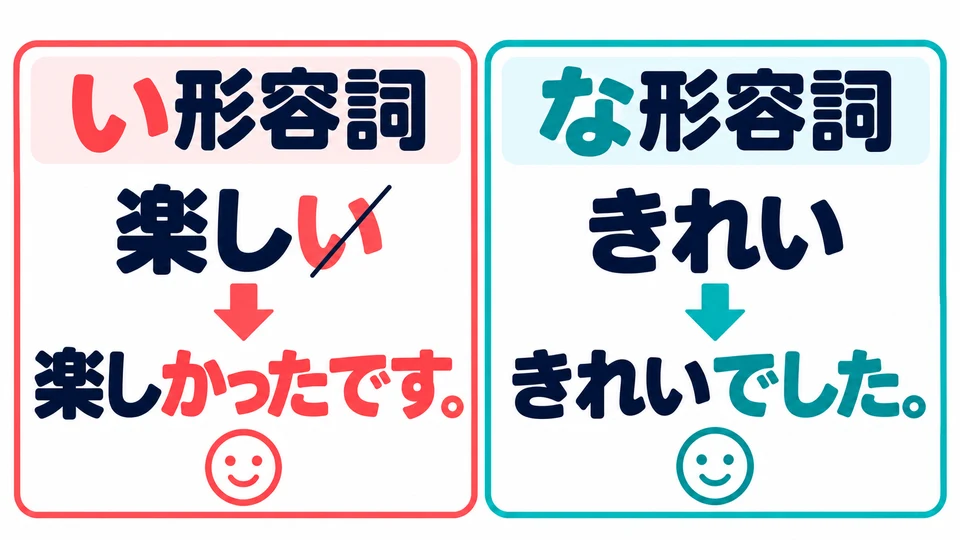
Compare with 「楽しかったです」, which you have already learned: い-adjectives and な-adjectives have different past endings.
Example sentences
- きれいでした。kireideshita
It was beautiful.
- 綺麗じゃkireijaありませんでした。arimasendeshita
It wasn't beautiful.
In a conversation

- Aパリはどうでしたか。
A: How was Paris?
- B楽しかったです。ルーブル美術館などは最高でした。
Check yourself
Level 1 · Recognise
Which sentence is correct?
Level 1 · Recognise
Listen and choose the meaning
Level 2 · Build
Put the words in order
Ueno Park was beautiful.
Level 3 · Use
What goes in the blank?
公園はきれい 。
The park was beautiful.
More grammar in this theme
- 〜でした/〜じゃありませんでしたpast state, affirmative or negative