JPEdLab iconJPEdLab
Save history

Create an account and play

Explore first, then save your progress whenever you are ready. No email address is required.

Start free
  1. Japanese grammar
  2. JLPT N5 grammar
  3. 〜で〜があります

〜で〜があります~ de ~ ga arimasu

De ga arimasu (〜で〜があります) means “event at a place; something exists”.

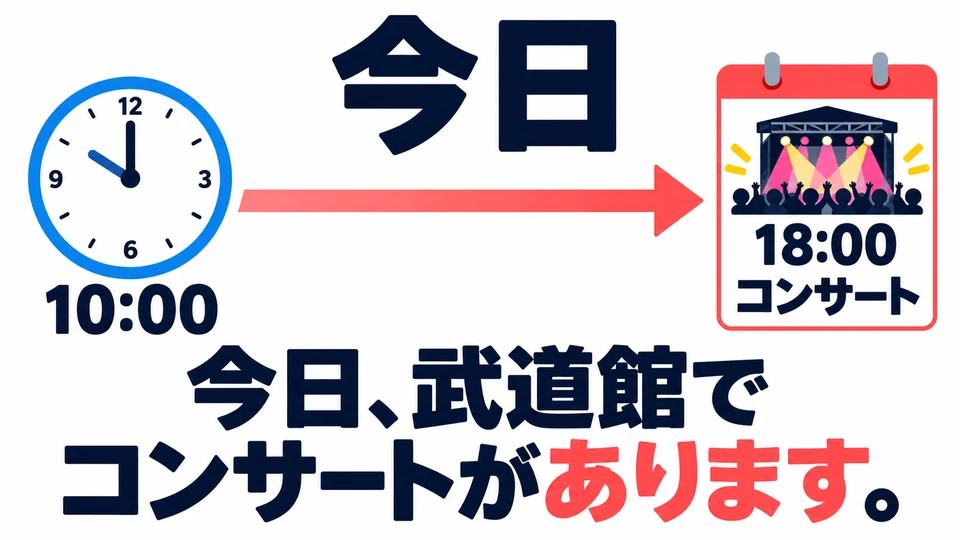
今日きょうkyou武道館ぶどうかんbudoukanでdeコンサートこんさーとkonsaatoがgaあります。ありますarimasu

There is a concert at the Budokan today.

Use 「〜で〜があります」 for an event at a place; 「〜が〜枚あります」 counts flat items such as tickets.

In the course›

How it works

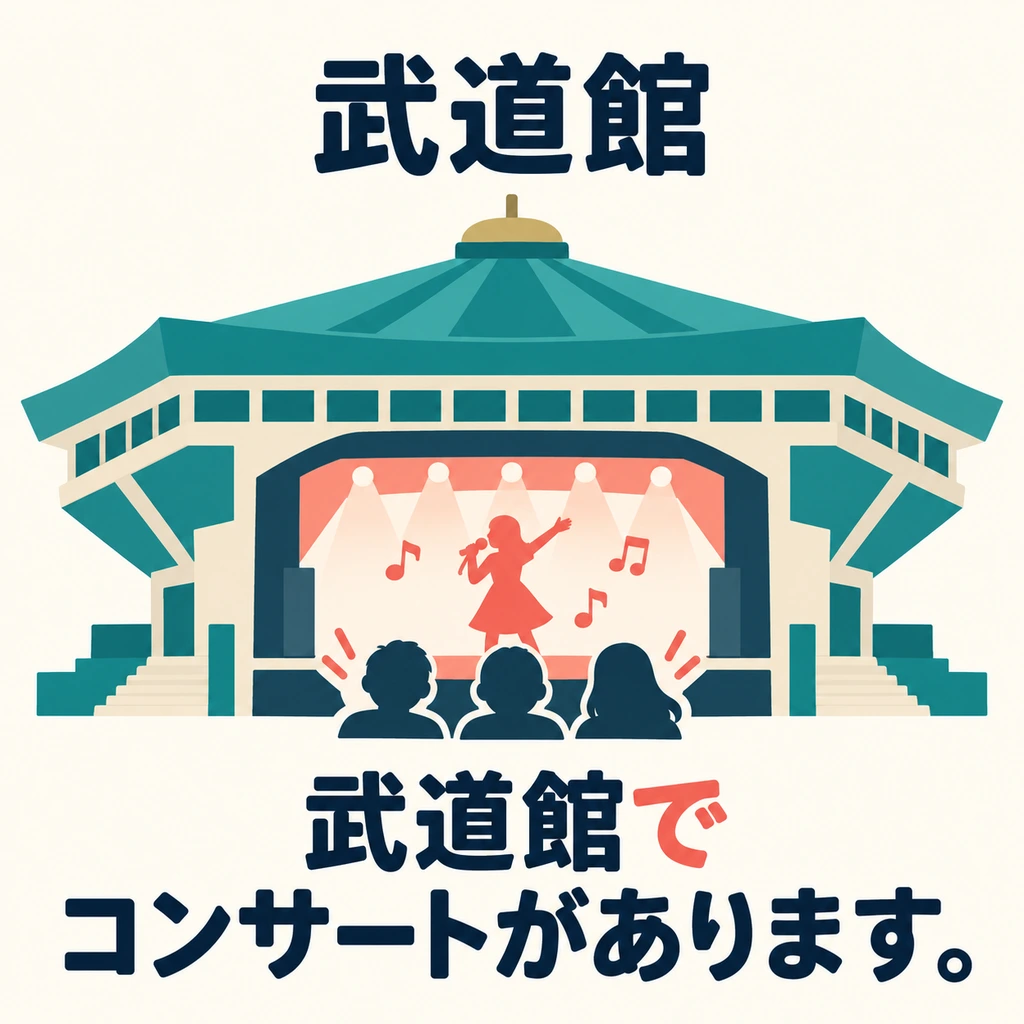
  1. Where is the concert held? Use 「で」 after the place to say that an event takes place there.
    Where is the concert held? Use 「で」 after the place to say that an event takes place there.

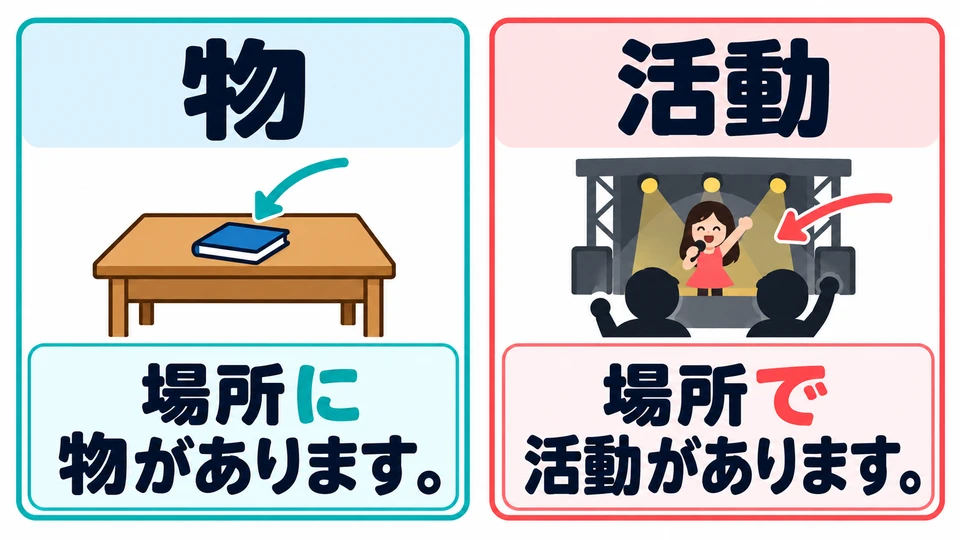
  2. Use 「に」 for where an object is, and 「で」 for where an event takes place. First decide: an object or an event?
    Use 「に」 for where an object is, and 「で」 for where an event takes place. First decide: an object or an event?

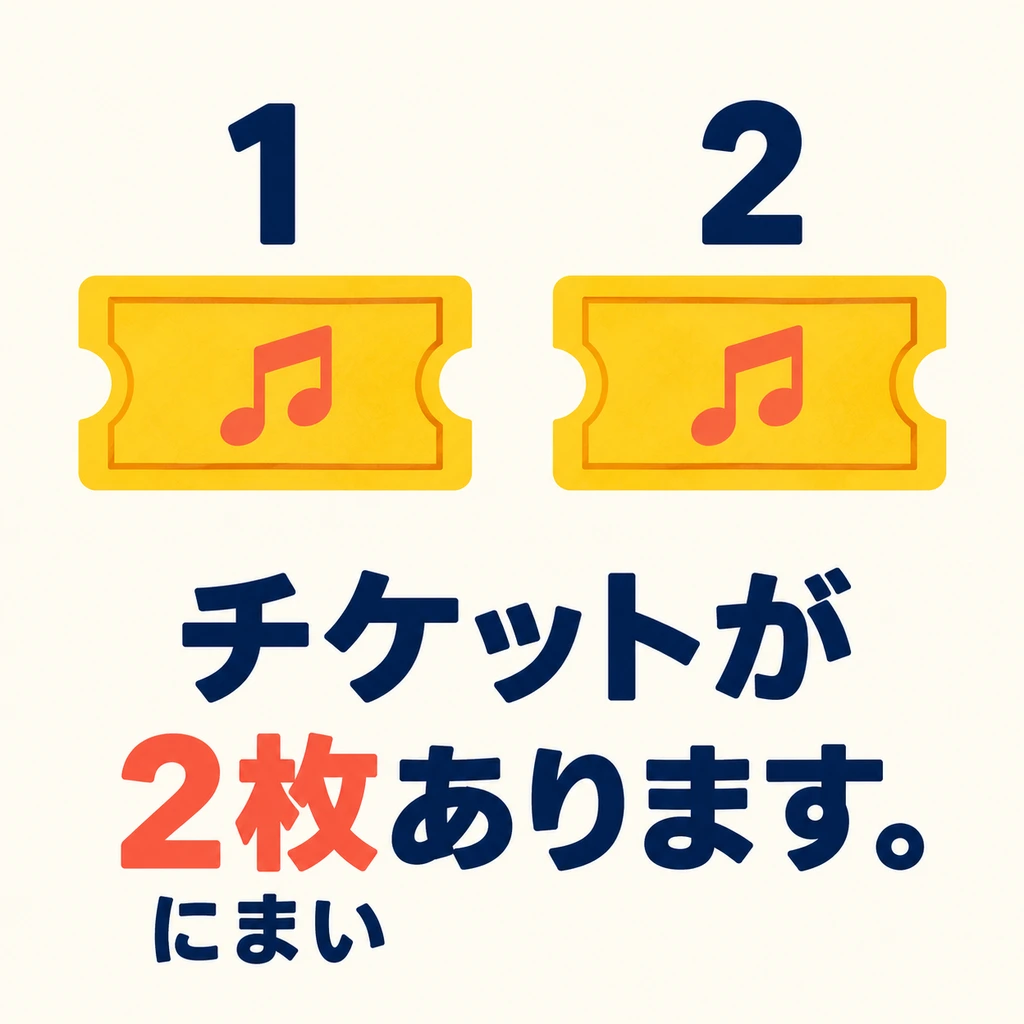
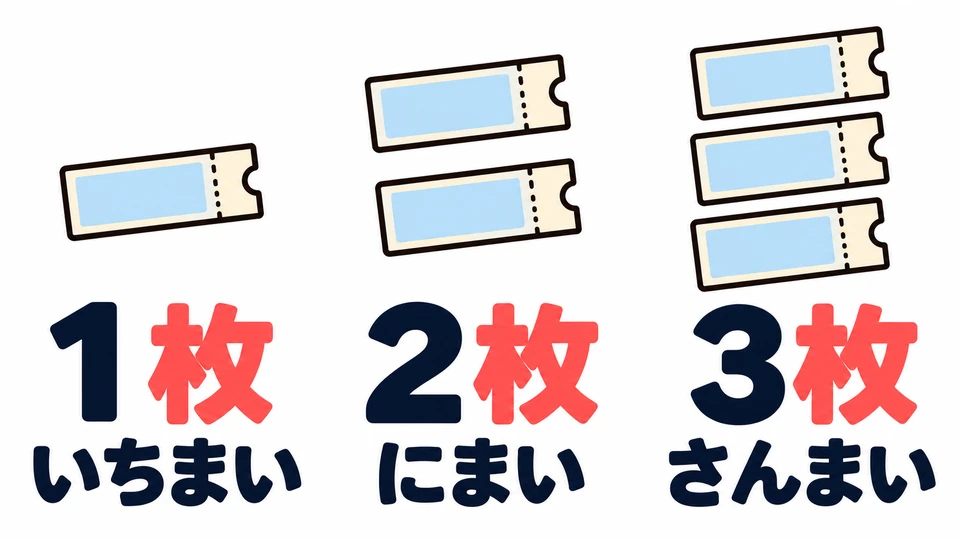
  3. Count the tickets. Use 「枚」 to count thin, flat objects such as tickets and sheets of paper.
    Count the tickets. Use 「枚」 to count thin, flat objects such as tickets and sheets of paper.

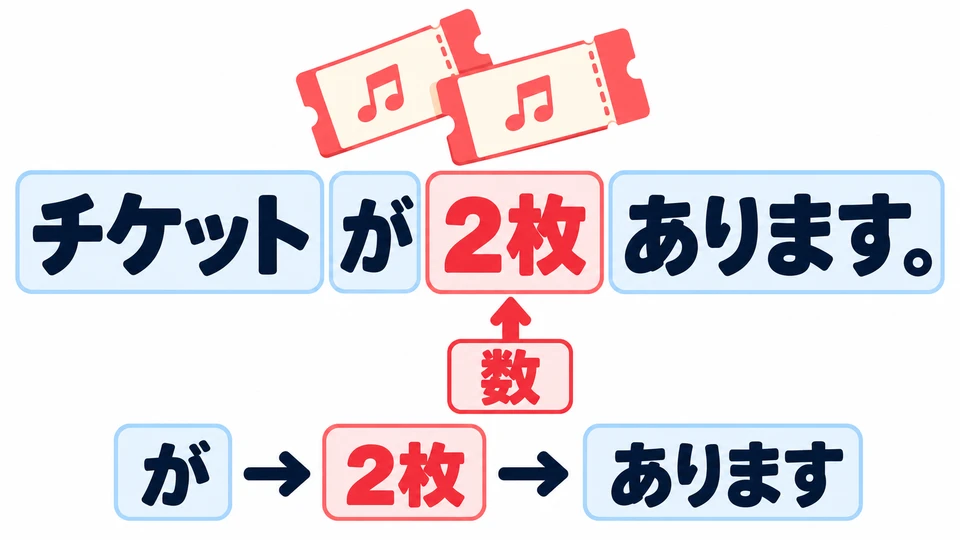
  4. In the example, 「2枚」 comes after 「が」 and before 「あります」 to say how many tickets there are.
    In the example, 「2枚」 comes after 「が」 and before 「あります」 to say how many tickets there are.

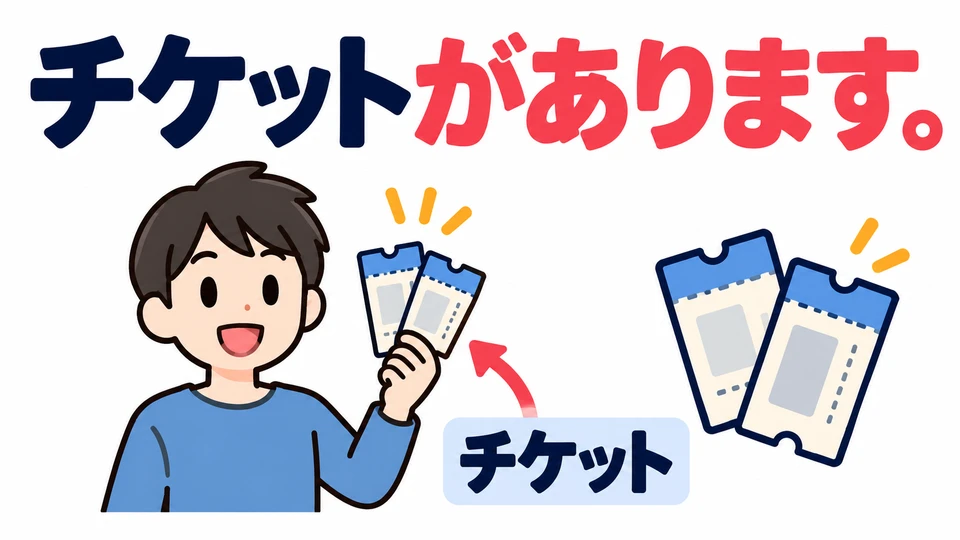
  5. In the example, 「チケットがあります」 can also mean that someone has tickets. The context tells us who has them.
    In the example, 「チケットがあります」 can also mean that someone has tickets. The context tells us who has them.

  6. Even if today’s concert has not started yet, you can use 「あります」 to introduce a scheduled event.
    Even if today’s concert has not started yet, you can use 「あります」 to introduce a scheduled event.

  7. In the example, 「2枚」 is read 「にまい」. When counting tickets, one is 「いちまい」 and three is 「さんまい」.

    In the example, 「2枚」 is read 「にまい」. When counting tickets, one is 「いちまい」 and three is 「さんまい」.

Example sentences

  • 今日きょうkyou武道館ぶどうかんbudoukanでdeコンサートこんさーとkonsaatoがgaあります。ありますarimasu

    There is a concert at the Budokan today.

  • コンサートこんさーとkonsaatoのnoチケット

In a conversation

  • A
    駅前えきまえで世界せかいのビールびーる祭りまつりがあります。あります一緒いっしょに行きませんいきませんか。か

    A: There is a world beer festival in front of the station. Would you like to go together?

  • B
    そう

Check yourself

  1. Level 1 · Recognise

    Which sentence is correct?

  2. Level 1 · Recognise

    Listen and choose the meaning

  3. Level 2 · Build

    Put the words in order

    There's a concert at Budokan today.

  4. Level 3 · Use

    What goes in the blank?

    映画のチケット (が数枚あります)。

    I have several movie tickets.

More grammar in this theme

  • 〜で〜がありますevent at a place; something exists

More JLPT N5 grammar

Keep practising

Test your Japanese vocabulary12 adaptive questions, freeCheck your pronunciationRead aloud and get a scorePractise verb forms10-question conjugation quizSee the whole courseGrammar, vocabulary and quizzes by theme
ちけっと
chiketto
がga
2枚にまいnimai
あります。ありますarimasu

I have two tickets for the concert.

です
か。か
何時なんじ
から
です
か。か

B: I see. What time does it start?

  • A
    12じゅうに時じからです。ですそのあと、あとコンサートこんさーとホールほーるでKPOPけーぴーおーぴーのイベントいべんとがありますよ。よ

    A: It's from 12:00. After that, there's a K-POP event at the concert hall.

    • A
      美術館びじゅつかんで展覧てんらん会かいがあります。ありますチラシちらしがありますよ。よ

      A: There is an exhibition at the art museum. I have a flyer.

    • B
      そうですか。か何曜なんよう日びまでですか。か

      B: I see. Until what day of the week?

    • A
      日曜にちよう日びまでです。チケットですちけっとが二枚にまいあります。あります

      A: It's until Sunday. I have two tickets.

    • A
      スタジアムすたじあむで試合しあいがあります。あります行きませんいきませんか。か

      A: There's a game at the stadium. Want to go?

    • B
      いいですね。ねチケットちけっとはわありますか。か

      B: That sounds good. Do you have tickets?

    • A
      はい、はいチケットちけっとが三枚さんまいあります。あります

      A: Yes, I have three tickets.

    Beginner 1
    Appointments
    More quizzesOpen this lesson’s quizzes in the course
    〜ませんか/〜ましょうinvite, suggest, or agree
    〜はちょっと…soft, indirect refusal
    〜で〜がいちばん〜ですthe most within a range
    〜と〜とどちらが〜ですかwhich of two is more
    〜は〜より〜ですcomparison: more than
    もう〜ましたかask if already done
    〜はどうですかhow about this option
    〜よ/〜ねshare or confirm information
    Previous〜はちょっと…
    Next〜で〜がいちばん〜です
    See all 111
    〜がほしいですwant to have something
    〜が好きです/嫌いですlikes and dislikes
    〜たいです/〜たくないですwant or not want to do
    〜へ〜に行きますgo somewhere to do something
    〜は〜にありますwhere an object is located
    〜は〜にいますwhere a person or animal is
    〜に〜があります/いますwhat is present at a place
    〜てくださいpolite request to do