JPEDLAB iconJPEDLAB
Save history

Create an account and play

Explore first, then save your progress whenever you are ready. No email address is required.

Start free
Read as articleCards
1/12

Look at the two plates. Who has already eaten lunch? You can ask using 「もう」.

››

Lesson notes · ≈ JLPT N5 · Beginner 1

もう〜ましたかmou ~ mashita ka

ask if already done

Use もう〜ましたか to ask whether an action has been completed by now; まだです means it is not done yet.

How it works
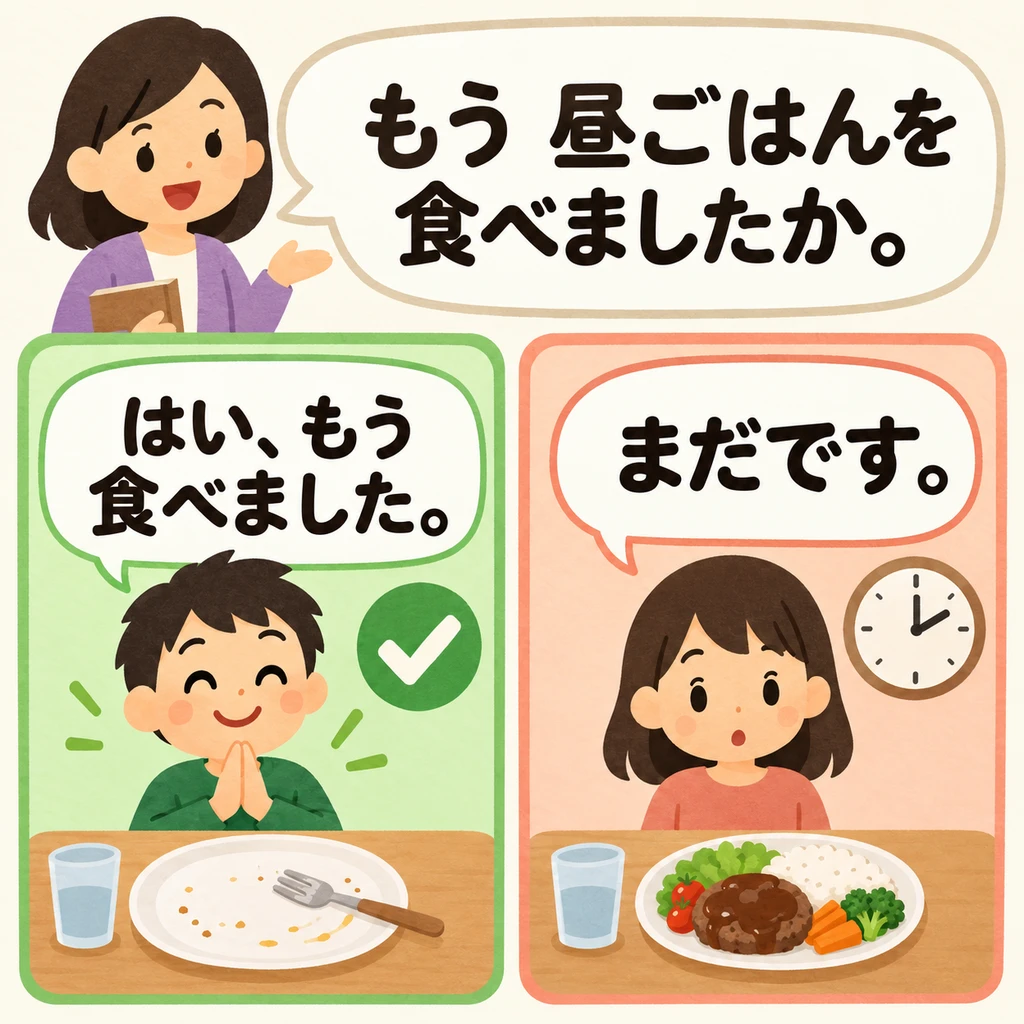
  1. Look at the two plates. Who has already eaten lunch? You can ask using 「もう」.
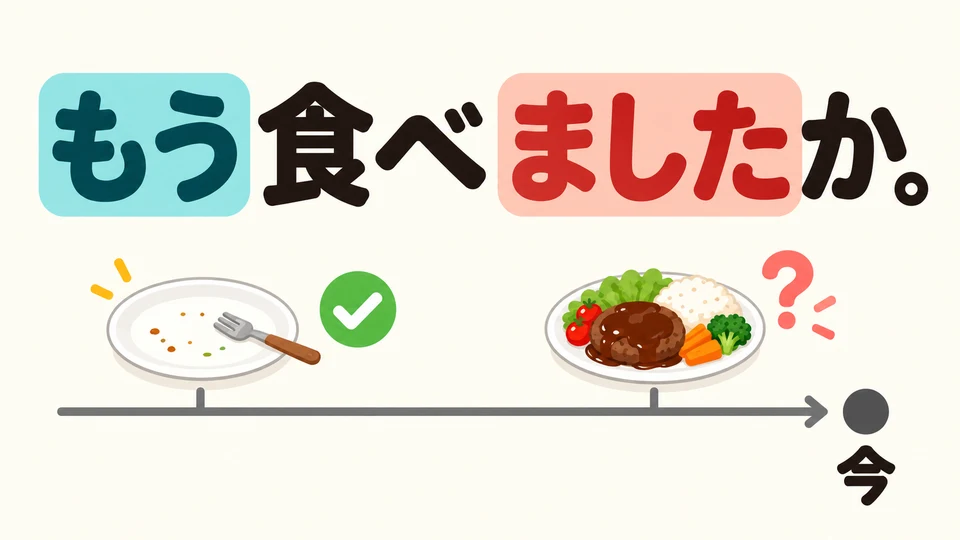
    Look at the two plates. Who has already eaten lunch? You can ask using 「もう」.

  2. 「もうVましたか」 asks whether an action has already been completed by now.
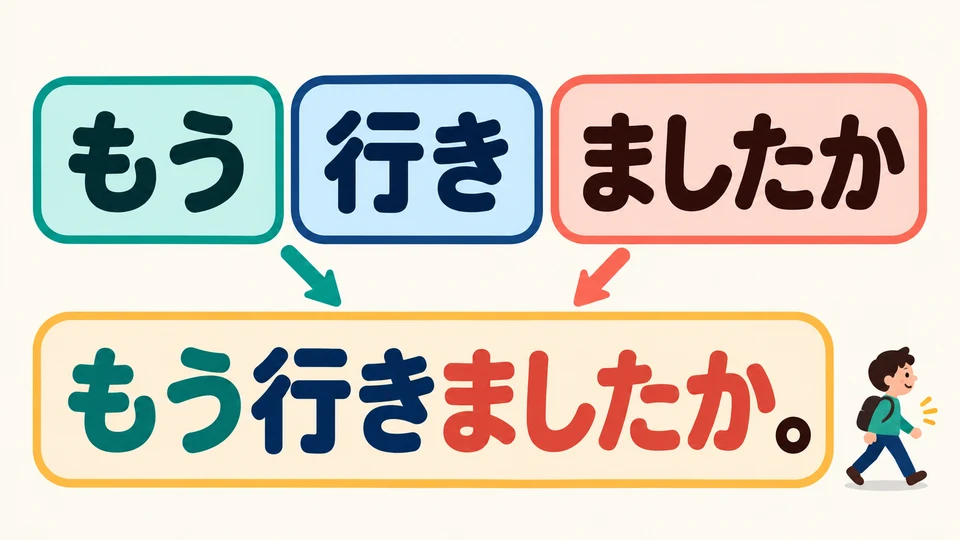
    「もうVましたか」 asks whether an action has already been completed by now.
Put 「もう」 before the verb and end with 「ましたか」, as in 「もう行きましたか」.

Put 「もう」 before the verb and end with 「ましたか」, as in 「もう行きましたか」.

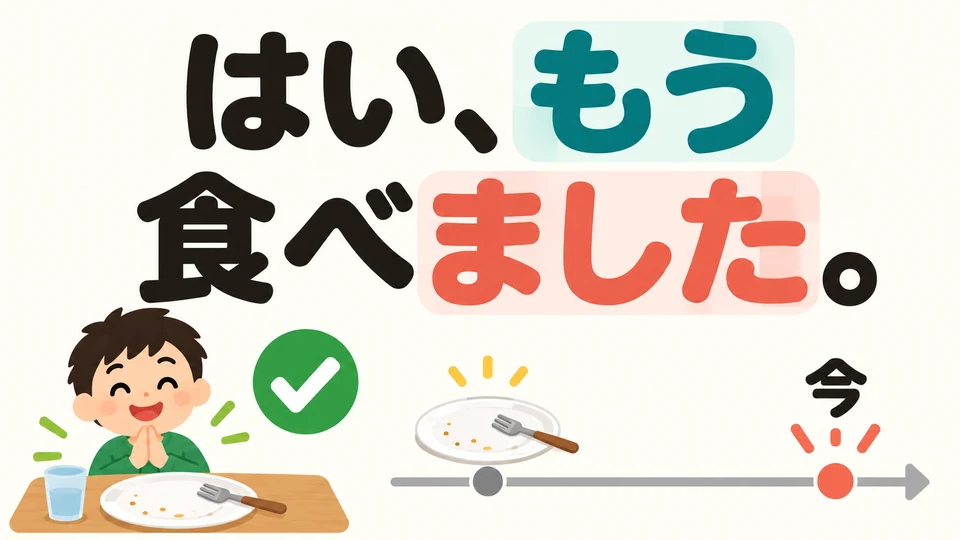
  • If you have already eaten, answer 「はい、もう食べました」 to show the action is complete.

    If you have already eaten, answer 「はい、もう食べました」 to show the action is complete.

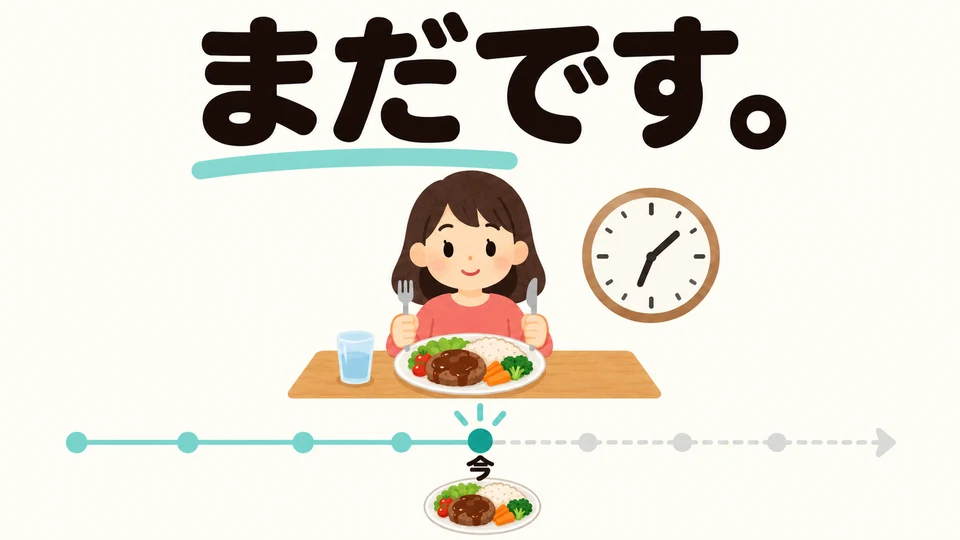
  • If you have not eaten yet, answer 「まだです」. It means the action is not complete yet.

    If you have not eaten yet, answer 「まだです」. It means the action is not complete yet.

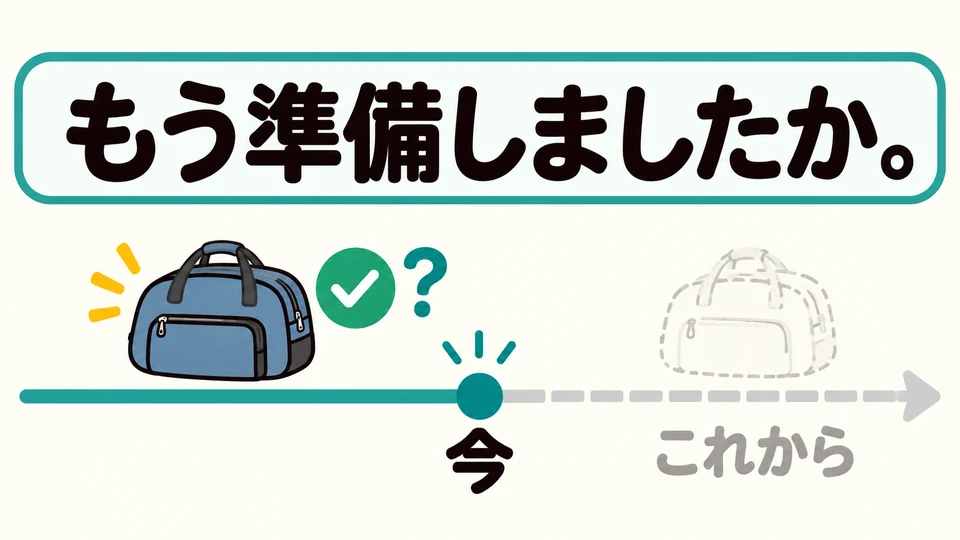
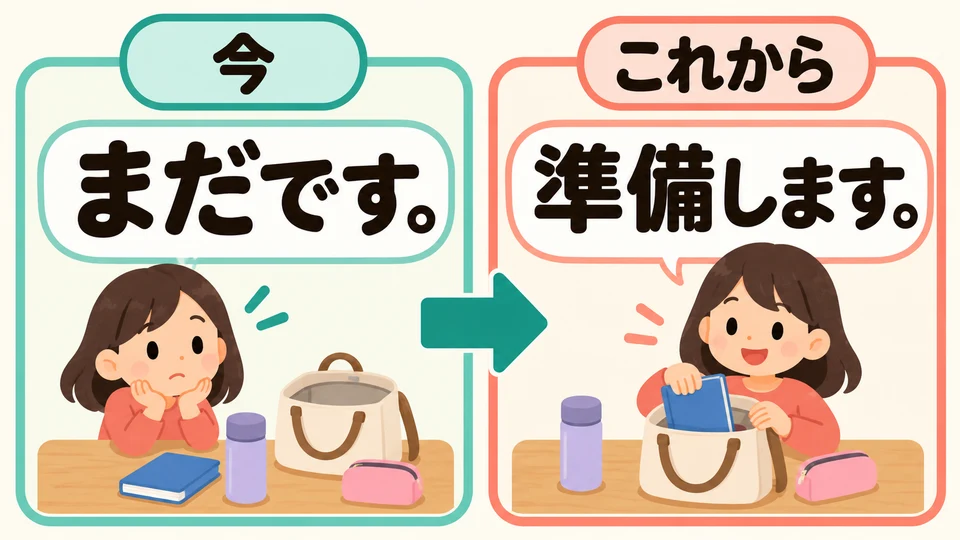
  • 「もう準備しましたか」 asks whether you have finished preparing, not whether you will prepare next.

    「もう準備しましたか」 asks whether you have finished preparing, not whether you will prepare next.

  • 「まだです」 means “not finished yet,” not that you will never do it.

    「まだです」 means “not finished yet,” not that you will never do it.

  • Example sentences

    • もうmou行きましたいきましたikimashitaか。かka

      Have you already gone?

    • もうmou準備じゅんびjunbiしましたshimashitaか。かka

      Have you already prepared?

    In a conversation

    • A
      もう行きましたいきましたか。か

      A: Have you already gone?

    • B
      まだです。です

      B: Not yet.

    • A
      もう準備じゅんびしましたか。か

      A: Have you already prepared?

    • B
      いいえ、いいえまだです。これですこれから準備じゅんびします。します

      B: No, not yet. I'm going to prepare now.

    • A
      もう漢字かんじを覚えましたおぼえましたか。か

      A: Have you already memorized the kanji?

    • B
      はい。はいもう覚えました。おぼえました

      B: Yes. I've already memorized them.

    • A
      もう家いえを出ましたでましたか。か

      A: Have you already left the house?

    • A
      もう着きましたつきましたか。か

      A: Have you already arrived?

    • B
      はい、はい五ご

    Check yourself

    1. Level 1 · Recognise

      Which sentence is correct?

    2. Level 1 · Recognise

      Listen and choose the meaning

    3. Level 2 · Build

      Put the words in order

      Have you already arrived at the station?

    4. Level 3 · Use

      What goes in the blank?

       昼ごはんは食べましたか。

      Have you already had lunch?

    More grammar in this theme

    • 〜ませんか/〜ましょうinvite, suggest, or agree
    • 〜はちょっと…soft, indirect refusal
    • 〜で〜がありますevent at a place; something exists
    • 〜で〜がいちばん〜ですthe most within a range
    • 〜と〜とどちらが〜ですかwhich of two is more
    • 〜は〜より〜ですcomparison: more than
    • もう〜ましたかask if already done
    • 〜はどうですかhow about this option
    • 〜よ/〜ねshare or confirm information
    Previous〜は〜より〜ですNext〜はどうですか

    Keep practising

    Test your Japanese vocabulary12 adaptive questions, freeCheck your pronunciationRead aloud and get a scorePractise verb forms10-question conjugation quizSee the whole courseGrammar, vocabulary and quizzes by theme
    See the whole course
    Beginner 1
    Appointments
    分ふん
    前まえ
    に
    着きました。つきました

    B: Yes, I arrived five minutes ago.

  • A
    昼ごはんひるごはんはわ食べましたたべましたか。か

    A: Have you eaten lunch?

  • B
    はい、はいもう食べました。たべました

    B: Yes, I've already eaten.

  • A
    明日あすの準備じゅんびはわしましたか。か

    A: Have you prepared for tomorrow?

  • B
    まだです。これですこれからします。します

    B: Not yet. I'll do it now.

  • A
    もう駅えきに着きましたつきましたか。か駅えきで本ほんを読みますよみますか。か

    A: Have you already arrived at the station? are you going to read a book at the station?

  • B
    はい、はいもう着きました。つきました友だちともだちも来ました。きました

    B: Yes, I've already arrived. My friend has come too.