
〜と〜人で住んでいます~to ~nin de sunde imasu
To nin de sunde imasu (〜と〜人で住んでいます) means “who you live with and how many”.
Three of us live together: my father, my mother, and me.
Use 「〜と」 for who lives with you and 「〜人で」 for the total, including yourself.
In the course
How it works
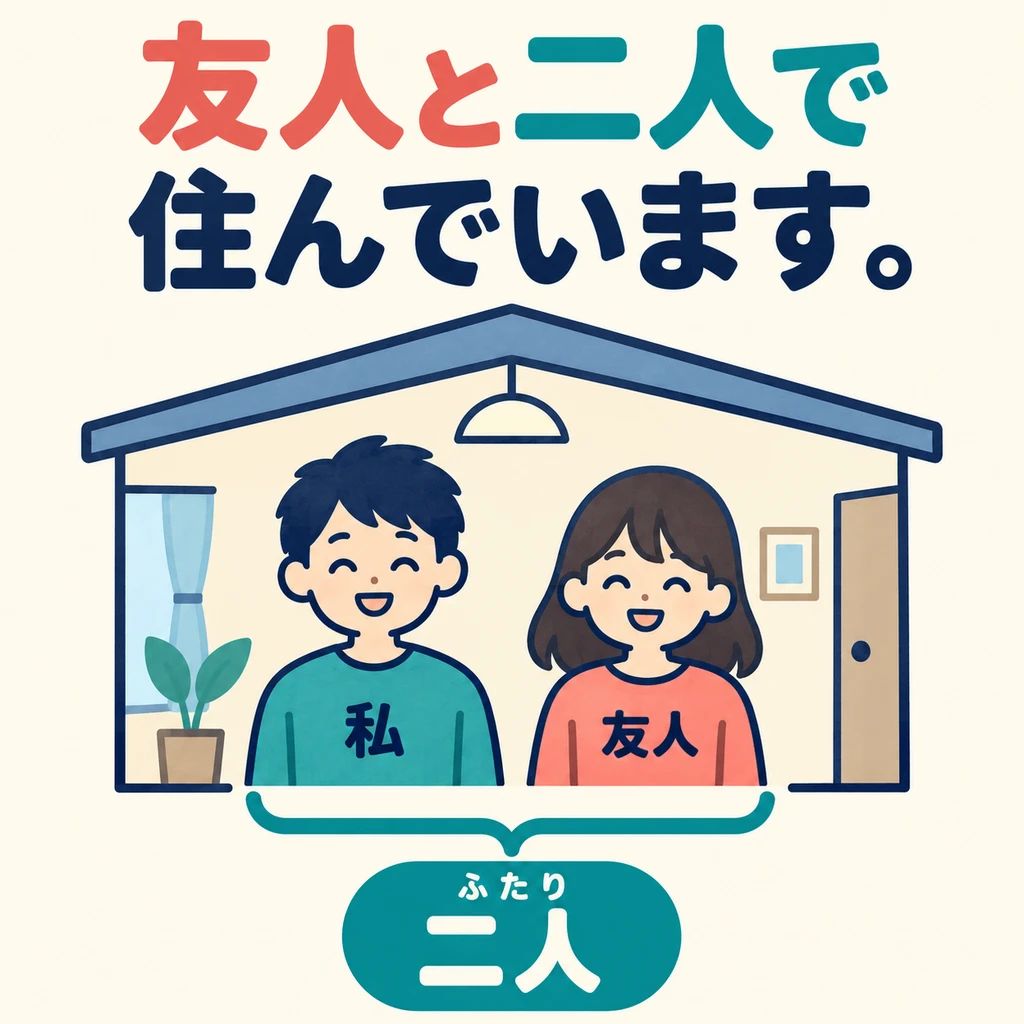
Use 「人+と」 to say who you live with. Look at the picture: who lives with me?
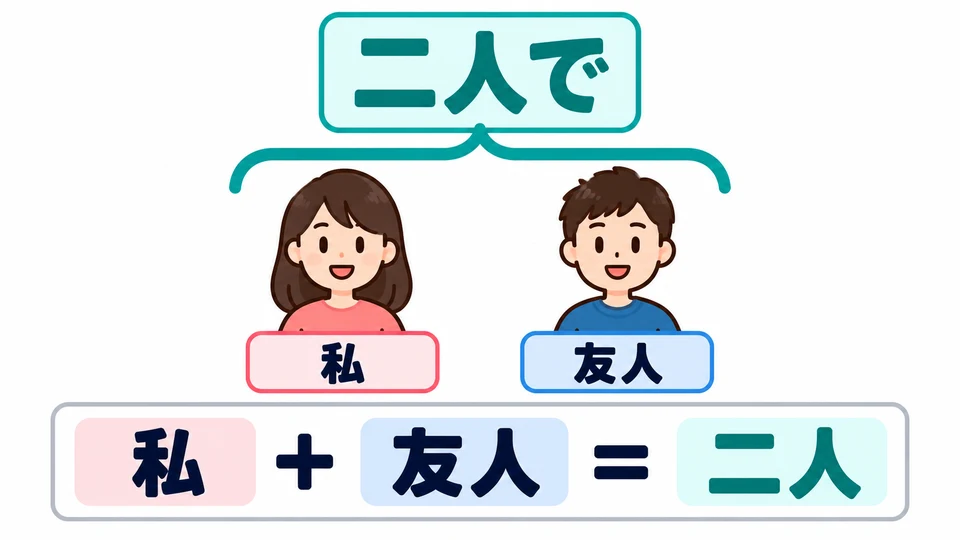
「人数+で」 gives the total number of people. 「二人で」 includes you and your friend.
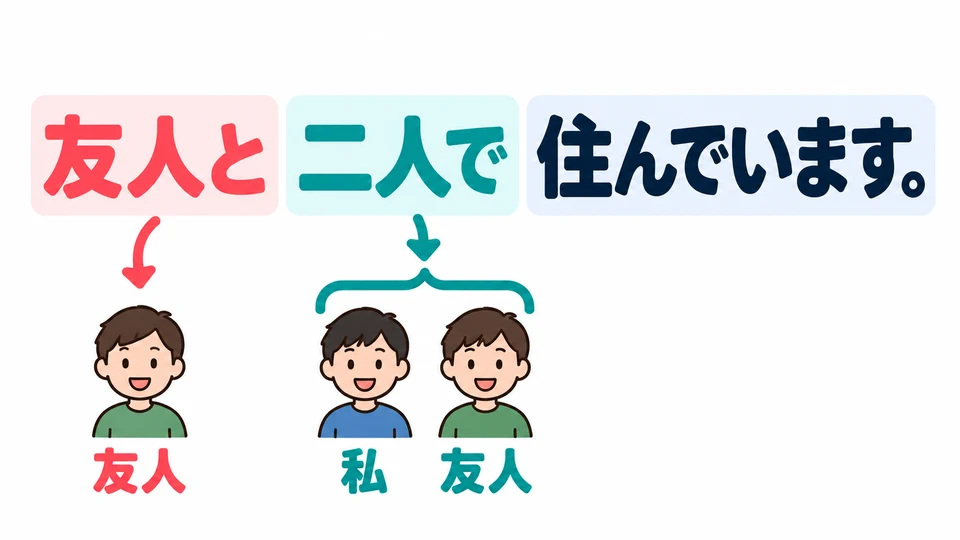
「友人と」 says who you live with; 「二人で」 gives the total number. You can use both together.
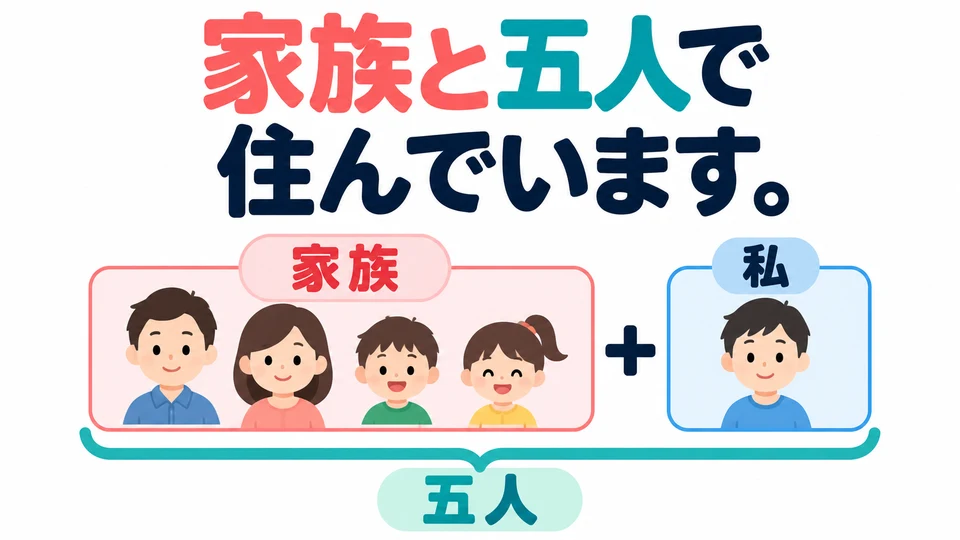
Four family members plus you make five people. Say 「家族と五人で住んでいます」.
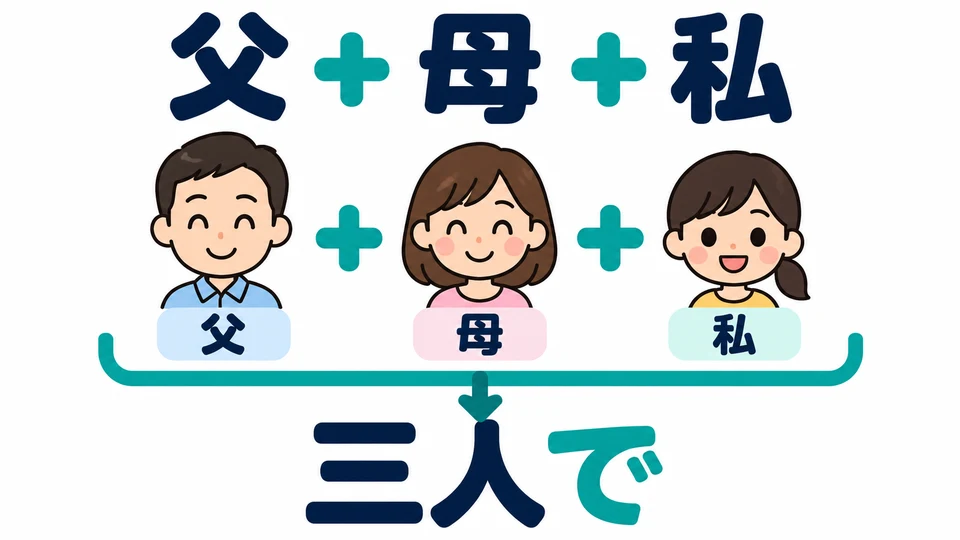
In the example, 「三人」 means my father, my mother, and me. Include yourself when counting everyone who lives together.
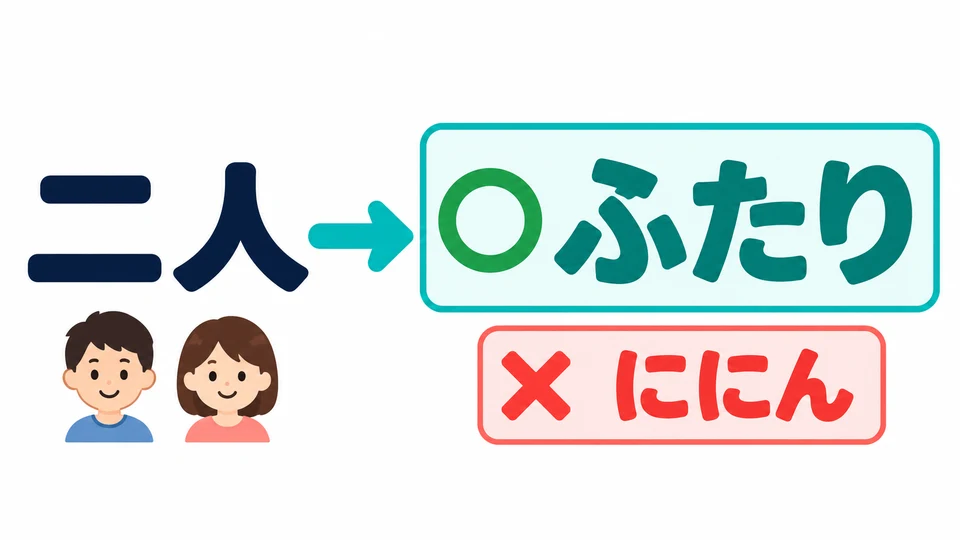
In the example, 「二人」 is read 「ふたり」, not 「ににん」. Pay attention to the reading when counting people.
Example sentences
- 父chichiとto母、haha私watashiのno三人sanninでde住んsunでdeいます。imasu
Three of us live together: my father, my mother, and me.
In a conversation

- A誰と住んでいますか。
A: Who do you live with?
- B家族と五人で住んでいます。
B: I live with my family, five of us.
Check yourself
Level 1 · Recognise
Which sentence is correct?
Level 1 · Recognise
Listen and choose the meaning
Level 2 · Build
Put the words in order
I live with my family of five.
Level 3 · Use
What goes in the blank?
友達 (一文字の助詞)四人で博物館を訪れました。
I visited a museum with my friends, the four of us.
More grammar in this theme
- 〜と〜人で住んでいますwho you live with and how many