
Japanese grammar · ≈ JLPT N4 · Beginner 2
くれますkuremasu
someone gives to me/us
Use 「くれます」 when someone gives something to you or someone on your side.
How it works
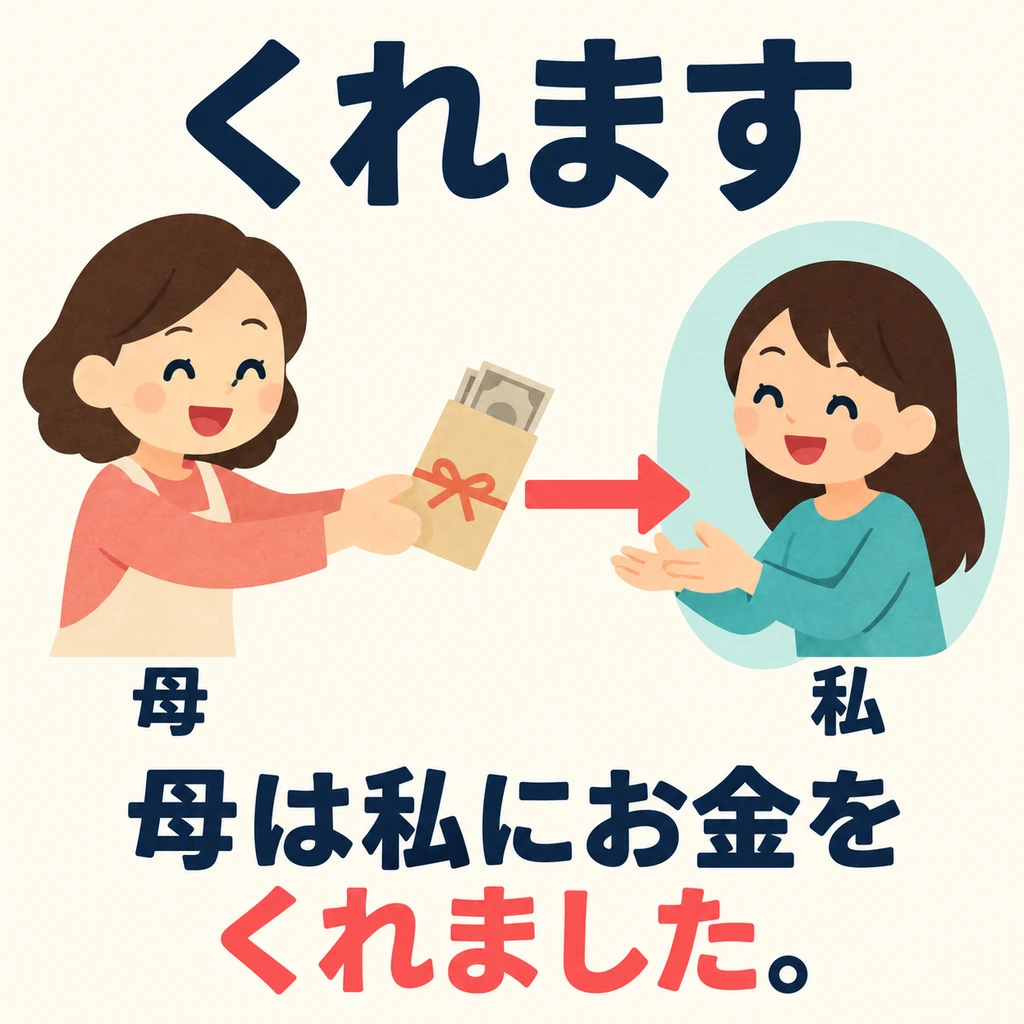
Follow the arrow: Mum gave me money. Use 「くれます」 when something comes to me.
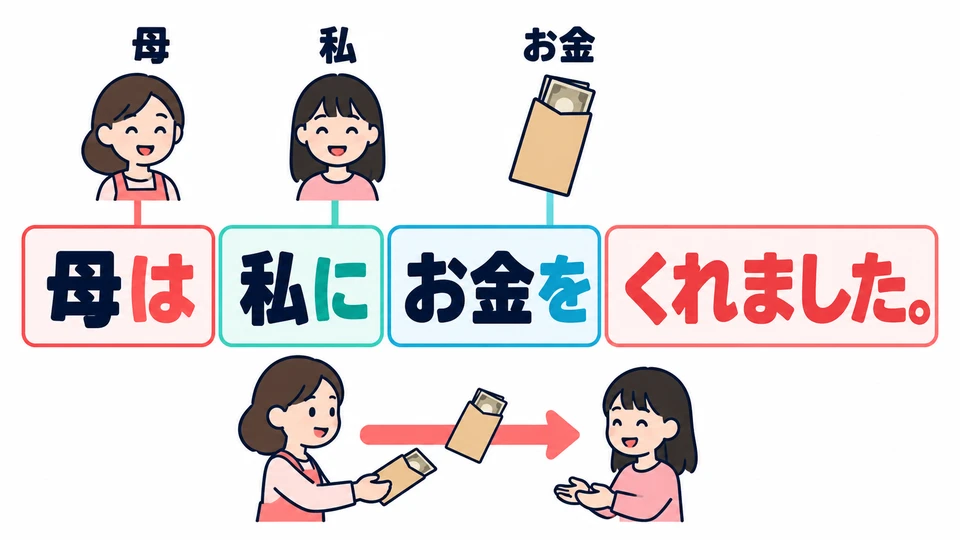
「母は」 names the giver, 「私に」 the receiver, and 「を」 marks the thing given.
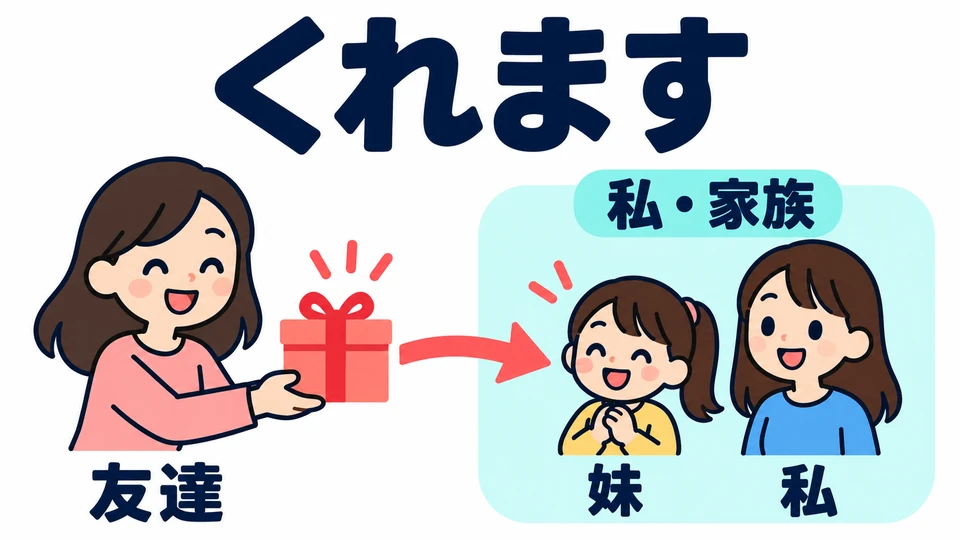
You can also use 「くれます」 when someone gives to a person on your side, such as a family member—not just to you.
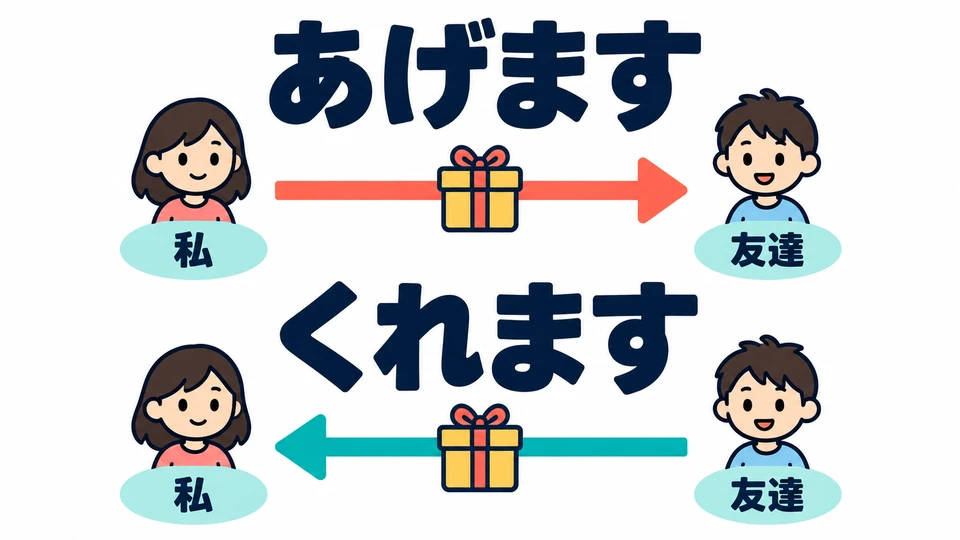
Use 「あげます」 when I give to someone else, and 「くれます」 when someone else gives to me. First, check the direction.
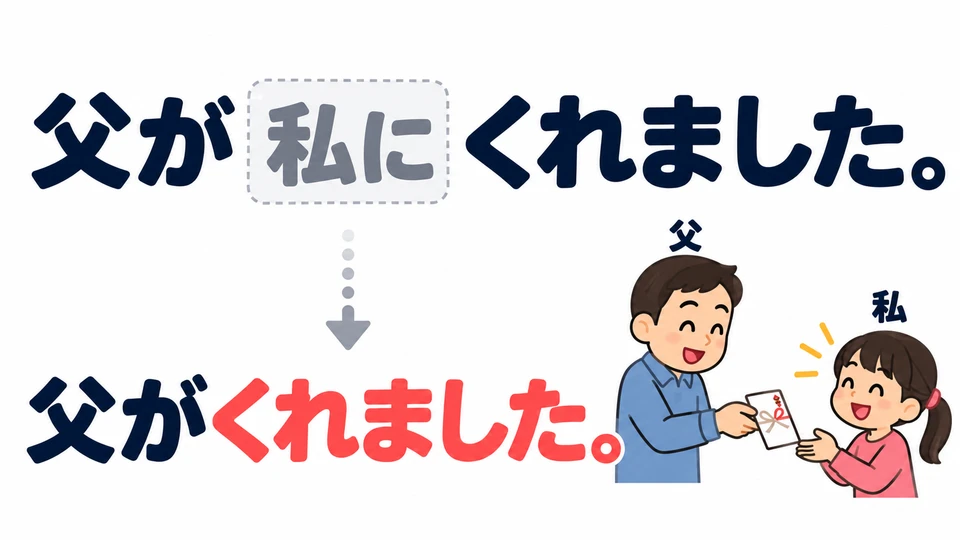
In 「父がくれました」, 「私に」 is left out because the context already makes the receiver clear.
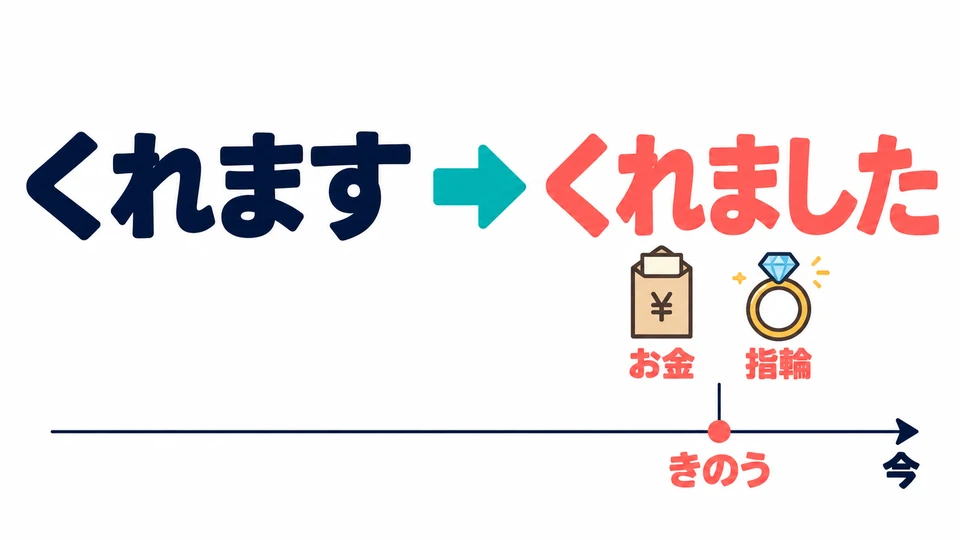
In the examples, the money and the ring have already been given, so we use the past form 「くれました」.
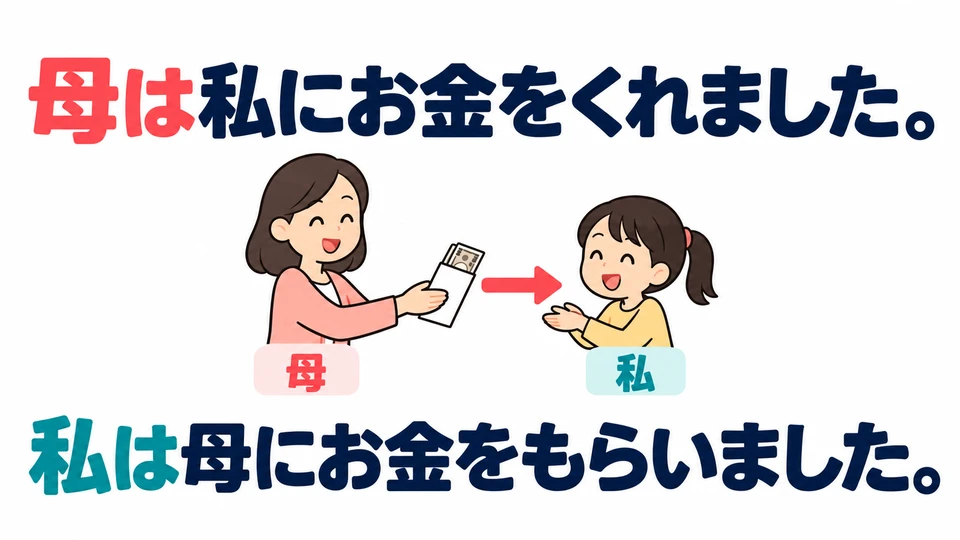
The same event can be expressed as 「私は母にお金をもらいました」. The subject is now me, the person receiving the money.
Example sentences
- 母hahaはwa私watashiにniお金okaneをoくれました。kuremashita
My mother gave me some money.
- 友達
In a conversation
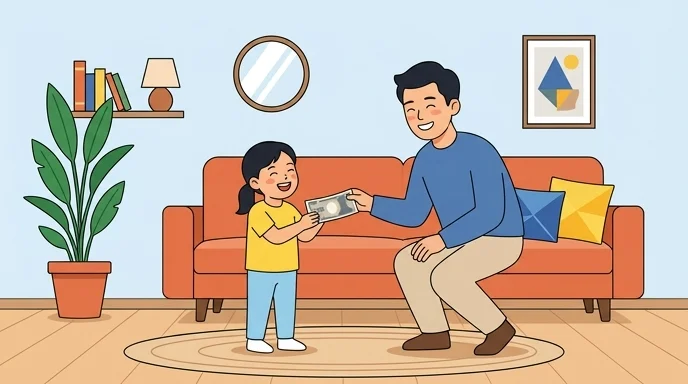
- A誰がお金をくれましたか。
A: Who gave you the money?
- B父がくれました。
B: My father gave it to me.
- Aいくら
Check yourself
Level 1 · Recognise
Which sentence is correct?
Level 1 · Recognise
Listen and choose the meaning
Level 2 · Build
Put the words in order
My father gave me sweets.
Level 3 · Use
What goes in the blank?
母は私にお金 。
My mother gave me money.
More grammar in this theme
- くれますsomeone gives to me/us