
JPEdLab iconJPEdLab
Save history

Create an account and play

Explore first, then save your progress whenever you are ready. No email address is required.

Start free
  1. Japanese grammar
  2. JLPT N5 grammar
  3. 〜ています/〜をしています

〜ています/〜をしています~te imasu / ~o shite imasu

Te imasu (〜ています) means “ongoing work or studies”.

私わたしwatashiはわwa大学だいがくdaigakuでde勉強べんきょうbenkyouしshiてteいます。いますimasu

I am studying at a university.

Use 「〜ています」 for ongoing work or study, and 「〜をしています」 after a profession to say someone's job.

In the course›

How it works

  1. Look at him working over several days: this sentence can introduce the job he does on an ongoing basis.
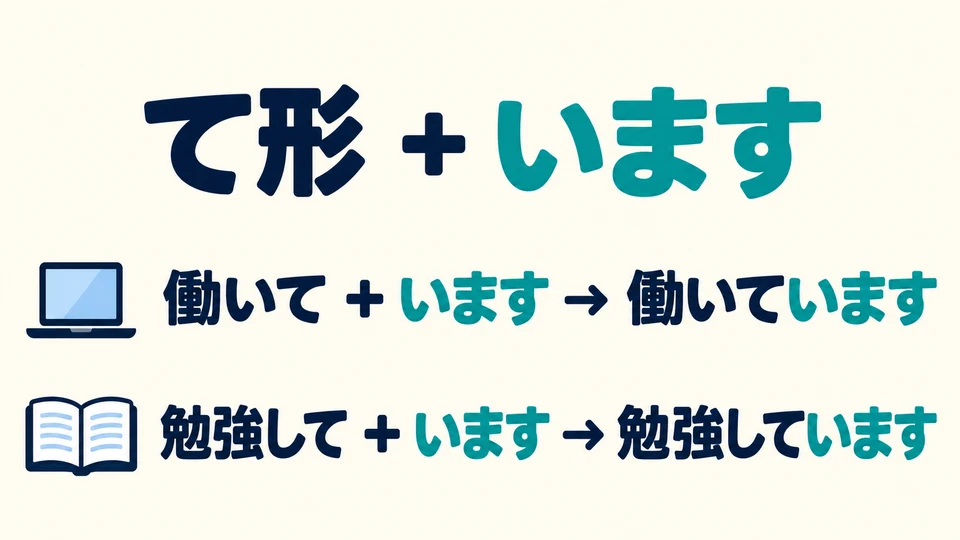
    Look at him working over several days: this sentence can introduce the job he does on an ongoing basis.

  2. To describe your work or studies, add 「います」 to a verb’s て-form to express an ongoing situation.
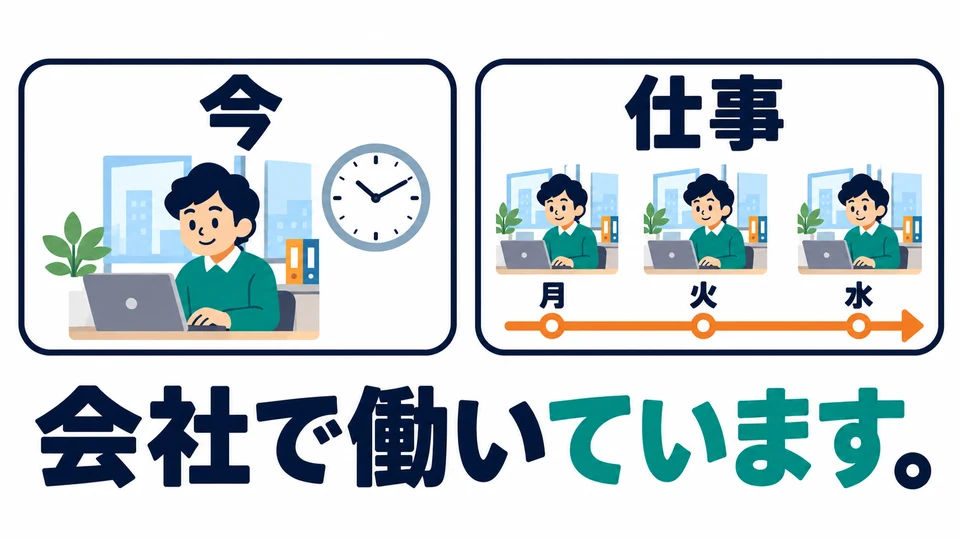
    To describe your work or studies, add 「います」 to a verb’s て-form to express an ongoing situation.

  3. 「ています」 can also describe an action happening right now. When talking about a job, it focuses on doing that work on an ongoing basis.
    「ています」 can also describe an action happening right now. When talking about a job, it focuses on doing that work on an ongoing basis.

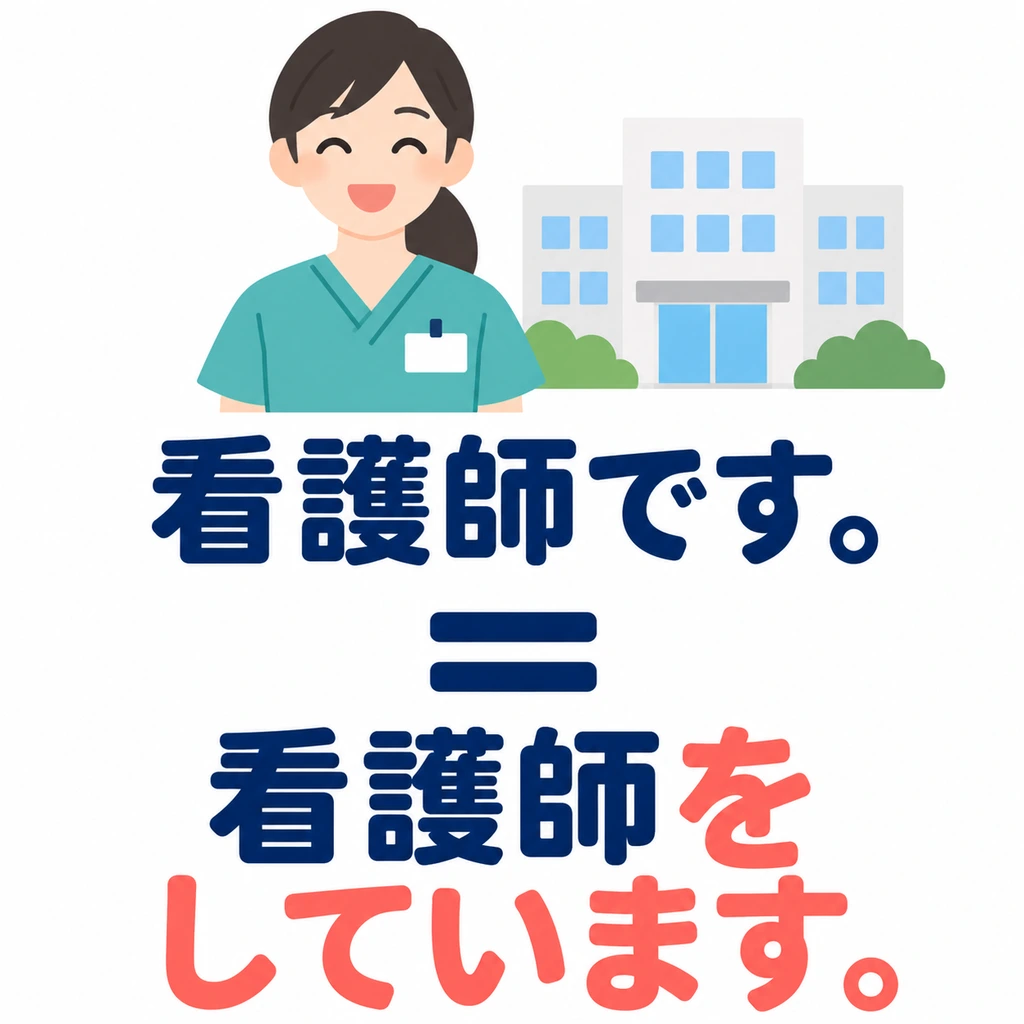
  4. Want to say what someone’s job is? Just add 「をしています」 after the name of the profession.
    Want to say what someone’s job is? Just add 「をしています」 after the name of the profession.

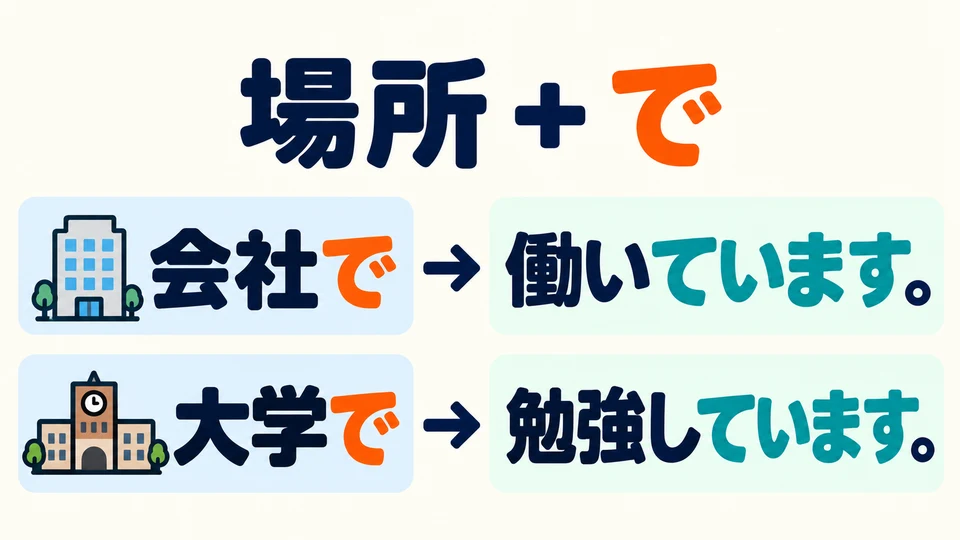
  5. To say where someone works or studies, put 「で」 after the place, then say what they do there.
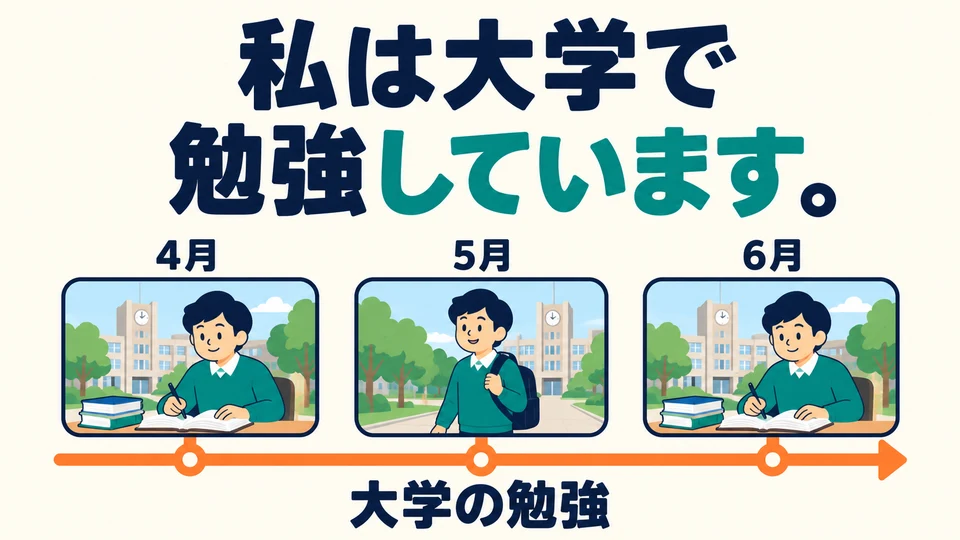
    To say where someone works or studies, put 「で」 after the place, then say what they do there.

  6. Studying at university in the example can describe someone’s current studies; it doesn’t necessarily mean they are studying at this very moment.
    Studying at university in the example can describe someone’s current studies; it doesn’t necessarily mean they are studying at this very moment.

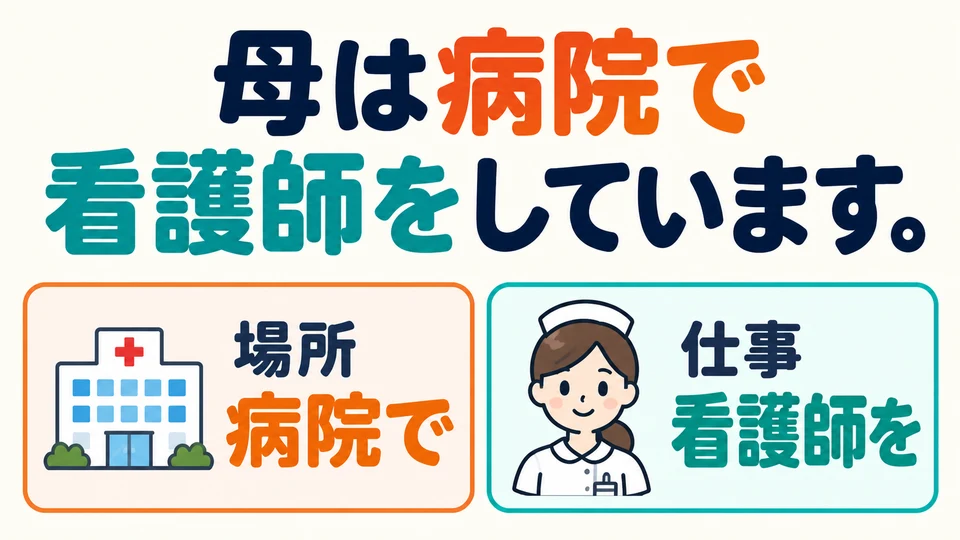
  7. In the example about the mother, 「病院で」 tells us where she works, and 「看護師を」 tells us her profession.

    In the example about the mother, 「病院で」 tells us where she works, and 「看護師を」 tells us her profession.

Example sentences

  • 私わたしwatashiはわwa大学だいがくdaigakuでde勉強べんきょうbenkyouしshiてteいます。いますimasu

    I am studying at a university.

  • 母ははhaha

In a conversation

  • A
    お父さんおとうさんはわ何なんをしていますか。か

    A: What does your father do?

  • B
    会社かいしゃで働いはたらいています。います

    B: He works at a company.

Check yourself

  1. Level 1 · Recognise

    Which sentence is correct?

  2. Level 1 · Recognise

    Listen and choose the meaning

  3. Level 2 · Build

    Put the words in order

    My father works at a company.

  4. Level 3 · Use

    What goes in the blank?

    友達と公園で散歩 (丁寧な過去進行形)。

    I was taking a walk in the park with a friend.

More grammar in this theme

  • 〜ています/〜をしていますongoing work or studies

More JLPT N5 grammar

Keep practising

Test your Japanese vocabulary12 adaptive questions, freeCheck your pronunciationRead aloud and get a scorePractise verb forms10-question conjugation quizSee the whole courseGrammar, vocabulary and quizzes by theme
はわ
wa
病院びょういんbyouin
でde
看護師かんごしkangoshi
をo
しshi
てte
います。いますimasu

My mother works as a nurse at a hospital.

  • A
    そうですか。か私わたしの父ちちはわ病院びょういんで働いはたらいています。います

    A: I see. My father works at a hospital.

  • Beginner 2
    Family and Friends
    More quizzesOpen this lesson’s quizzes in the course
    〜に住んでいますsay where you live
    〜と〜人で住んでいますwho you live with and how many
    〜が〜人/匹いますcount people or small animals
    〜が上手です/下手ですskill at an activity
    〜は〜が〜ですdescribe someone's features
    〜くて〜/〜で〜link two qualities
    あげます/あげましたgive something to someone
    もらいますreceive: get from someone
    くれますsomeone gives to me/us
    Previous〜と〜人で住んでいます
    Next〜が〜人/匹います
    See all 111
    〜ていますaction in progress
    〜ましょうかoffer or suggestion
    まだあります/もうありませんstill left or all gone
    誰が〜ますかask who does it
    いつも・よく・ときどきfrequency: always to sometimes
    期間に〜回/冊/本quantity per time period
    〜ができますcan do something
    〜ことができますcan do an action