JPEDLAB iconJPEDLAB
Save history

Create an account and play

Explore first, then save your progress whenever you are ready. No email address is required.

Start free
Read as articleCards
See the whole course›Beginner 2›Hobbies and Preferences

Japanese grammar · ≈ JLPT N5 · Beginner 2

〜ことができます~koto ga dekimasu

can do an action

Use 「〜ことができます」 to describe an ability, placing the action in dictionary form before こと.

Start the interactive lessonIllustrated cards, audio and speaking practiceTake the quiz
Pattern
〜ことができます
Romaji
~koto ga dekimasu
JLPT (approx.)
≈ N5
Course level
Beginner 2
Theme
Hobbies and Preferences

How it works

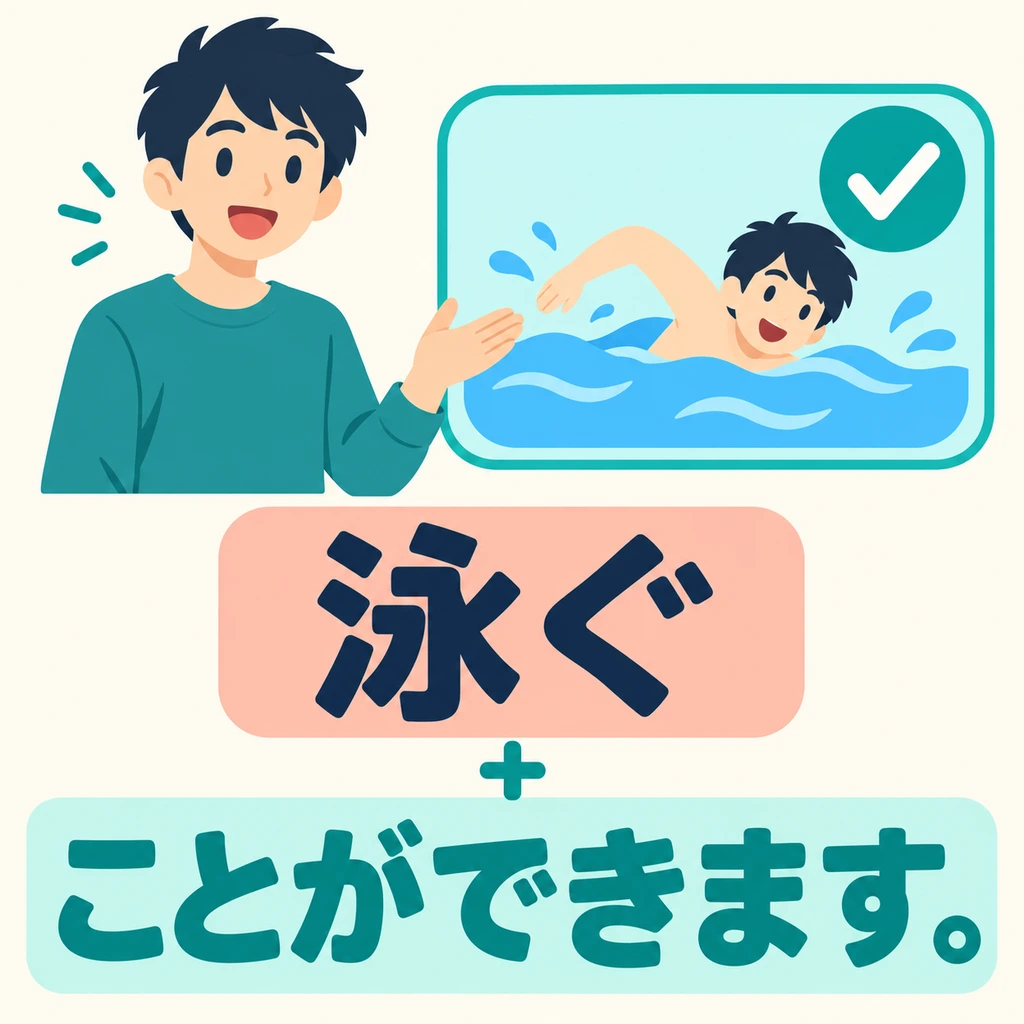
  1. Look at the picture: he can swim. Use this pattern to describe your abilities when saying what you can do.
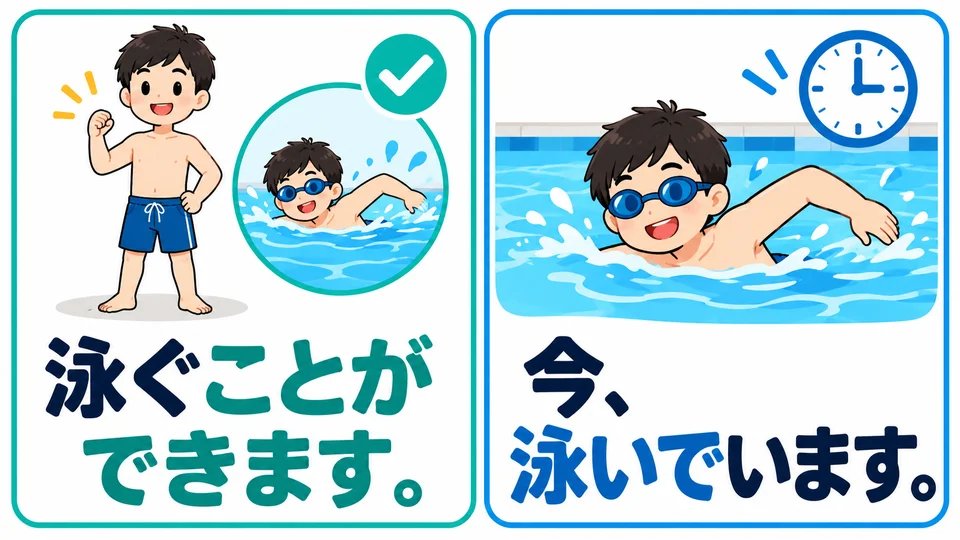
    Look at the picture: he can swim. Use this pattern to describe your abilities when saying what you can do.

  2. This describes the ability to swim. It does not mean he is swimming at the moment of speaking.
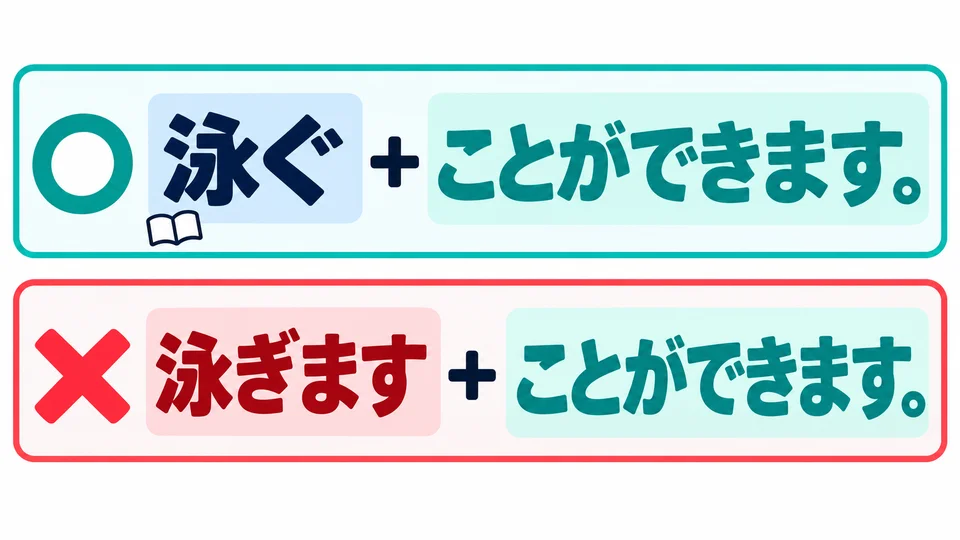
    This describes the ability to swim. It does not mean he is swimming at the moment of speaking.

  3. Before 「こと」, use the dictionary form 「泳ぐ」. You cannot attach it directly to 「泳ぎます」.
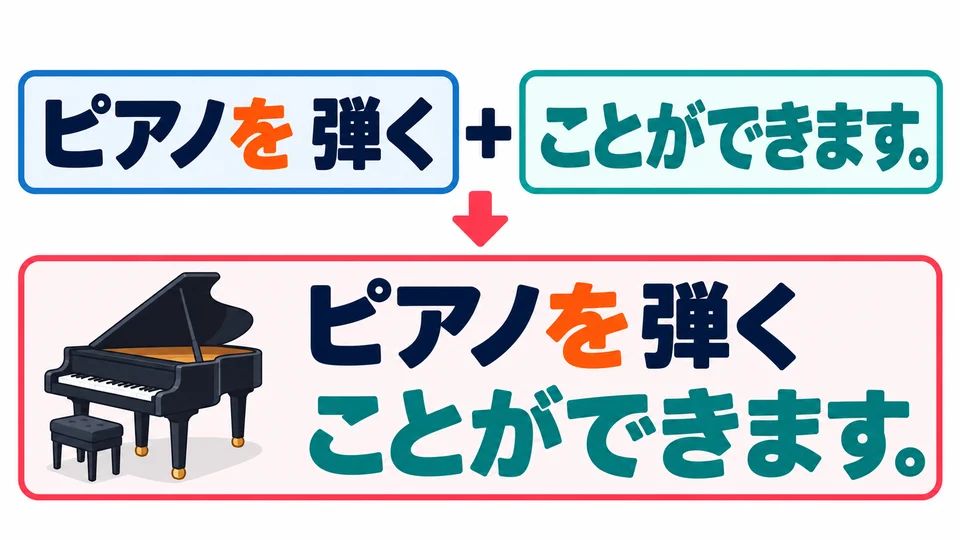
    Before 「こと」, use the dictionary form 「泳ぐ」. You cannot attach it directly to 「泳ぎます」.

  4. First give the complete action, then add 「ことができます」. Keep the particles within the action phrase.
    First give the complete action, then add 「ことができます」. Keep the particles within the action phrase.

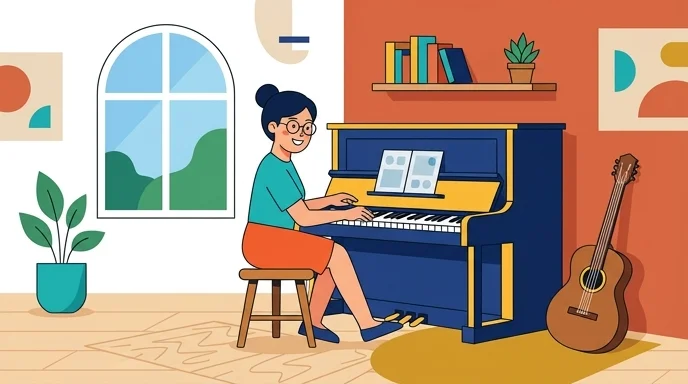
  5. In the piano example, 「弾く」 is read 「ひく」. Here it means to play a musical instrument.
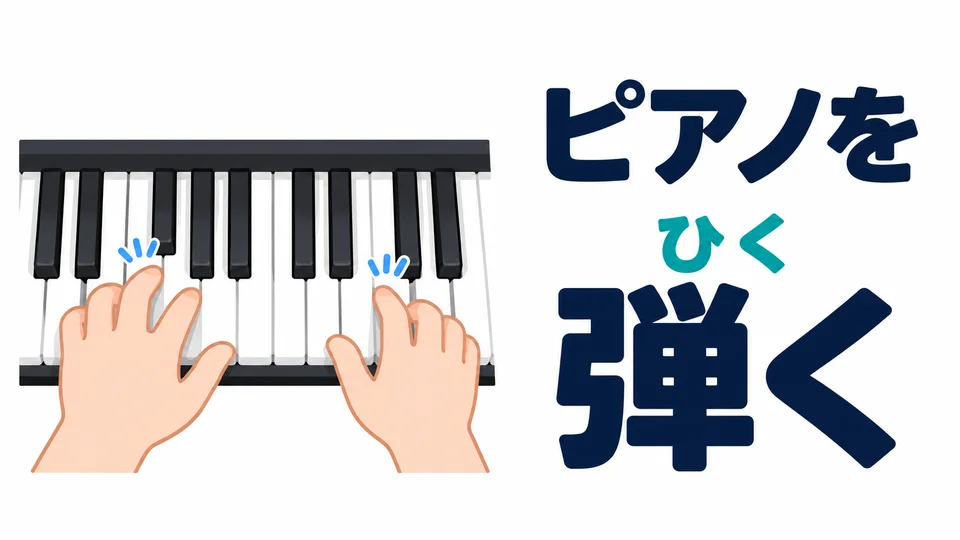
    In the piano example, 「弾く」 is read 「ひく」. Here it means to play a musical instrument.

  6. In the computer example, keep 「で」 and 「を」. 「が」 comes after the complete action phrase plus 「こと」.

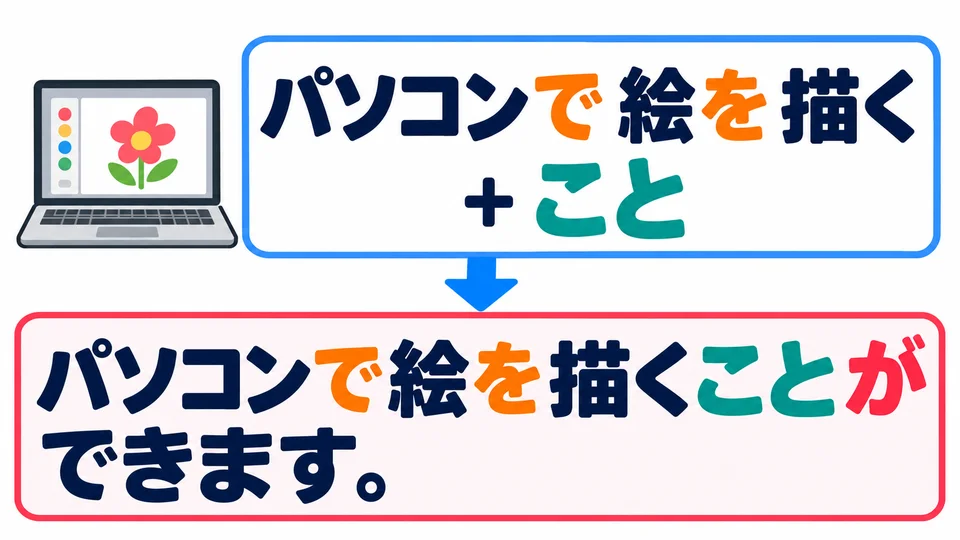
    In the computer example, keep 「で」 and 「を」. 「が」 comes after the complete action phrase plus 「こと」.

Example sentences

  • ピアノぴあのpianoをo弾くひくhikuことkotoがgaできます。できますdekimasu

    I can play the piano.

  • パソコンぱそこんpasokonでde絵えe

In a conversation

  • A
    何なにを作るつくることができますか。か

    A: What can you make?

  • B
    料理りょうりを作るつくることができます。できます

Check yourself

  1. Which sentence is correct?

    1. 私は泳ぐことができます。
    2. 私は泳ぎることができます。
    3. 私は泳ぐができます。
    4. 私は泳ぐことがあります。
    Show answer

    Answer: A 私は泳ぐことができます。

  2. Which sentence is correct?

    1. 彼は運転することができます。
    2. 彼は運転するができます。
    3. 彼は運転しことができます。
    4. 彼は運転することができまする。
    Show answer

    Answer: A 彼は運転することができます。

  3. Which sentence is correct?

    1. ピアノを弾くことができます。
    2. ピアノを弾きることができます。
    3. ピアノを弾くができるです。
    4. ピアノが弾くことができます。
    Show answer

    Answer: A ピアノを弾くことができます。

More grammar in this theme

  • 〜ことができますcan do an action

Keep practising

Test your Japanese vocabulary12 adaptive questions, freeCheck your pronunciationRead aloud and get a scorePractise verb forms10-question conjugation quizSee the whole courseGrammar, vocabulary and quizzes by theme
を
o
描くえがくegaku
ことkoto
がga
できます。できますdekimasu

I can draw pictures on a computer.

B: I can cook dishes.

  • A
    どんな料理りょうりですか。か

    A: What kind of dishes?

  • B
    中華ちゅうか料理りょうりと日本にっぽん料理りょうりです。です

    B: Chinese and Japanese food.

    • A
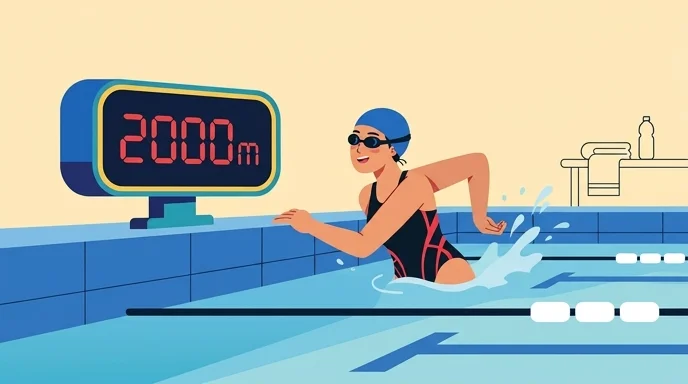
      泳ぐおよぐことができますか。か

      A: Can you swim?

    • B
      はい、はい泳ぐおよぐことができます。できます

      B: Yes, I can swim.

    • A
      どのくらい泳げますおよげますか。か

      A: How far can you swim?

    • B
      500 ごひゃくメートルめーとる泳ぐおよぐことができます。できます

      B: I can swim 500 meters.

    • A
      楽器がっきを弾くひくことができますか。か

      A: Can you play a musical instrument?

    • B
      はい、はいピアノぴあのを弾くひくことができます。できます

      B: Yes, I can play the piano.

    • A
      ほかにはわ何なにができますか。か

      A: What else can you do?

    • B
      ギターぎたーを弾くひくこともできます。できます

      B: I can also play the guitar.

    Take the quiz
    趣味は〜ことですhobby: activity as a noun
    いつも・よく・ときどきfrequency: always to sometimes
    期間に〜回/冊/本quantity per time period
    〜ができますcan do something
    〜ことができますかask if someone can
    〜て、〜てからsequence actions in order
    どうやって〜かask how to do something
    Previous〜ができます
    Next〜ことができますか