
Japanese grammar · ≈ JLPT N5 · Beginner 2
〜ことができますか~koto ga dekimasu ka
ask if someone can
Add 「か」 to 「〜ことができます」 to ask about an ability; answer できます or できません.
- Pattern
- 〜ことができますか
- Romaji
- ~koto ga dekimasu ka
- JLPT (approx.)
- ≈ N5
- Course level
- Beginner 2
- Theme
- Hobbies and Preferences
How it works
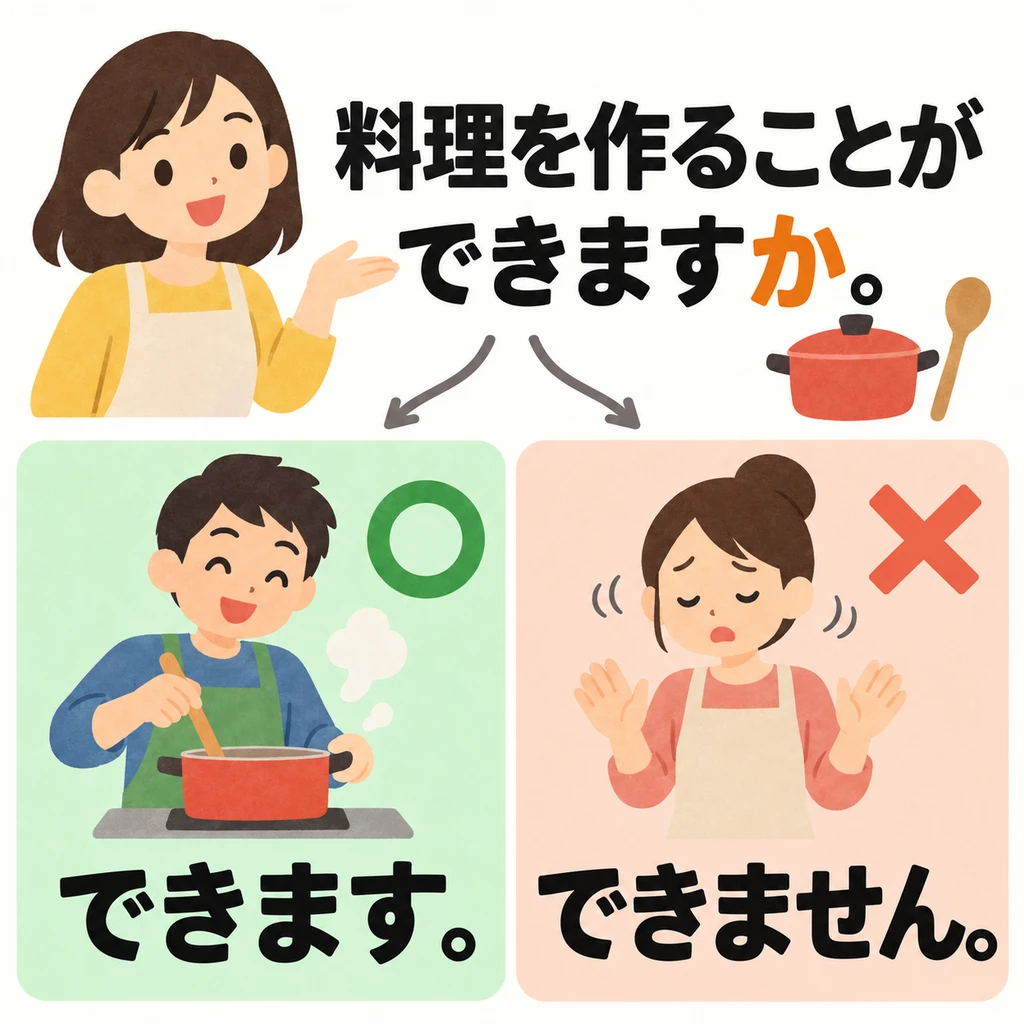
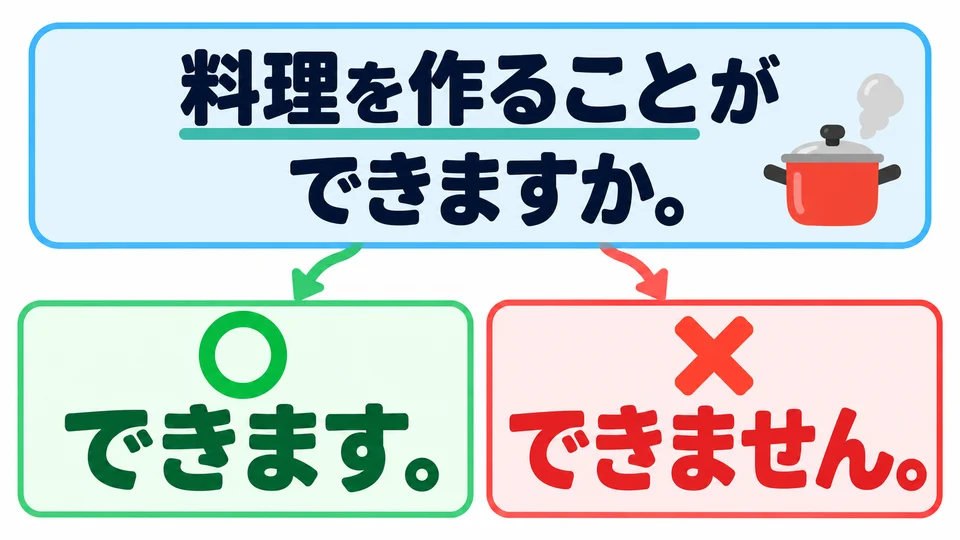
To find out whether someone can cook, ask and answer as shown in the picture.
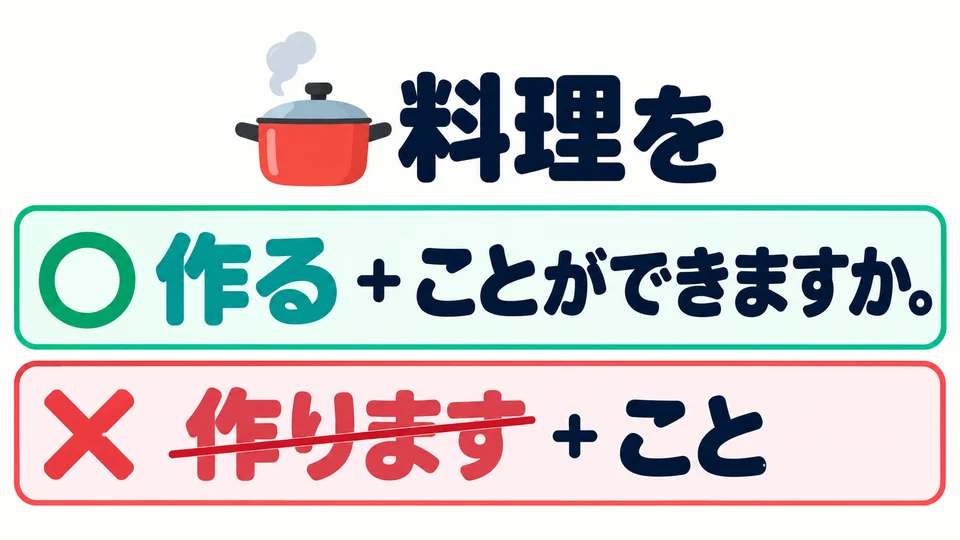
Put the action before 「こと」 in the dictionary form: use 「作る」 here, not 「作ります」.
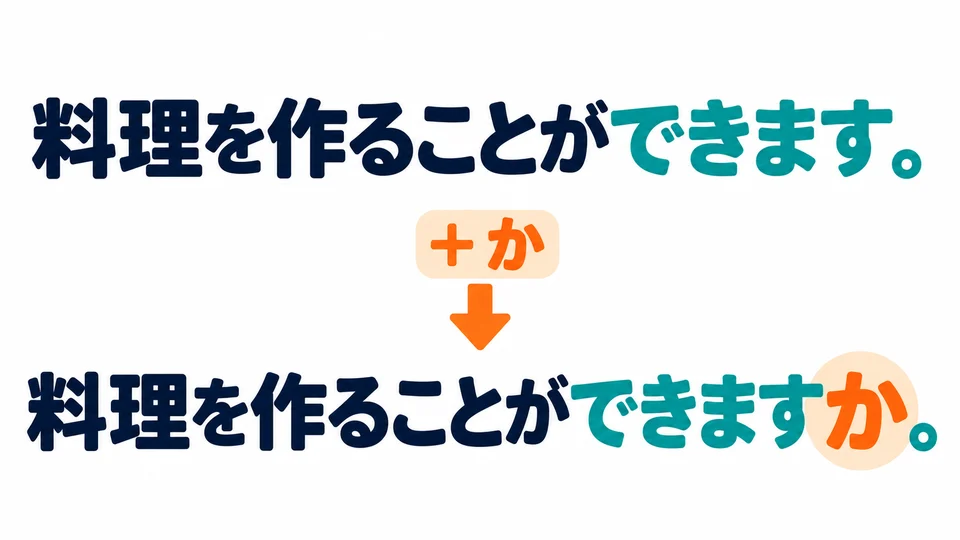
Add 「か」 after 「ことができます」 to turn a statement of ability into a question about ability.
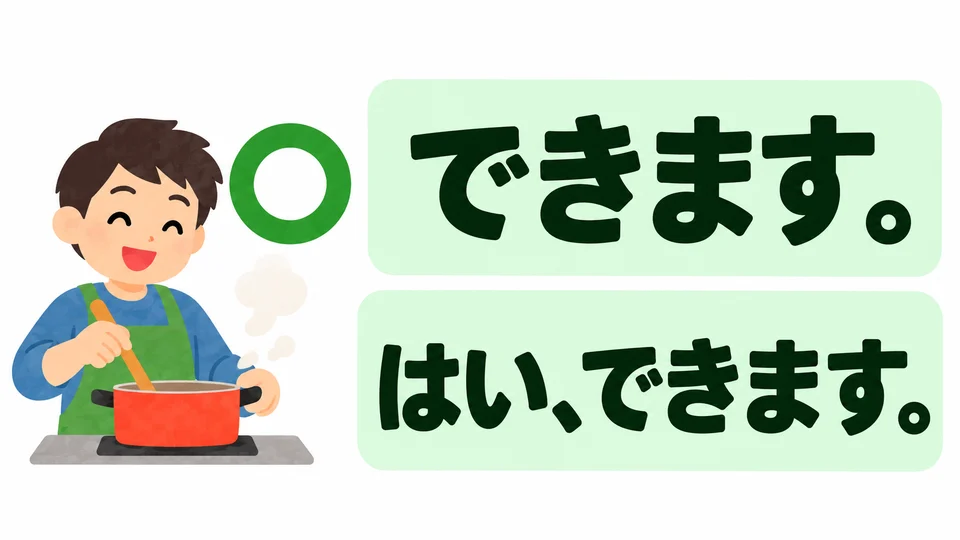
If you can do it, answer 「できます」. You can also say 「はい」 first.
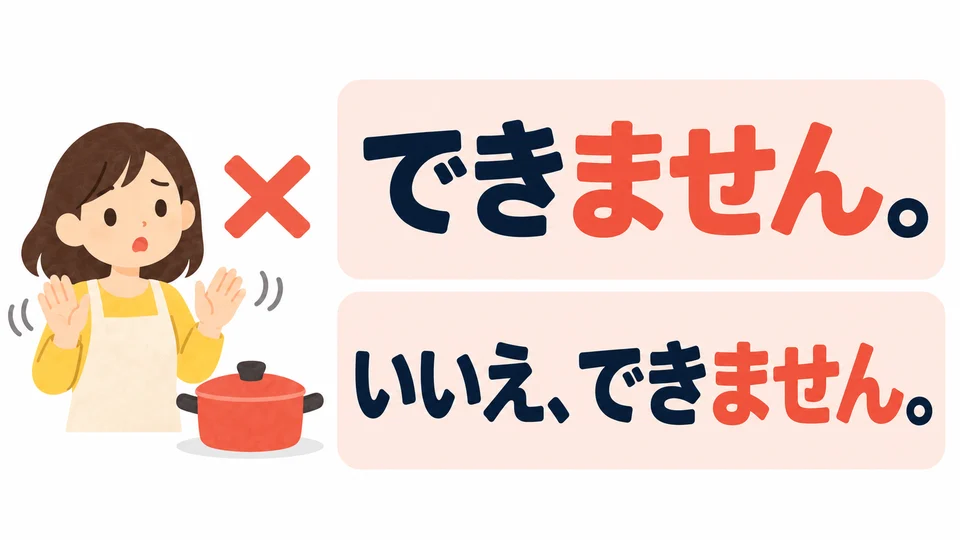
If you cannot do it, answer 「できません」. You can also say 「いいえ」 first.
The question already makes the action clear, so you can leave it out of your answer and just say 「できます」 or 「できません」.
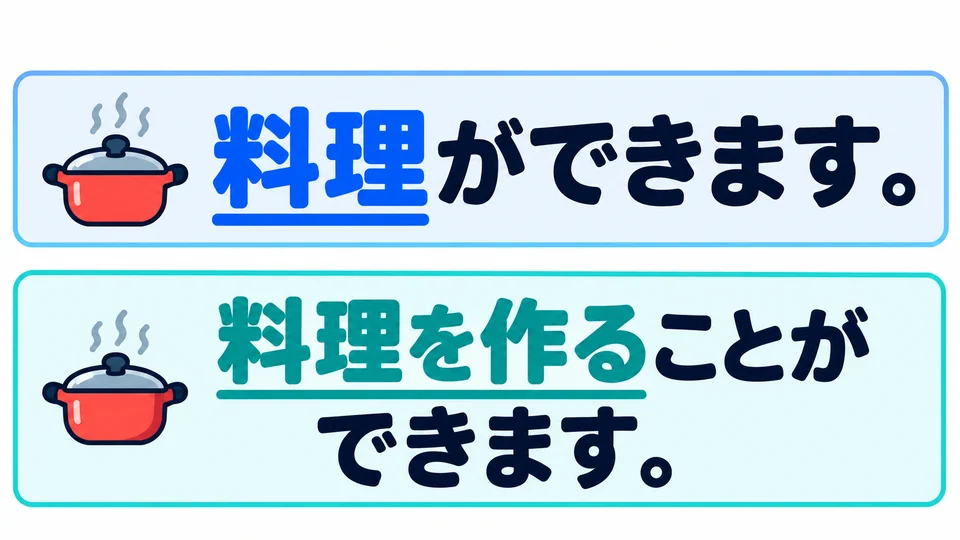
In the example, 「料理ができます」 means you can cook; 「料理を作ることができます」 names the action explicitly.
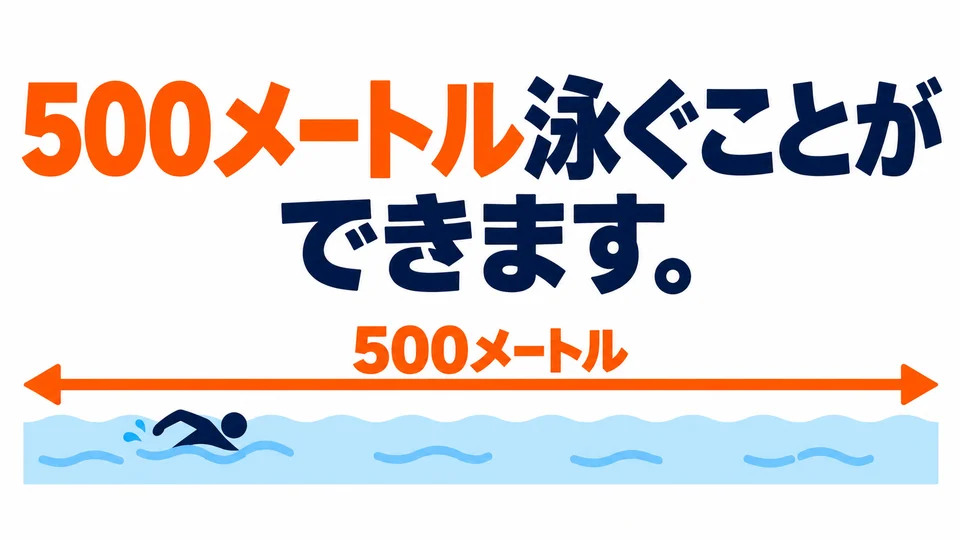
When asked how well they can swim, the speaker uses 「500メートル」 to say how far they can swim, making the ability more specific.
Example sentences
- 料理ryouriをo作るtsukuruことkotoがgaできますdekimasuか。ka
Can you cook?
- できますdekimasuよ。yo
In a conversation
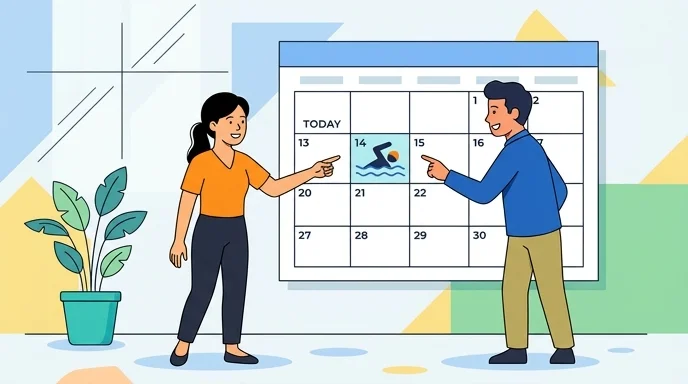
- A明日、泳ぐことができますか。
A: Can you go swimming tomorrow?
- Bはい、明日泳ぐことができます。
B: Yes, I can go swimming tomorrow.
Check yourself
Which sentence is correct?
- 泳ぐことができますか。
- 泳ぎることができますか。
- 泳ぐをできますか。
- 泳ぐことができますな。
Show answer
Answer: A 泳ぐことができますか。
Which sentence is correct?
- いいえ、運転することができません。
- いいえ、運転するができません。
- いいえ、運転することができませんる。
- いいえ、運転しますことができません。
Show answer
Answer: A いいえ、運転することができません。
Which sentence is correct?
- 料理を作ることができますか。
- 料理を作らことができますか。
- 料理を作るができるですか。
- 料理を作れますことができますか。
Show answer
Answer: A 料理を作ることができますか。
More grammar in this theme
- 〜ことができますかask if someone can