Japanese grammar · ≈ JLPT N5 · Beginner 2
〜て、〜てから~te, ~te kara
sequence actions in order
Connect actions with 「〜て」 in order; 「〜てから」 stresses finishing one action before the next.
How it works
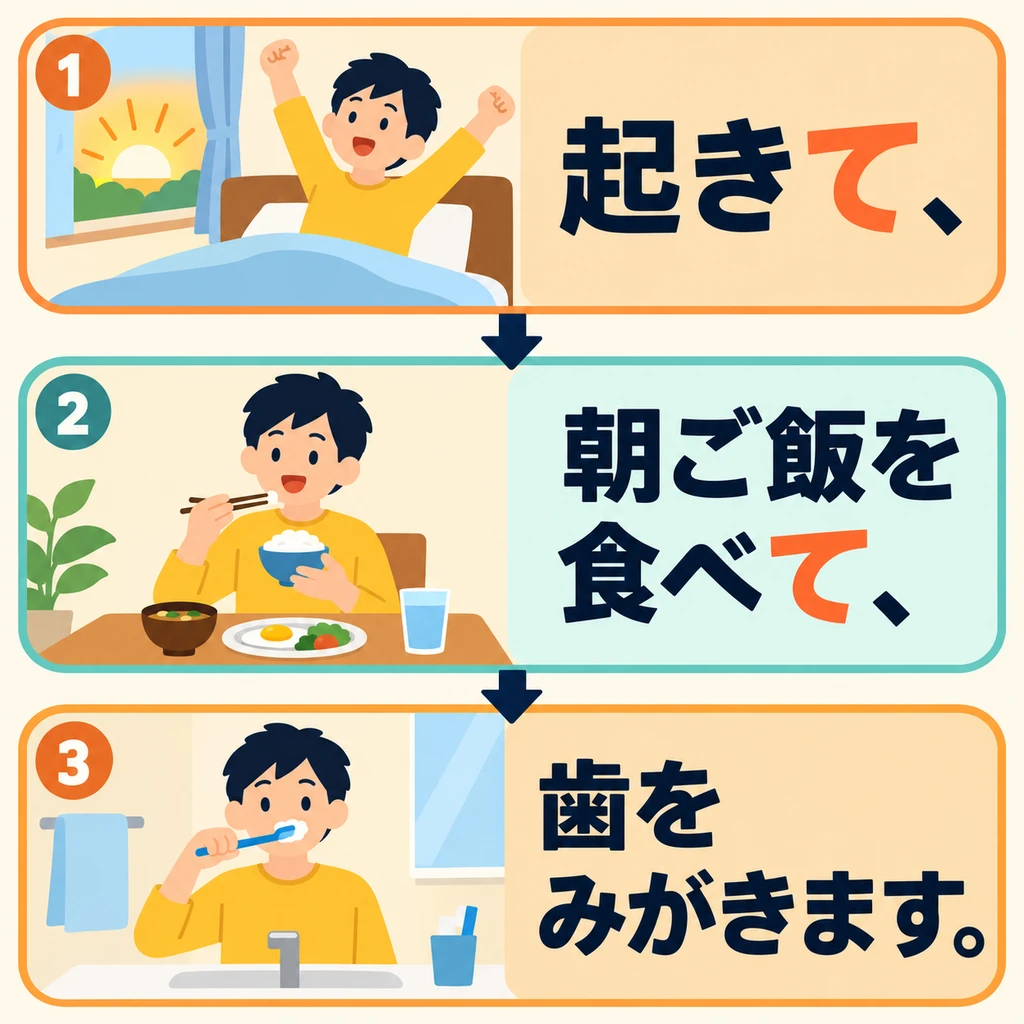
Get up, eat breakfast, then brush your teeth. The arrows show the order of the actions; connect them with the て形.
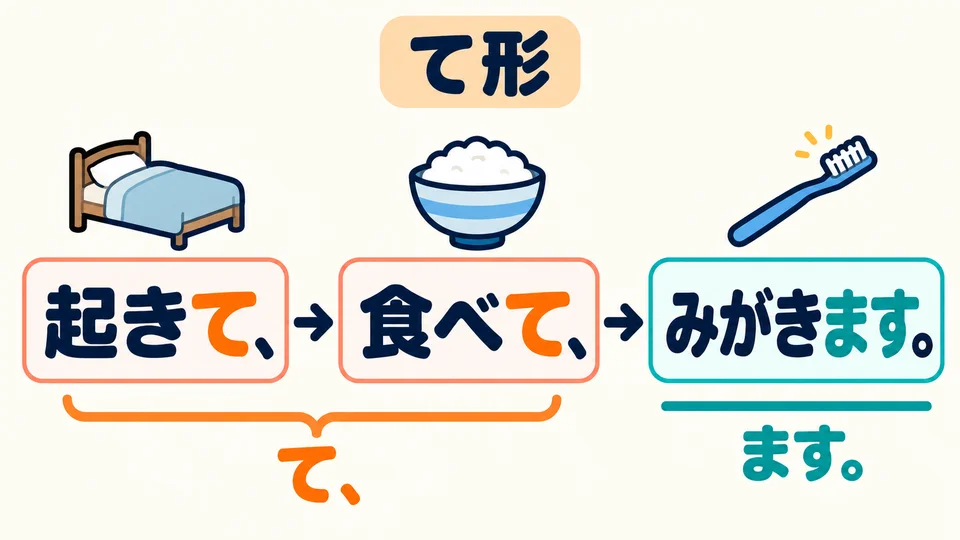
Use the て形 to connect the earlier actions. End with the final verb in its usual sentence-ending form; it does not need to be in the て形.
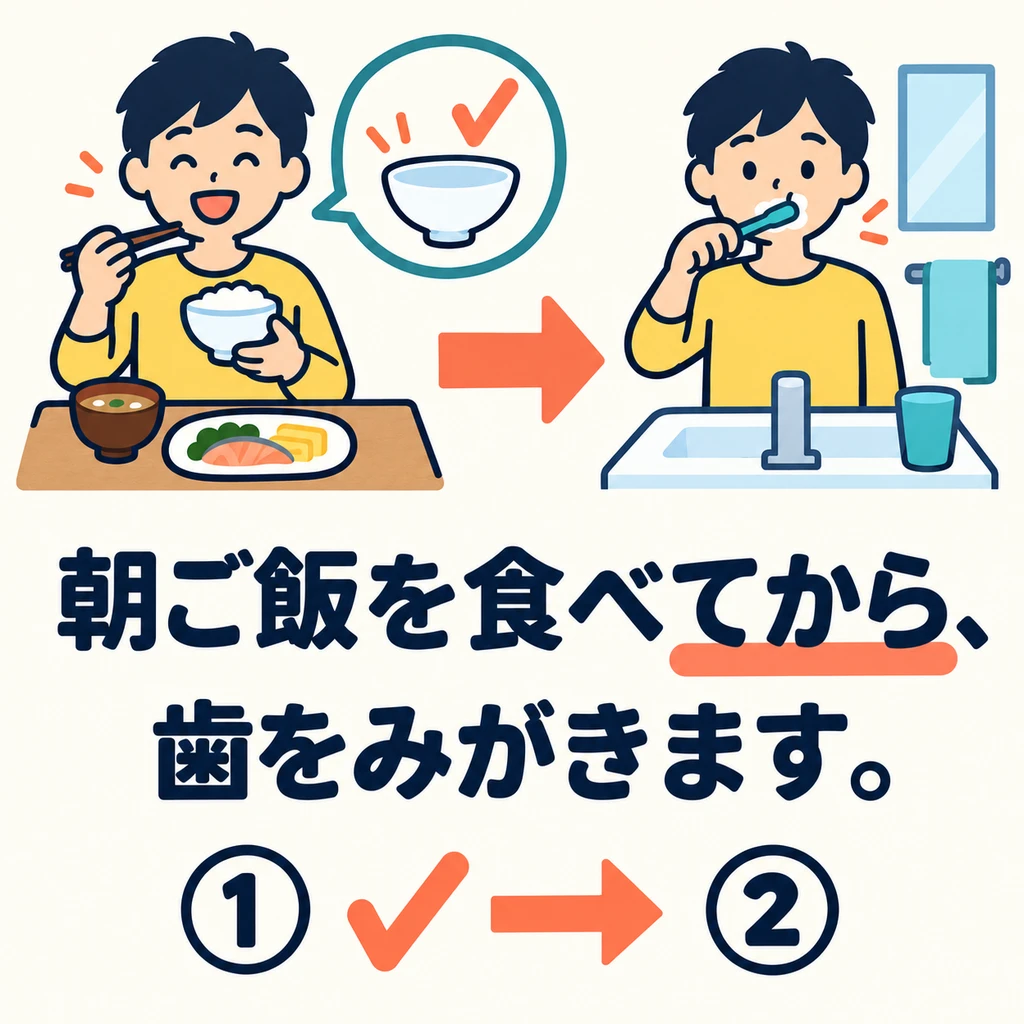
The empty bowl and check mark show that eating is finished. てから emphasizes completing the first action before doing the next.
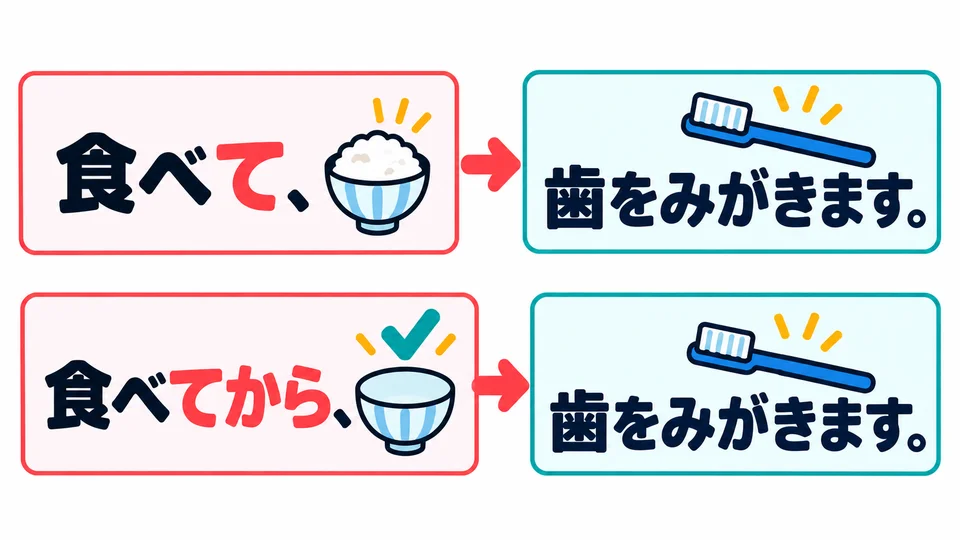
Both expressions can mean eating first and then brushing your teeth. てから puts more emphasis on finishing the meal before brushing.
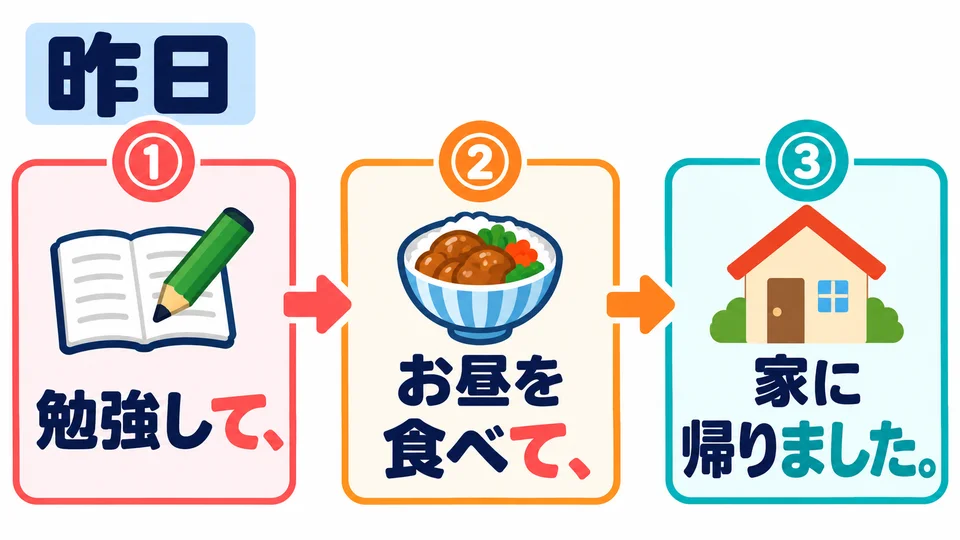
The example about yesterday has three actions: studying, eating lunch, and going home. Simply connect them one by one in that order.
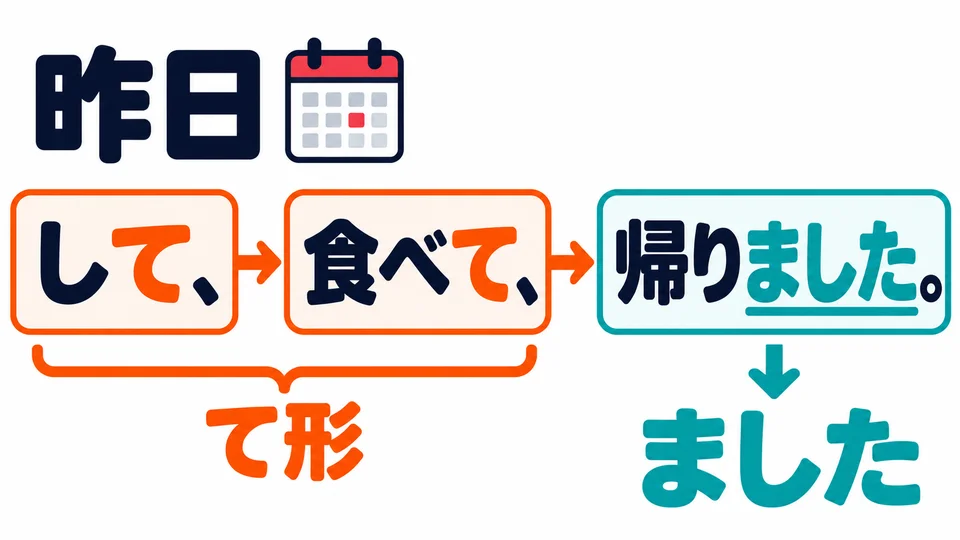
The example about yesterday ends in 帰りました, marking the past. The earlier forms して and 食べて stay the same.
Example sentences
- 朝asa起きokiて、te歯haをo磨きます。migakimasu
I wake up in the morning and brush my teeth.
- 昨日kinouは
In a conversation
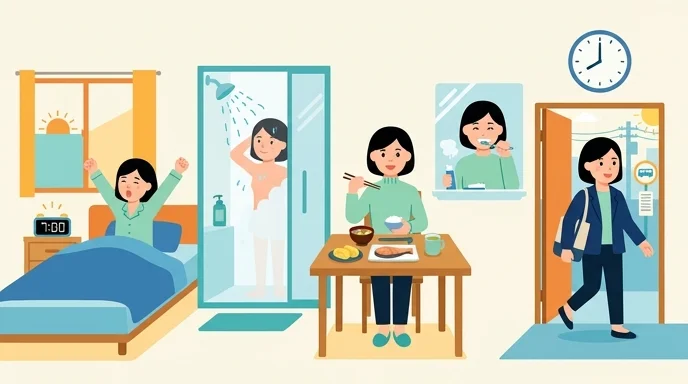
- A今朝何時に起きましたか。
A: What time did you wake up this morning?
- B7 時に起きて、すぐにシャワー
Check yourself
Level 1 · Recognise
Which sentence is correct?
Level 1 · Recognise
Listen and choose the meaning
Level 2 · Build
Put the words in order
I woke up, brushed my teeth, and washed my face.
Level 3 · Use
What goes in the blank?
朝 歯をみがいて、顔を洗いました。
I woke up in the morning, brushed my teeth, and washed my face.
More grammar in this theme
- 〜て、〜てからsequence actions in order