JPEDLAB iconJPEDLAB
Save history

Create an account and play

Explore first, then save your progress whenever you are ready. No email address is required.

Start free
Read as articleCards
See the whole course›Beginner 2›Hobbies and Preferences

Japanese grammar · ≈ JLPT N5 · Beginner 2

〜て、〜てから~te, ~te kara

sequence actions in order

Connect actions with 「〜て」 in order; 「〜てから」 stresses finishing one action before the next.

Start the interactive lessonIllustrated cards, audio and speaking practice

How it works

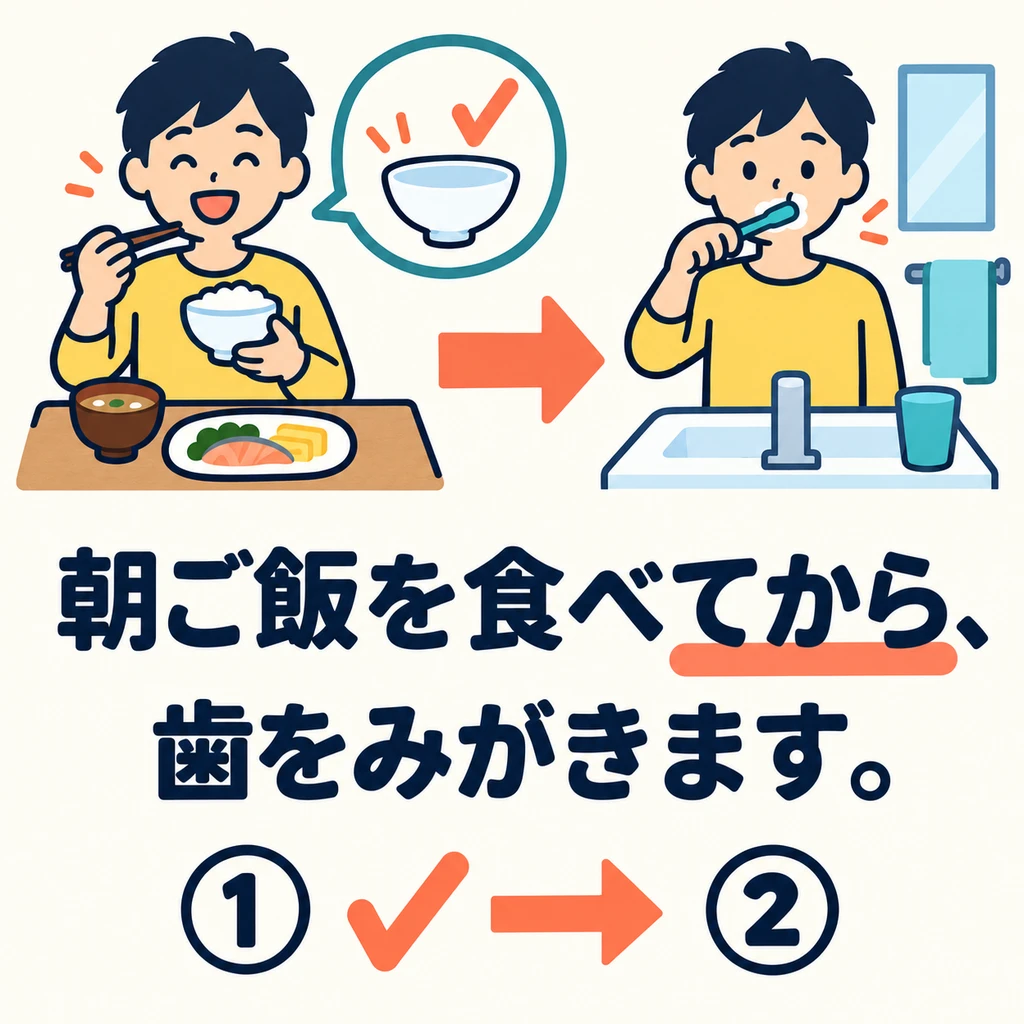
  1. Get up, eat breakfast, then brush your teeth. The arrows show the order of the actions; connect them with the て形.
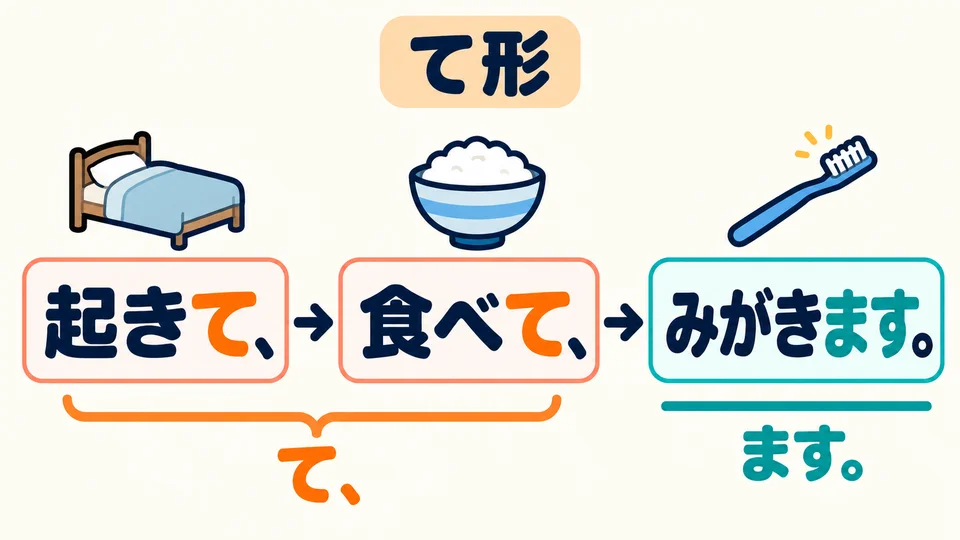
    Get up, eat breakfast, then brush your teeth. The arrows show the order of the actions; connect them with the て形.

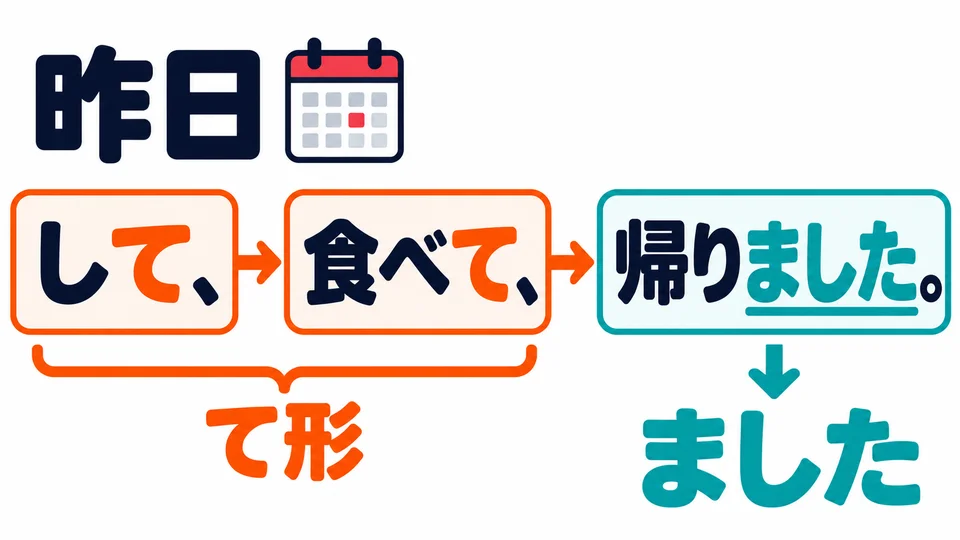
  2. Use the て形 to connect the earlier actions. End with the final verb in its usual sentence-ending form; it does not need to be in the て形.
    Use the て形 to connect the earlier actions. End with the final verb in its usual sentence-ending form; it does not need to be in the て形.

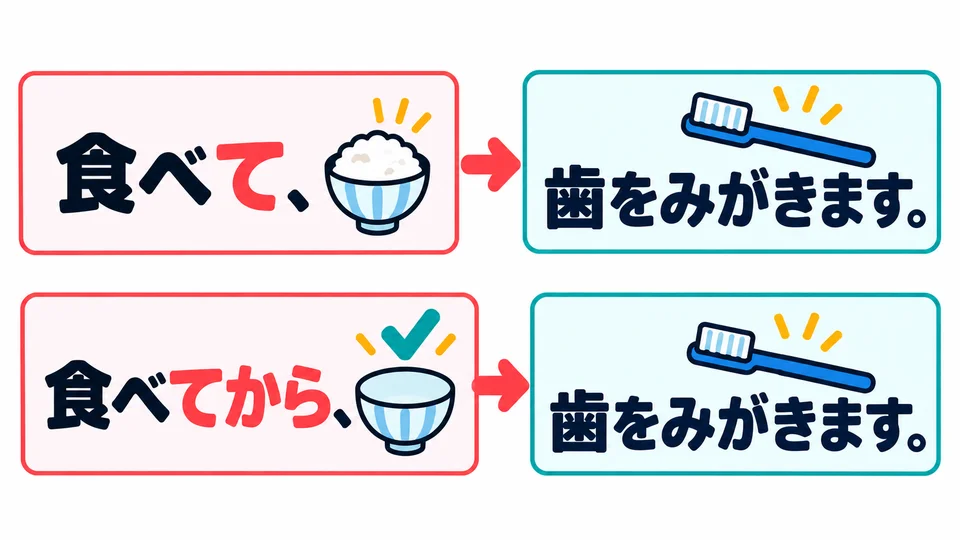
  3. The empty bowl and check mark show that eating is finished. てから emphasizes completing the first action before doing the next.
    The empty bowl and check mark show that eating is finished. てから emphasizes completing the first action before doing the next.

  4. Both expressions can mean eating first and then brushing your teeth. てから puts more emphasis on finishing the meal before brushing.
    Both expressions can mean eating first and then brushing your teeth. てから puts more emphasis on finishing the meal before brushing.

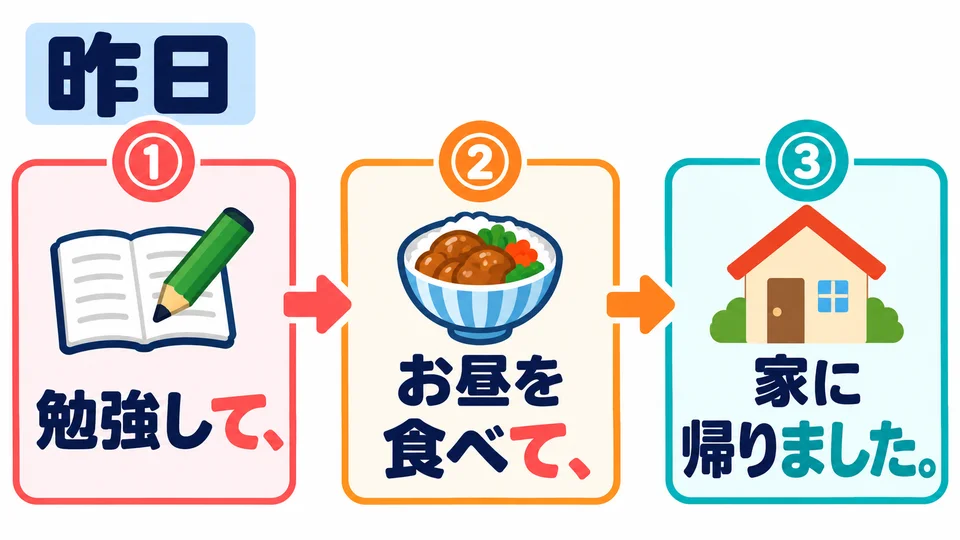
  5. The example about yesterday has three actions: studying, eating lunch, and going home. Simply connect them one by one in that order.
    The example about yesterday has three actions: studying, eating lunch, and going home. Simply connect them one by one in that order.

  6. The example about yesterday ends in 帰りました, marking the past. The earlier forms して and 食べて stay the same.

    The example about yesterday ends in 帰りました, marking the past. The earlier forms して and 食べて stay the same.

Example sentences

  • 朝あさasa起きおきokiて、てte歯はhaをo磨きます。みがきますmigakimasu

    I wake up in the morning and brush my teeth.

  • 昨日きのうkinouは

In a conversation

  • A
    今朝けさ何時なんじに起きましたおきましたか。か

    A: What time did you wake up this morning?

  • B
    7 しち時じに起きおきて、てすぐにシャワーしゃわー

Check yourself

  1. Level 1 · Recognise

    Which sentence is correct?

  2. Level 1 · Recognise

    Listen and choose the meaning

  3. Level 2 · Build

    Put the words in order

    I woke up, brushed my teeth, and washed my face.

  4. Level 3 · Use

    What goes in the blank?

    朝 歯をみがいて、顔を洗いました。

    I woke up in the morning, brushed my teeth, and washed my face.

More grammar in this theme

  • 〜て、〜てからsequence actions in order

Keep practising

Test your Japanese vocabulary12 adaptive questions, freeCheck your pronunciationRead aloud and get a scorePractise verb forms10-question conjugation quizSee the whole courseGrammar, vocabulary and quizzes by theme
わ
wa
学校がっこうgakkou
でde
勉強べんきょうbenkyou
しshi
て、てte
お昼おひるohiru
をo
食べたべtabe
て、てte
午後ごごgogo
5ごgo
時じji
にni
家いえie
にni
帰りました。かえりましたkaerimashita

Yesterday, I studied at school, ate lunch, and returned home at 5 PM.

を
浴びました。あびました

B: I woke up at 7 and took a shower right away.

  • A
    それから何なにをしましたか。か

    A: What did you do after that?

  • B
    朝ご飯あさごはんを食べたべて、て歯はをみがいて、て8 はち時じに出でかけました。かけました

    B: I ate breakfast, brushed my teeth, and left at 8.

  • A
    大変ですたいへんですね。ね

    A: That sounds though.

  • B
    はい、はいでも毎朝まいあさこの順番じゅんばんです。です

    B: Yes, but it's this order every morning.

  • 趣味は〜ことですhobby: activity as a noun
    いつも・よく・ときどきfrequency: always to sometimes
    期間に〜回/冊/本quantity per time period
    〜ができますcan do something
    〜ことができますcan do an action
    〜ことができますかask if someone can
    どうやって〜かask how to do something
    Previous〜ことができますか
    Nextどうやって〜か