JPEdLab iconJPEdLab
Save history

Create an account and play

Explore first, then save your progress whenever you are ready. No email address is required.

Start free
  1. Japanese grammar
  2. JLPT N5 grammar
  3. いつも・よく・ときどき

いつも・よく・ときどきitsumo・yoku・tokidoki

Itsumo・yoku・tokidoki (いつも・よく・ときどき) means “frequency: always to sometimes”.

ときどきtokidokiレストランれすとらんresutoranでde食べます。たべますtabemasu

I sometimes eat at a restaurant.

Use these adverbs to describe how often a habit happens; あまり and 全然 take a negative form.

In the course›

How it works

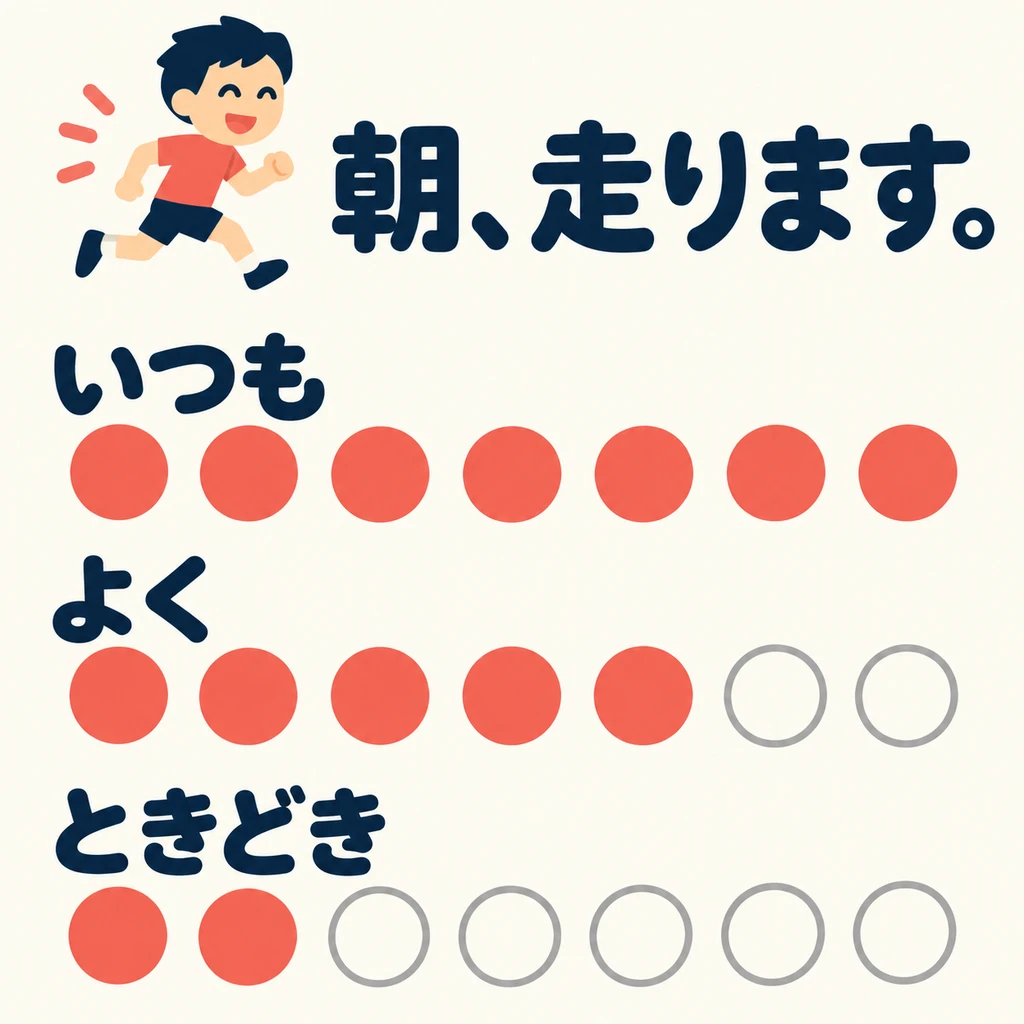
  1. Colored dots show that the action happened. From always to often to sometimes, it happens less and less frequently.
    Colored dots show that the action happened. From always to often to sometimes, it happens less and less frequently.

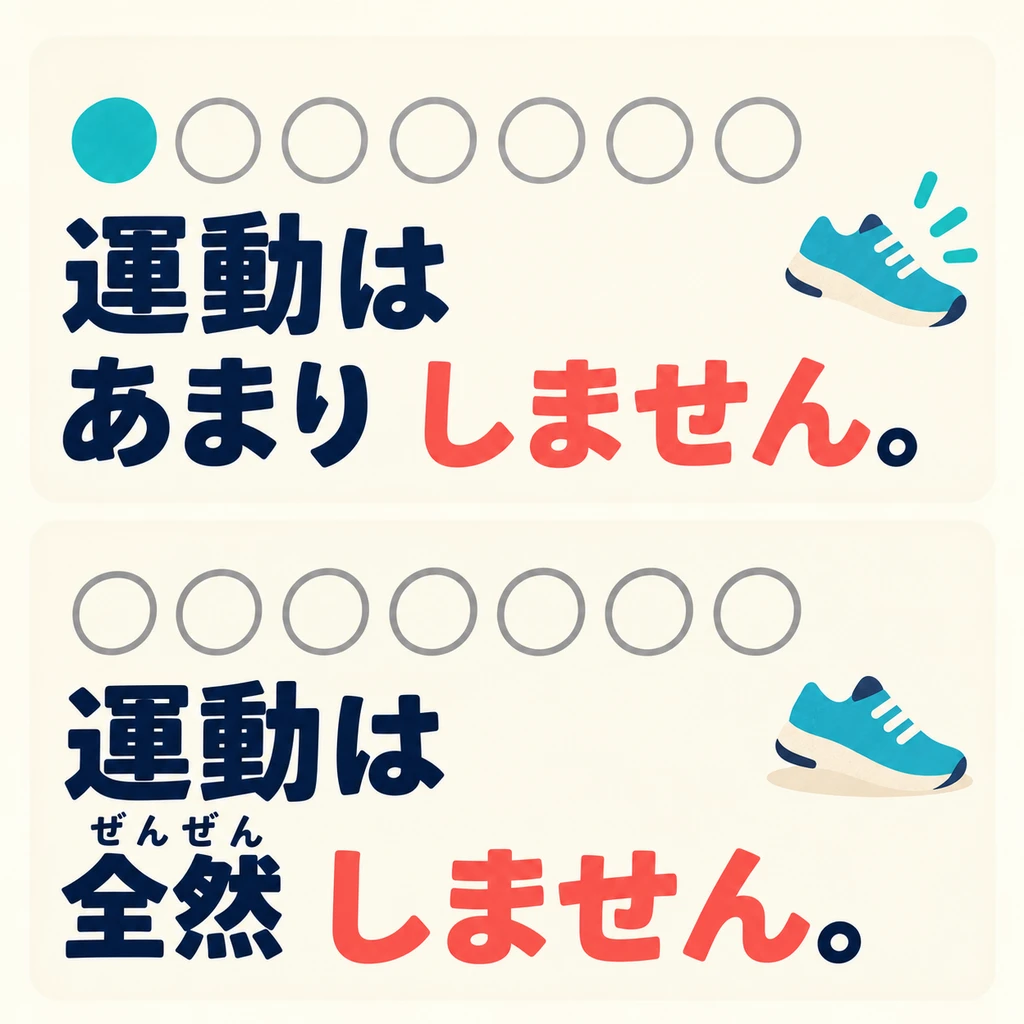
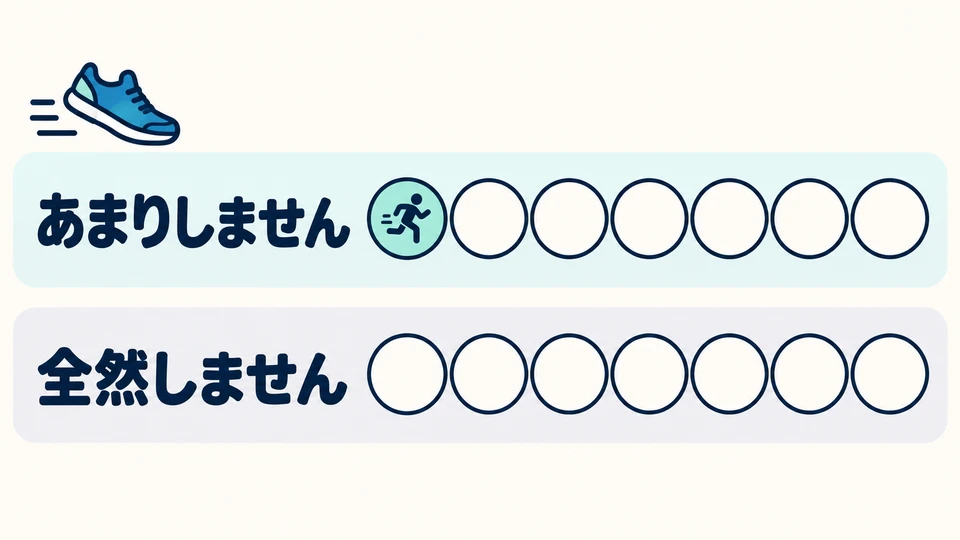
  2. Exercising rarely is different from never exercising: the top shows occasional exercise; the bottom shows none at all.
    Exercising rarely is different from never exercising: the top shows occasional exercise; the bottom shows none at all.

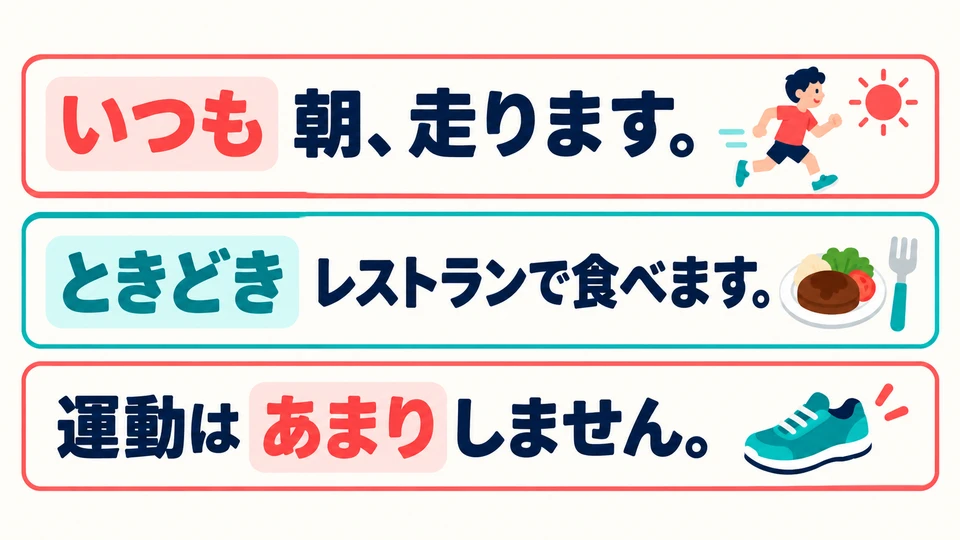
  3. Use these words to describe everyday habits, such as running in the morning, going to a restaurant, or exercising.
    Use these words to describe everyday habits, such as running in the morning, going to a restaurant, or exercising.

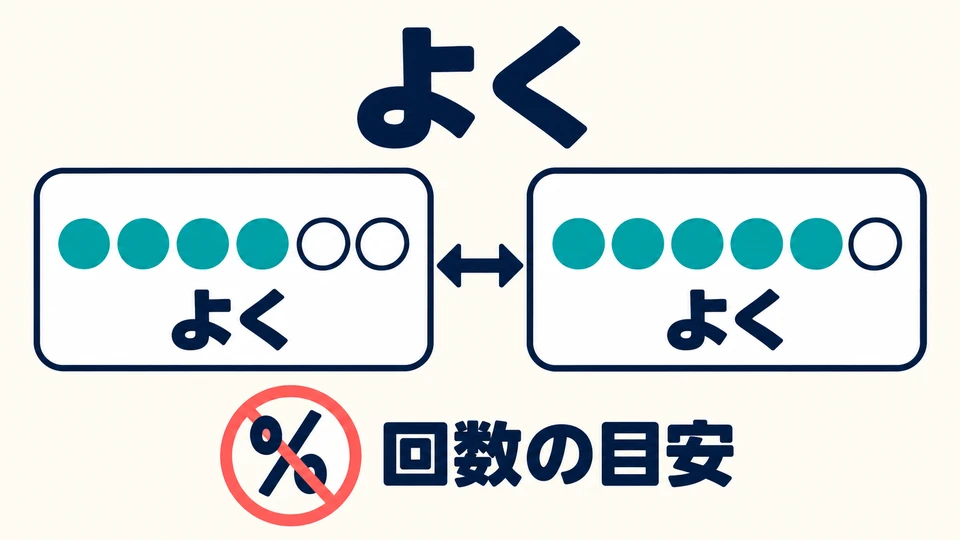
  4. The dots only help compare frequency; they do not give a fixed number of times. “Often” has no set percentage.
    The dots only help compare frequency; they do not give a fixed number of times. “Often” has no set percentage.

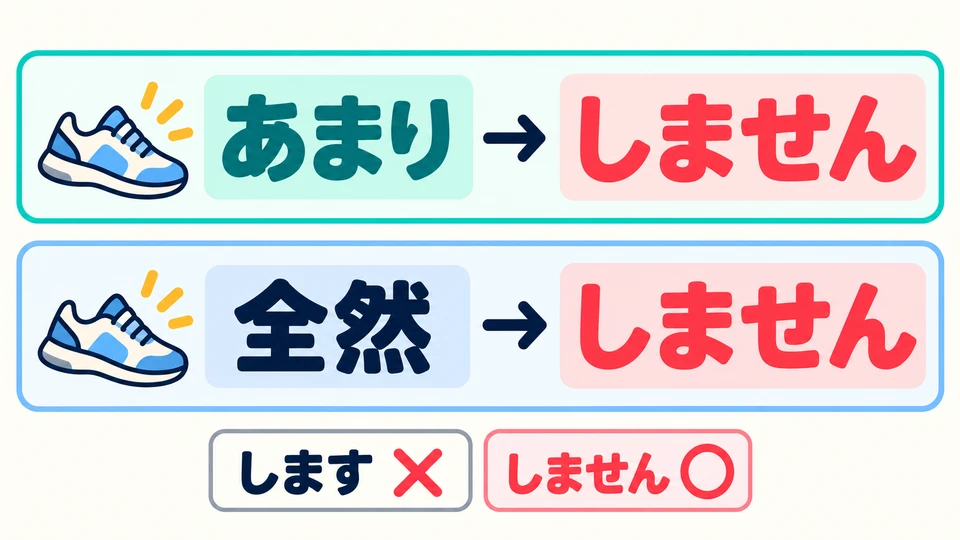
  5. To mean “not very much/often” and “not at all,” both 「あまり」 and 「全然」 are followed by a negative form.
    To mean “not very much/often” and “not at all,” both 「あまり」 and 「全然」 are followed by a negative form.

  6. The example says the person does not exercise often, but they may still exercise sometimes. あまりしません does not mean never doing it.
    The example says the person does not exercise often, but they may still exercise sometimes. あまりしません does not mean never doing it.

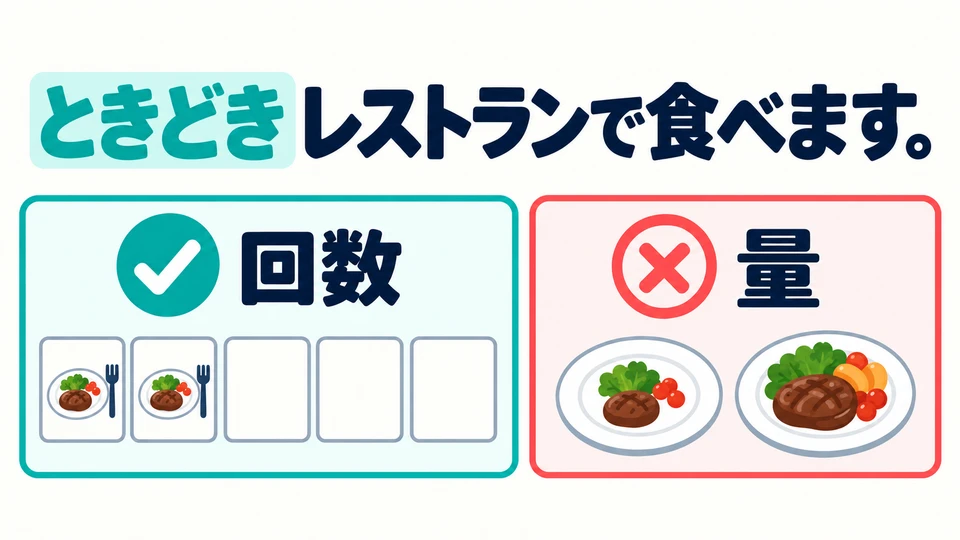
  7. In the restaurant example, “sometimes” describes how often the person eats there, not how much they eat each time.

    In the restaurant example, “sometimes” describes how often the person eats there, not how much they eat each time.

Example sentences

  • ときどきtokidokiレストランれすとらんresutoranでde食べます。たべますtabemasu

    I sometimes eat at a restaurant.

  • 運動うんどうundouはわwaあまりamariしません。しませんshimasen

    I don't exercise much.

In a conversation

  • A
    運動うんどうはわよくしますか。か

    A: Do you exercise often?

  • B
    いいえ、いいえあまりしません。しません

    B: No, not very often.

  • A
    そう

Check yourself

  1. Level 1 · Recognise

    Which sentence is correct?

  2. Level 1 · Recognise

    Listen and choose the meaning

  3. Level 2 · Build

    Put the words in order

    I always wake up at 6 in the morning.

  4. Level 3 · Use

    What goes in the blank?

     スーパーへ買い物に行きます。

    I often go shopping at the supermarket.

More grammar in this theme

  • いつも・よく・ときどきfrequency: always to sometimes

More JLPT N5 grammar

Keep practising

Test your Japanese vocabulary12 adaptive questions, freeCheck your pronunciationRead aloud and get a scorePractise verb forms10-question conjugation quizSee the whole courseGrammar, vocabulary and quizzes by theme
です
か。か
私わたし
はわ
いつも
朝あさ
走ります。はしります

A: I see. I always run in the morning.

  • B
    毎朝まいあさですか。かすごいですね。ね

    B: Every morning? That's amazing.

  • A
    はい、はい続けるつづけることが大切です。たいせつです

    A: Yes, consistency is important.

  • Beginner 2
    Hobbies and Preferences
    More quizzesOpen this lesson’s quizzes in the course
    趣味は〜ことですhobby: activity as a noun
    期間に〜回/冊/本quantity per time period
    〜ができますcan do something
    〜ことができますcan do an action
    〜ことができますかask if someone can
    〜て、〜てからsequence actions in order
    どうやって〜かask how to do something
    Previous趣味は〜ことです
    Next期間に〜回/冊/本
    See all 111
    〜が上手です/下手ですskill at an activity
    〜は〜が〜ですdescribe someone's features
    〜くて〜/〜で〜link two qualities
    あげます/あげましたgive something to someone
    もう〜ましたか/まだ〜ていませんalready done or not yet
    〜てもいいですかasking for permission
    〜ないでくださいpolite request not to act
    〜が〜ていますcurrent action or state