
もう〜ましたか/まだ〜ていませんmou ~mashita ka / mada ~te imasen
Mou mashita ka (もう〜ましたか) means “already done or not yet”.
Has it already departed?
Ask 「もう〜ましたか」 about completion by now; answer 「まだ〜ていません」 if it is not done yet.
In the course
How it works
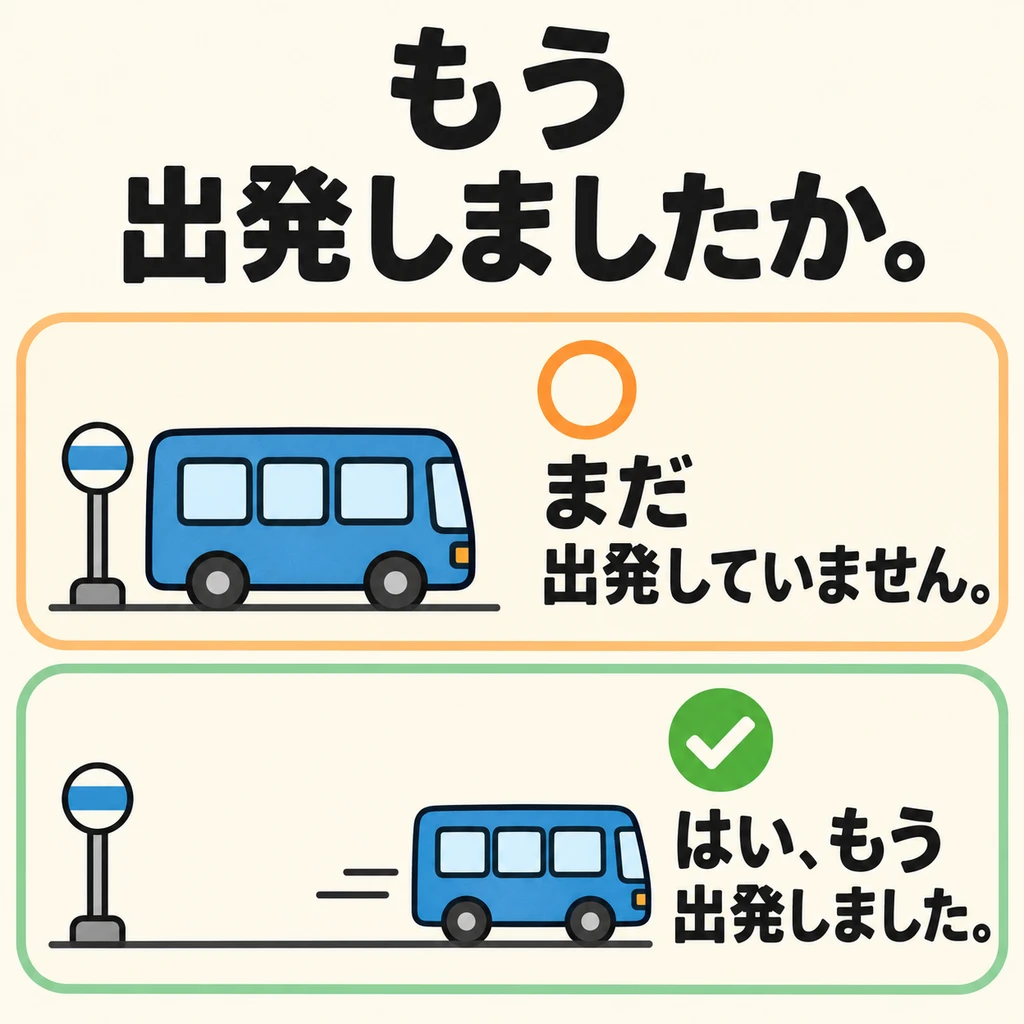
Is the bus still at the stop, or has it already left? Look at the picture and choose the answer meaning “not departed yet.”
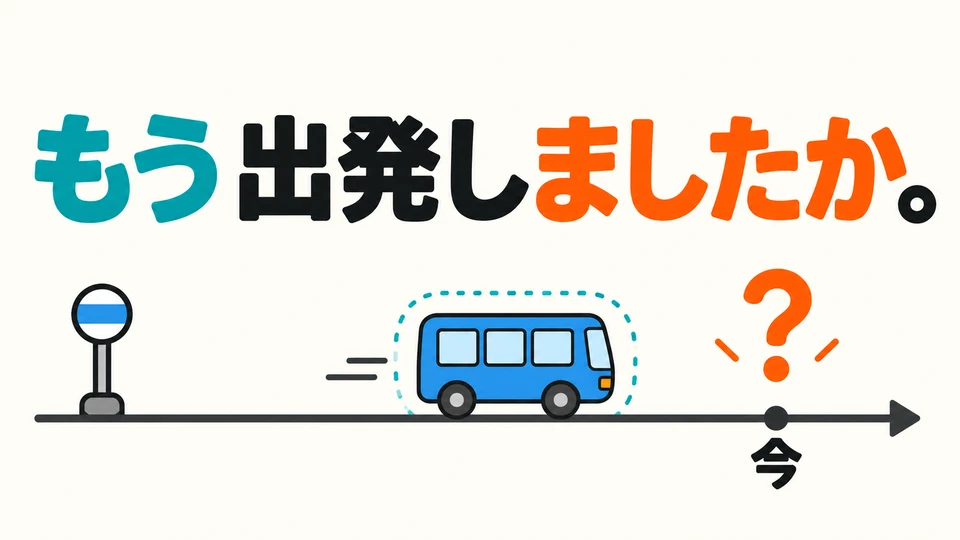
Use 「もう + verb in ました form + か」 to ask whether an action has been completed by now.
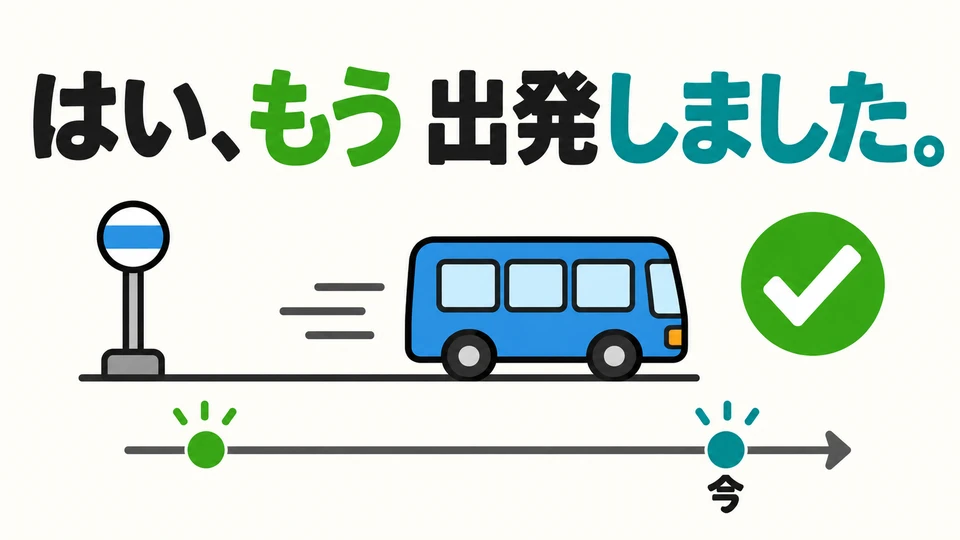
When the action is complete, answer with 「はい、もう + verb in ました form」, meaning “Yes, I have already done it.”

When it is not complete yet, answer with 「まだ + verb in て form + いません」, meaning “I have not done it yet.”
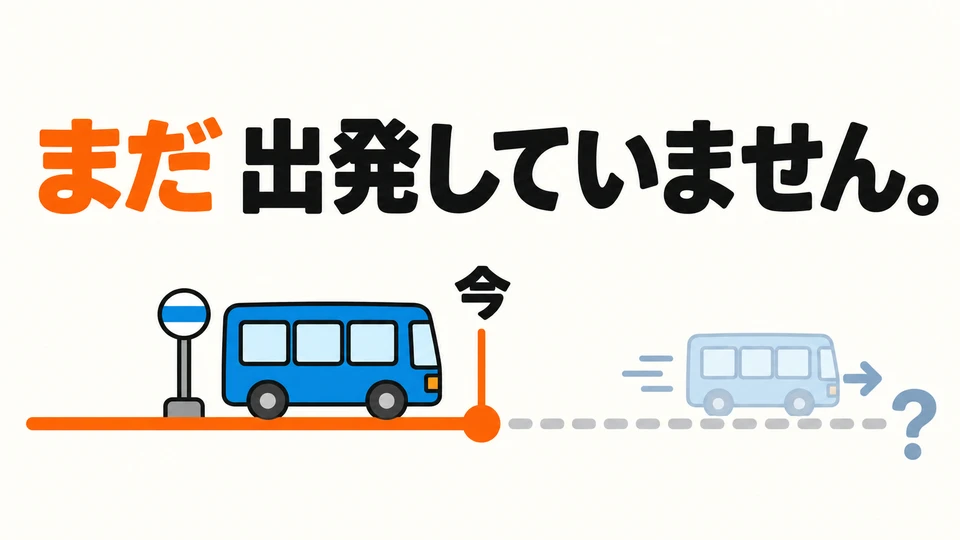
「まだ」 means “not done yet, up to now.” It does not mean the action will never happen.
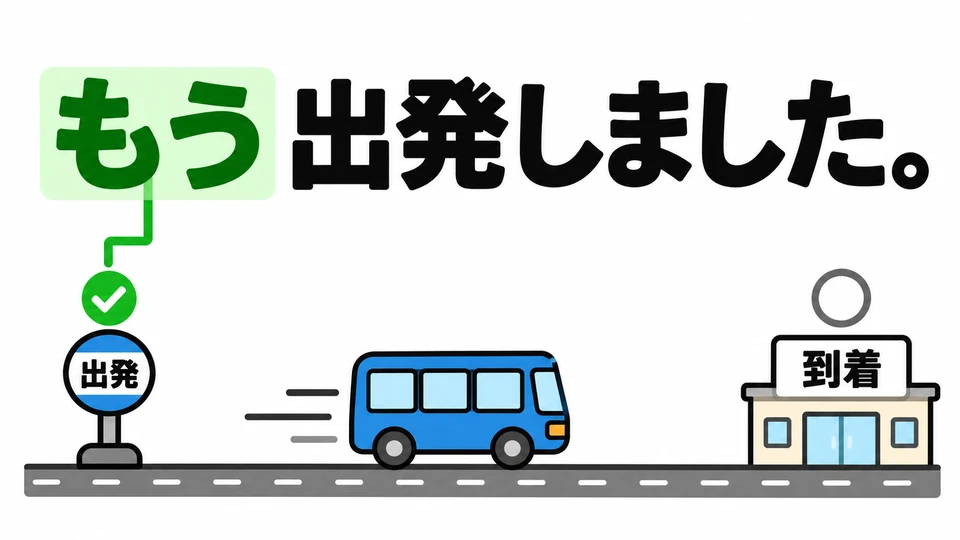
The example asks whether the bus has departed. Once it has left, you can say “already”; it does not need to have reached its destination.
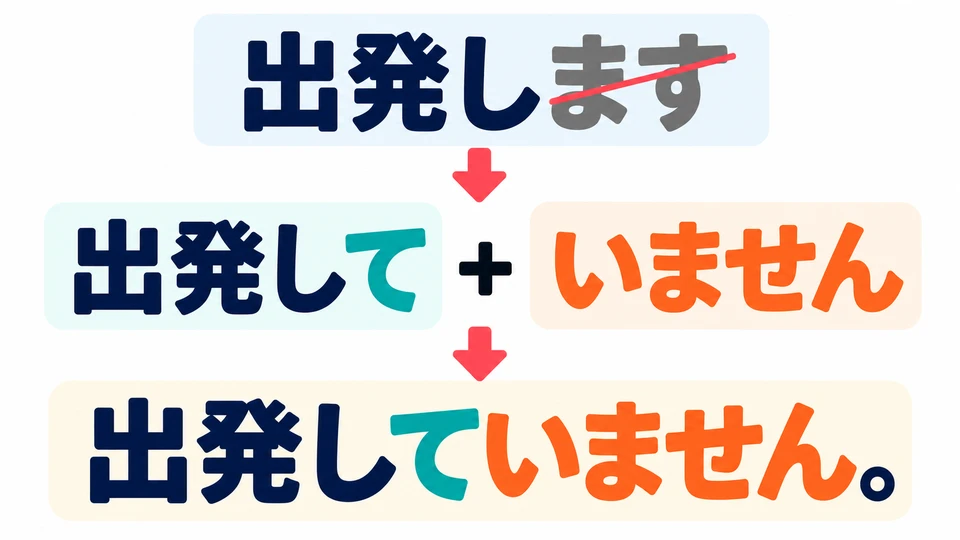
In the example, first change 「出発します」 to 「出発して」, then add 「いません」.
Example sentences
- もうmou出発shuppatsuしましたshimashitaか。ka
Has it already departed?
- まだmada出発shuppatsuしshiてteいません。imasen
In a conversation

- Aもうバス乗り場へ行きましたか。
A: Have you already gone to the bus stop?
- Bいいえ、まだ行っていません。
B: No, I haven't gone yet.
Check yourself
Level 1 · Recognise
Which sentence is correct?
Level 1 · Recognise
Listen and choose the meaning
Level 2 · Build
Put the words in order
Have you already gone to the bus stop?
Level 3 · Use
What goes in the blank?
もう予定を確認 か。
Have you already confirmed the schedule?
More grammar in this theme
- もう〜ましたか/まだ〜ていませんalready done or not yet