〜たり、〜たりします~tari, ~tari shimasu
Tari, tari shimasu (〜たり、〜たりします) means “listing example activities”.
On weekends, I do things like play games and read books.
Use 「〜たり、〜たりします」 to give examples of activities without saying they are exhaustive or in a particular order.
In the course
How it works

When a friend asks what you do on weekends, use 「たり」 to give a few representative activities.

The picture also shows shopping and an ellipsis: the two activities listed are not everything; there may be others.

There are no arrows showing a sequence: 「たり」 lists activities without saying which happened first.
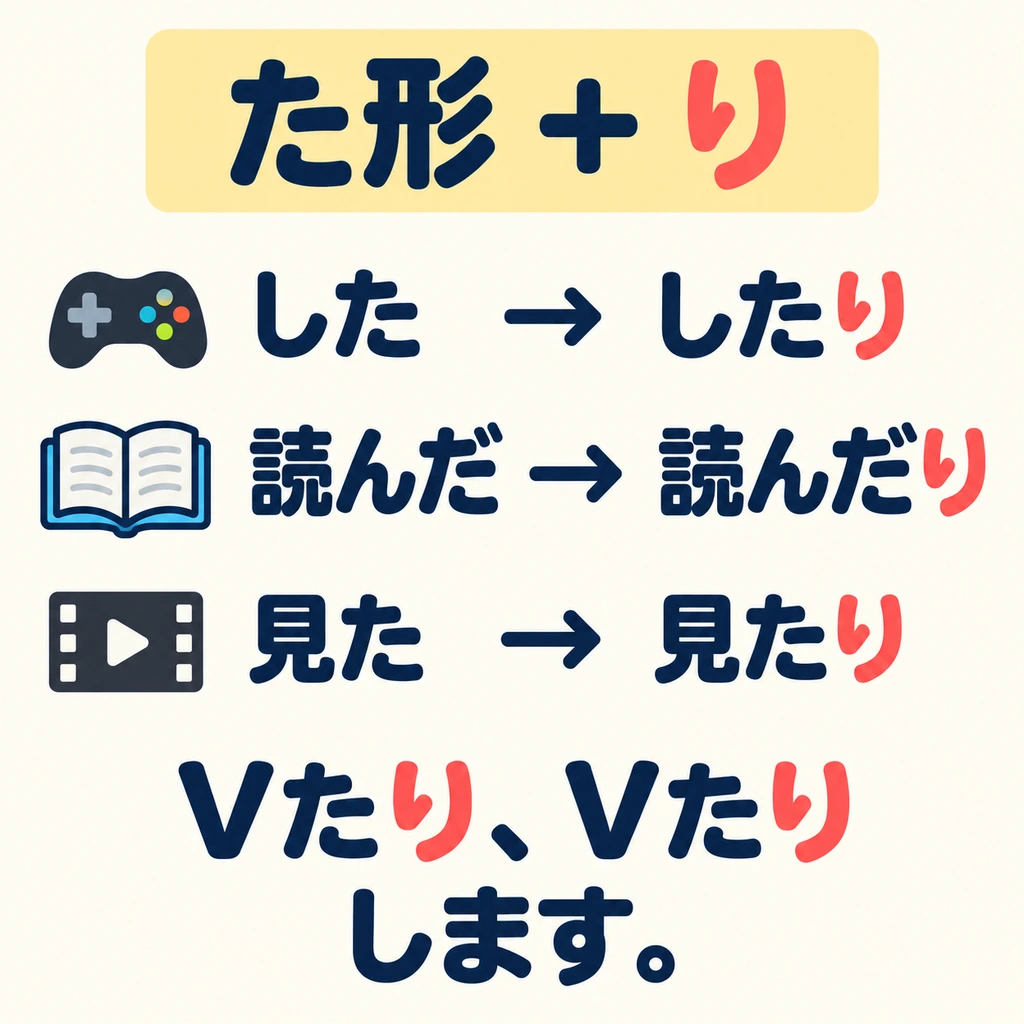
First put the verb in the た-form, then add 「り」, as in 「見た→見たり」.
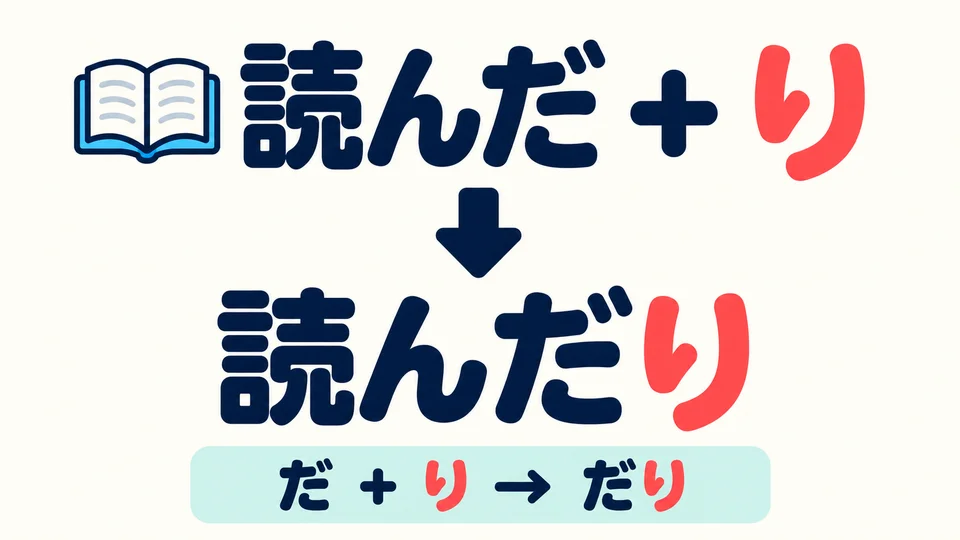
If the た-form ends in 「だ」, simply add 「り」: 「読んだ→読んだり」.

End the list with 「します」, and keep 「たり」 on the last verb too.

In the example with 「昨日」, 「しました」 expresses the past; 「たり」 itself does not.
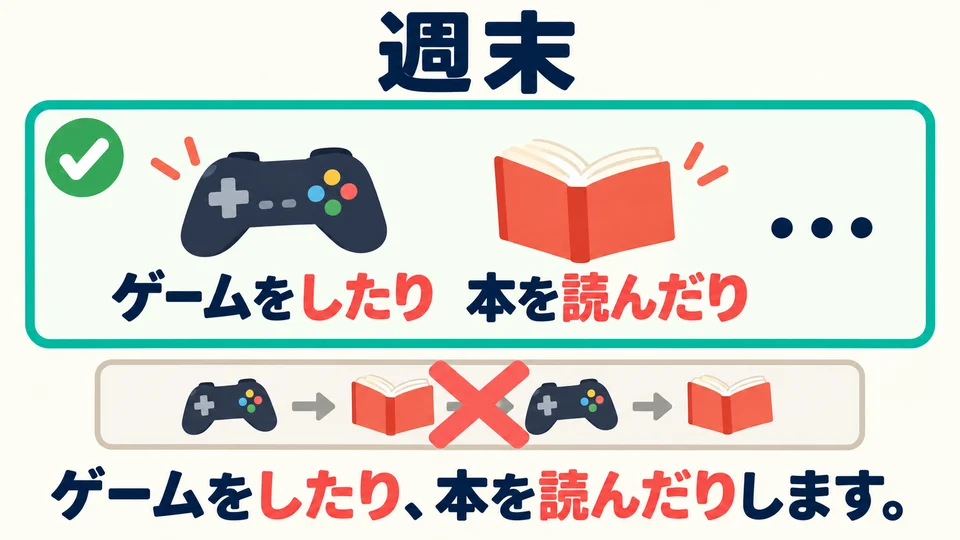
The weekend example gives examples of activities; it does not mean you must alternate between playing games and reading.
Example sentences
- 週末shuumatsuはwaゲームgeemuをoしshiたり、tari本honをo読んyonだりdariします。shimasu
In a conversation

- A休日は何をしますか。
A: What do you do on your days off?
- Bそうですね。買い物をしたり、
Check yourself
Level 1 · Recognise
Which sentence is correct?
Level 1 · Recognise
Listen and choose the meaning
Level 2 · Build
Put the words in order
I do laundry and clean in the morning.
Level 3 · Use
What goes in the blank?
家で寝 たりします。
At home, I do things like sleep and eat.
More grammar in this theme
- 〜たり、〜たりしますlisting example activities