
〜たことがあります~ta koto ga arimasu
Ta koto ga arimasu (〜たことがあります) means “past experience”.
Have you ever been to Tokyo?
Use「〜たことがあります」to say you have done something before, without specifying when or how many times.
In the course
How it works
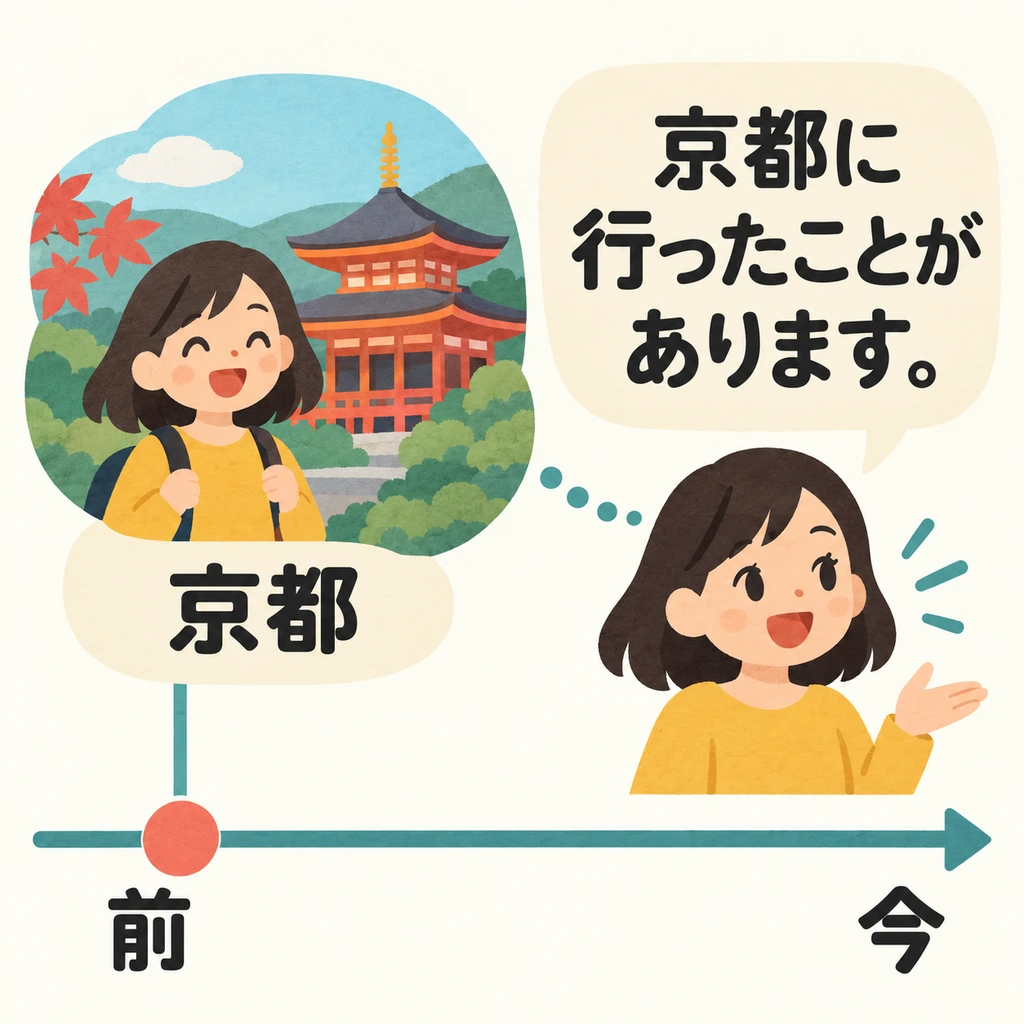
Look at the picture: she has visited Kyoto before. Use 「た形+ことがあります」 to say you have had this experience.
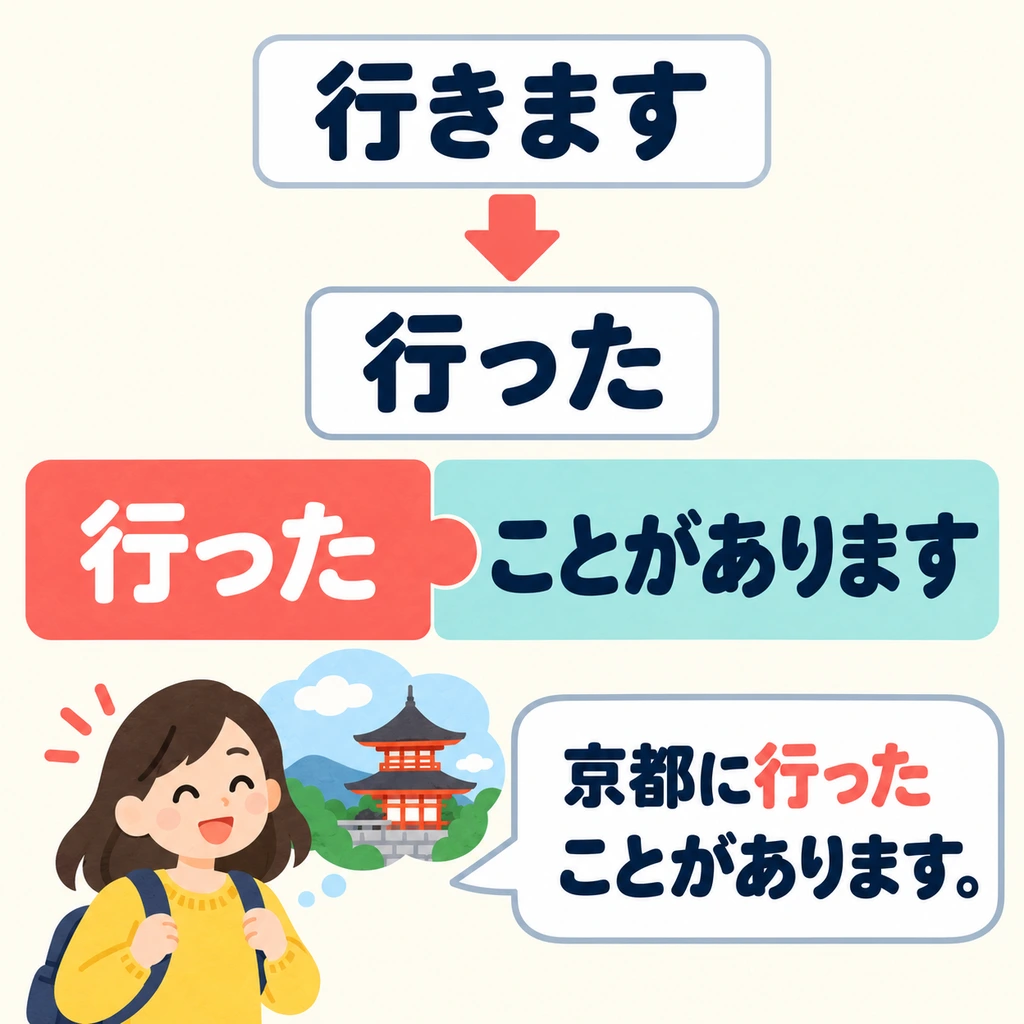
First put the verb in the た form, then add 「ことがあります」. Here, use 「行った」, not 「行きます」.

The trip in the picture happened in the past. This sentence only says she has been to Kyoto; it does not mean she is there now.
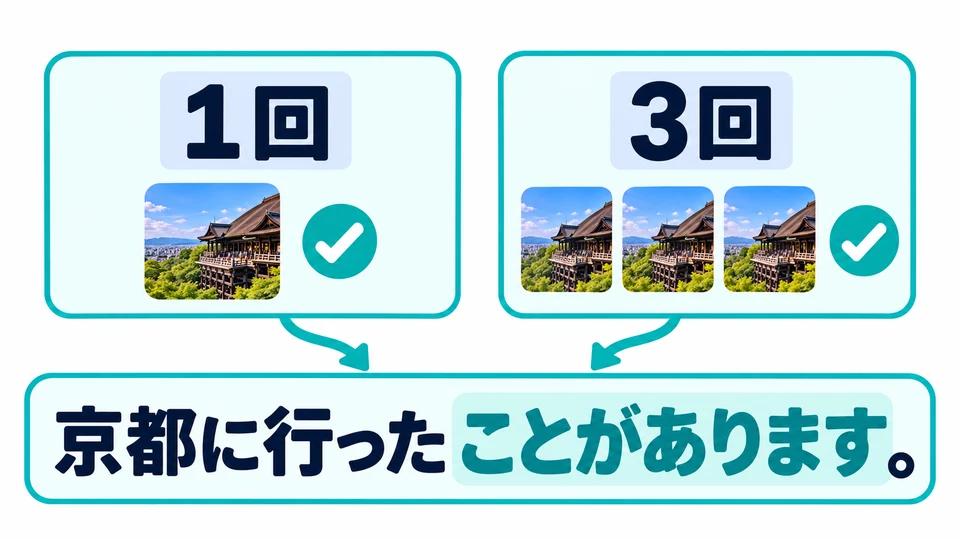
If you have done it before, you have that experience. It may have been once or several times; the sentence itself does not say how many.
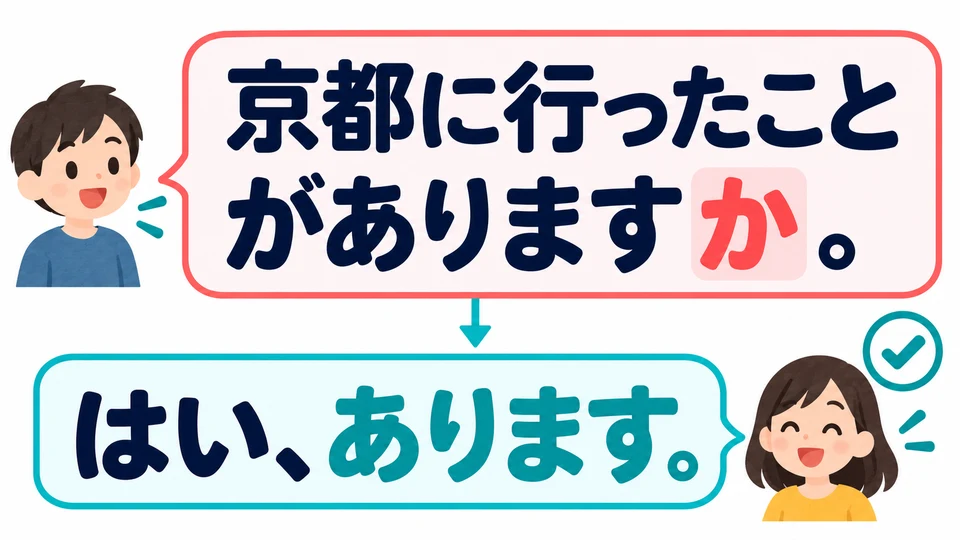
To ask someone if they have had this experience, add 「か」 at the end. If they have, a short answer is 「はい、あります」.

The Tokyo example asks “Have you ever been?”, not which day you went. To talk about a particular trip, use 「行きました」.
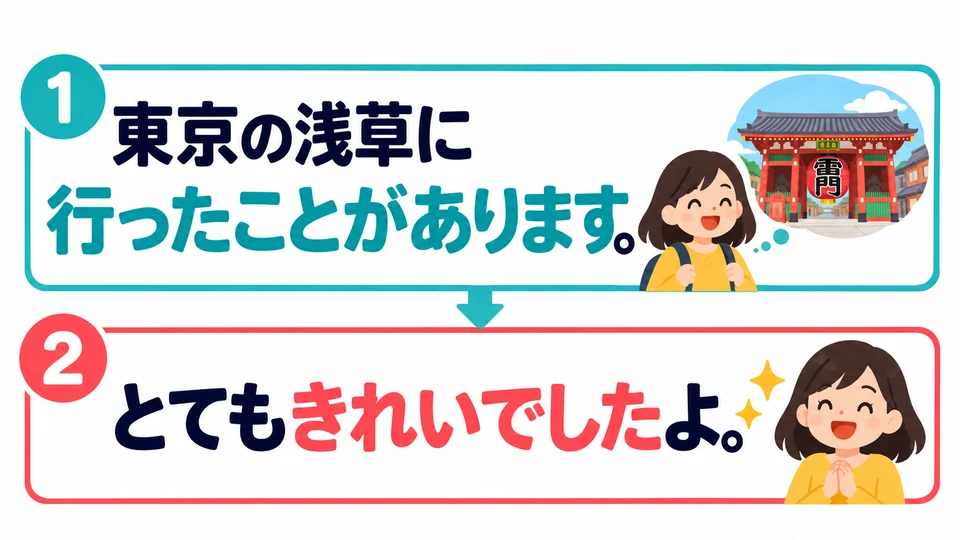
The Asakusa example first says the speaker has been there, then shares an impression from that visit with 「とてもきれいでしたよ」.
Example sentences
- 東京toukyouにni行ったittaことkotoがgaありますarimasuか。ka
Have you ever been to Tokyo?
- 東京toukyouのno浅草
In a conversation

- A京都に行ったことがありますか。
A: Have you ever been to Kyoto?
- Bはい、あります。京都の古いお寺に
Check yourself
Level 1 · Recognise
Which sentence is correct?
Level 1 · Recognise
Listen and choose the meaning
Level 2 · Build
Put the words in order
I have stayed at an old temple in Kyoto.
Level 3 · Use
What goes in the blank?
東京の浅草に あります。
I have been to Asakusa in Tokyo.
More grammar in this theme
- 〜たことがありますpast experience