
参りますmairimasu
Mairimasu (参ります) means “humble go or come”.
I will be there at 10:00.
Use 「参ります」 humbly for your own going or coming, with the exact direction understood from context.
In the course
How it works
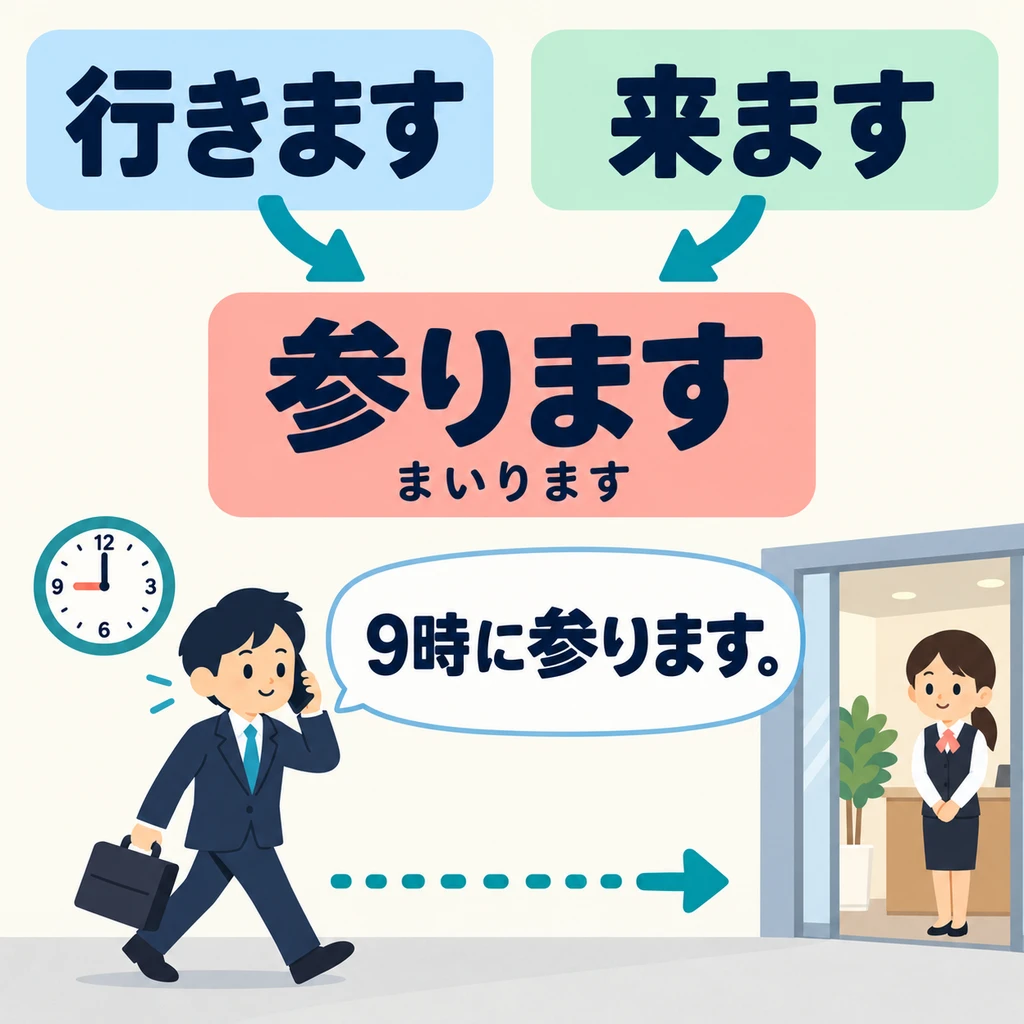
Look at the picture: the visitor tells the receptionist when he will arrive, using 「参ります」 for his own movement.
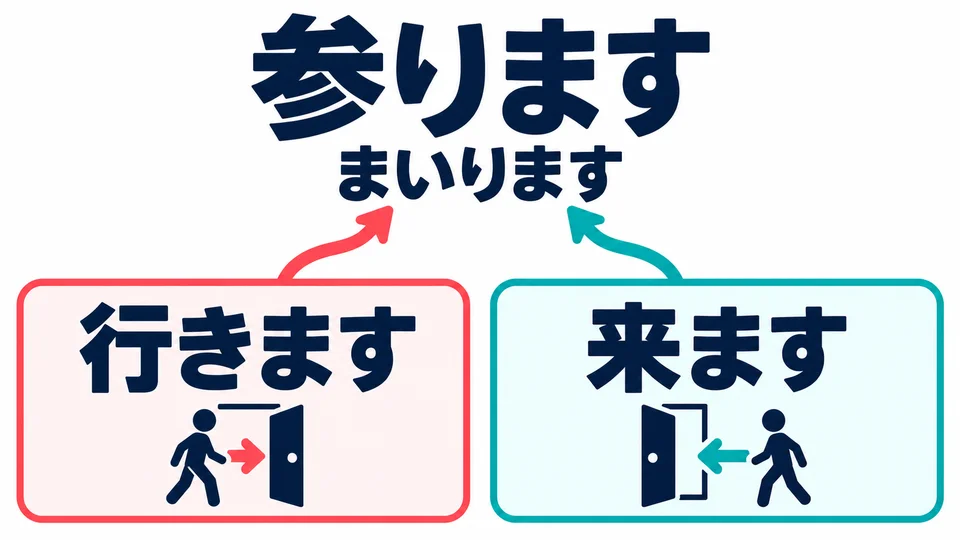
「参ります」 is read 「まいります」 and can mean either “go” or “come.”
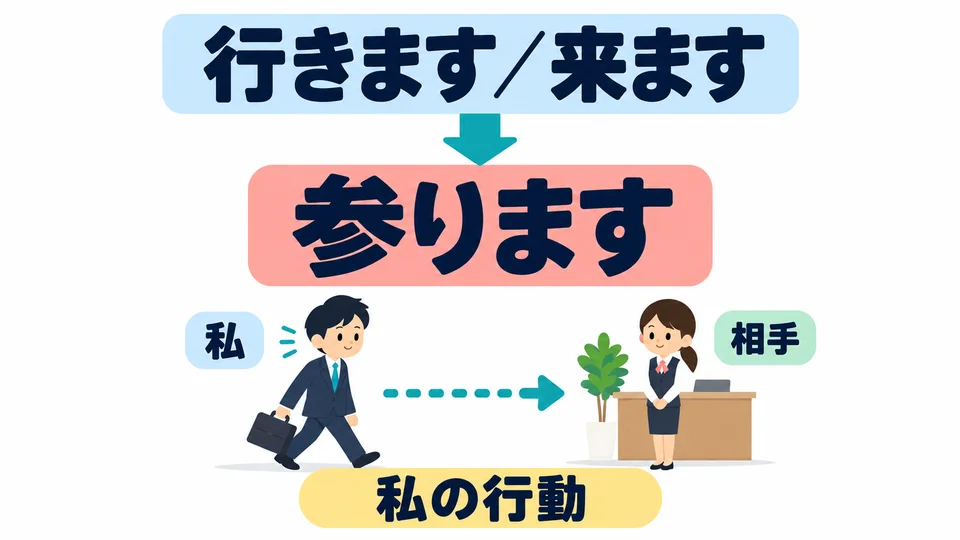
It is the humble form of 「行きます/来ます」: you speak modestly about your own action to show respect to the listener.
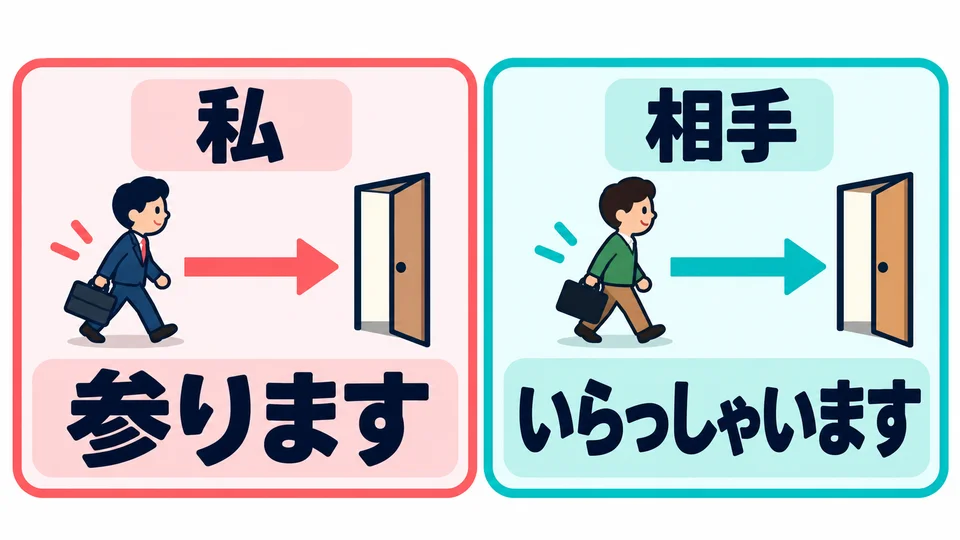
First check who is moving: use 「参ります」 for yourself and 「いらっしゃいます」 to refer respectfully to the other person’s movement.
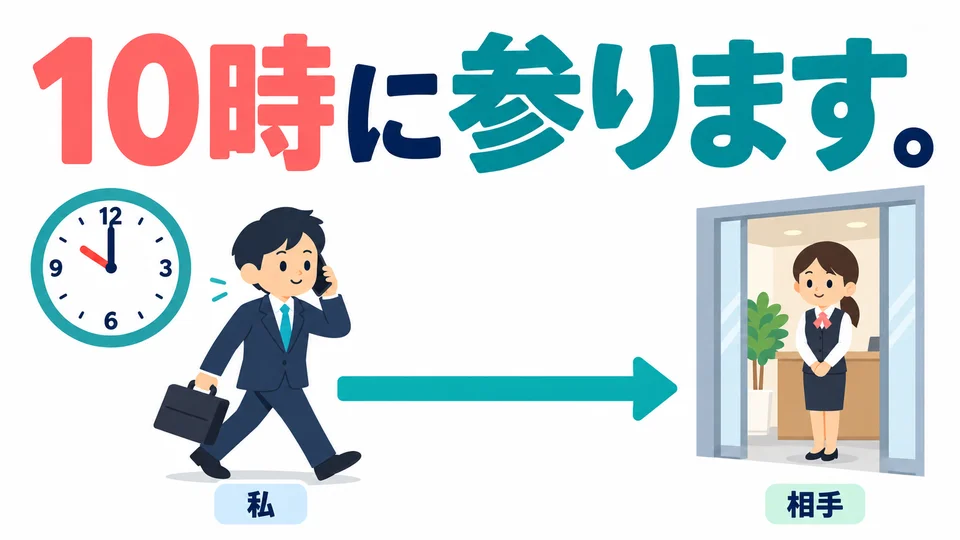
The example 「10時に参ります」 gives the time of a visit. Whether it means “go” or “come” depends on the situation.
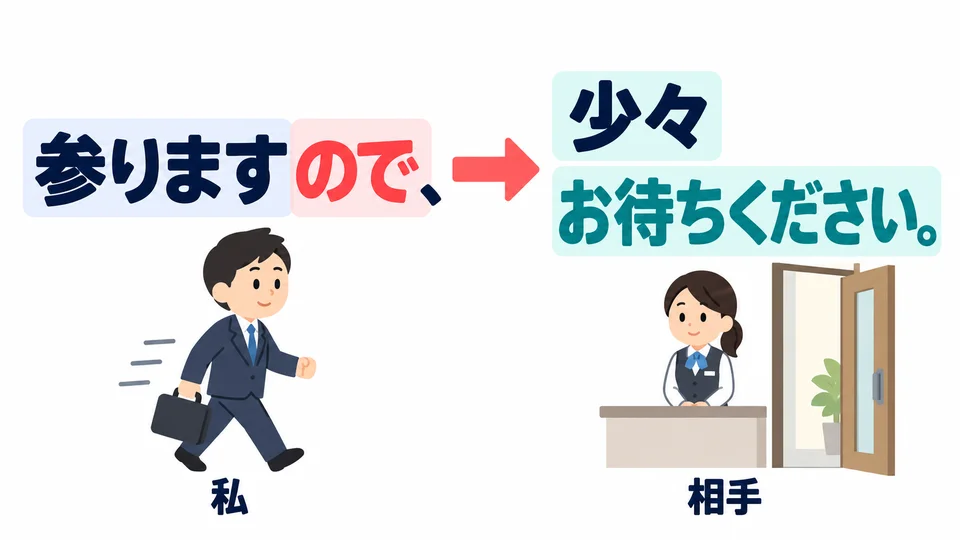
「参りますので」 explains that you are on your way, leading into “please wait a moment” and reassuring the listener as they wait.
Example sentences
- 10時juujiにni参ります。mairimasu
I will be there at 10:00.
- 参りますmairimasuのnoで、de少々shoushouお待ちomachiください。kudasai
In a conversation

- A明日は何時に来られますか。
What time can you come tomorrow?
- B9 時に参ります。
I'll be there at 9:00.
Check yourself
Level 0 · Conjugate
Change your own “go / come” to 参る. Keep the tense and negation. 謙譲語(参る)
私は明日、そちらへ(行きます)。
Level 1 · Recognise
Which sentence is correct?
Level 1 · Recognise
Listen and choose the meaning
Level 2 · Build
Put the words in order
I will come at 9 AM tomorrow.
Level 3 · Use
What goes in the blank?
田中と申します。アルバイトの面接で 。
My name is Tanaka. I came for the part-time job interview.
More grammar in this theme
- 参りますhumble go or come