JPEdLab iconJPEdLab
Save history

Create an account and play

Explore first, then save your progress whenever you are ready. No email address is required.

Start free
  1. Japanese grammar
  2. JLPT N4 grammar
  3. いらっしゃいます

いらっしゃいますirasshaimasu

Irasshaimasu (いらっしゃいます) means “respectful be, come, go”.

社長しゃちょうshachouはわwa今、いまima事務所じむしょjimushoにniいらっしゃいます。いらっしゃいますirashshaimasu

The president is in the office right now.

Use 「いらっしゃいます」 to respectfully say that someone is present, coming, or going.

In the course›

How it works

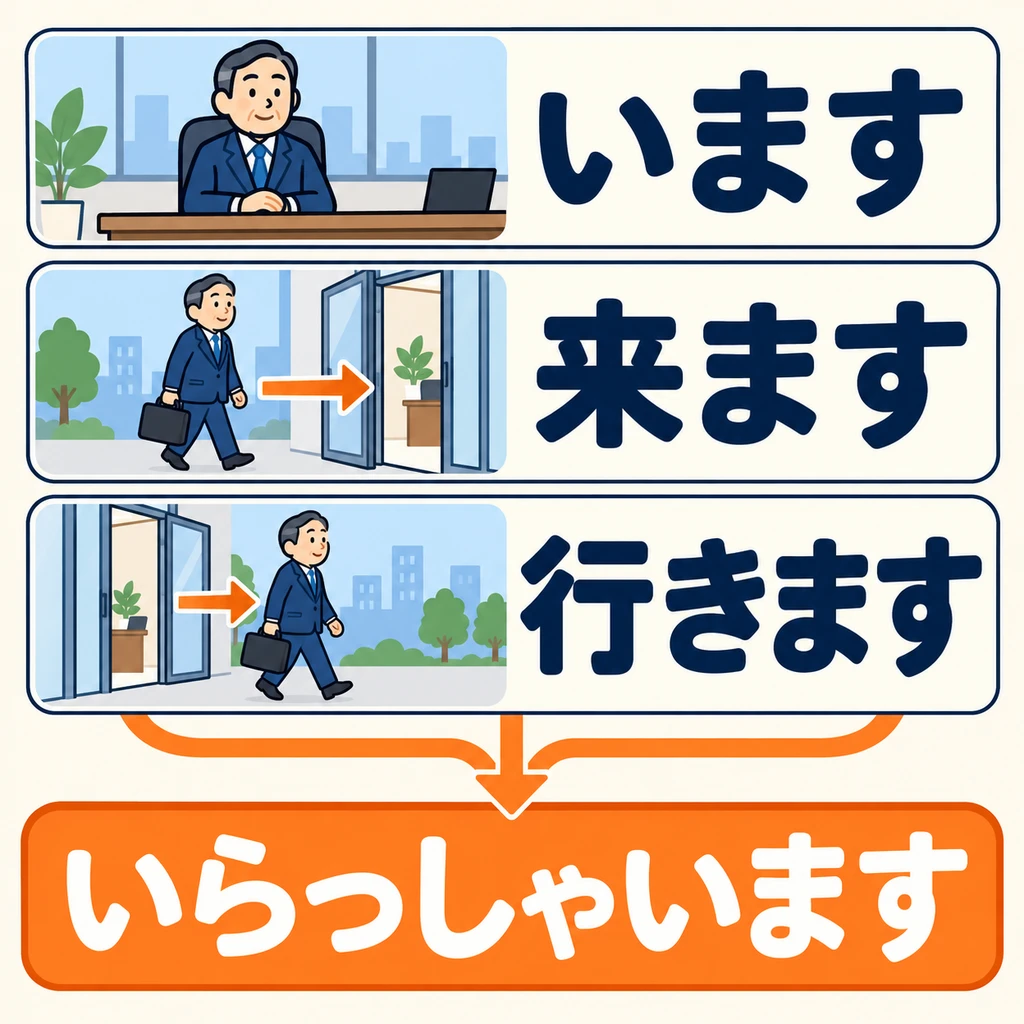
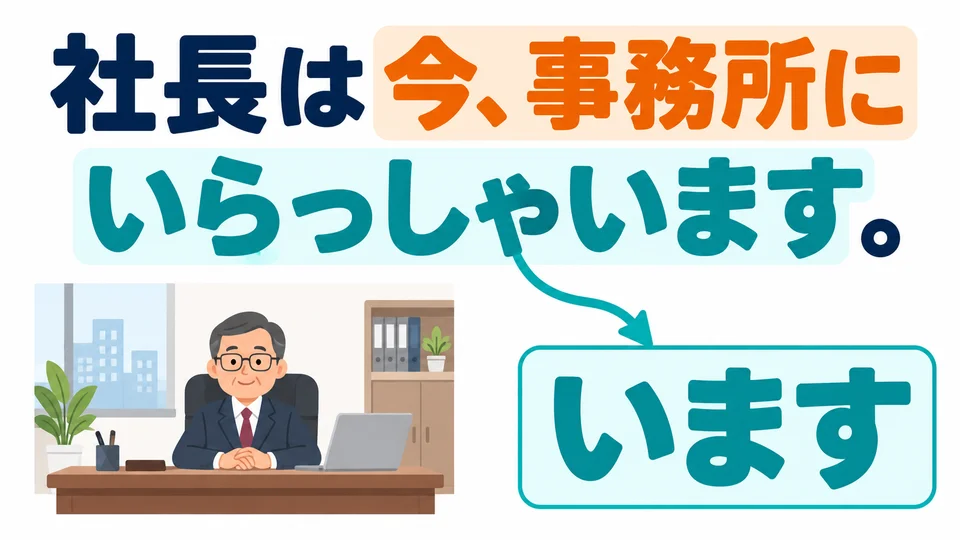
  1. “Be here, come, and go” share one respectful form. Look at the picture: which expression do all three verbs lead to?
    “Be here, come, and go” share one respectful form. Look at the picture: which expression do all three verbs lead to?

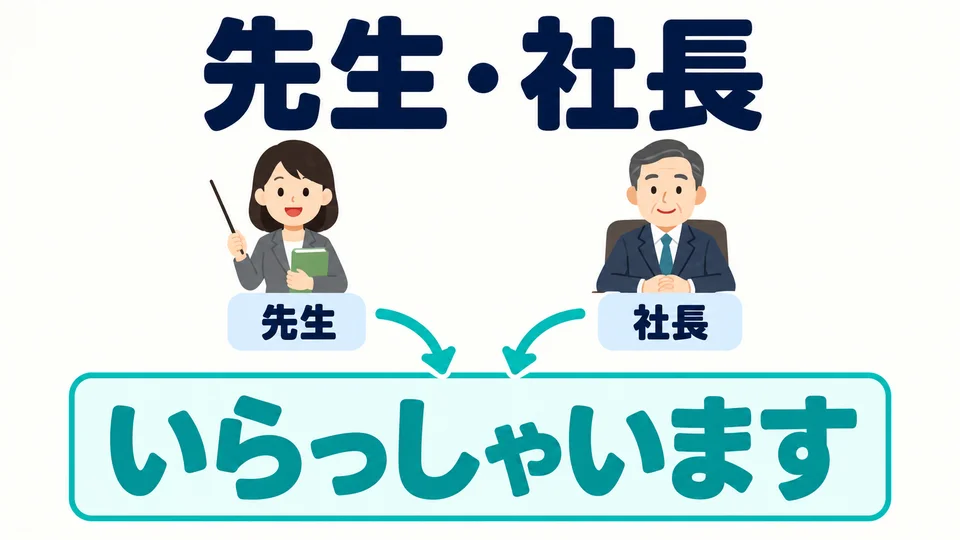
  2. When talking about someone you treat with respect, such as a teacher or company president, this expression honors that person in the sentence.
    When talking about someone you treat with respect, such as a teacher or company president, this expression honors that person in the sentence.

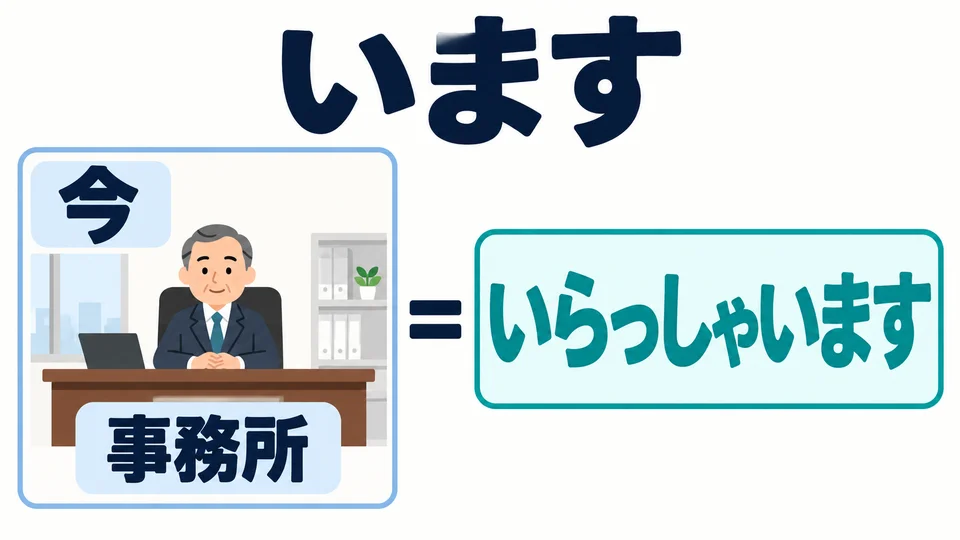
  3. When it means “be present,” focus on where the person is now. It does not describe arriving or leaving.
    When it means “be present,” focus on where the person is now. It does not describe arriving or leaving.

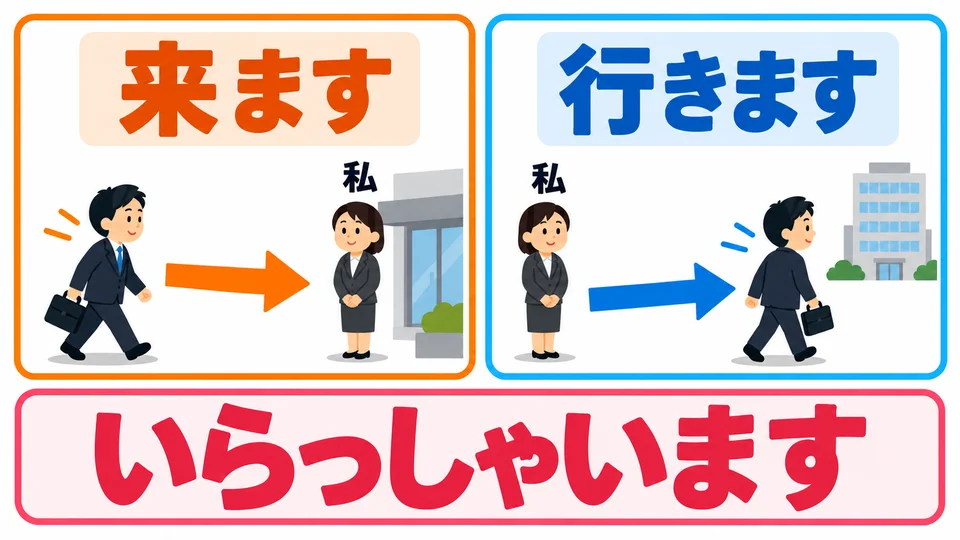
  4. When it means “come” or “go,” the direction still matters. Use the situation to work out the exact meaning.
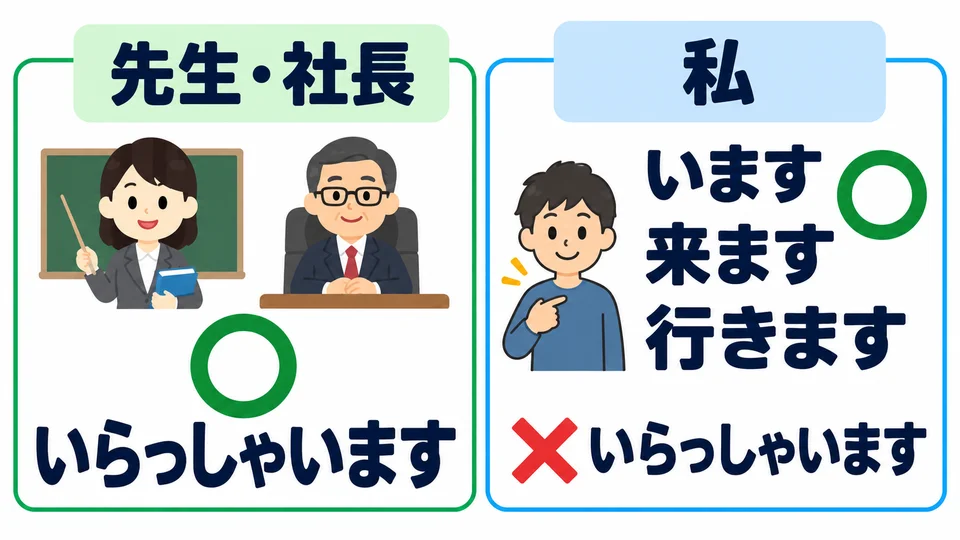
    When it means “come” or “go,” the direction still matters. Use the situation to work out the exact meaning.

  5. When saying that you are somewhere, come, or go, use the ordinary polite forms. Do not use this expression to honor yourself.
    When saying that you are somewhere, come, or go, use the ordinary polite forms. Do not use this expression to honor yourself.

  6. The example contains “今、事務所に”. It tells us where the company president is right now, so the meaning is “be present.”
    The example contains “今、事務所に”. It tells us where the company president is right now, so the meaning is “be present.”

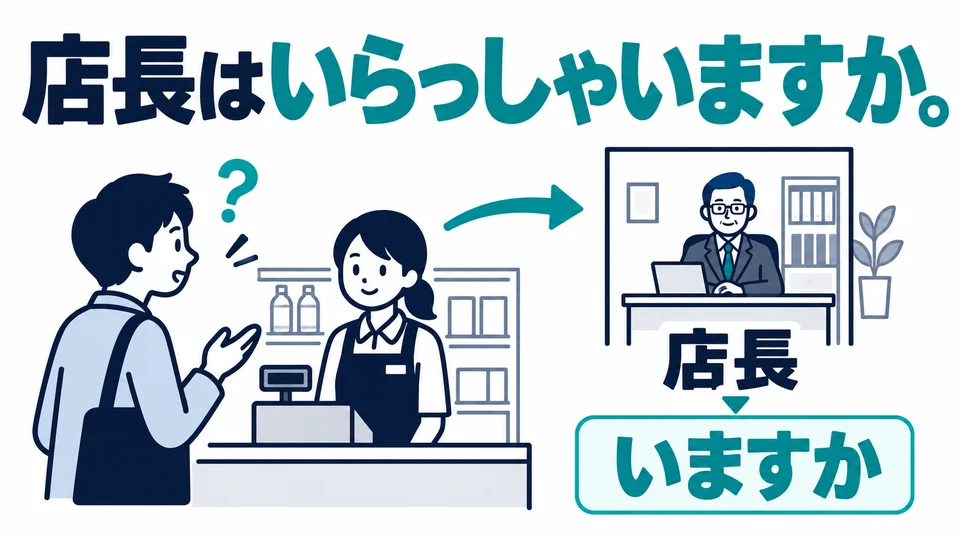
  7. In a shop, “店長はいらっしゃいますか” asks whether the manager is in, while showing respect to the manager.

    In a shop, “店長はいらっしゃいますか” asks whether the manager is in, while showing respect to the manager.

Example sentences

  • 社長しゃちょうshachouはわwa今、いまima事務所じむしょjimushoにniいらっしゃいます。いらっしゃいますirashshaimasu

    The president is in the office right now.

  • 店長てんちょうtenchouはわwaいらっしゃいます

In a conversation

  • A
    店長てんちょうはわいらっしゃいますか。か

    Is the manager in?

  • B
    はい、はい今事務所いまじむしょにいらっしゃいます。いらっしゃいます

    Yes, he's in the office right now.

  • A

Check yourself

  1. Level 0 · Conjugate

    Use いらっしゃる for the respected person's action. Keep the tense and negation. 尊敬語(いらっしゃる)

    社長は今、事務所に(います)。

  2. Level 1 · Recognise

    Which sentence is correct?

  3. Level 1 · Recognise

    Listen and choose the meaning

  4. Level 2 · Build

    Put the words in order

    The manager is in the office now.

  5. Level 3 · Use

    What goes in the blank?

    社長は今、事務所に 。

    The president is in the office now.

More grammar in this theme

  • いらっしゃいますrespectful be, come, go

More JLPT N4 grammar

Keep practising

Test your Japanese vocabulary12 adaptive questions, freeCheck your pronunciationRead aloud and get a scorePractise verb forms10-question conjugation quizSee the whole courseGrammar, vocabulary and quizzes by theme
irashshaimasu
か。かka

Is the manager in?

そう
です
か。か
ちょっと
お待ちおまち
ください。ください

I see. Please wait a moment.

  • B
    はい、はい分かりました。わかりました

    Okay, I understand.

  • Beginner 3
    New Life
    More quizzesOpen this lesson’s quizzes in the course
    〜と申しますformal humble self-introduction
    可能形ability or possibility
    〜ので/〜なのでreason; gentle explanation
    参りますhumble go or come
    〜ならif; under that condition
    〜のが好きですlike doing; be good at
    〜のは〜ですmake an activity the topic
    〜ようになりますbecome able; develop a habit
    Next〜と申します
    See all 138
    〜たらif; imagined condition
    〜と思いますI think; give an opinion
    〜ても/〜でもeven if; still
    〜ていますresulting state still holds
    〜そうですlooks / seems
    〜てみますtry doing
    〜てもらえませんかcould you do for me?
    〜やすい・〜にくいeasy / hard to do