
Japanese grammar · ≈ JLPT N4 · Beginner 3
〜たら~tara
if; imagined condition
Form 「〜たら」 from the plain past form to imagine a condition and state what you plan to do if it happens.
- Pattern
- 〜たら
- Romaji
- ~tara
- JLPT (approx.)
- ≈ N4
- Course level
- Beginner 3
- Theme
- TV and Magazines
How it works
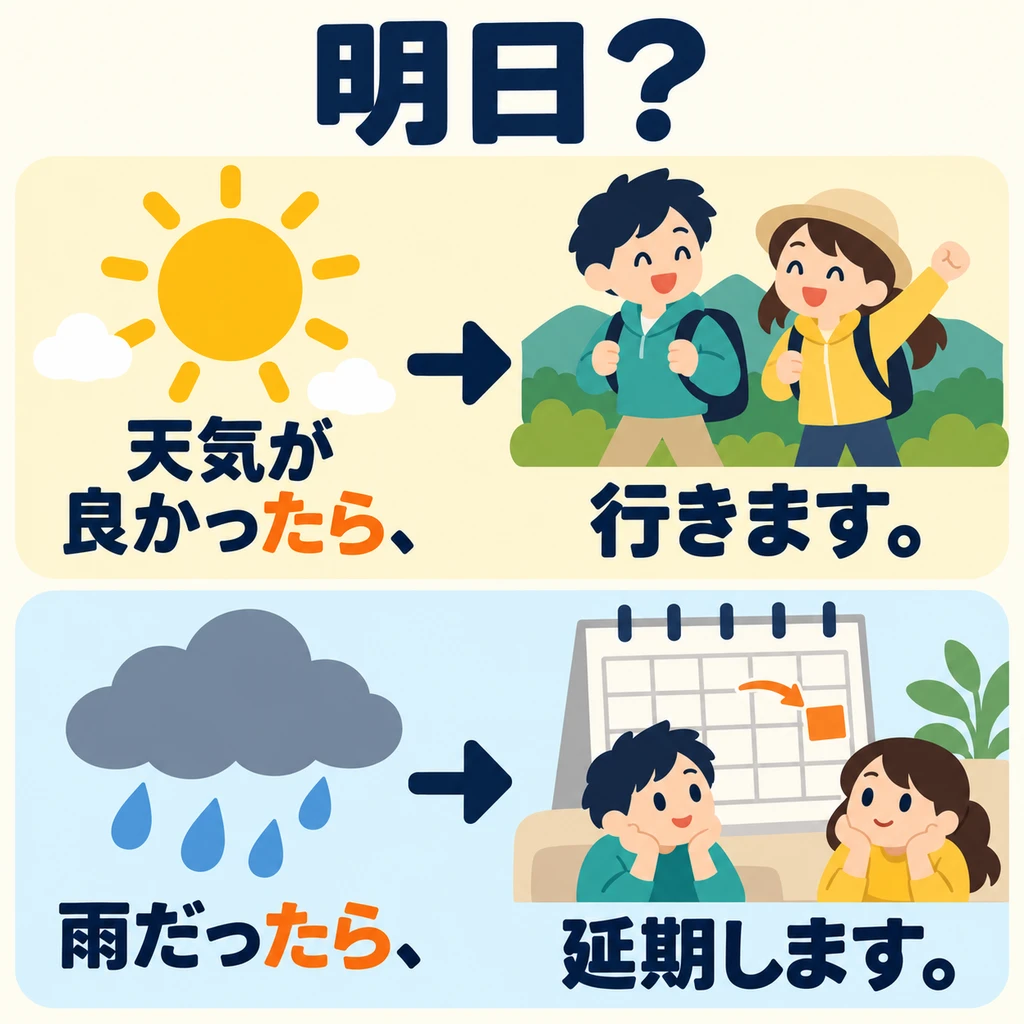
Tomorrow’s weather is still uncertain. Imagine two kinds of weather, then see what they plan to do in each case.
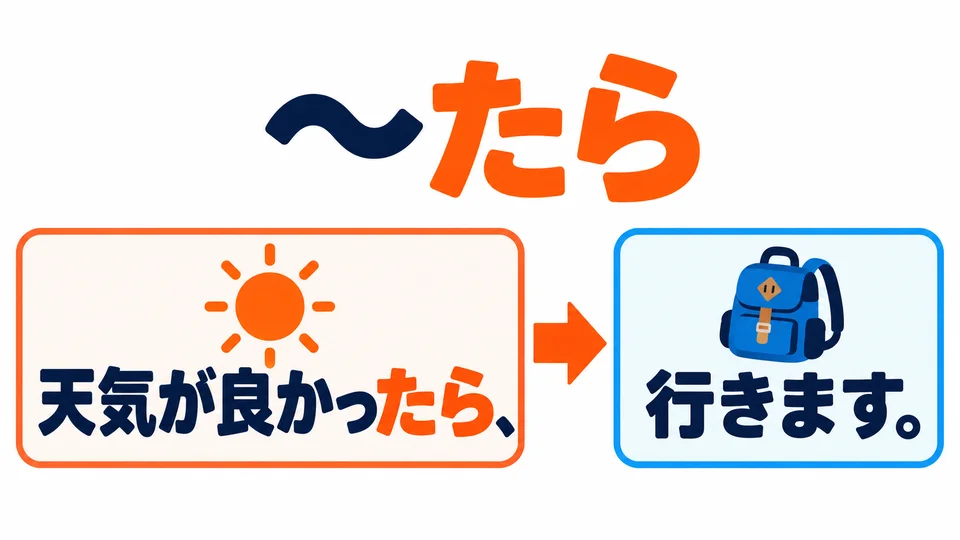
「~たら」 means “if …”. First state an imagined condition, then say what you will do under that condition.
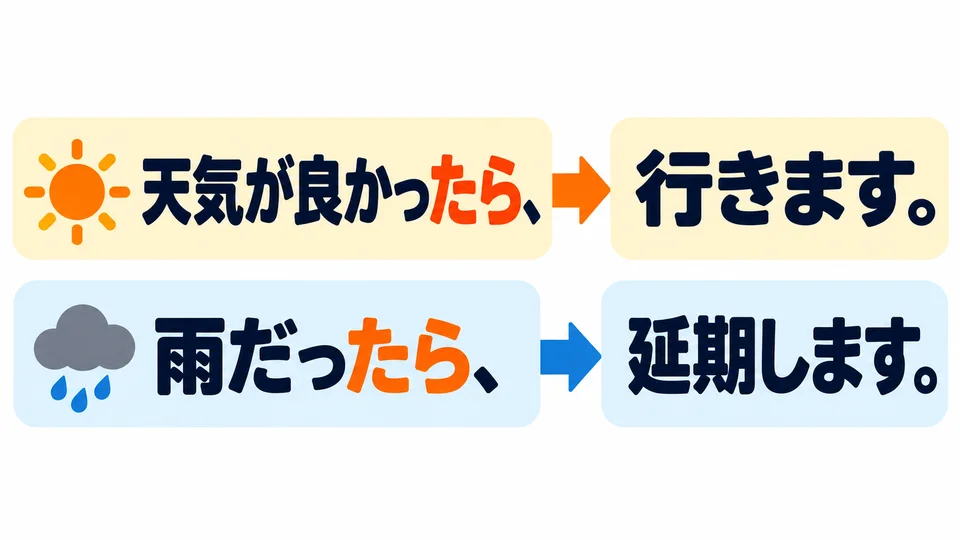
Follow the arrows: if the weather is good, they go on the trip; if it rains, they postpone it. Different conditions lead to different plans.
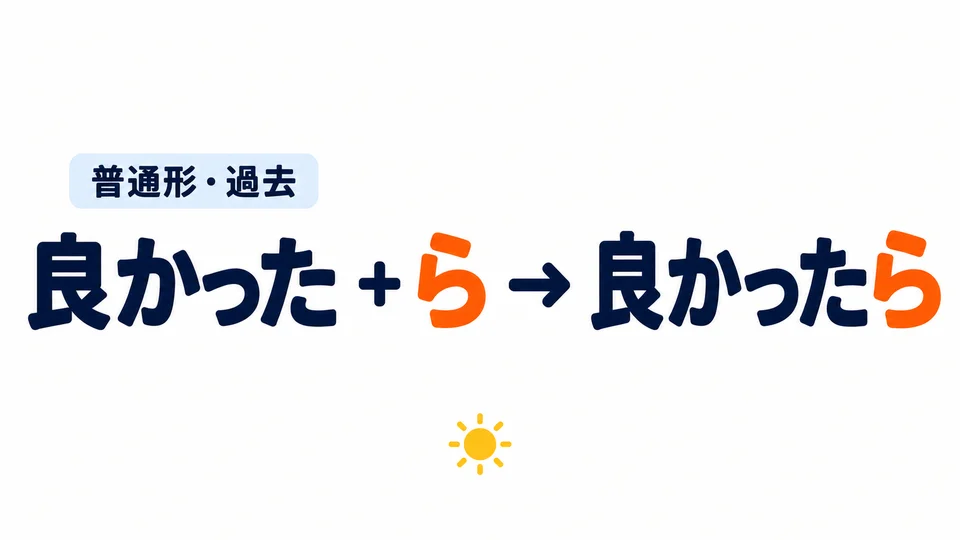
Form it by adding 「ら」 to the plain past form: 「良かった+ら→良かったら」.
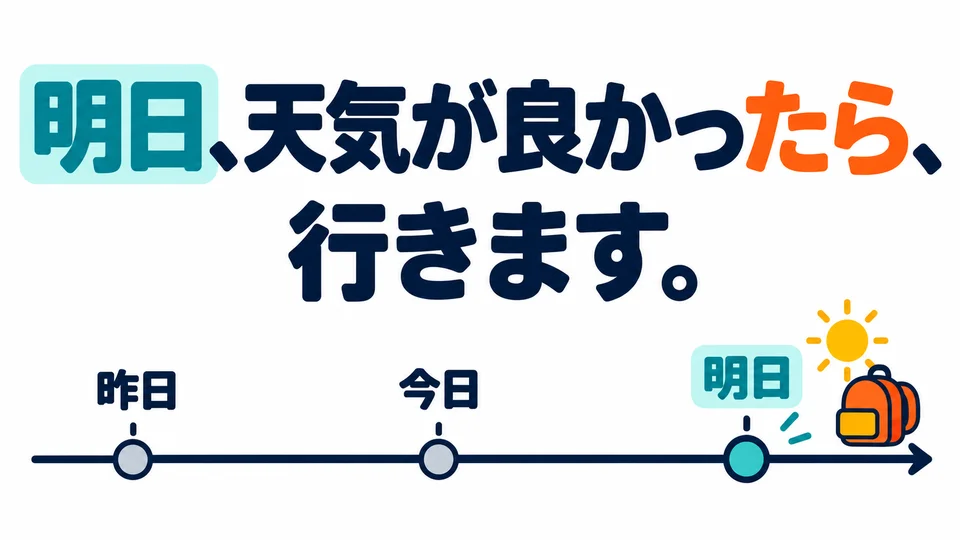
Here, the past form is simply part of how the pattern is built. 「明日」 tells us this is about tomorrow, not the past.
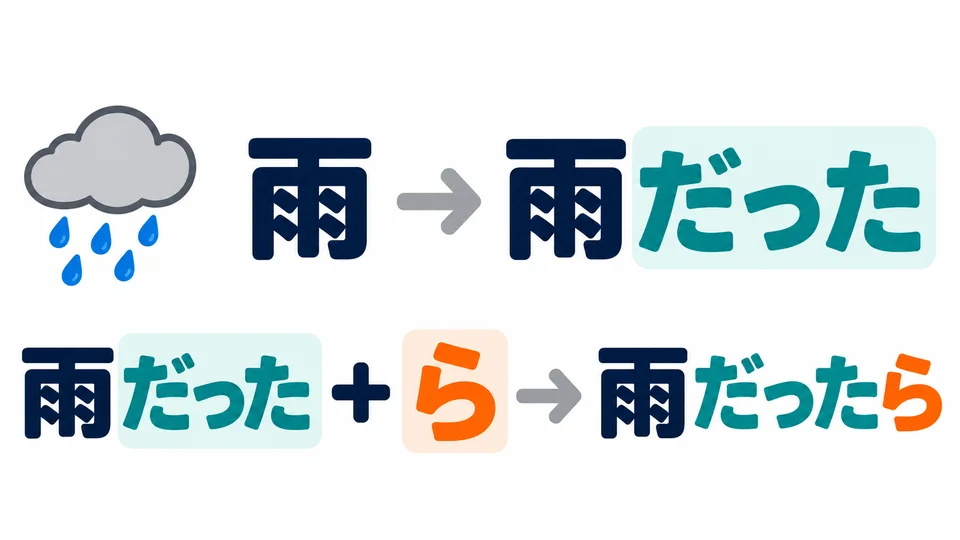
For nouns, the past form uses 「だった」. To imagine a rainy situation, say 「雨だったら」.
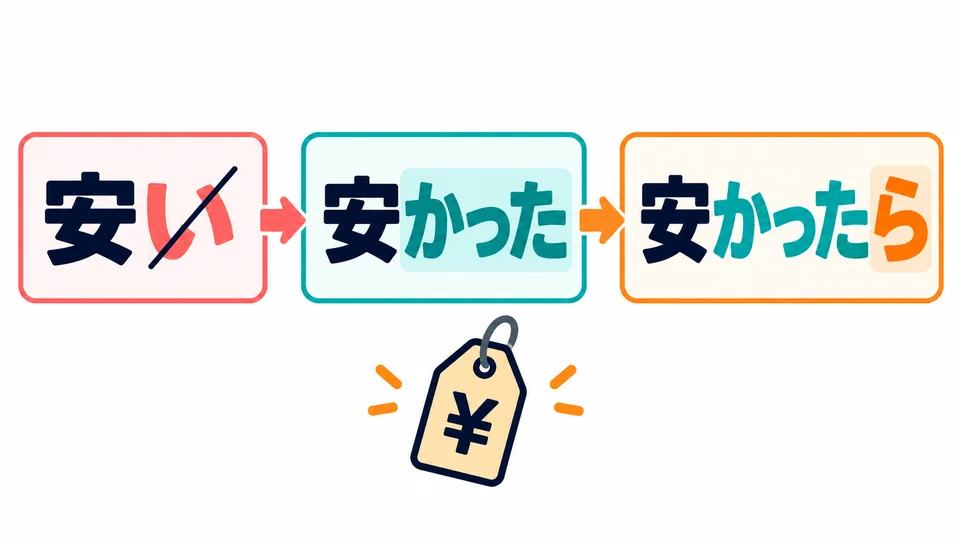
In the example, 「安い」 first becomes 「安かった」. Adding 「ら」 then makes it the condition for buying.
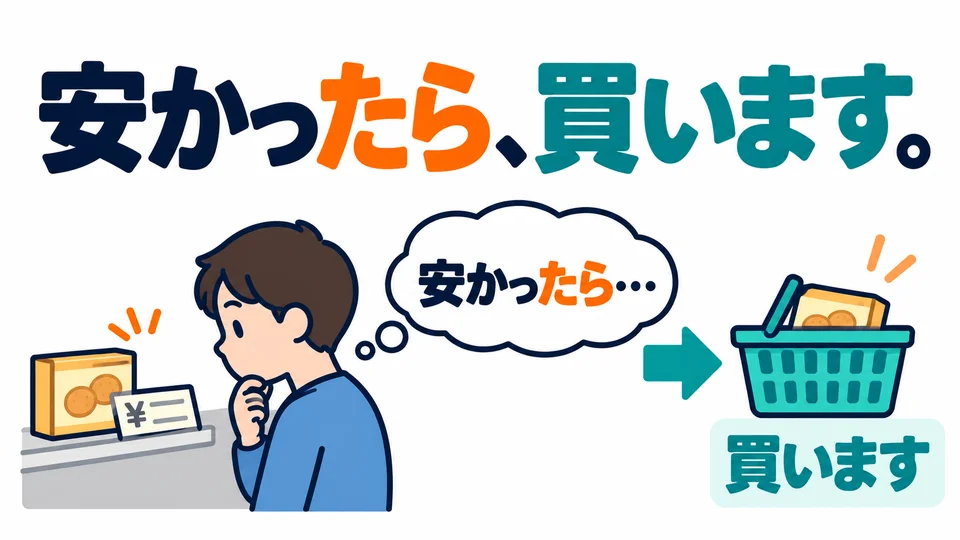
「安かったら、買います」 imagines that the price is low and expresses a plan to buy. It does not mean the purchase has already happened.
Example sentences
- 安かったら、yasukattara買います。kaimasu
(Conditional) If it's cheap, I will buy it.
In a conversation

- A明日の旅行、どうしますか。
A: What about tomorrow's trip?
- B天気が良かったら、行きます。
B: If the weather is good, I will go.
- A
Check yourself
Which sentence is correct?
- レビューが良かったら、予約します。
- レビューが良い、予約します。
- レビューが良くたら、予約します。
- レビューは良かったら、予約します。
Show answer
Answer: A レビューが良かったら、予約します。
Which sentence is correct?
- 予定が決まったら、連絡します。
- 予定が決まる、連絡します。
- 予定が決まってら、連絡します。
- 予定が決まらかったら、連絡します。
Show answer
Answer: A 予定が決まったら、連絡します。
Which sentence is correct?
- 場所が便利だったら、そこに変えます。
- 場所が便利、そこに変えます。
- 場所が便利でたら、そこに変えます。
- 場所は便利だったら、そこに変えます。
Show answer
Answer: A 場所が便利だったら、そこに変えます。
More grammar in this theme
- 〜たらif; imagined condition