
JPEDLAB iconJPEDLAB
Save history

Create an account and play

Explore first, then save your progress whenever you are ready. No email address is required.

Start free
Read as articleCards
1/11

Tomorrow’s weather is still uncertain. Imagine two kinds of weather, then see what they plan to do in each case.

››

Lesson notes · ≈ JLPT N4 · Beginner 3

〜たら~tara

if; imagined condition

Form 「〜たら」 from the plain past form to imagine a condition and state what you plan to do if it happens.

How it works
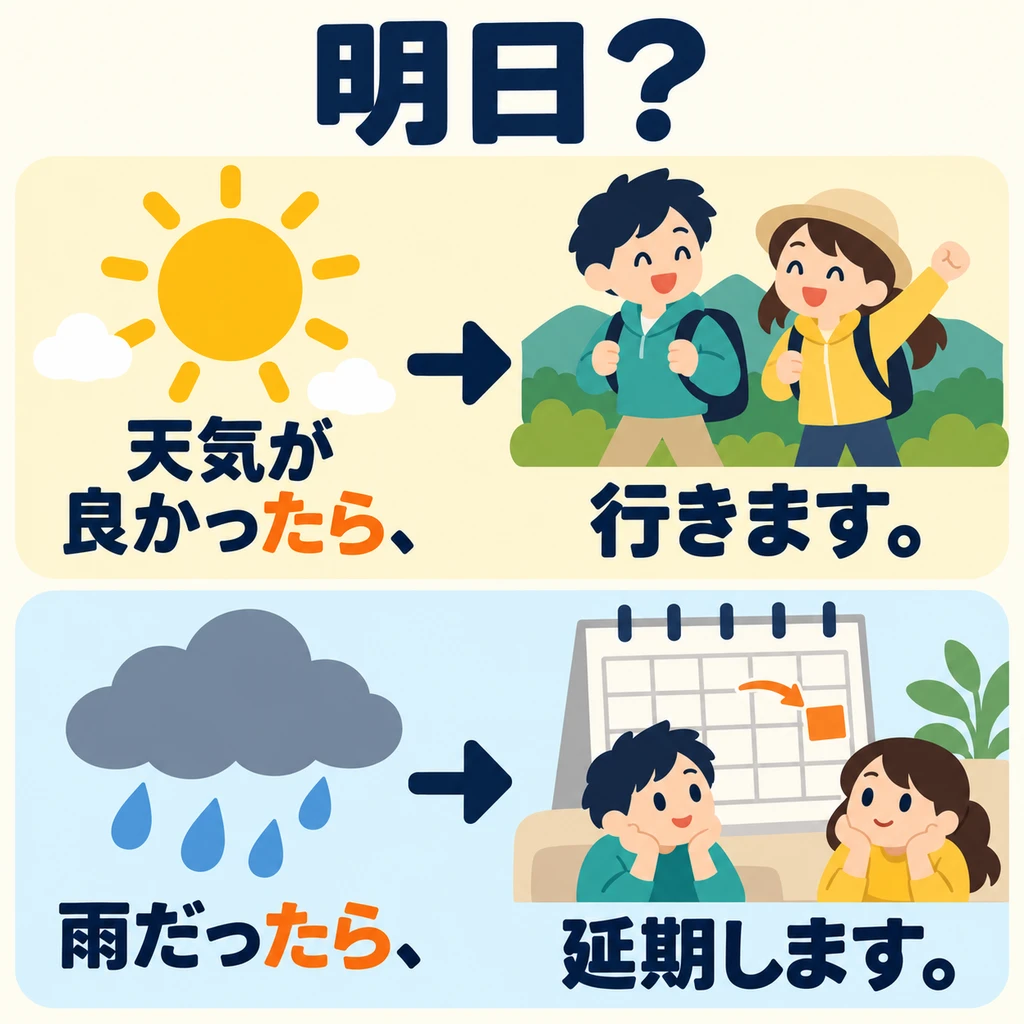
  1. Tomorrow’s weather is still uncertain. Imagine two kinds of weather, then see what they plan to do in each case.
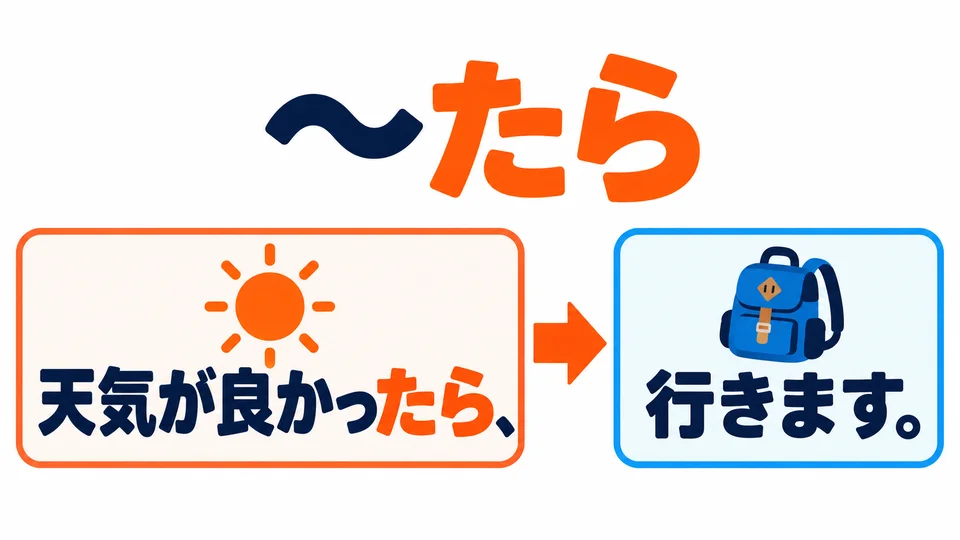
    Tomorrow’s weather is still uncertain. Imagine two kinds of weather, then see what they plan to do in each case.

  2. 「~たら」 means “if …”. First state an imagined condition, then say what you will do under that condition.
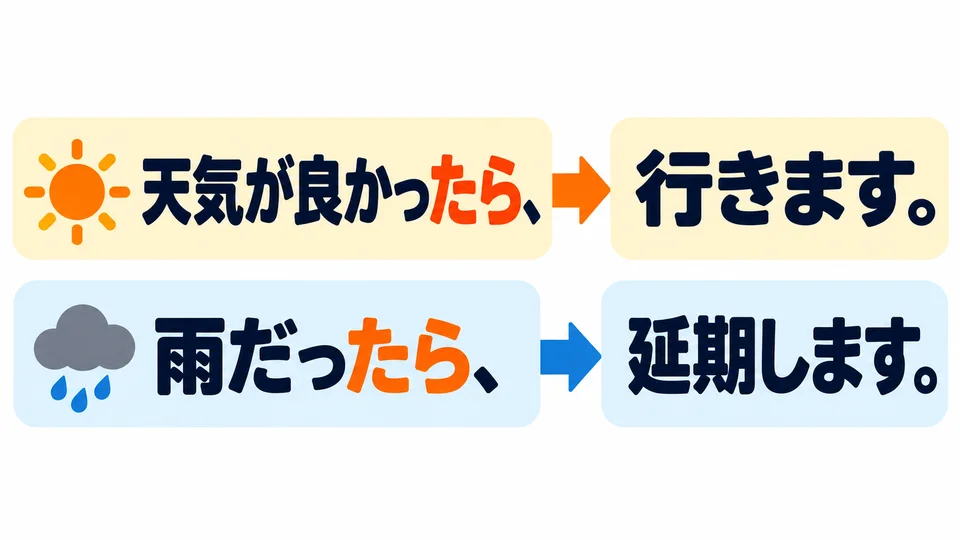
    「~たら」 means “if …”. First state an imagined condition, then say what you will do under that condition.

  3. Follow the arrows: if the weather is good, they go on the trip; if it rains, they postpone it. Different conditions lead to different plans.
    Follow the arrows: if the weather is good, they go on the trip; if it rains, they postpone it. Different conditions lead to different plans.

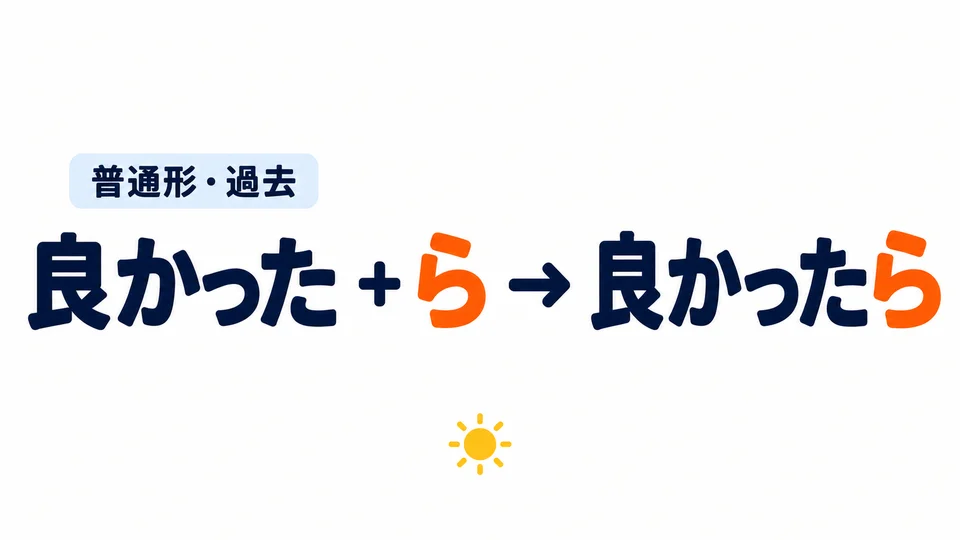
  4. Form it by adding 「ら」 to the plain past form: 「良かった+ら→良かったら」.
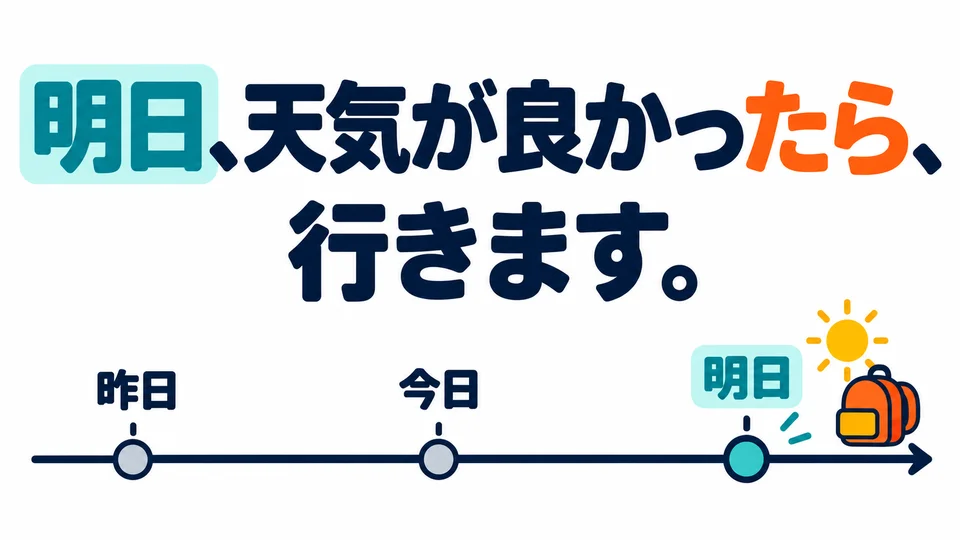
    Form it by adding 「ら」 to the plain past form: 「良かった+ら→良かったら」.

  5. Here, the past form is simply part of how the pattern is built. 「明日」 tells us this is about tomorrow, not the past.
    Here, the past form is simply part of how the pattern is built. 「明日」 tells us this is about tomorrow, not the past.
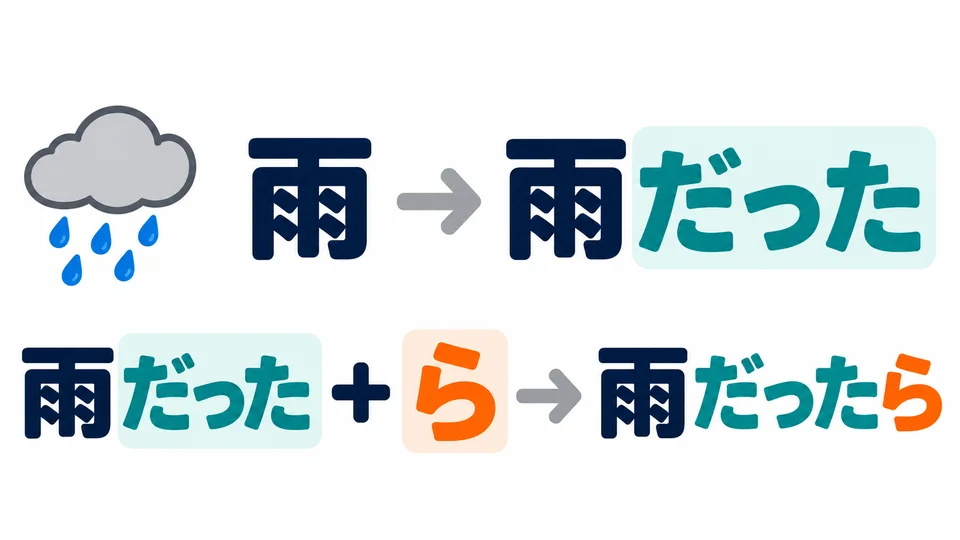
For nouns, the past form uses 「だった」. To imagine a rainy situation, say 「雨だったら」.

For nouns, the past form uses 「だった」. To imagine a rainy situation, say 「雨だったら」.

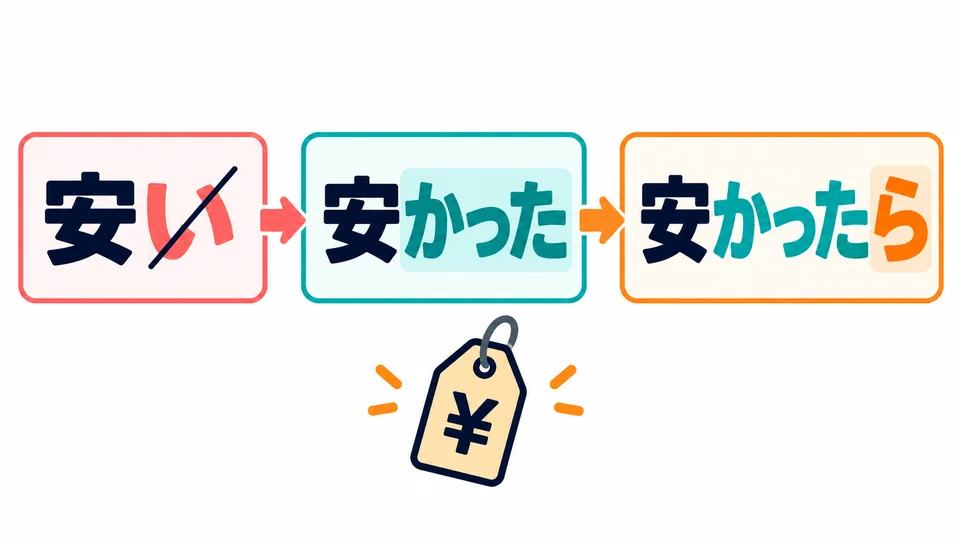
  • In the example, 「安い」 first becomes 「安かった」. Adding 「ら」 then makes it the condition for buying.

    In the example, 「安い」 first becomes 「安かった」. Adding 「ら」 then makes it the condition for buying.

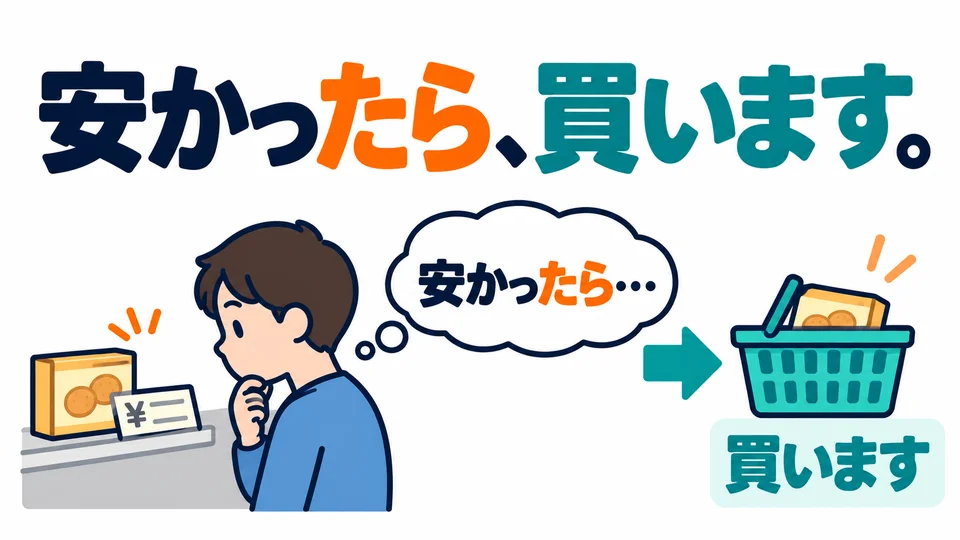
  • 「安かったら、買います」 imagines that the price is low and expresses a plan to buy. It does not mean the purchase has already happened.

    「安かったら、買います」 imagines that the price is low and expresses a plan to buy. It does not mean the purchase has already happened.

  • Example sentences

    • 安かったら、やすかったらyasukattara買います。かいますkaimasu

      (Conditional) If it's cheap, I will buy it.

    In a conversation

    • A
      明日あすの旅行、りょこうどうしますか。か

      A: What about tomorrow's trip?

    • B
      天気てんきが良かったら、よかったら行きます。いきます

      B: If the weather is good, I will go.

    • A
      雨あめだったら。だったら

      A: What if it rains?

    • B
      雨あめだったら、だったら延期えんきします。します

      B: If it rains, we will postpone it.

    Check yourself

    1. Level 1 · Recognise

      Which sentence is correct?

    2. Level 1 · Recognise

      Listen and choose the meaning

    3. Level 2 · Build

      Put the words in order

      If the review is good, I will make a reservation.

    4. Level 3 · Use

      What goes in the blank?

      天気が 行きます。

      If the weather is good, I'll go.

    More grammar in this theme

    • 〜そうですhearsay; I hear that
    • 〜て/〜でcause and result
    • 〜たらif; imagined condition
    • 〜と思いますI think; give an opinion
    • 〜ても/〜でもeven if; still
    • て形link actions; form requests
    • 〜ていますresulting state still holds
    Previous〜て/〜でNext〜と思います

    Keep practising

    Test your Japanese vocabulary12 adaptive questions, freeCheck your pronunciationRead aloud and get a scorePractise verb forms10-question conjugation quizSee the whole courseGrammar, vocabulary and quizzes by theme
    See the whole course
    Beginner 3
    TV and Magazines