JPEDLAB iconJPEDLAB
Save history

Create an account and play

Explore first, then save your progress whenever you are ready. No email address is required.

Start free
Read as articleCards
See the whole course›Beginner 3›TV and Magazines

Japanese grammar · ≈ JLPT N5 · Beginner 3

て形tekei

link actions; form requests

「て形」 links actions, and with います can describe an ongoing activity or a habit.

Start the interactive lessonIllustrated cards, audio and speaking practiceTake the quiz
Pattern
て形
Romaji
tekei
JLPT (approx.)
≈ N5
Course level
Beginner 3
Theme
TV and Magazines

How it works

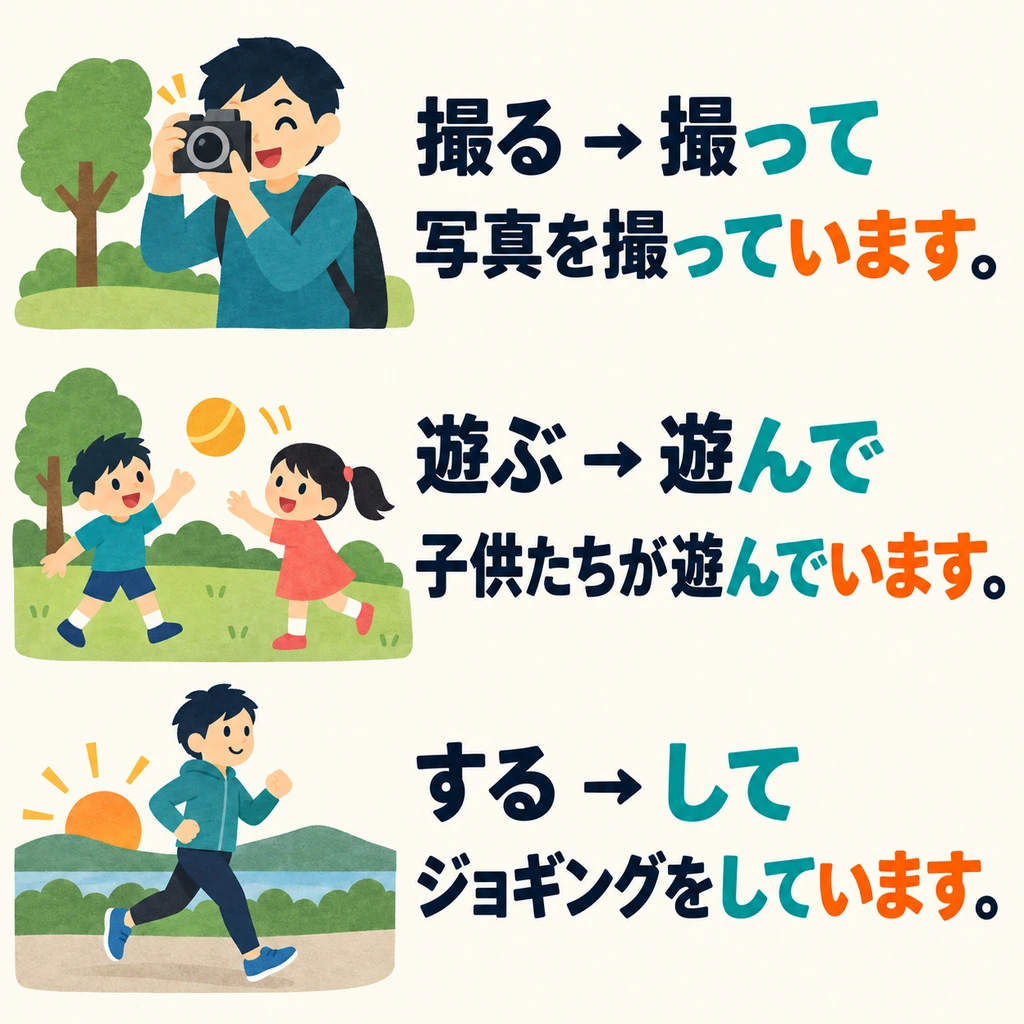
  1. Find the actions in the picture. Adding います to the て form can describe what is happening now.
    Find the actions in the picture. Adding います to the て form can describe what is happening now.

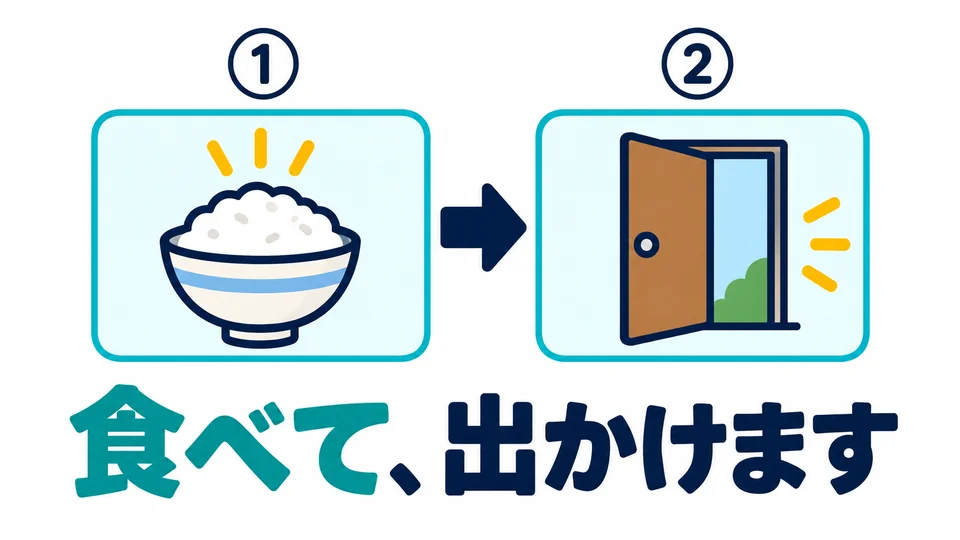
  2. The て form also links actions in order, as in 「食べて、出かけます」. It does not express tense by itself.
    The て form also links actions in order, as in 「食べて、出かけます」. It does not express tense by itself.

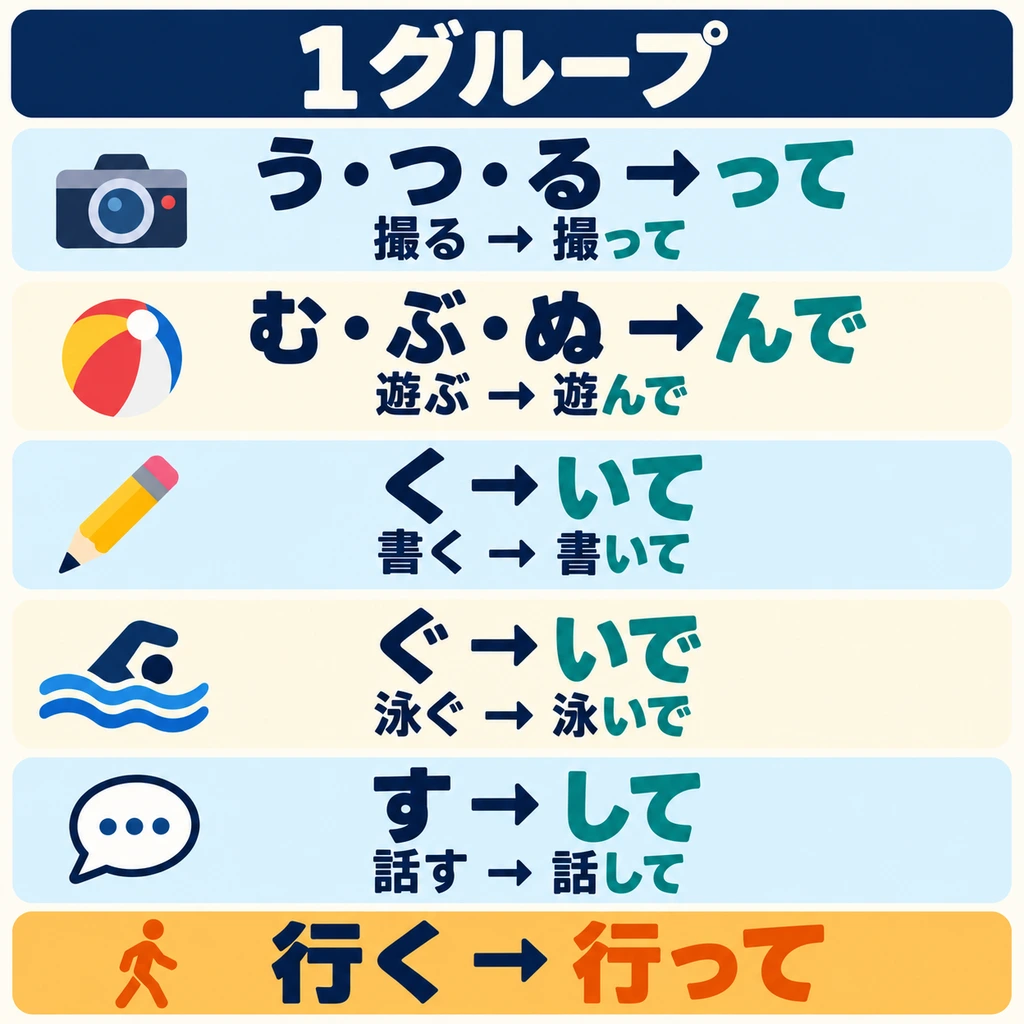
  3. First check the verb group. For Group 1, use the dictionary-form ending to find the right change.
    First check the verb group. For Group 1, use the dictionary-form ending to find the right change.

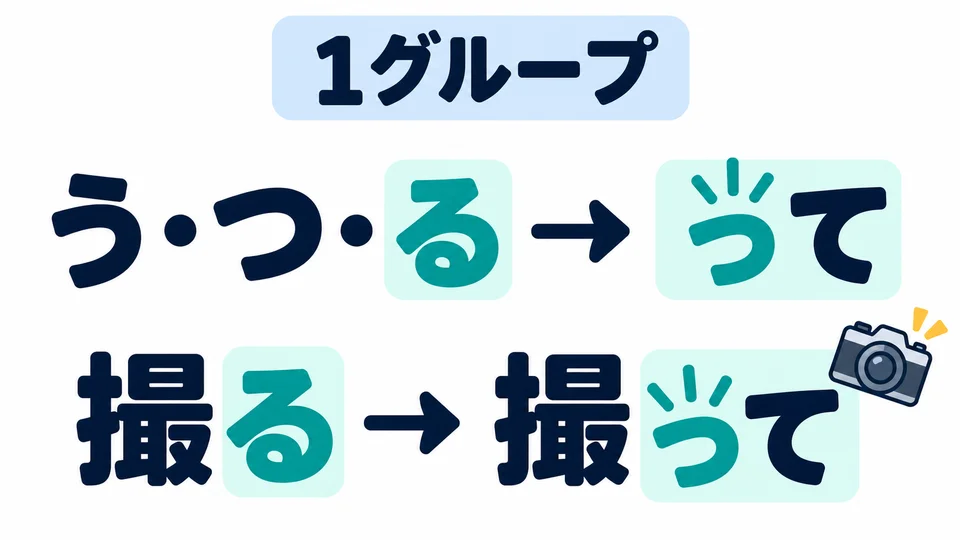
  4. In Group 1, う, つ and る become って. For example, 「撮る→撮って」. Remember the small っ.
    In Group 1, う, つ and る become って. For example, 「撮る→撮って」. Remember the small っ.

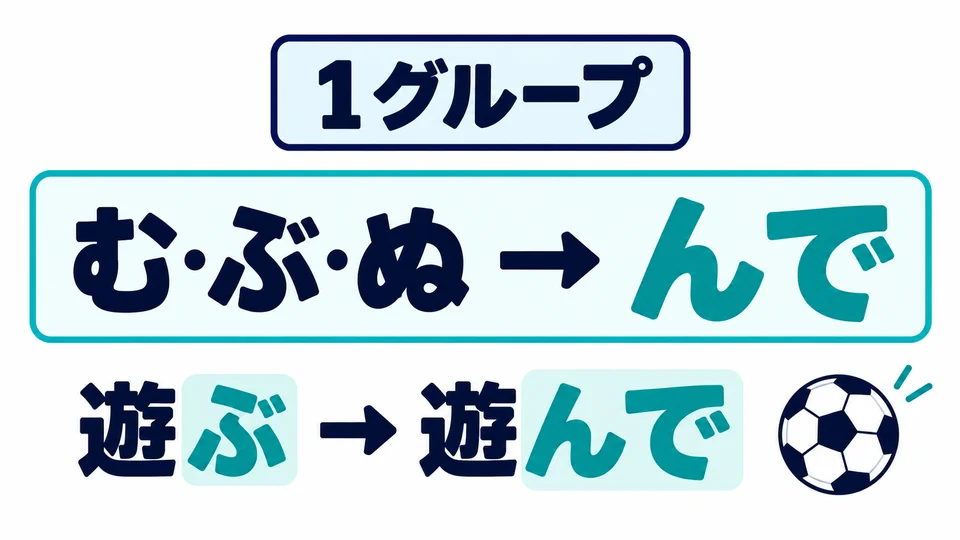
  5. In Group 1, む, ぶ and ぬ become んで. For example, 「遊ぶ→遊んで」. Use で here.
    In Group 1, む, ぶ and ぬ become んで. For example, 「遊ぶ→遊んで」. Use で here.

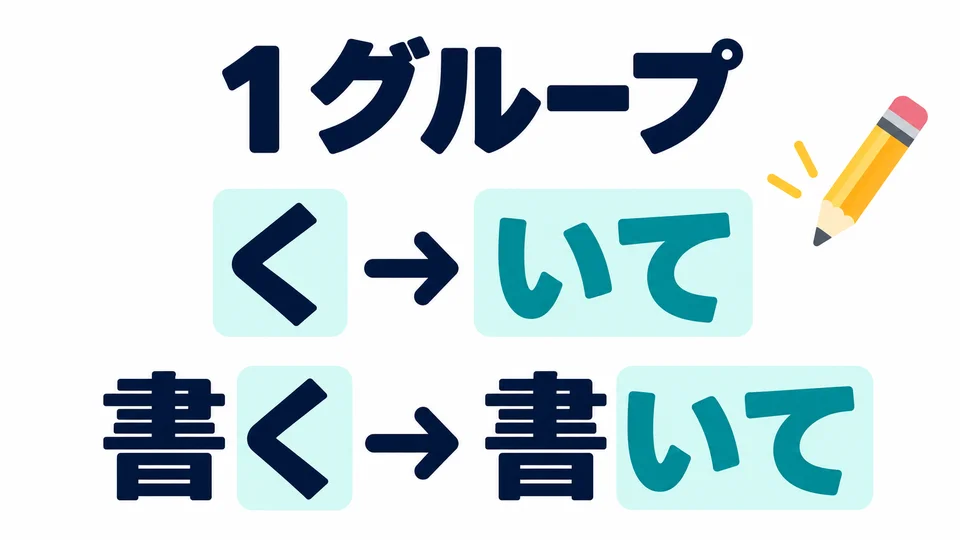
  6. Group 1 verbs ending in く usually change to いて: 「書く→書いて」, not 「書くて」.
    Group 1 verbs ending in く usually change to いて: 「書く→書いて」, not 「書くて」.

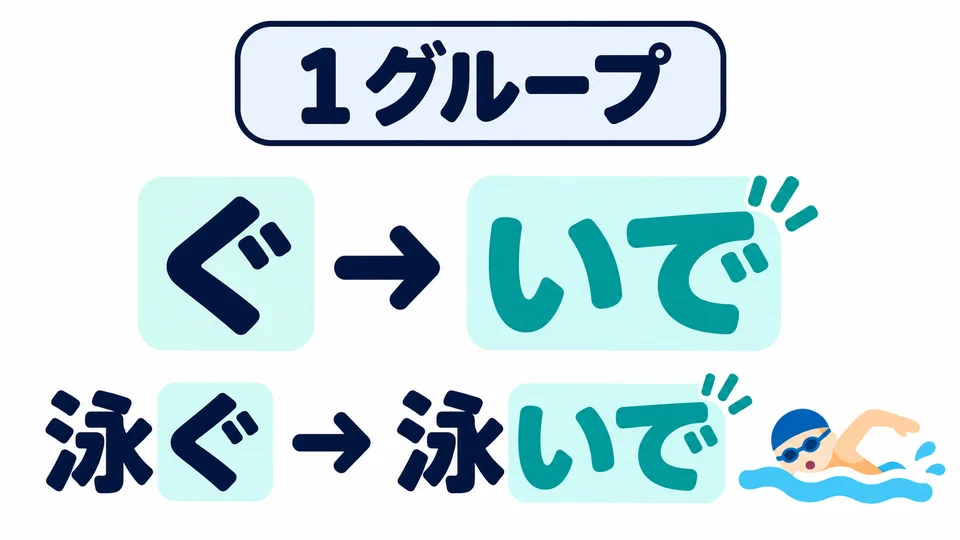
  7. Group 1 verbs ending in ぐ change to いで: 「泳ぐ→泳いで」. Distinguish this from く → いて.
    Group 1 verbs ending in ぐ change to いで: 「泳ぐ→泳いで」. Distinguish this from く → いて.

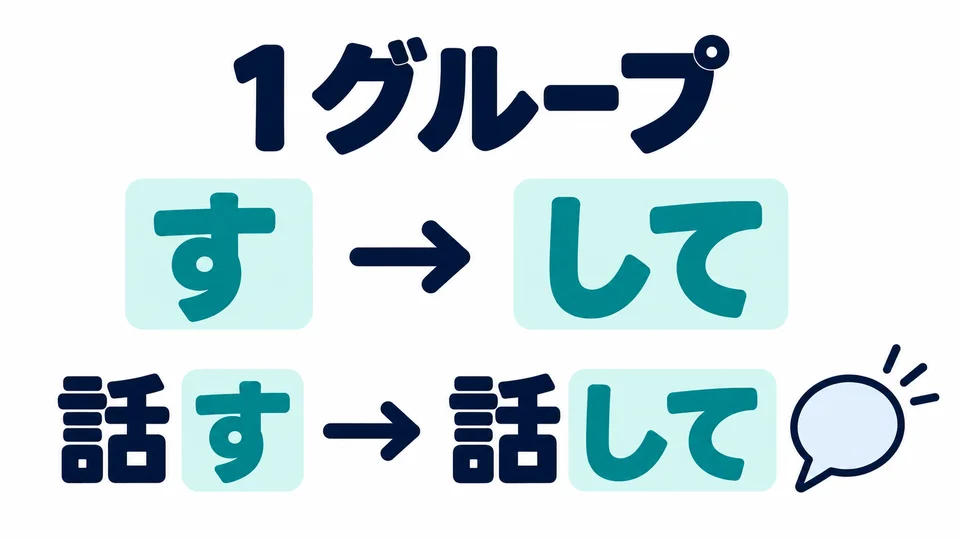
  8. Group 1 verbs ending in す change to して: 「話す→話して」. Keep the stem before the ending.
    Group 1 verbs ending in す change to して: 「話す→話して」. Keep the stem before the ending.

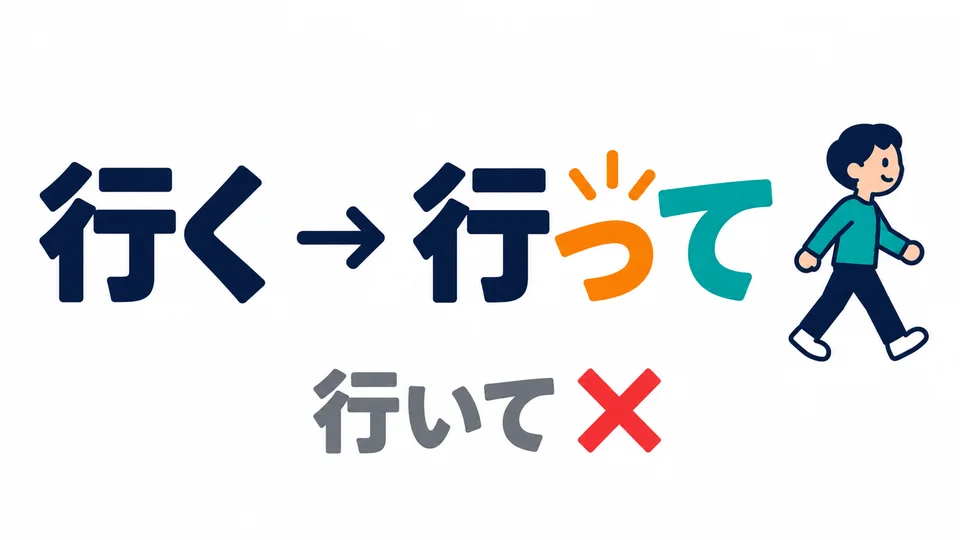
  9. 「行く」 is an exception: 行って. Do not apply the usual く rule and say 行いて.
    「行く」 is an exception: 行って. Do not apply the usual く rule and say 行いて.

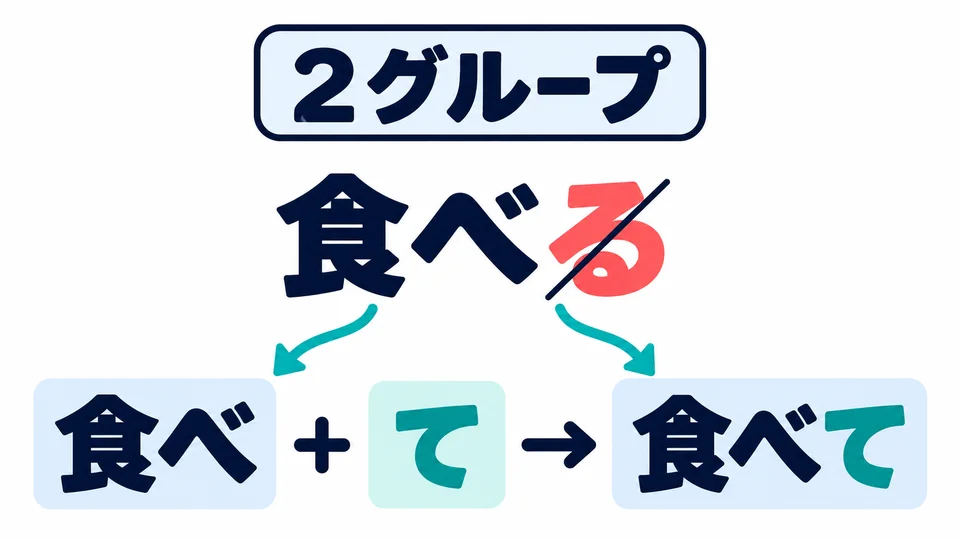
  10. For Group 2, remove る and add て: 「食べる→食べて」. No small っ is needed.
    For Group 2, remove る and add て: 「食べる→食べて」. No small っ is needed.

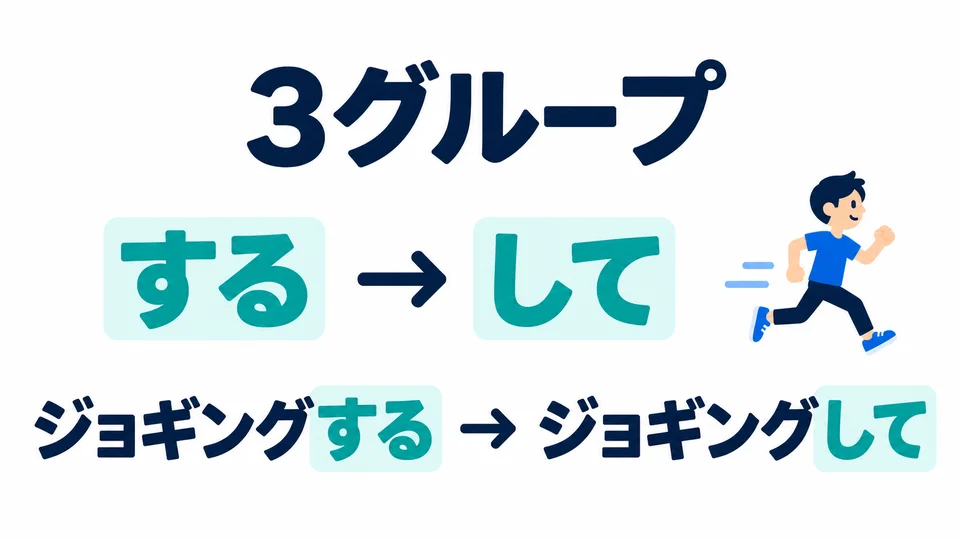
  11. In Group 3, 「する→して」. The same applies to ジョギングする: ジョギングして.
    In Group 3, 「する→して」. The same applies to ジョギングする: ジョギングして.

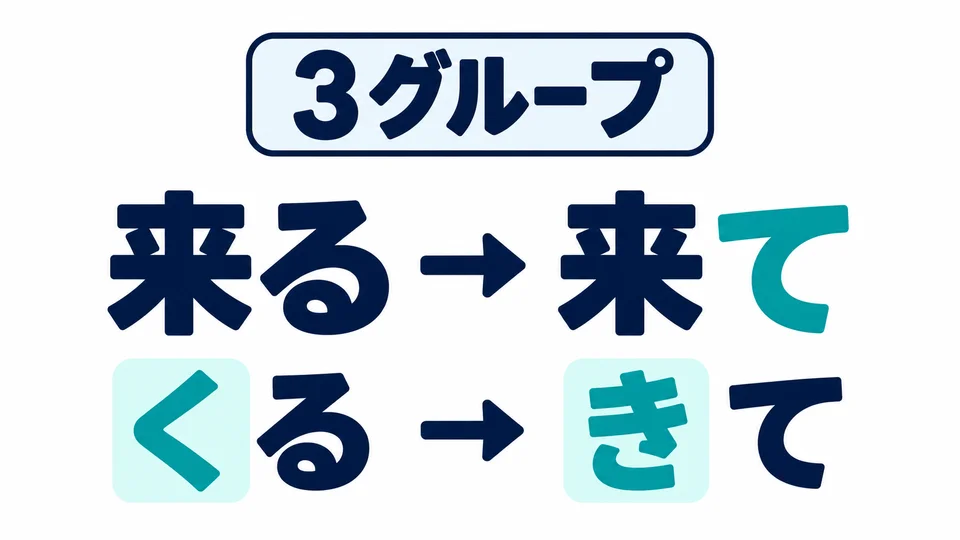
  12. In Group 3, 「来る→来て」. The kanji stays the same, but the reading changes from くる to きて.
    In Group 3, 「来る→来て」. The kanji stays the same, but the reading changes from くる to きて.

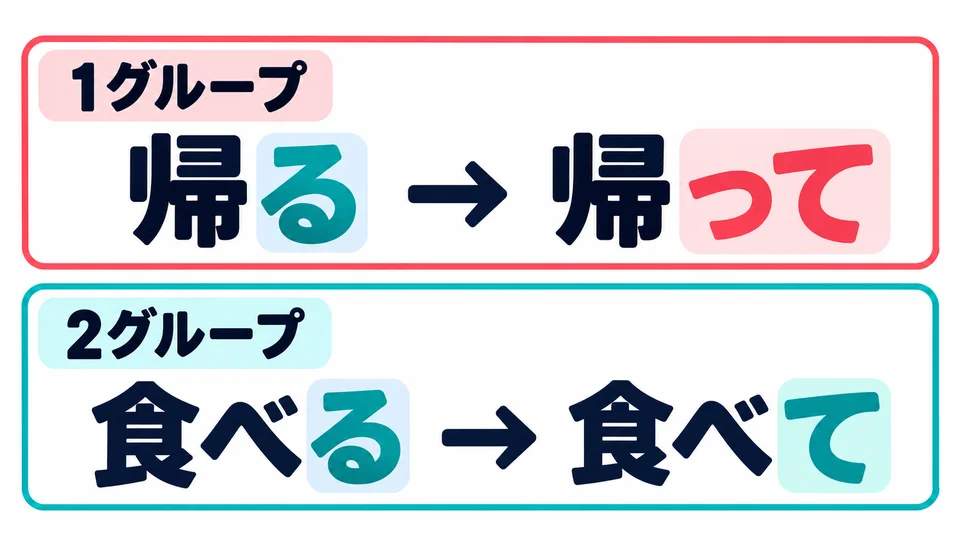
  13. An ending in る does not always mean Group 2. 「帰る」 belongs to Group 1, so it becomes 帰って.
    An ending in る does not always mean Group 2. 「帰る」 belongs to Group 1, so it becomes 帰って.

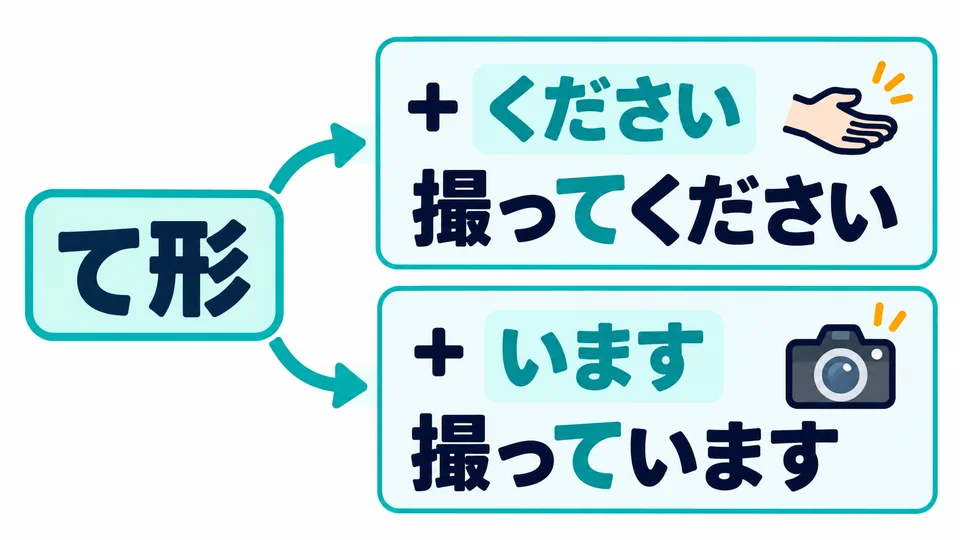
  14. The て form connects expressions. Add ください for a request, or います to describe an activity.
    The て form connects expressions. Add ください for a request, or います to describe an activity.

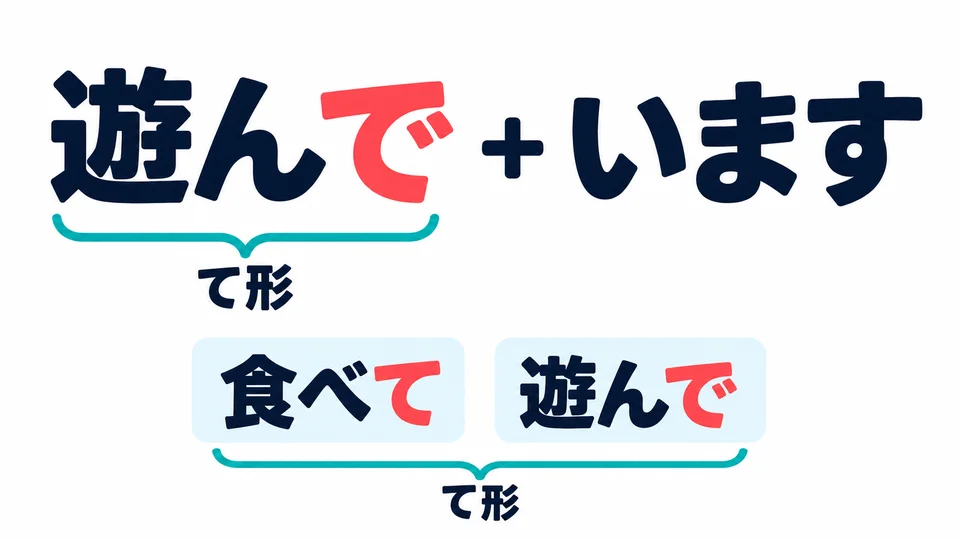
  15. The で in the example 「遊んでいます」 is also part of the て form. This form does not always end in て.
    The で in the example 「遊んでいます」 is also part of the て form. This form does not always end in て.

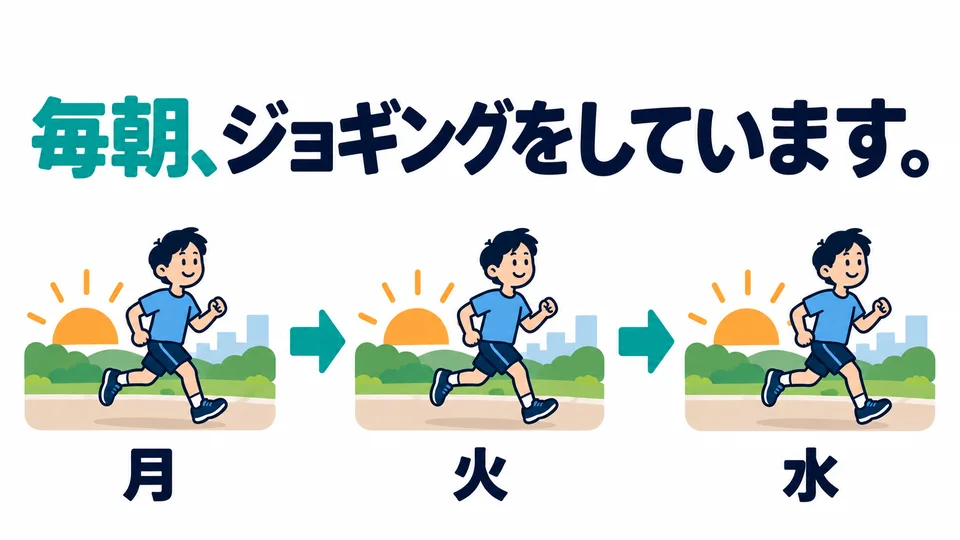
  16. 「毎朝」 signals a regular habit. Here, しています does not necessarily mean the speaker is jogging right now.

    「毎朝」 signals a regular habit. Here, しています does not necessarily mean the speaker is jogging right now.

Example sentences

  • 公園こうえんkouenでde子供たちこどもたちkodomotachiがga遊んあそんasonでdeいます。いますimasu

    The children are playing in the park.

  • 私わたしwatashiはわwa

In a conversation

  • A
    今、いま何なんをしていますか。か

    A: What are you doing now?

  • B
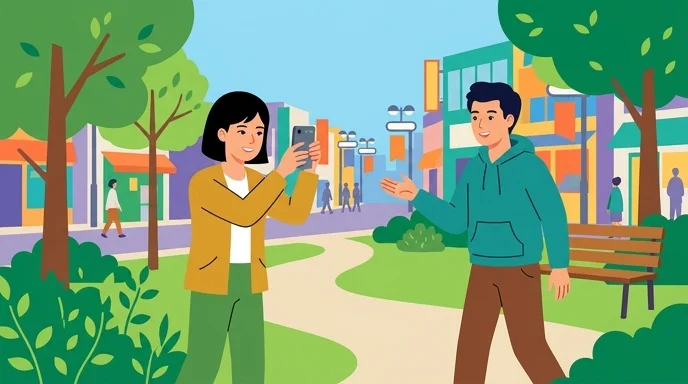
    公園こうえんで写真しゃしんを撮っとって

Check yourself

  1. Which sentence is correct?

    1. 公園で子供たちが遊んでいます。
    2. 公園で子供たちが遊びています。
    3. 公園で子供たちが遊んであります。
    4. 公園で子供たちが遊びますしています。
    Show answer

    Answer: A 公園で子供たちが遊んでいます。

  2. Which sentence is correct?

    1. 私は毎朝ジョギングをしています。
    2. 私は毎朝ジョギングをしてあります。
    3. 私は毎朝ジョギングをしいています。
    4. 私は毎朝ジョギングをしていまする。
    Show answer

    Answer: A 私は毎朝ジョギングをしています。

  3. Which sentence is correct?

    1. 彼はカフェで本を読んでいます。
    2. 彼はカフェで本を読みています。
    3. 彼はカフェで本を読んであります。
    4. 彼はカフェで本を読みますしています。
    Show answer

    Answer: A 彼はカフェで本を読んでいます。

More grammar in this theme

  • て形link actions; form requests

Keep practising

Test your Japanese vocabulary12 adaptive questions, freeCheck your pronunciationRead aloud and get a scorePractise verb forms10-question conjugation quizSee the whole courseGrammar, vocabulary and quizzes by theme
毎朝まいあさmaiasa
ジョギングじょぎんぐjogingu
をo
しshi
てte
います。いますimasu

I jog every morning.

います。います

B: I'm taking photos at the park.

  • A
    へえ、へえどこで撮っとっているんですか。か

    A: Oh, where are you taking them?

  • B
    この近くちかくの商店街しょうてんがいで撮っとっています。います

    B: I'm taking them at the shopping street near here.

  • Take the quiz
    〜そうですhearsay; I hear that
    〜て/〜でcause and result
    〜たらif; imagined condition
    〜と思いますI think; give an opinion
    〜ても/〜でもeven if; still
    〜ていますresulting state still holds
    Previous〜ても/〜でも
    Next〜ています