
Japanese grammar · ≈ JLPT N4 · Beginner 3
〜ても/〜でも~te mo / ~de mo
even if; still
Use 「〜ても/〜でも」 when a condition does not change what happens next.
How it works
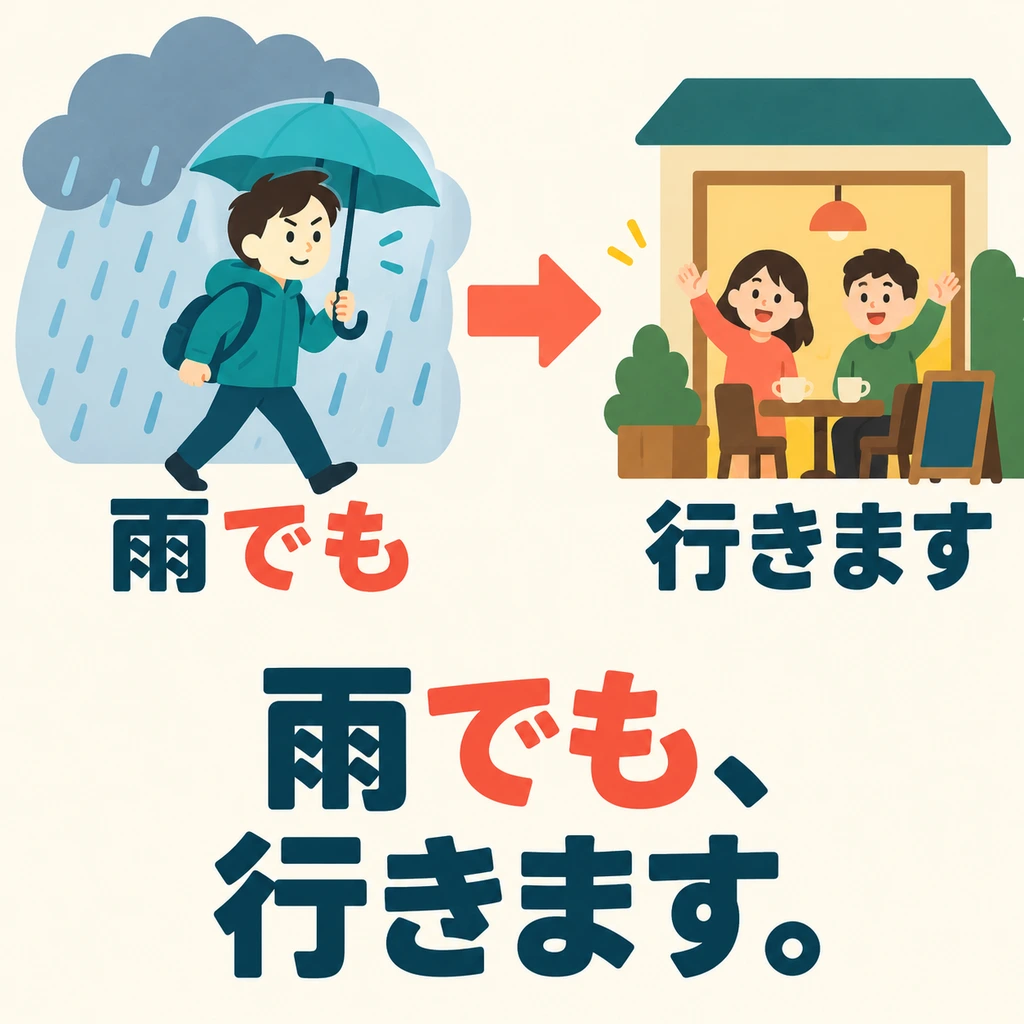
Rain usually affects plans to go out, but the person in the picture still goes: even if it rains, the decision stays the same.
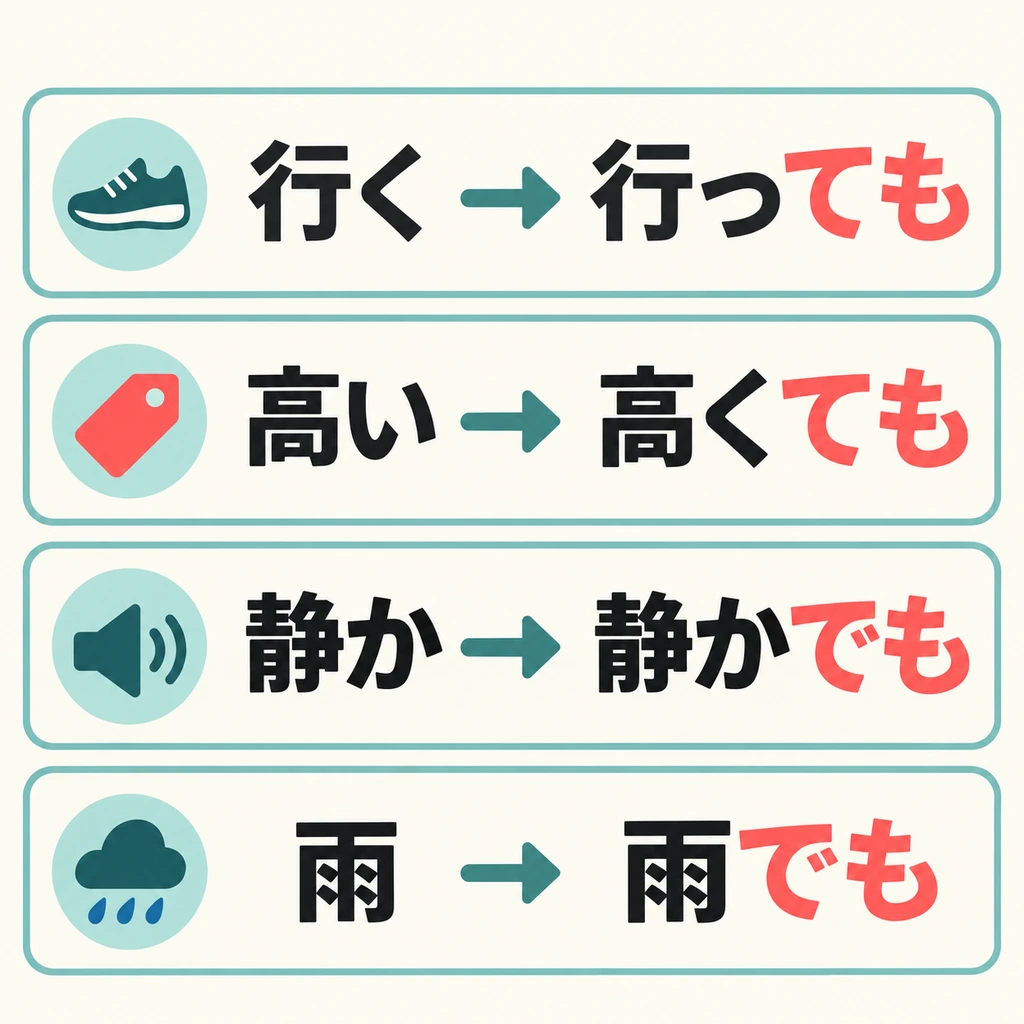
Both mean “even if …, ….” Whether you add ても or でも depends on the type of word before it.
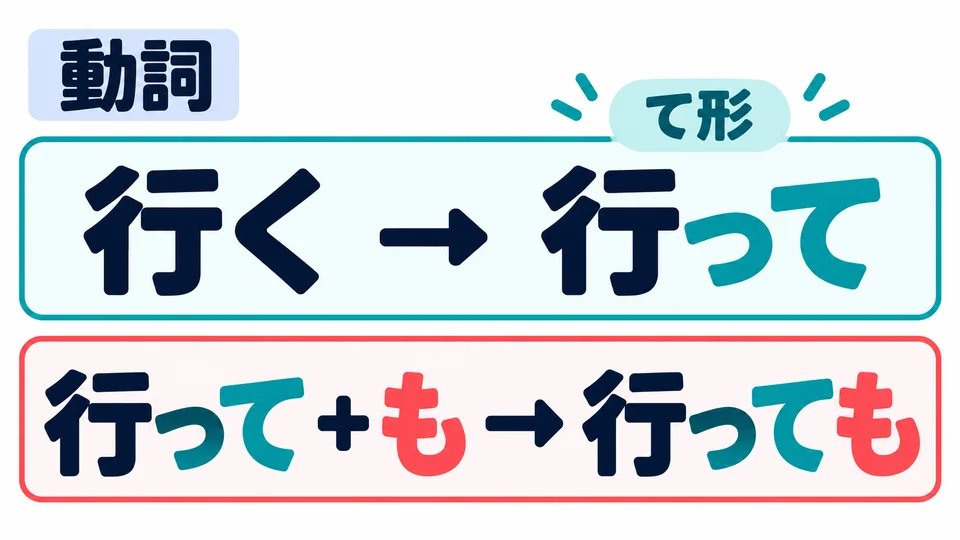
Put a verb into its て-form, then add も. In the picture, 行く becomes 行って before も is added.
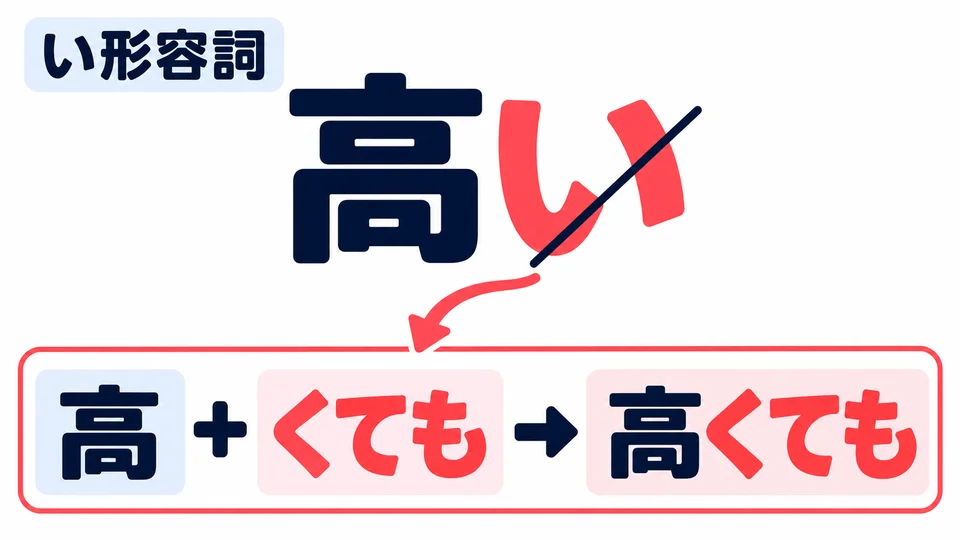
For an い-adjective, replace the final い with くても: 高い becomes 高くても.
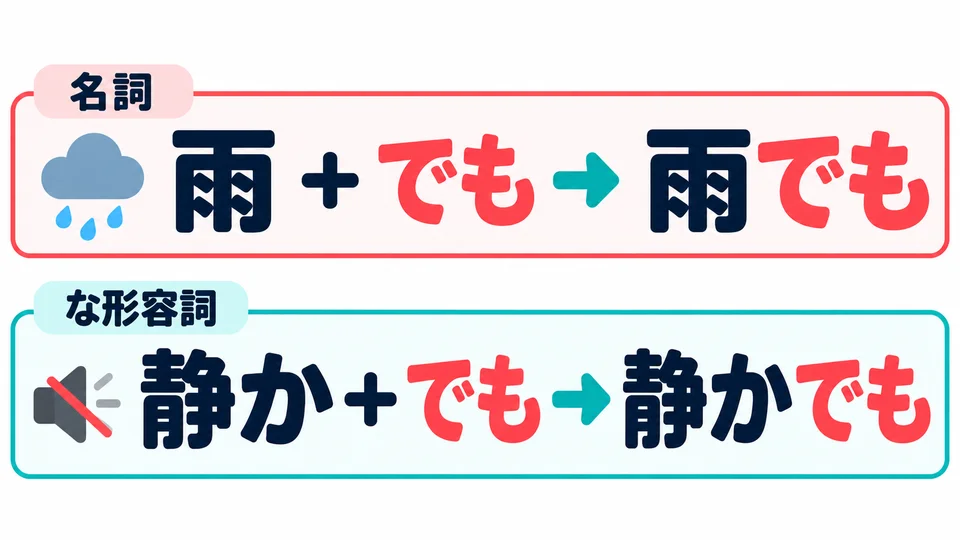
Add でも directly to a noun or a な-adjective stem. 雨でも and 静かでも both follow this pattern.
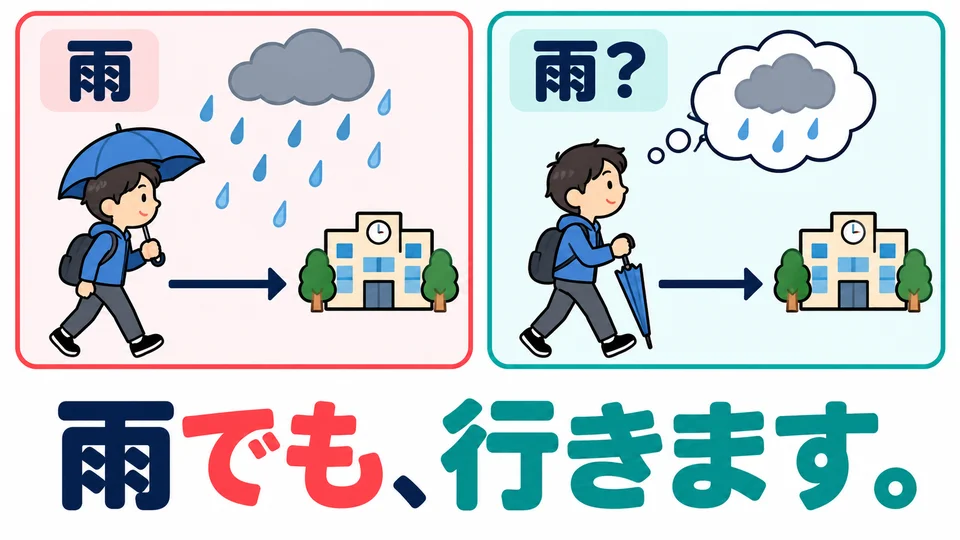
The first part can describe something that has already happened or a hypothetical situation. Either way, the second part is unaffected.
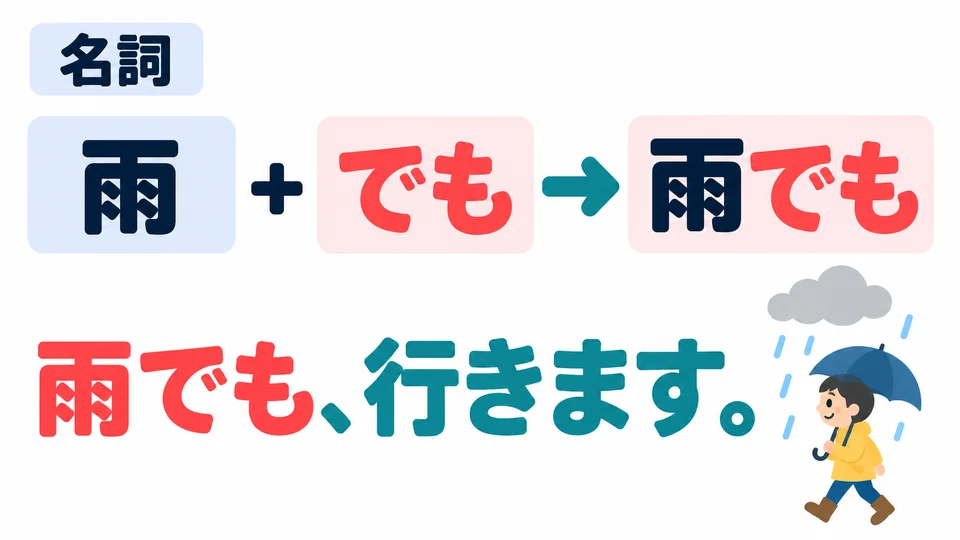
In 雨でも, 雨 is a noun, so でも is added directly. There is no need to make a て-form here.
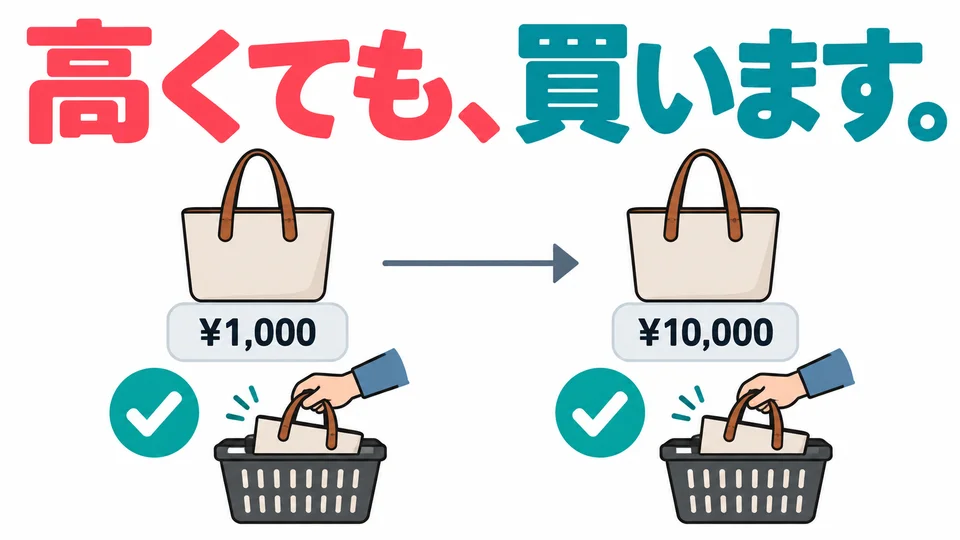
高くても買います emphasizes that you will buy it even if it is expensive—not because it is expensive.
Example sentences
- 雨ameでdeもmo行きます。ikimasu
I will go even if it rains.
- これkoreはwa高くtakakuてte
In a conversation

- A明日は忙しいですね。
A: Tomorrow will be busy, won't it?
- B忙しくても、集まりますか。
B: Will we get together even if we're busy?
- A
Check yourself
Level 1 · Recognise
Which sentence is correct?
Level 1 · Recognise
Listen and choose the meaning
Level 2 · Build
Put the words in order
Even if the schedule changes, I will contact you.
Level 3 · Use
What goes in the blank?
暑 散歩に行きます。
I'll go for a walk even if it's hot.
More grammar in this theme
- 〜ても/〜でもeven if; still