JPEdLab iconJPEdLab
Save history

Create an account and play

Explore first, then save your progress whenever you are ready. No email address is required.

Start free
  1. Japanese grammar
  2. JLPT N4 grammar
  3. 〜そうです

〜そうです~sou desu

Sou desu (〜そうです) means “hearsay; I hear that”.

明日あすasu雨あめameがga降るふるfuruそうsouです。ですdesu

I heard it will rain tomorrow.

Attach 「そうです」 to plain-form information to report something heard from another person or source.

In the course›

How it works

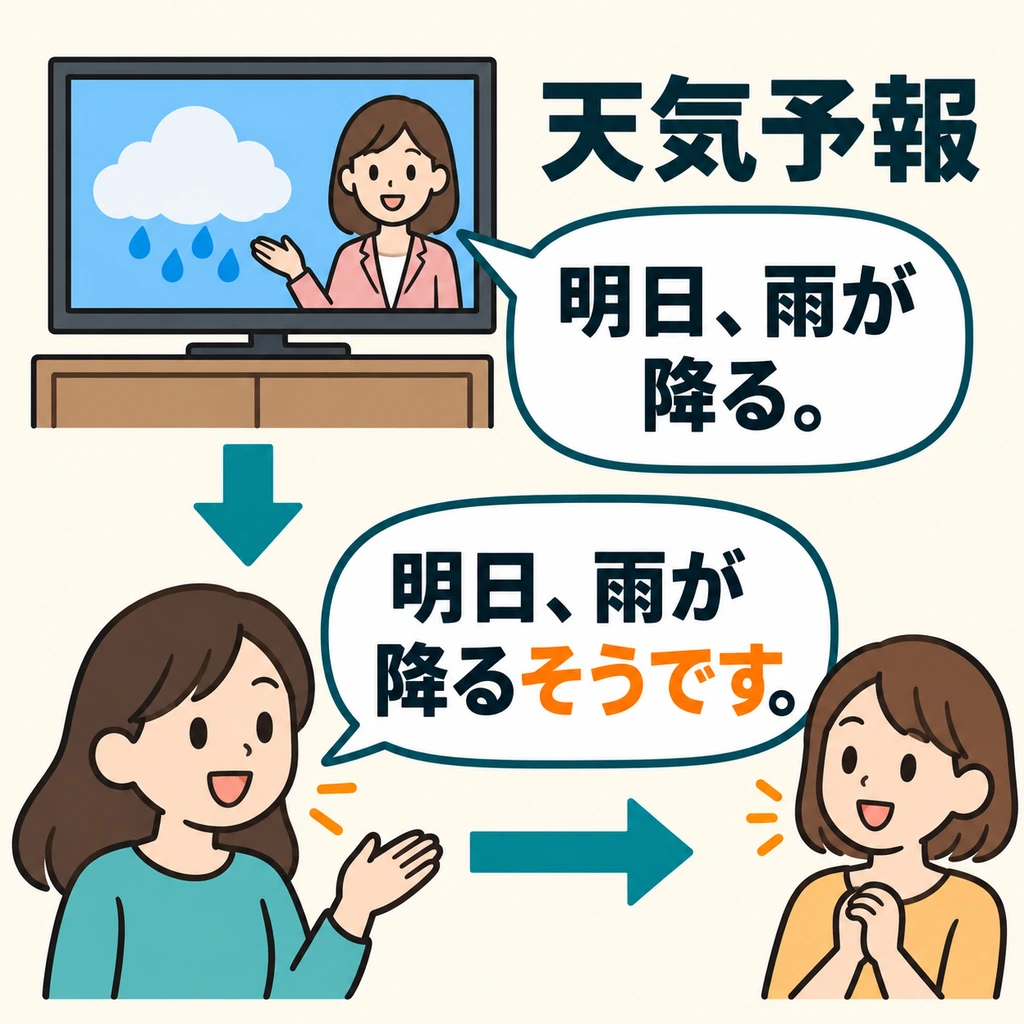
  1. Use “そうです” to mean “I hear” when passing on a forecast or something someone told you.
    Use “そうです” to mean “I hear” when passing on a forecast or something someone told you.

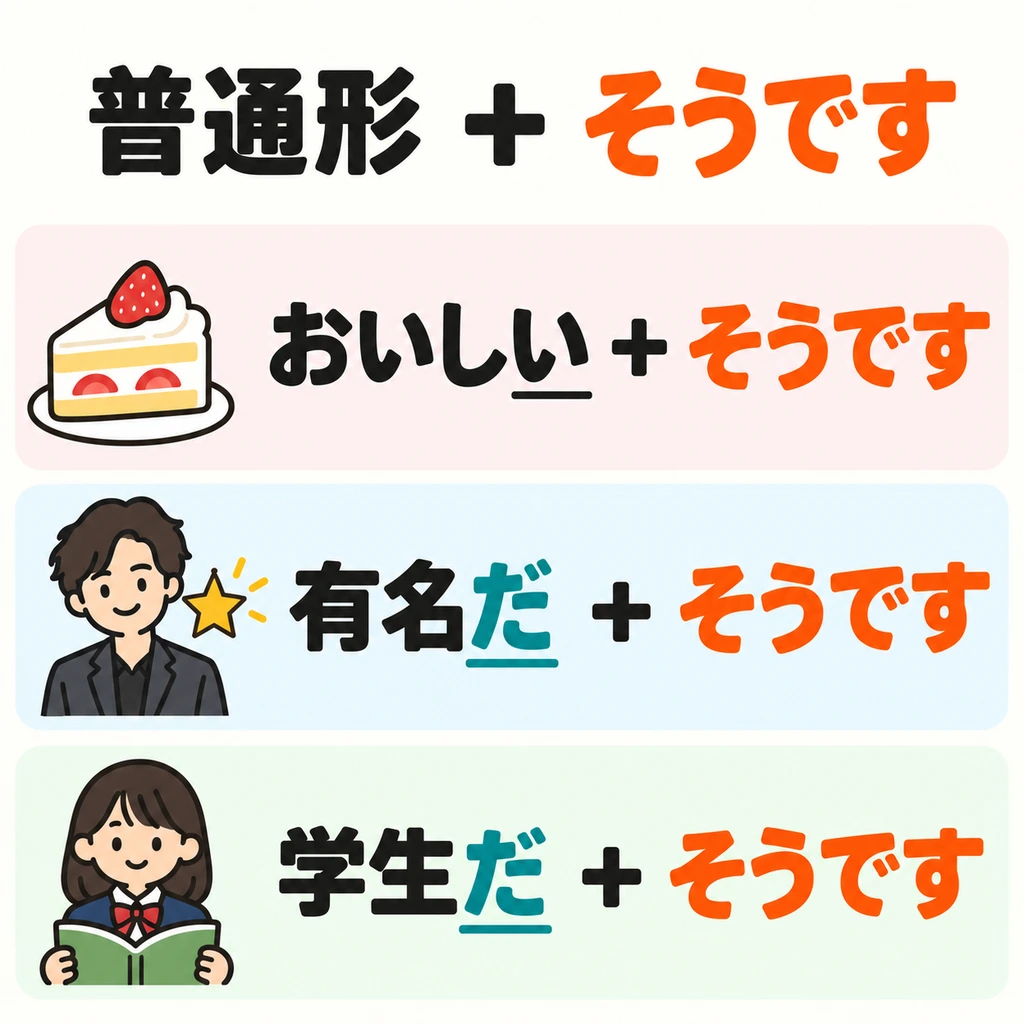
  2. Put the information in the plain form, then add “そうです” directly. Keep all the endings shown in the picture.
    Put the information in the plain form, then add “そうです” directly. Keep all the endings shown in the picture.

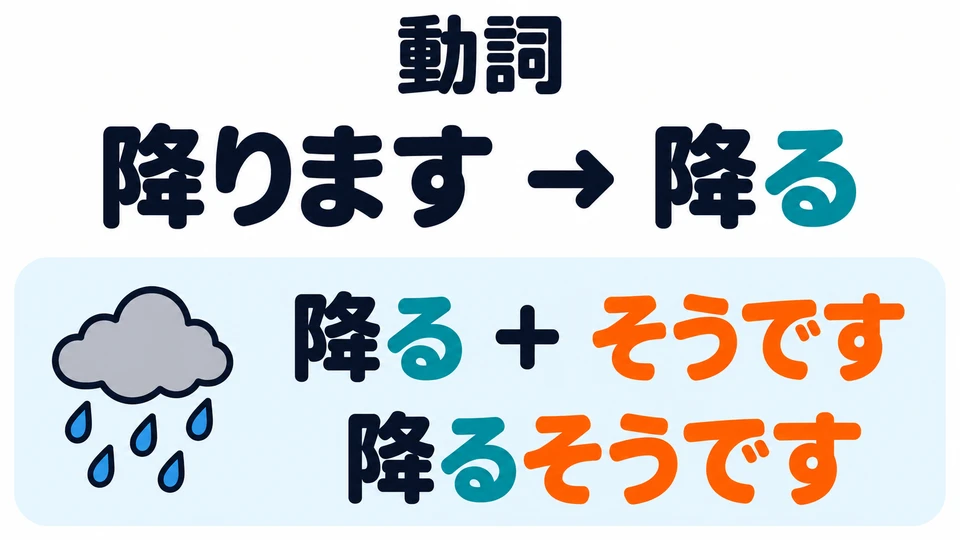
  3. Verbs connect in the plain form: change “降ります” to “降る”, then add “そうです”.
    Verbs connect in the plain form: change “降ります” to “降る”, then add “そうです”.

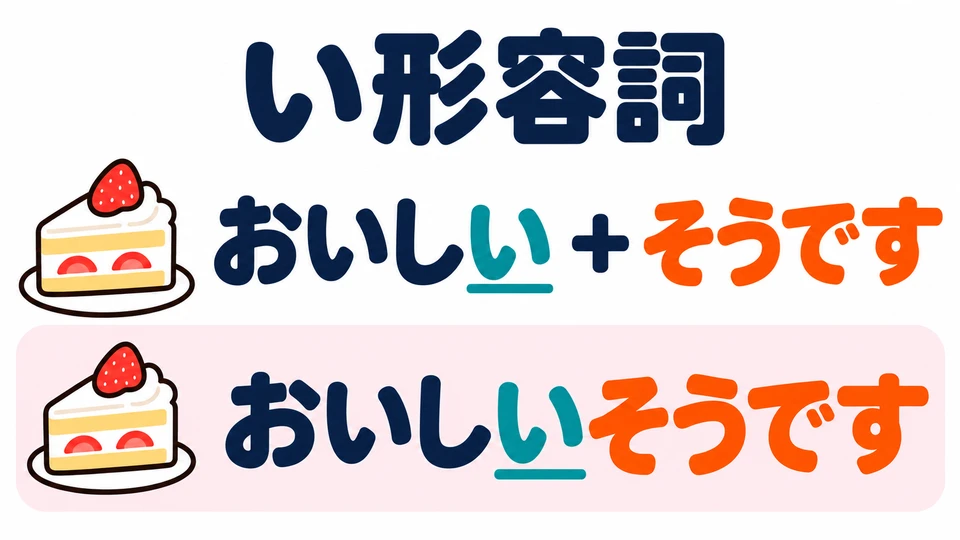
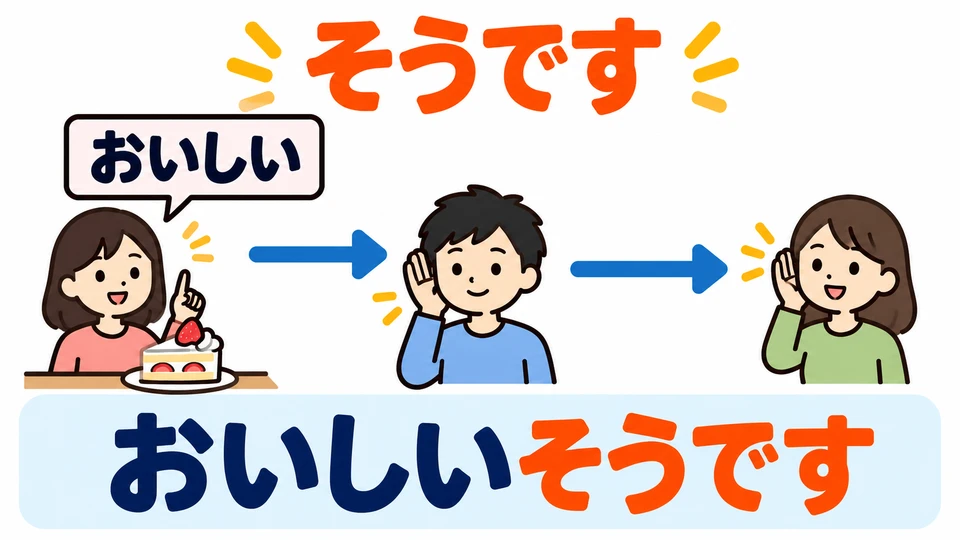
  4. Keep the final い of an い-adjective. Add “そうです” directly to “おいしい” to say you heard it is delicious.
    Keep the final い of an い-adjective. Add “そうです” directly to “おいしい” to say you heard it is delicious.

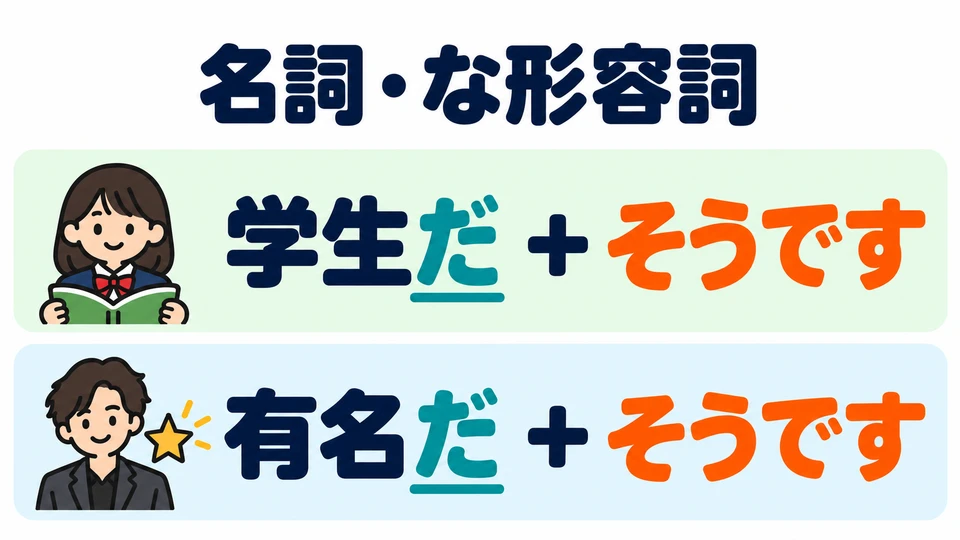
  5. Keep だ with nouns and な-adjectives: add “そうです” after “学生だ” or “有名だ”.
    Keep だ with nouns and な-adjectives: add “そうです” after “学生だ” or “有名だ”.

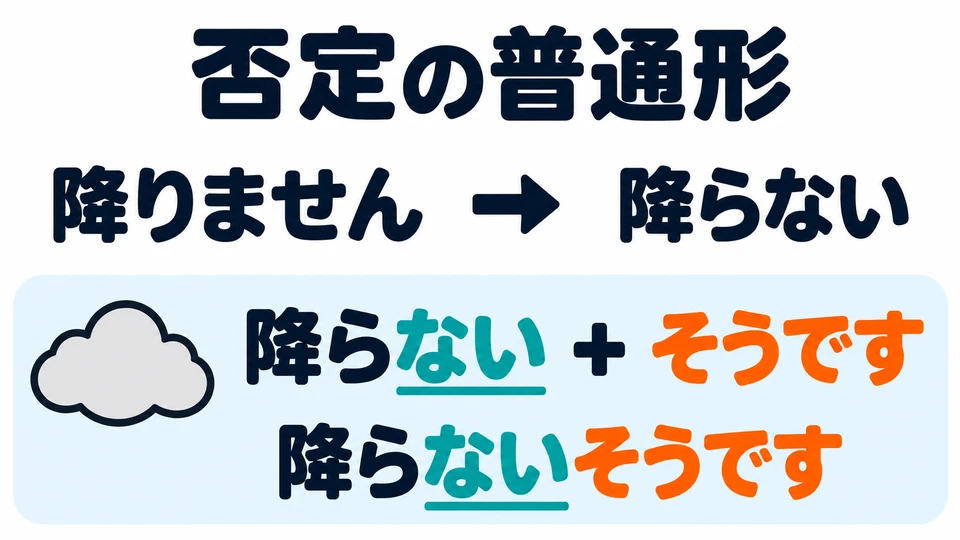
  6. If the information you heard is negative, use the negative plain form first, as in “降らないそうです”.
    If the information you heard is negative, use the negative plain form first, as in “降らないそうです”.

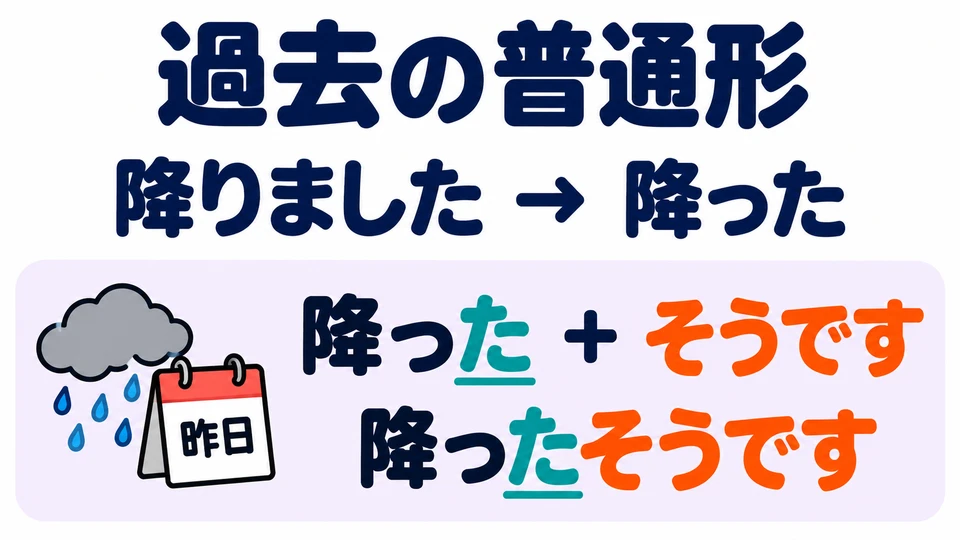
  7. If what you heard happened in the past, use the past plain form first, as in “降ったそうです”.
    If what you heard happened in the past, use the past plain form first, as in “降ったそうです”.

  8. The cake example passes on an opinion the speaker heard. “I hear it is delicious” does not mean the speaker has tasted it.

    The cake example passes on an opinion the speaker heard. “I hear it is delicious” does not mean the speaker has tasted it.

Example sentences

  • 明日あすasu雨あめameがga降るふるfuruそうsouです。ですdesu

    I heard it will rain tomorrow.

  • あのano店みせmiseのnoケーキ

In a conversation

  • A
    今夜こんやのクイズくいず番組、ばんぐみ見ましたみましたか。か

    A: Did you watch the quiz show tonight?

  • B
    いいえ、見みていませんが、とても盛りもり

Check yourself

  1. Level 0 · Conjugate

    Change to plain form + そうです: “I hear …”. 普通形(+そうです)

    雑誌の記事によると、あの俳優が新しいドラマに(出ますでます)そうです。

  2. Level 1 · Recognise

    Which sentence is correct?

  3. Level 1 · Recognise

    Listen and choose the meaning

  4. Level 2 · Build

    Put the words in order

    I heard that it will rain tomorrow.

  5. Level 3 · Use

    What goes in the blank?

    雑誌の表紙を飾る人気ランキング 1 位の歌手が 。

    I heard the number-one singer on the popularity ranking, who graces the magazine cover, is the talk of the town.

More grammar in this theme

  • 〜そうですhearsay; I hear that

More JLPT N4 grammar

Keep practising

Test your Japanese vocabulary12 adaptive questions, freeCheck your pronunciationRead aloud and get a scorePractise verb forms10-question conjugation quizSee the whole courseGrammar, vocabulary and quizzes by theme
けーき
keeki
はわwa
おいしいoishii
そうsou
です。ですdesu

I heard the cakes at that shop are delicious.

上がったそうあがったそう
です
ね。

B: No, I haven't watched it, but I heard it was really exciting.

  • A
    そうですね。ね特にとくに最後さいごの問題もんだいが印象的いんしょうてきでした。でした

    A: Yes. Especially the last question was impressive.

    • B
      ところで、で明日あすのドキュメンタリーどきゅめんたりーはわ知っしっていますか。か

      B: By the way, do you know about tomorrow's documentary?

    • A
      いいえ、いいえどんな番組ばんぐみですか。か

      A: No, what kind of program is it?

    • B
      有名なゆうめいな芸能人げいのうじんがインタビューいんたびゅーに答えるこたえるそうですよ。よ

      B: I heard a famous celebrity will be interviewed.

    • A
      そうですか。かそれ、それ面白おもしろそうですね。ね

      A: Oh, I see. That sounds interesting.

    Beginner 3
    TV and Magazines
    More quizzesOpen this lesson’s quizzes in the course
    〜て/〜でcause and result
    〜たらif; imagined condition
    〜と思いますI think; give an opinion
    〜ても/〜でもeven if; still
    て形link actions; form requests
    〜ていますresulting state still holds
    Next〜て/〜で
    See all 138
    〜と言いますreporting what someone said
    〜なければなりませんmust do
    〜なくてもいいですdo not have to
    〜と思いますI think; give an opinion
    いらっしゃいますrespectful be, come, go
    〜と申しますformal humble self-introduction
    可能形ability or possibility
    〜ので/〜なのでreason; gentle explanation