JPEdLab iconJPEdLab
Save history

Create an account and play

Explore first, then save your progress whenever you are ready. No email address is required.

Start free
  1. Japanese grammar
  2. JLPT N4 grammar
  3. 〜と言います

〜と言います~to iimasu

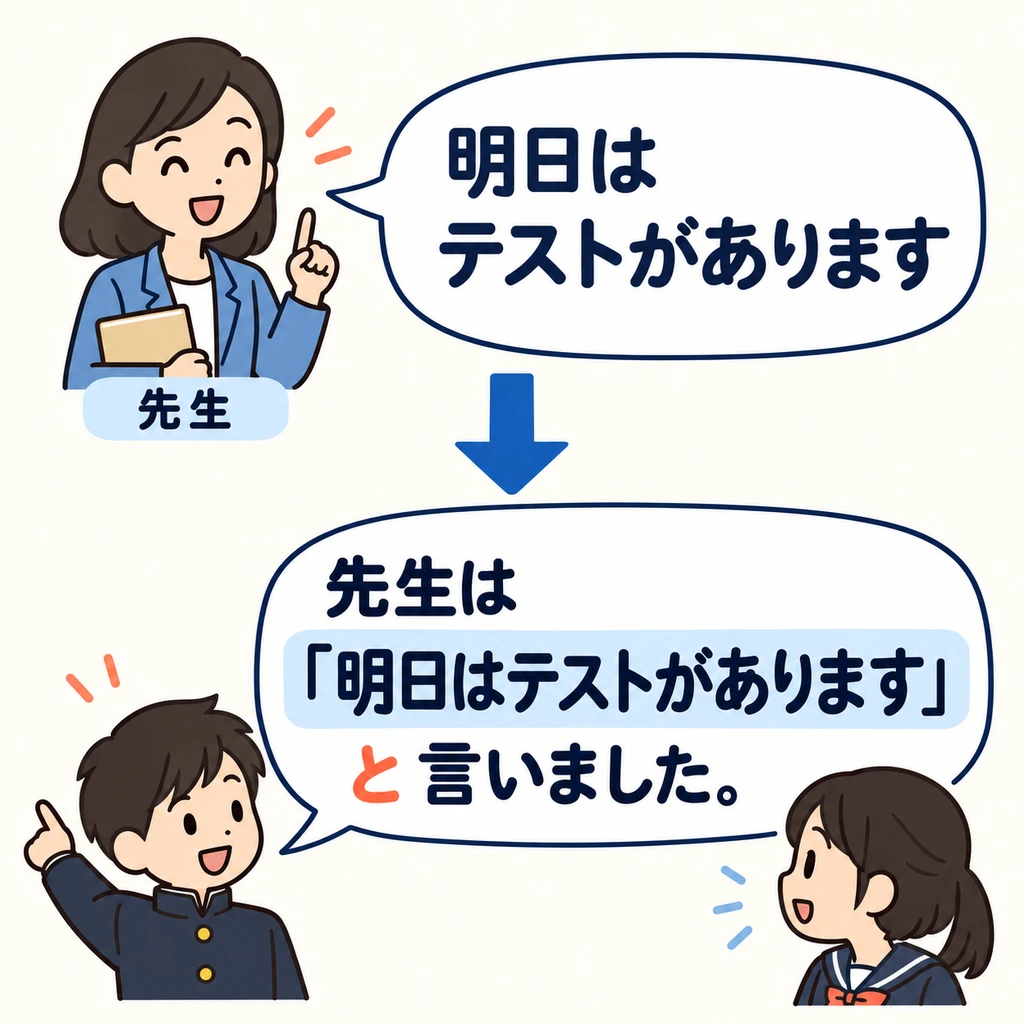
To iimasu (〜と言います) means “reporting what someone said”.

先生せんせいsenseiはわwa明日あすasuお祭りおまつりomatsuriがgaあるaruとto言いました。いいましたiimashita

The teacher said there will be a festival tomorrow.

Put the reported words before 「と」 and use 「言いました」 to say someone said them.

In the course›

How it works

  1. After the teacher speaks, you pass the message on to a classmate. Which part of the picture shows the teacher’s words?
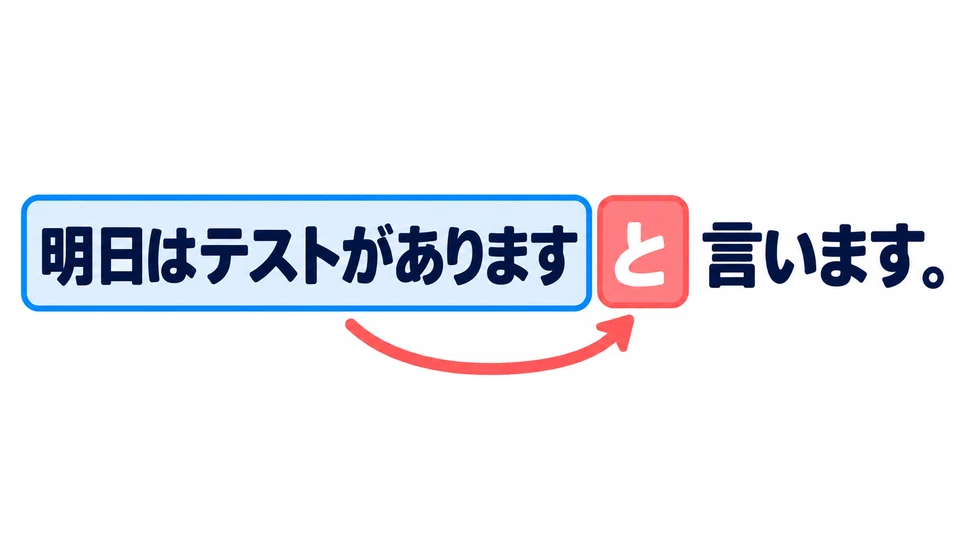
    After the teacher speaks, you pass the message on to a classmate. Which part of the picture shows the teacher’s words?

  2. The quoted words go before 「と」. 「と」 connects them to 「言います」.
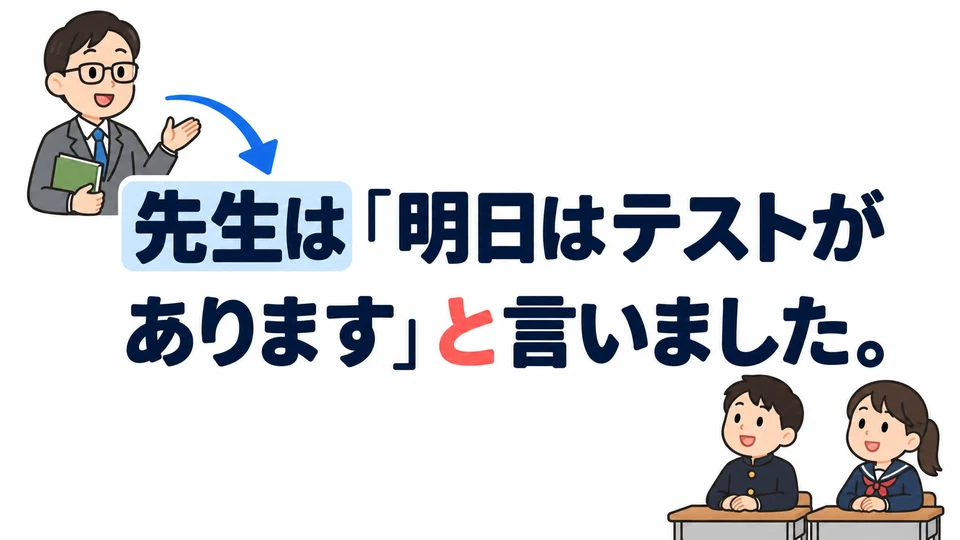
    The quoted words go before 「と」. 「と」 connects them to 「言います」.

  3. 「先生は」 identifies who spoke: these are the teacher’s words, not the person passing them on.
    「先生は」 identifies who spoke: these are the teacher’s words, not the person passing them on.

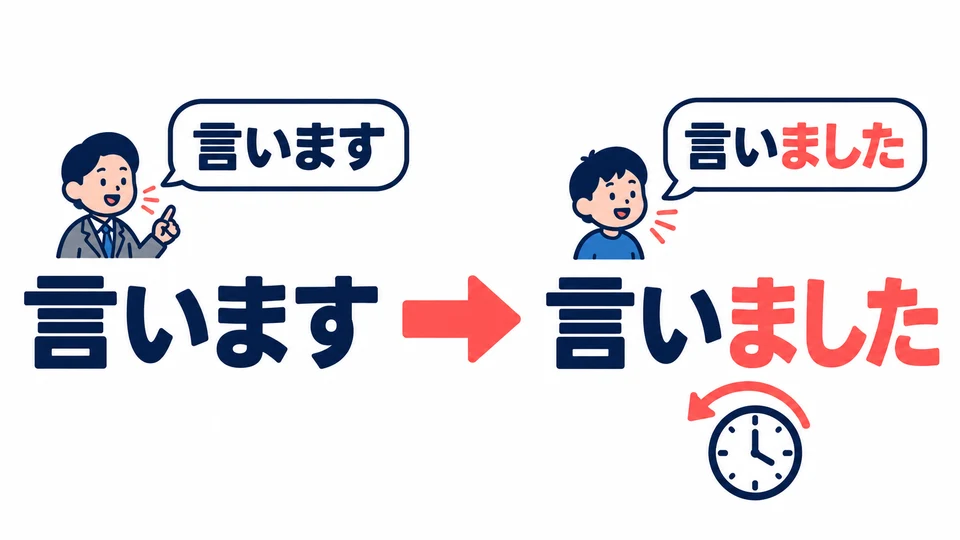
  4. To report something already said, end with 「言いました」, meaning “said.”
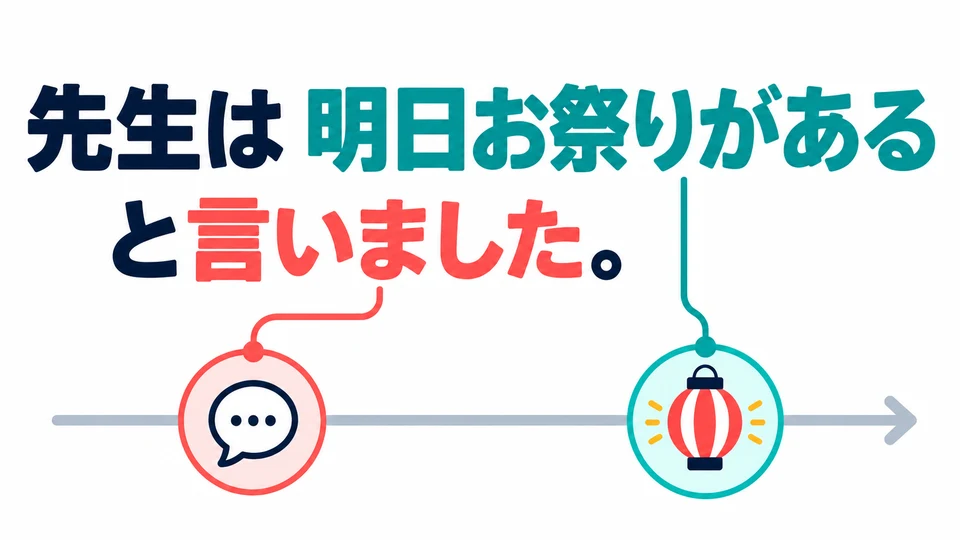
    To report something already said, end with 「言いました」, meaning “said.”

  5. 「言いました」 puts only the act of speaking in the past, not the event in the quoted words.
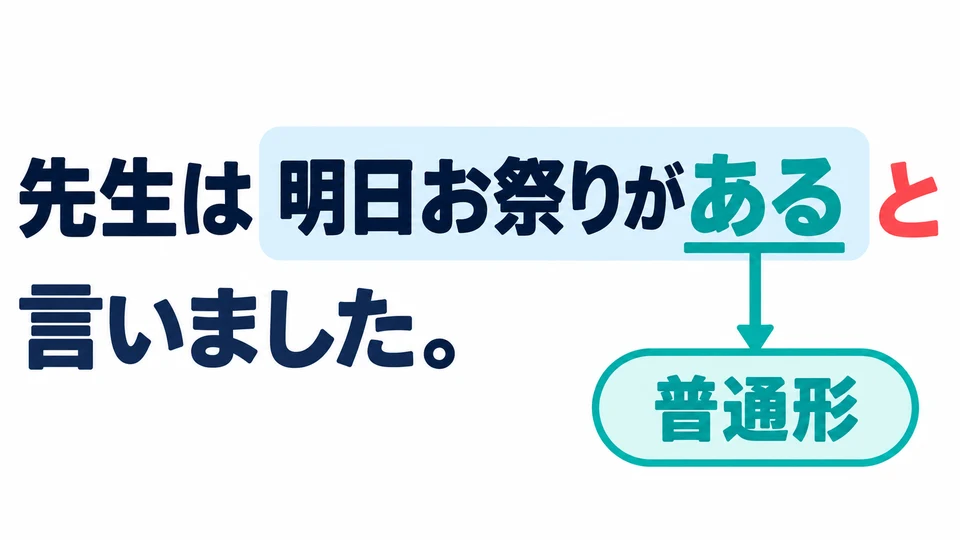
    「言いました」 puts only the act of speaking in the past, not the event in the quoted words.

  6. In the example, 「明日お祭りがある」 is what is being reported. 「ある」 is the plain form.
    In the example, 「明日お祭りがある」 is what is being reported. 「ある」 is the plain form.

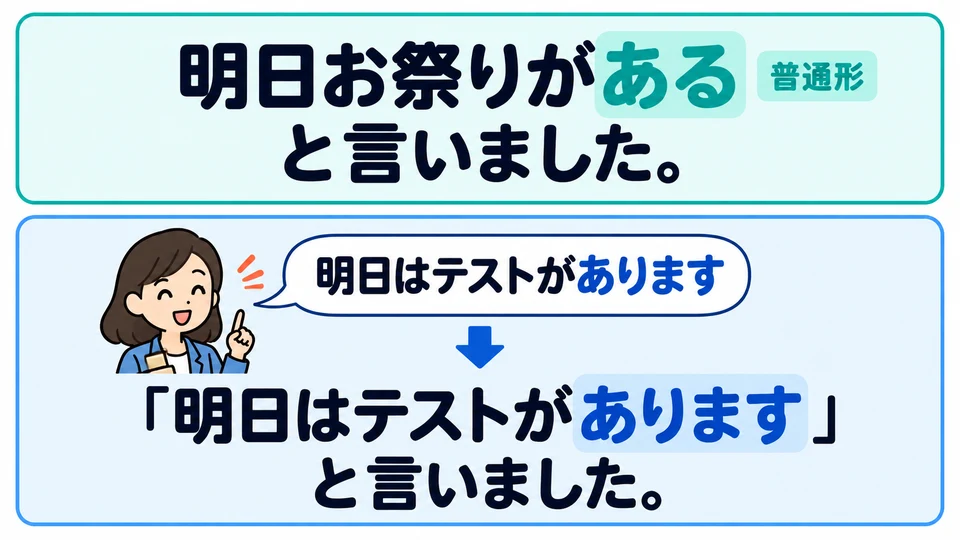
  7. The example reports the content using the plain form. The picture quotes the exact words, so 「あります」 stays as it is.

    The example reports the content using the plain form. The picture quotes the exact words, so 「あります」 stays as it is.

Example sentences

  • 先生せんせいsenseiはわwa明日あすasuお祭りおまつりomatsuriがgaあるaruとto言いました。いいましたiimashita

    The teacher said there will be a festival tomorrow.

In a conversation

  • A
    先生せんせいはわ何なんと言いましたいいましたか。か

    A: What did the teacher say?

  • B
    「明日あすはわテストてすとがあります」ありますと

Check yourself

  1. Level 1 · Recognise

    Which sentence is correct?

  2. Level 1 · Recognise

    Listen and choose the meaning

  3. Level 2 · Build

    Put the words in order

    The teacher said there will be a festival tomorrow.

  4. Level 3 · Use

    What goes in the blank?

    ガイドブックに「ここは有名な観光地です」 書いてあります。

    The guidebook says, "This is a famous tourist spot."

More grammar in this theme

  • 〜と言いますreporting what someone said

More JLPT N4 grammar

Keep practising

Test your Japanese vocabulary12 adaptive questions, freeCheck your pronunciationRead aloud and get a scorePractise verb forms10-question conjugation quizSee the whole courseGrammar, vocabulary and quizzes by theme
言いました。いいました

B: They said, "There will be a test tomorrow."

  • A
    そうですか。か頑張ります。がんばります

    A: I see. I'll do my best.

  • Beginner 2
    Customs & Etiquette
    More quizzesOpen this lesson’s quizzes in the course
    〜と、〜condition and result
    〜てはいけませんprohibited action
    〜なければなりませんmust do
    〜なくてもいいですdo not have to
    〜と思いますI think; give an opinion
    Previous〜と、〜
    Next〜てはいけません
    See all 138
    〜ないほうがいいですadvice against doing
    〜という〜named or called something
    〜た〜を/へnoun modifier + particle
    〜た〜はnoun modifier as topic
    〜そうですhearsay; I hear that
    〜て/〜でcause and result
    〜たらif; imagined condition
    〜と思いますI think; give an opinion