Japanese grammar · ≈ JLPT N4 · Beginner 2
〜ないほうがいいです~nai hou ga ii desu
advice against doing
Use「〜ないほうがいいです」with a verb in ない-form to gently advise someone against an action.
How it works
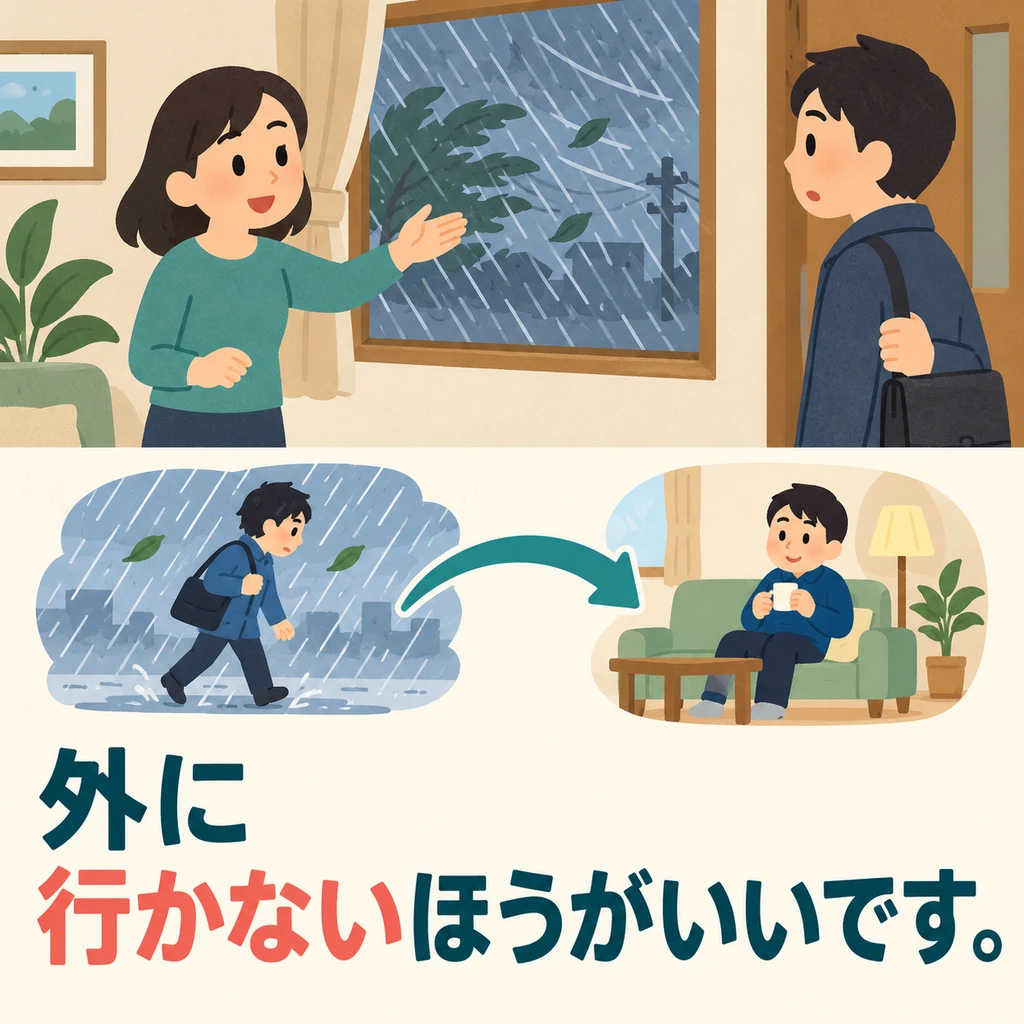
It is very windy and rainy outside. Which choice is better? The person in the picture advises the other person to stay indoors.
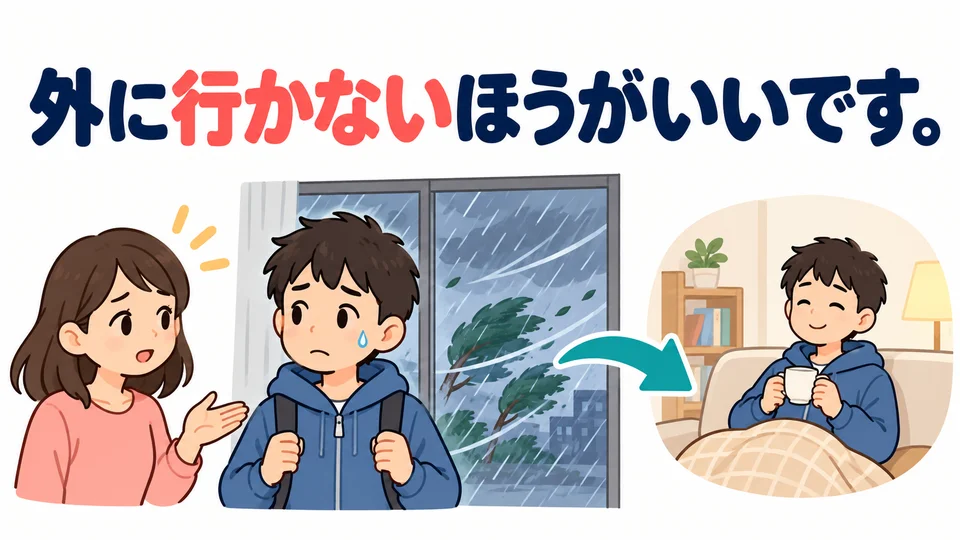
When you are worried that someone might run into trouble, use this pattern to advise them not to do something. It gives advice, not an order.
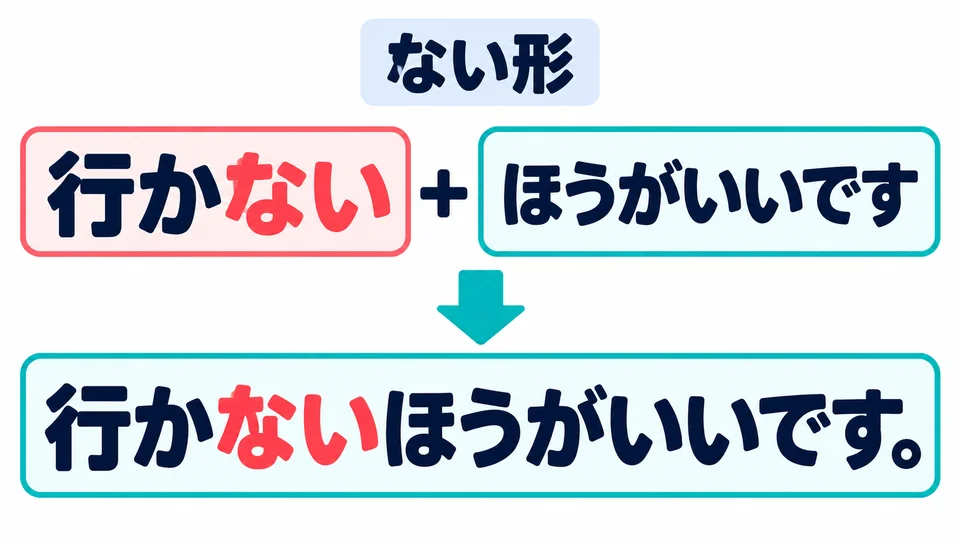
First put the verb in the ない-form, such as 「行かない」, then add 「ほうがいいです」.
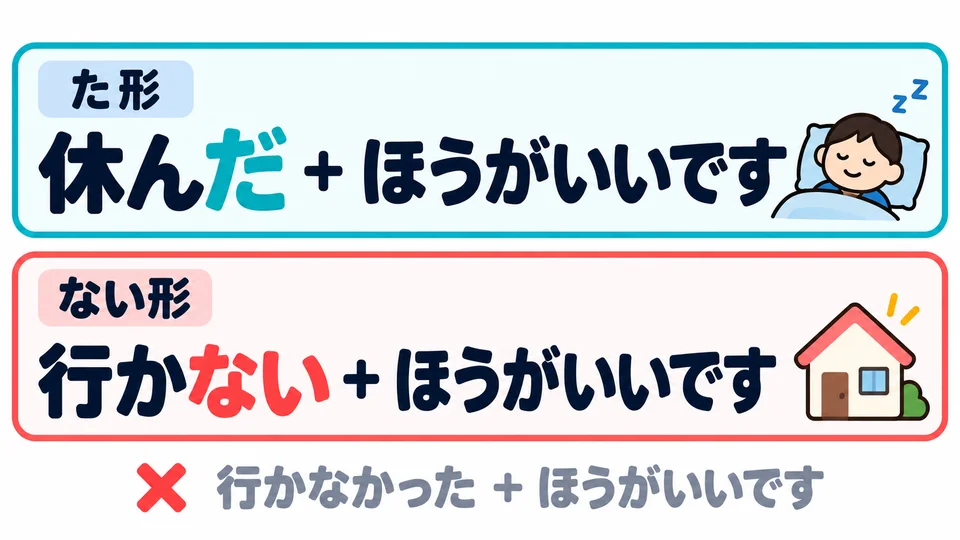
Use the た-form to advise doing something and the ない-form to advise against it. Do not replace ない with 「なかった」 when giving negative advice.
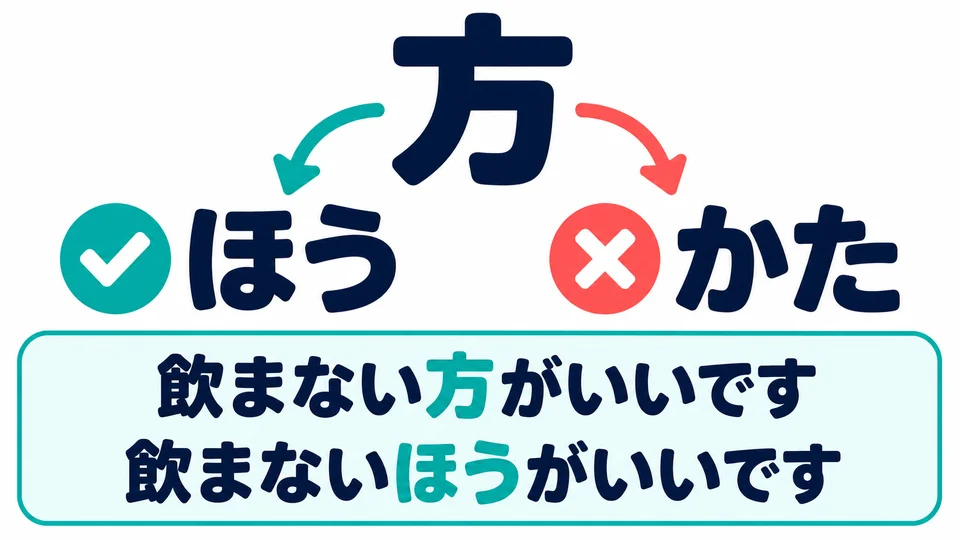
In the example about drinking alcohol, 「方」 is read 「ほう」, not 「かた」. You can also write it in kana.
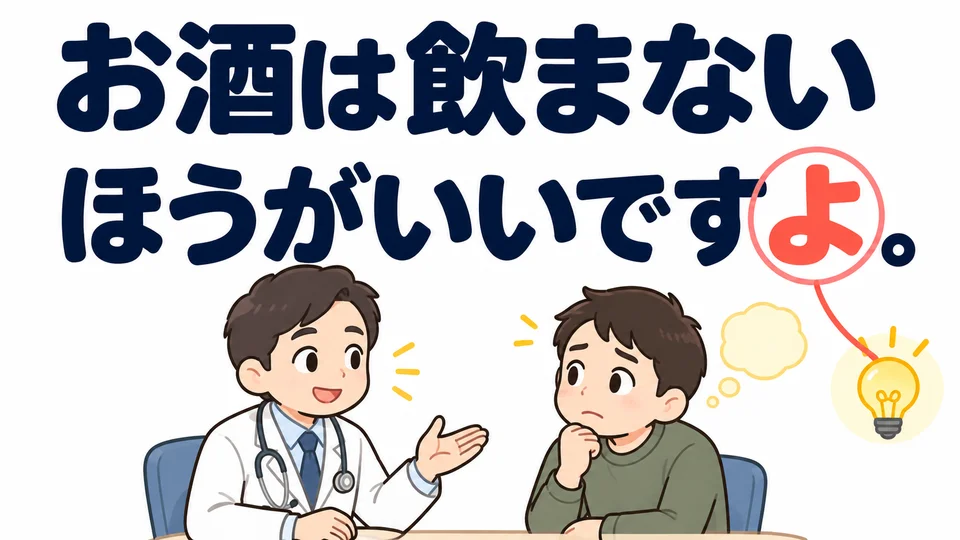
The example about drinking alcohol ends with 「よ」. This draws the listener’s attention to the advice; it does not make it a command.
Example sentences
- 外sotoにni行かないikanaiほうhouがgaいいです。iidesu
It's better not to go outside.
- お酒osakeをo
In a conversation
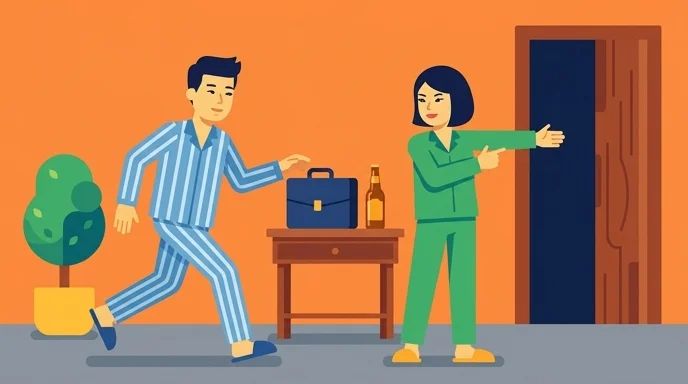
- A仕事に行ってもいいですか。
May I go to work?
- Bいいえ、休んだほうがいいです。
No, you should rest.
- A
Check yourself
Level 1 · Recognise
Which sentence is correct?
Level 1 · Recognise
Listen and choose the meaning
Level 2 · Build
Put the words in order
You should not overdo it.
Level 3 · Use
What goes in the blank?
体調が悪いときは写真を撮ら がいいです。
When you don't feel well, you'd better not take pictures.
More grammar in this theme
- 〜ないほうがいいですadvice against doing