JPEdLab iconJPEdLab
Save history

Create an account and play

Explore first, then save your progress whenever you are ready. No email address is required.

Start free
  1. Japanese grammar
  2. JLPT N4 grammar
  3. どうしたんですか

どうしたんですかdou shita n desu ka

Dou shita n desu ka (どうしたんですか) means “asking what’s wrong”.

会社かいしゃkaishaでde

At the office

Use「どうしたんですか」to ask with concern what happened or what problem someone is facing.

In the course›

How it works

  1. When you see a coworker holding their stomach, notice how they look, then use this phrase to show concern.
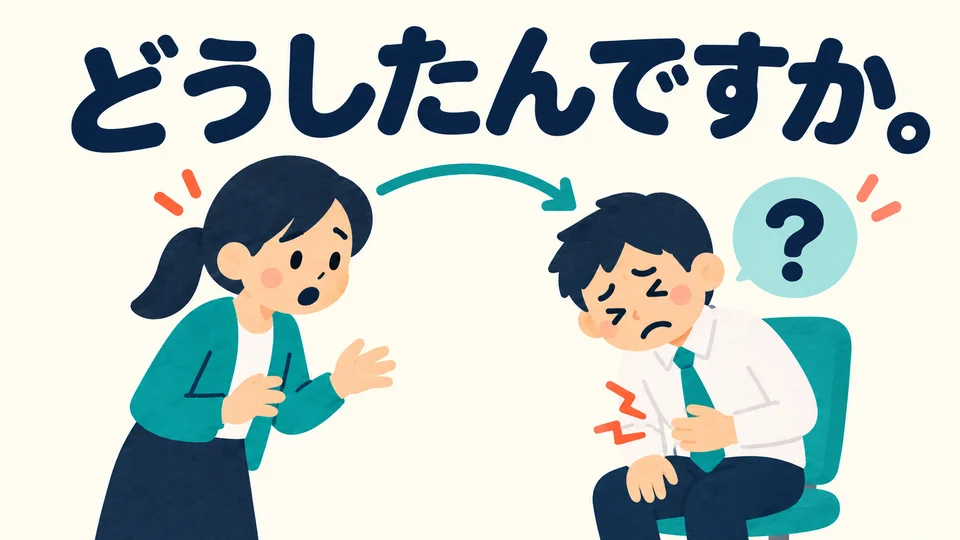
    When you see a coworker holding their stomach, notice how they look, then use this phrase to show concern.

  2. 「どうしたんですか」 means “What’s wrong?” It asks about the situation or problem the other person is facing.
    「どうしたんですか」 means “What’s wrong?” It asks about the situation or problem the other person is facing.

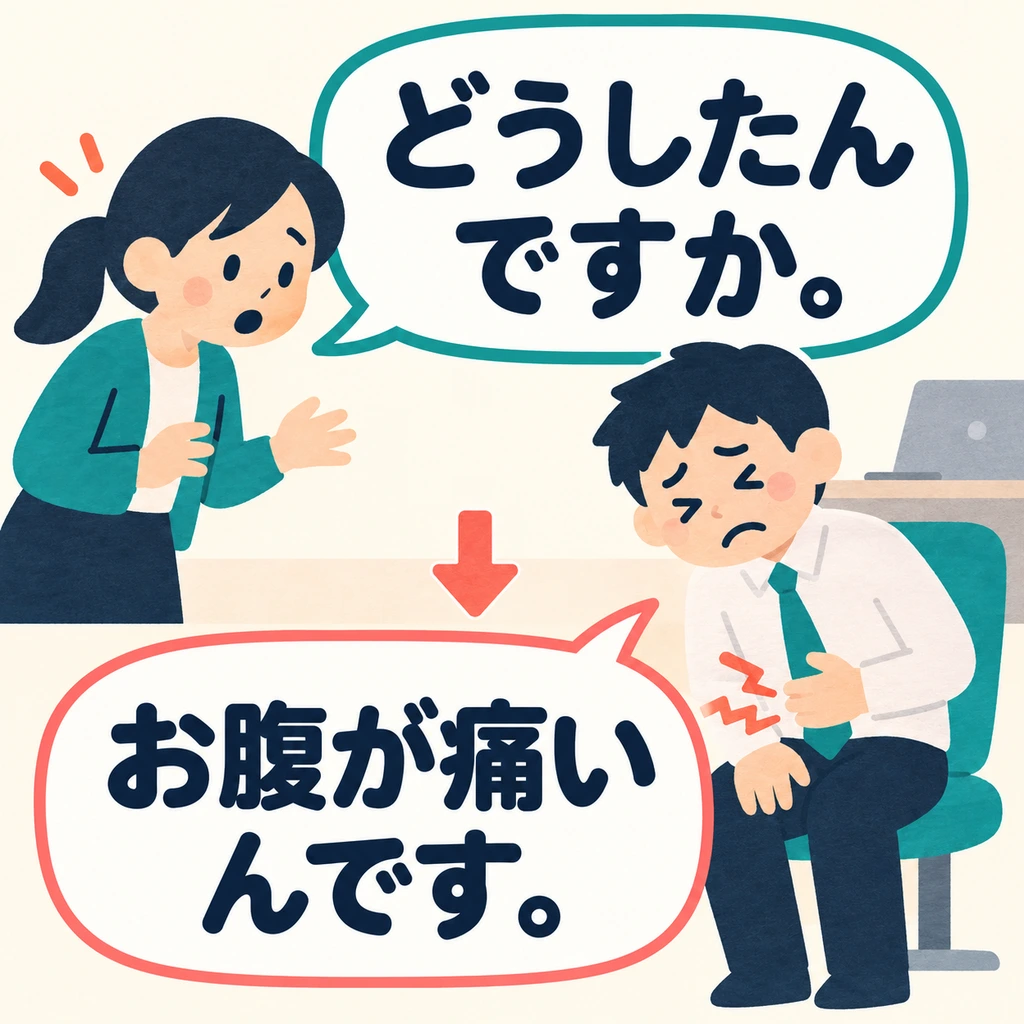
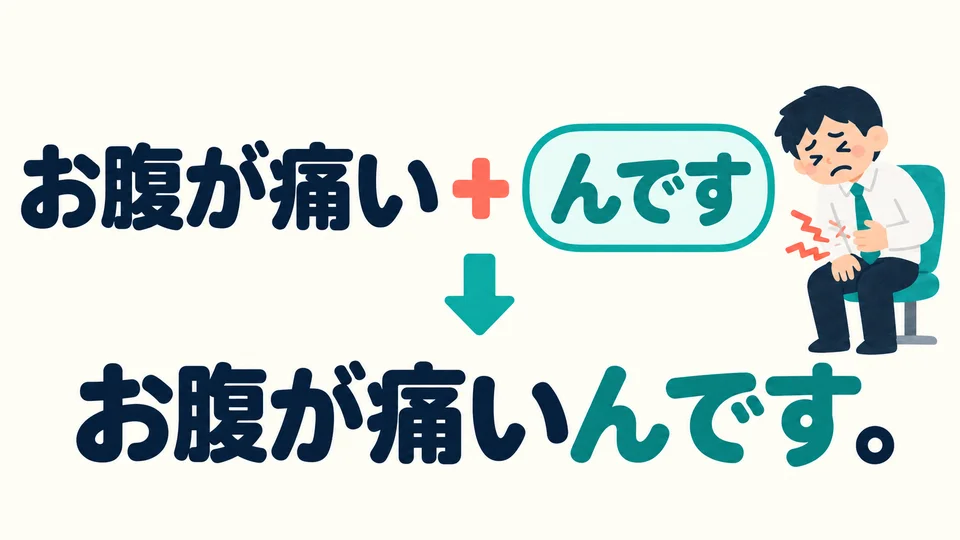
  3. The other person can explain with 「~んです」, as in the picture: “My stomach hurts.”
    The other person can explain with 「~んです」, as in the picture: “My stomach hurts.”

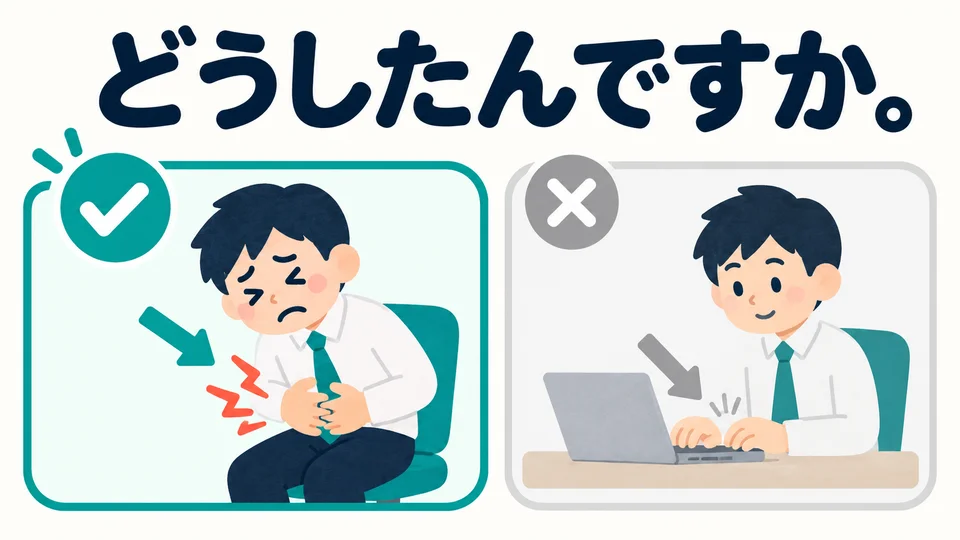
  4. Here you are asking “What happened?”, rather than what action the other person is doing.
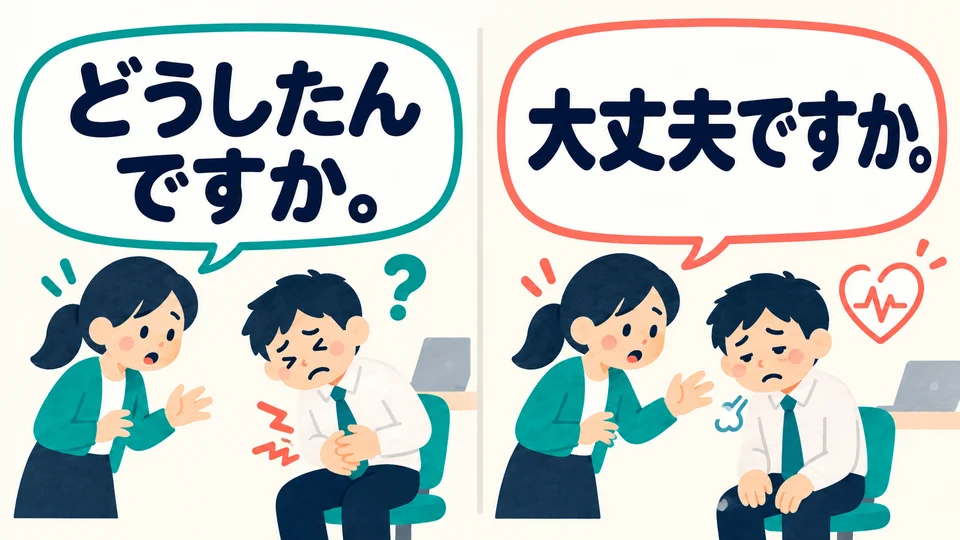
    Here you are asking “What happened?”, rather than what action the other person is doing.

  5. 「どうしたんですか」 asks what is wrong; 「大丈夫ですか」 checks whether the person is okay.

    「どうしたんですか」 asks what is wrong; 「大丈夫ですか」 checks whether the person is okay.

Example sentences

  • 会社かいしゃkaishaでde

    At the office

  • 学校がっこうgakkouでde

    At school

In a conversation

  • A
    山田さん、やまださんどうしたんですか。か

    A: Yamada, what's wrong?

  • B
    会社かいしゃでお腹おなかが痛くいたくなったんです。です

Check yourself

  1. Level 1 · Recognise

    Which sentence is correct?

  2. Level 1 · Recognise

    Listen and choose the meaning

  3. Level 2 · Build

    Put the words in order

    I collapsed at the company.

  4. Level 3 · Use

    What goes in the blank?

    昨日、会社を (丁寧に)。

    I was absent from work yesterday.

More grammar in this theme

  • どうしたんですかasking what’s wrong

More JLPT N4 grammar

Keep practising

Test your Japanese vocabulary12 adaptive questions, freeCheck your pronunciationRead aloud and get a scorePractise verb forms10-question conjugation quizSee the whole courseGrammar, vocabulary and quizzes by theme

B: My stomach started hurting at the office.

  • A
    大丈夫ですだいじょうぶですか。か

    A: Are you okay?

  • B
    はい、はいでも今日きょうはわ早退そうたいします。します

    B: I'm fine, but I'm leaving early today.

  • A
    わかりました。わかりましたお大事に。おだいじに

    A: Understood. Take care.

  • Beginner 2
    Injury and Illness
    More quizzesOpen this lesson’s quizzes in the course
    〜んですexplaining a situation
    動詞のた形past verb form
    〜たほうがいいですadvice to do something
    〜ないほうがいいですadvice against doing
    〜てからafter doing something
    〜前にbefore doing something
    Previous〜んです
    Next動詞のた形
    See all 138
    趣味は〜ことですhobby: activity as a noun
    〜てきますgo and come back
    〜が見えます/聞こえますunintentional seeing or hearing
    〜てcasual request or invitation
    〜という〜named or called something
    〜た〜を/へnoun modifier + particle
    〜た〜はnoun modifier as topic
    〜と、〜condition and result