
〜が見えます/聞こえます~ga miemasu/kikoemasu
Ga miemasu (〜が見えます) means “unintentional seeing or hearing”.
You can see a big bridge.
Use 「〜が見えます/聞こえます」 for things visible or sounds audible without deliberate looking or listening.
In the course
How it works
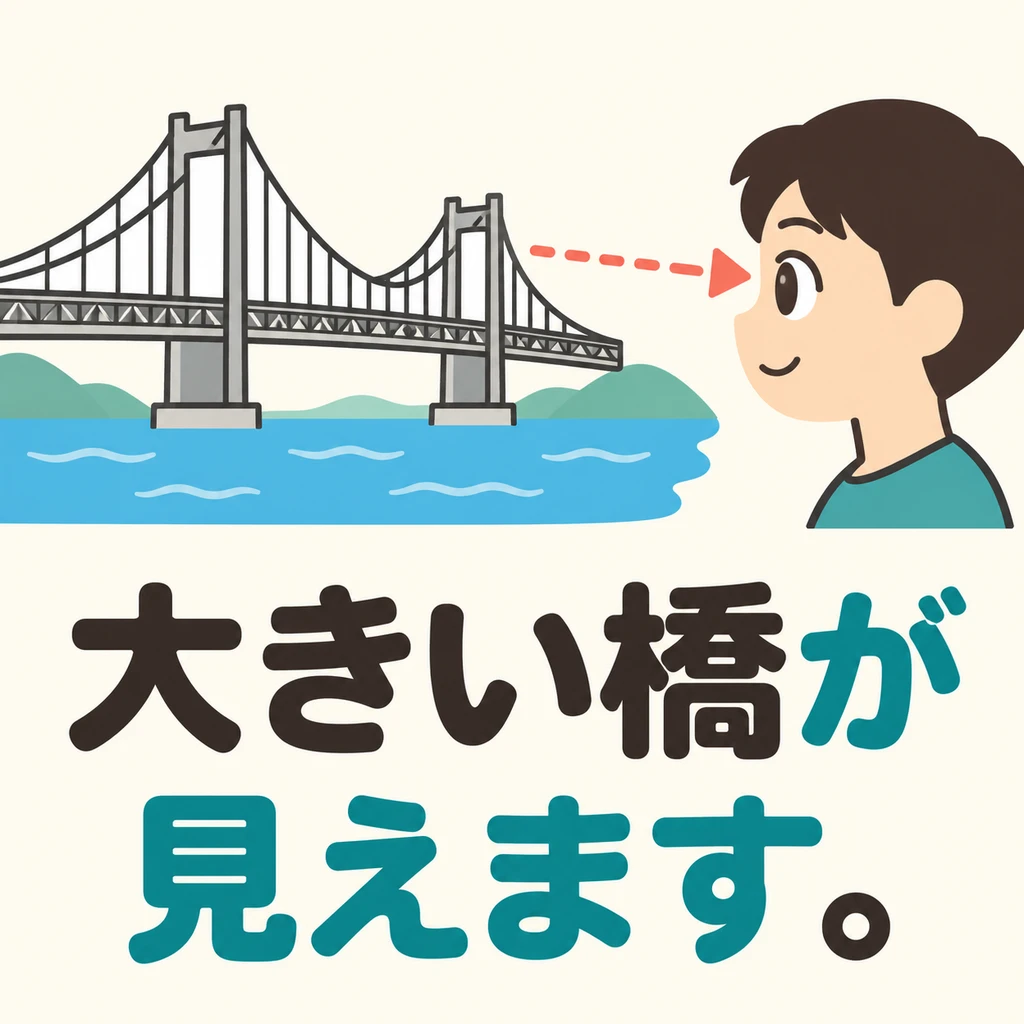
The bridge in front of you comes into view. Use 「見えます」 to say you can see it.
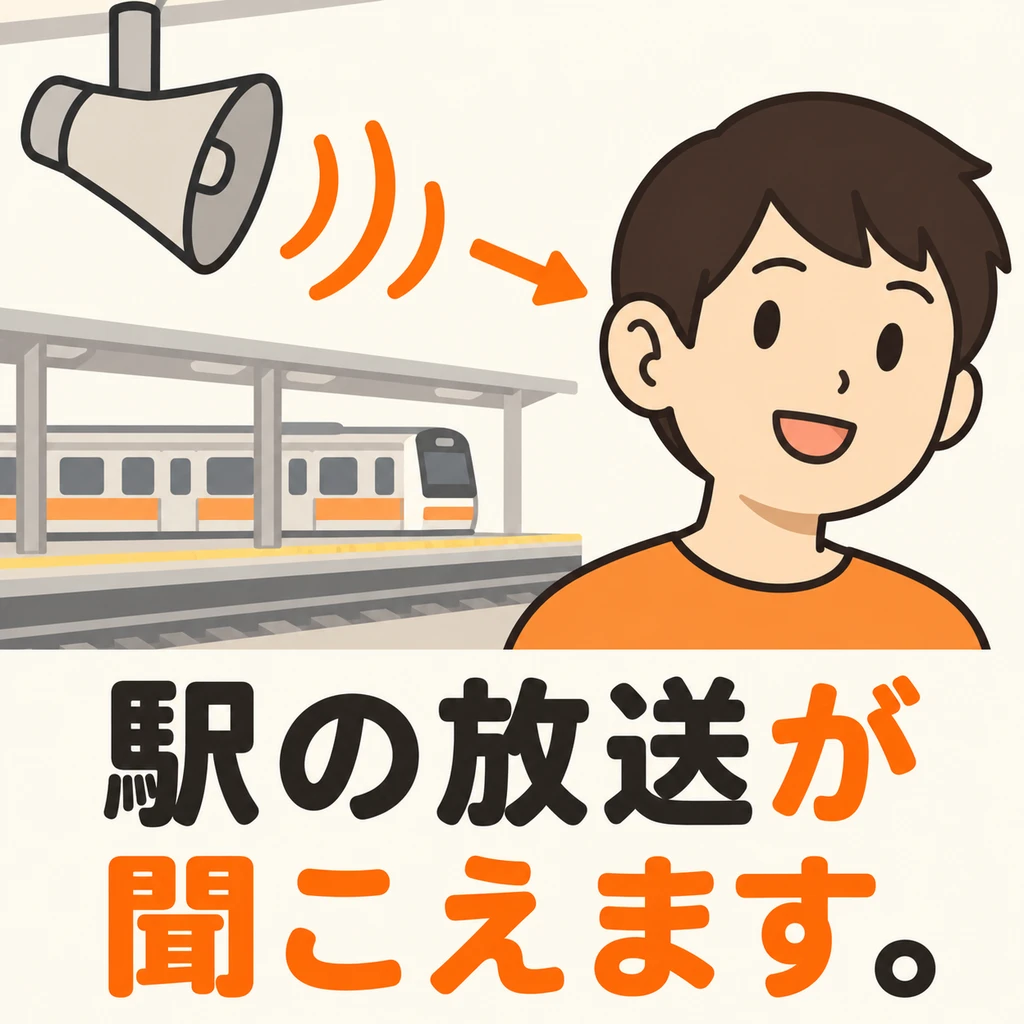
The station announcement reaches your ears. Use 「聞こえます」 to say you can hear it.
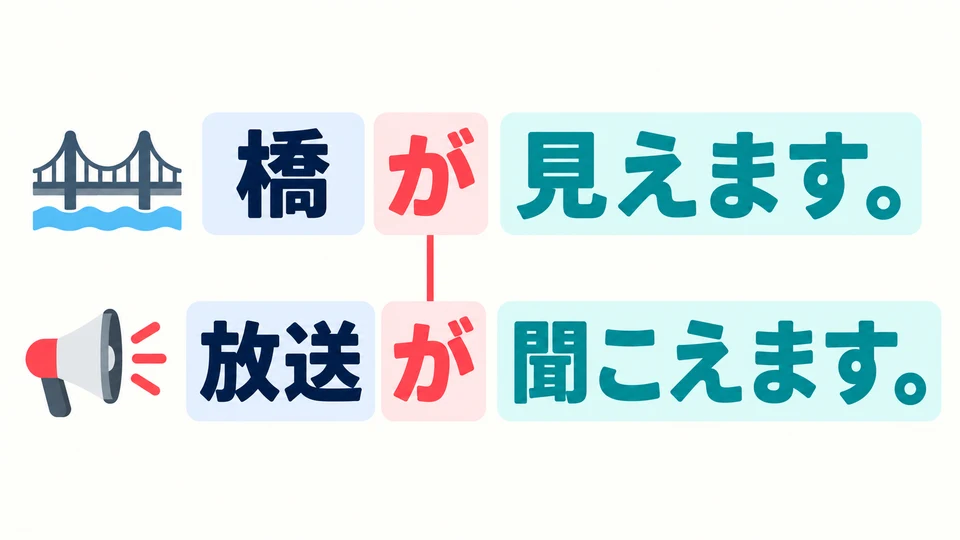
Put the thing you see or the sound you hear before 「が」 to show what you perceive.
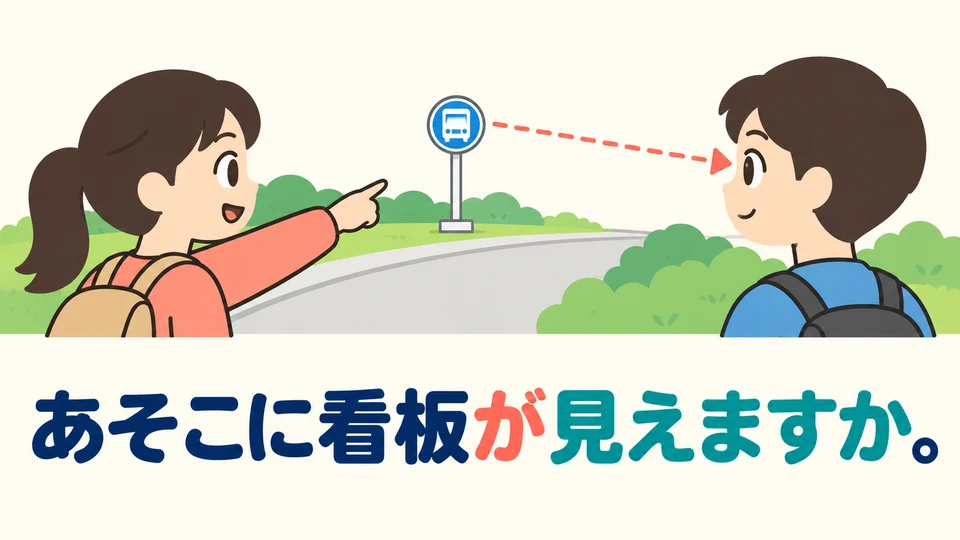
When giving directions, use 「見えますか」 to check whether the other person can see a sign in the distance.
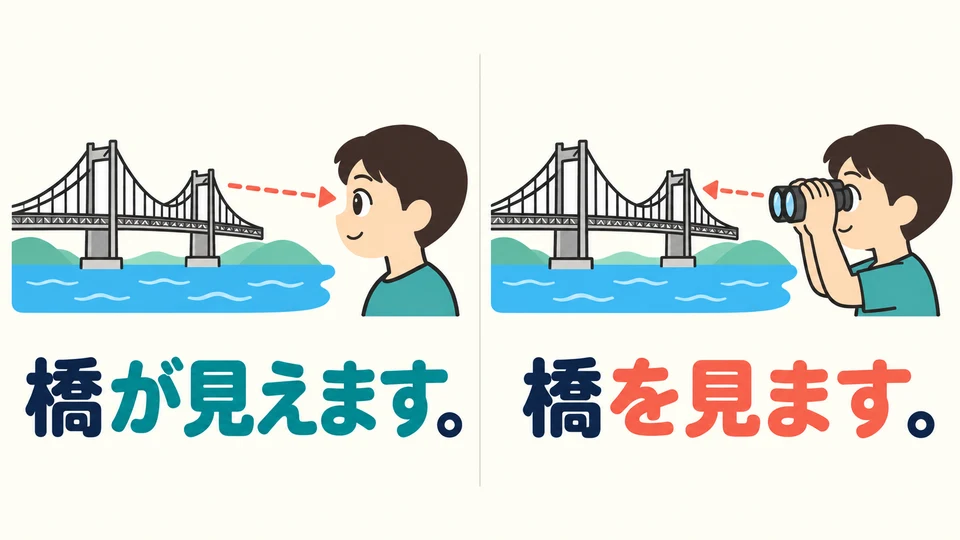
The bridge example says a bridge is visible in front of you. 「橋を見ます」 describes deliberately looking at the bridge.
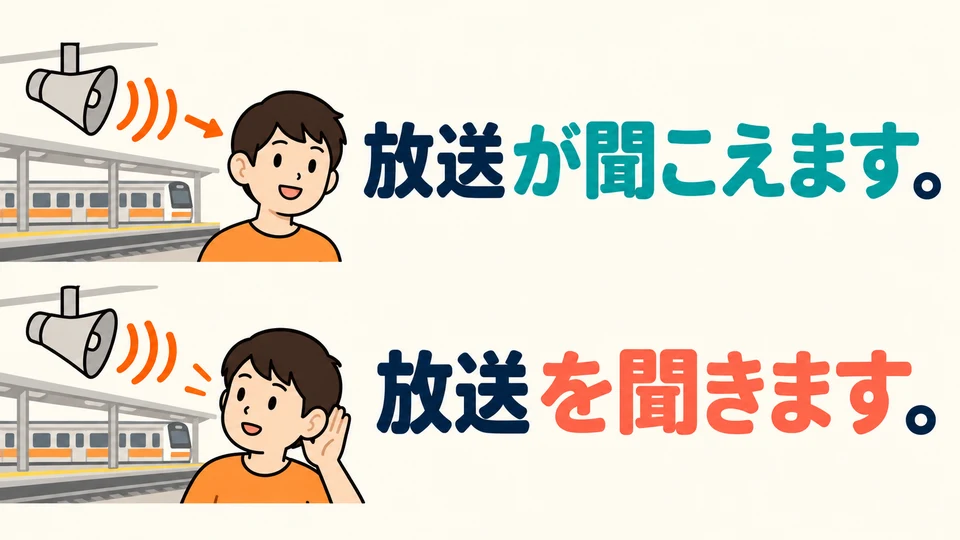
The announcement example says the sound has reached your ears. 「放送を聞きます」 describes deliberately listening to the announcement.
Example sentences
- 大きいookii橋hashiがga見えます。miemasu
You can see a big bridge.
- 駅ekiのno放送housouがga聞こえます。kikoemasu
In a conversation

- Aバス乗り場はどこですか。
A: Where is the bus stop?
- Bあそこに看板が見えますか。
B: Can you see the sign over there?
Check yourself
Level 1 · Recognise
Which sentence is correct?
Level 1 · Recognise
Listen and choose the meaning
Level 2 · Build
Put the words in order
I can see the bus stop sign.
Level 3 · Use
What goes in the blank?
学校の放送 。
The school announcement can be heard.
More grammar in this theme
- 〜が見えます/聞こえますunintentional seeing or hearing