JPEdLab iconJPEdLab
Save history

Create an account and play

Explore first, then save your progress whenever you are ready. No email address is required.

Start free
  1. Japanese grammar
  2. JLPT N4 grammar
  3. 趣味は〜ことです

趣味は〜ことですshumi wa ~ koto desu

Shumi wa koto desu (趣味は〜ことです) means “hobby: activity as a noun”.

趣味しゅみshumiはわwa食べるたべるtaberuことkotoです。ですdesu

My hobby is eating.

Use 「趣味は〜ことです」 to name an activity as your hobby; put a dictionary-form verb before こと.

In the course›

How it works

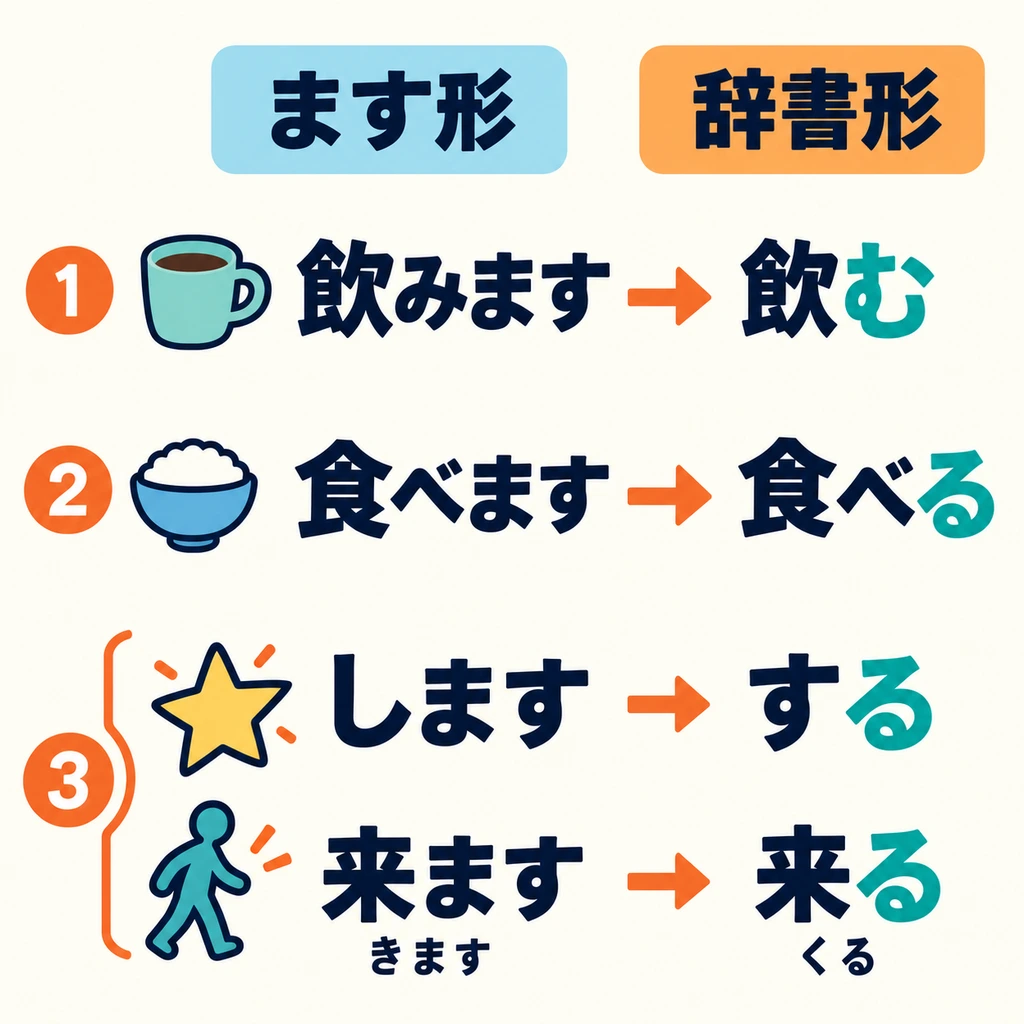
  1. The dictionary form is the verb form you find in a dictionary. Look at the picture: the three verb groups change differently.
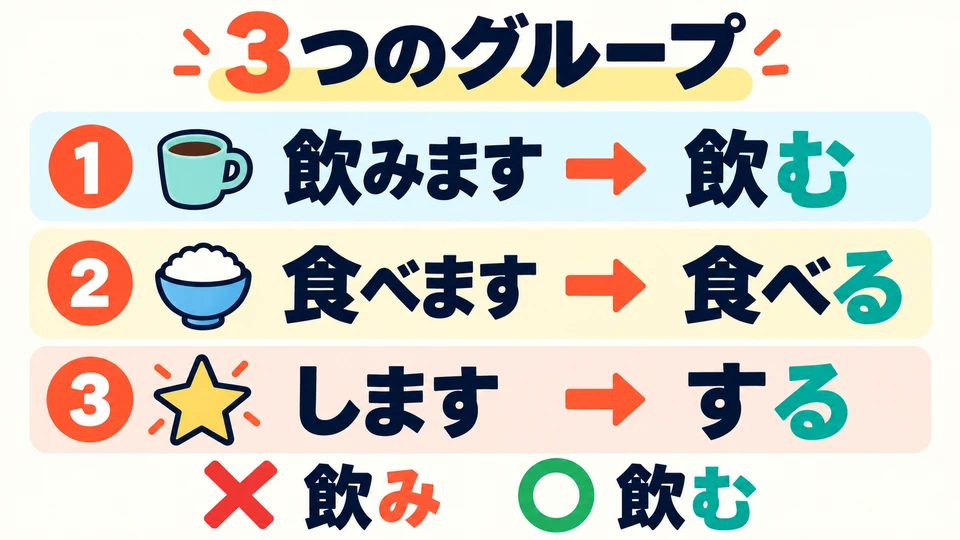
    The dictionary form is the verb form you find in a dictionary. Look at the picture: the three verb groups change differently.

  2. First identify the verb’s group, then make its dictionary form. You cannot simply remove 「ます」 from every verb.
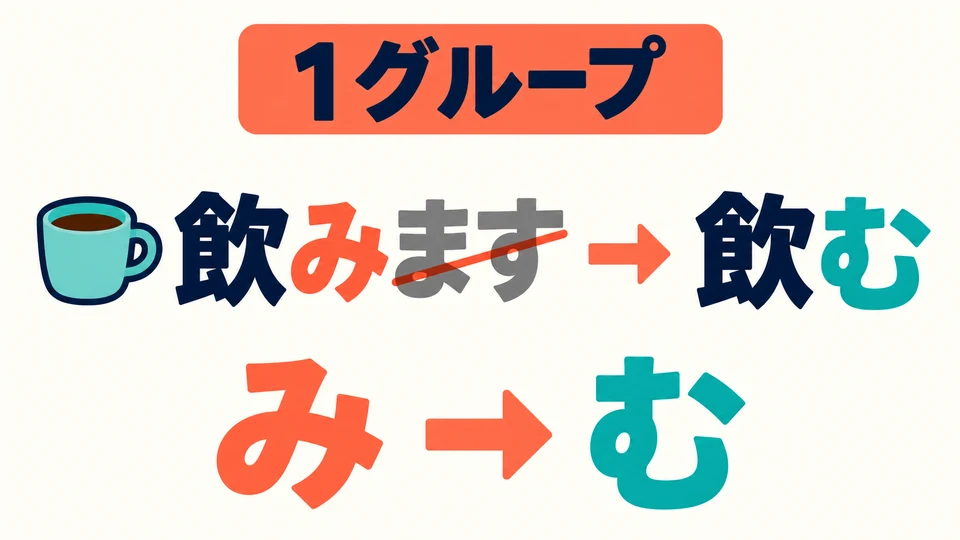
    First identify the verb’s group, then make its dictionary form. You cannot simply remove 「ます」 from every verb.

  3. For the Group 1 verb 「飲みます→飲む」, change the final 「み」 to 「む」 and remove 「ます」.
    For the Group 1 verb 「飲みます→飲む」, change the final 「み」 to 「む」 and remove 「ます」.

  4. For the Group 2 verb 「食べます→食べる」, remove 「ます」 and add 「る」.
    For the Group 2 verb 「食べます→食べる」, remove 「ます」 and add 「る」.

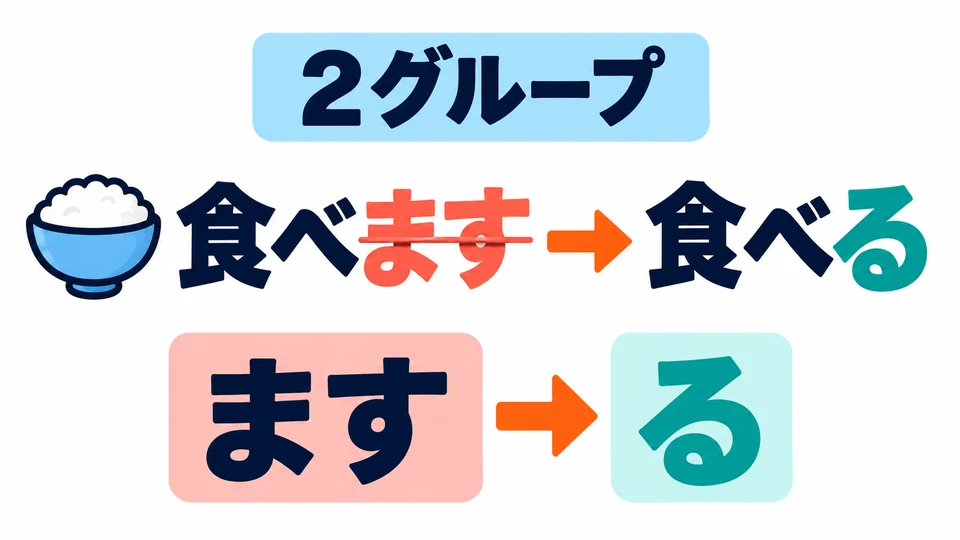
  5. Memorize the Group 3 verbs separately: 「します→する」 and 「来ます→来る」.
    Memorize the Group 3 verbs separately: 「します→する」 and 「来ます→来る」.

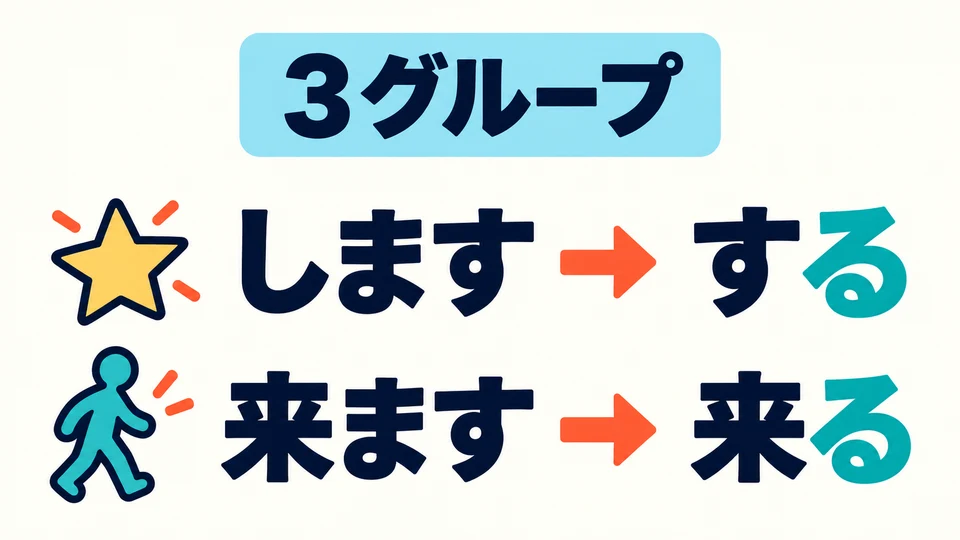
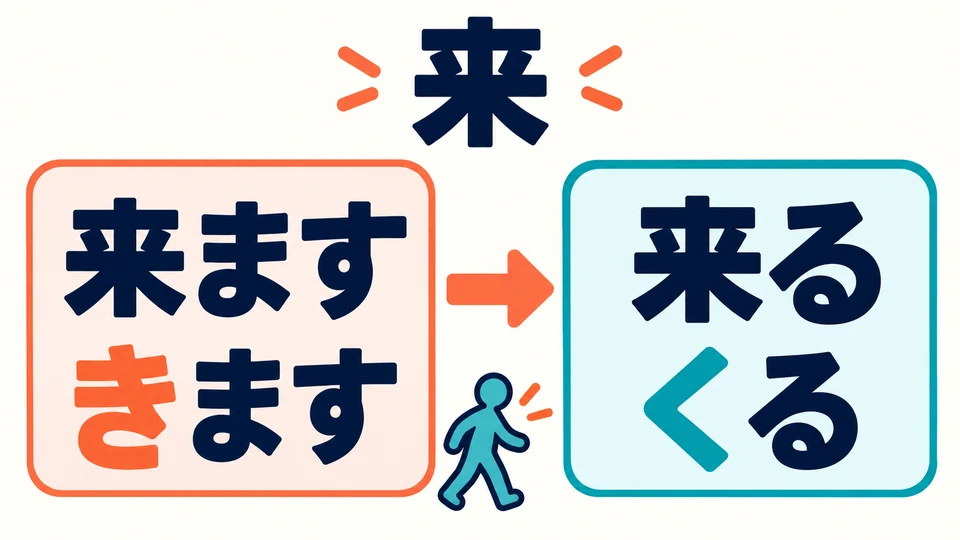
  6. Notice that the reading of 「来」 changes too: 「来ます」 is read きます, while 「来る」 is read くる.
    Notice that the reading of 「来」 changes too: 「来ます」 is read きます, while 「来る」 is read くる.

  7. How do you name an activity as a hobby? Add 「こと」 to the dictionary form to treat the whole activity as one thing.
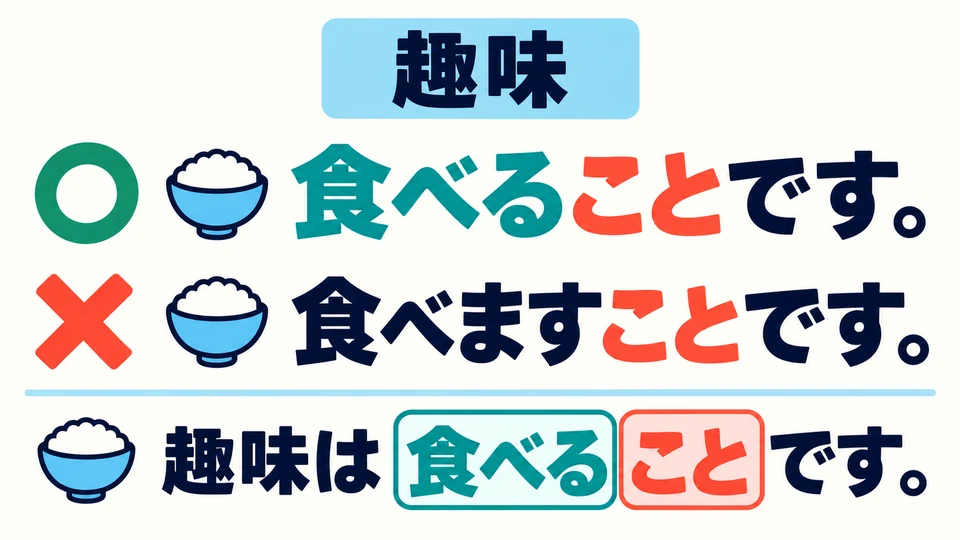
    How do you name an activity as a hobby? Add 「こと」 to the dictionary form to treat the whole activity as one thing.

  8. Use 「趣味は~ことです」 to answer with an activity as your hobby. Before 「こと」, use the dictionary form, not the ます form.
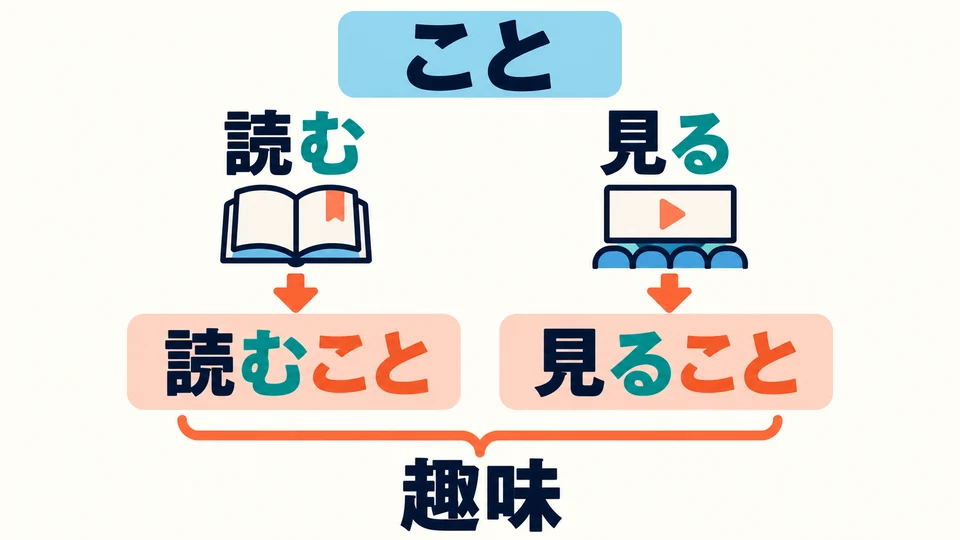
    Use 「趣味は~ことです」 to answer with an activity as your hobby. Before 「こと」, use the dictionary form, not the ます form.

  9. Treating an activity as one thing can also help you describe habits. Here, let’s practice with hobbies first.

Example sentences

  • 趣味しゅみshumiはわwa食べるたべるtaberuことkotoです。ですdesu

    My hobby is eating.

In a conversation

  • A
    趣味しゅみはわ何なんですか。か

    A: What is your hobby?

  • B
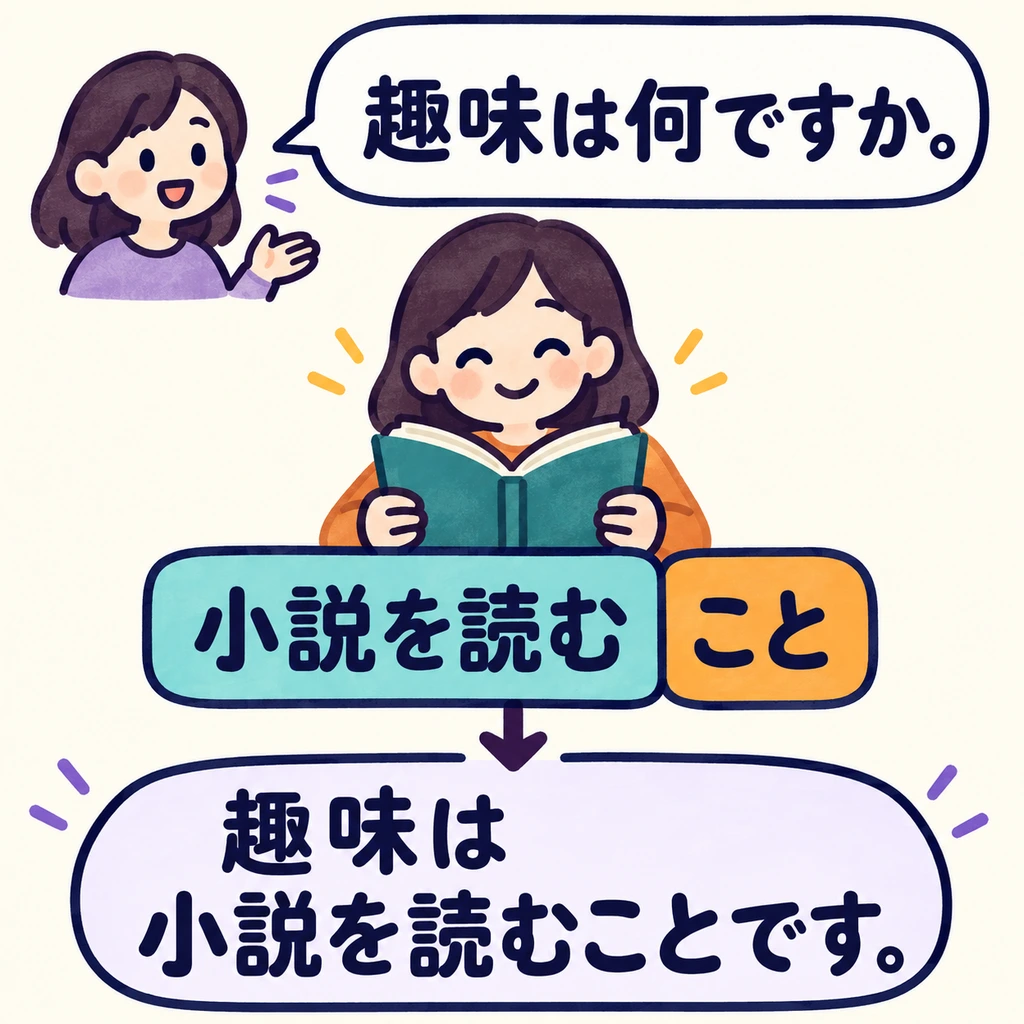
    趣味しゅみはわ小説しょうせつを読むよむことです。です

    B: My hobby is reading novels.

Check yourself

  1. Level 0 · Conjugate

    Change to the form used in dictionaries. 辞書形

    私の趣味は映画を(見ますみます)ことです。

  2. Level 1 · Recognise

    Which sentence is correct?

  3. Level 1 · Recognise

    Listen and choose the meaning

  4. Level 2 · Build

    Put the words in order

    My hobby is reading novels.

  5. Level 3 · Use

    What goes in the blank?

    趣味はカラオケで です。

    My hobby is singing at karaoke.

More grammar in this theme

  • 趣味は〜ことですhobby: activity as a noun

More JLPT N4 grammar

Keep practising

Test your Japanese vocabulary12 adaptive questions, freeCheck your pronunciationRead aloud and get a scorePractise verb forms10-question conjugation quizSee the whole courseGrammar, vocabulary and quizzes by theme

Treating an activity as one thing can also help you describe habits. Here, let’s practice with hobbies first.

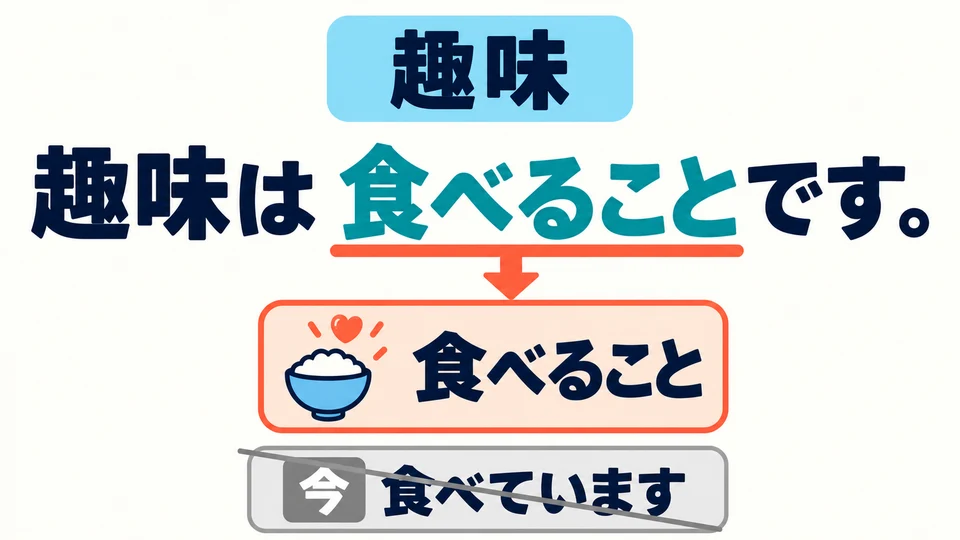
  • In the example, 「食べること」 means the activity of eating. The sentence introduces a hobby; it does not say someone is eating right now.

    In the example, 「食べること」 means the activity of eating. The sentence introduces a hobby; it does not say someone is eating right now.

    • A
      そうですか。私わたしの趣味しゅみはわ映画えいがを見るみることです。

      A: I see. My hobby is watching movies.

    • B
      映画えいがもいいですね。ねどんな映画えいがが好きですすきですか。か

      B: Watching movies is nice, too. What kind of movies do you like?

    • A
      アクションあくしょん映画えいがが好きです。すきです

      A: I like action movies.

    Beginner 2
    Hobbies and Preferences
    More quizzesOpen this lesson’s quizzes in the course
    いつも・よく・ときどきfrequency: always to sometimes
    期間に〜回/冊/本quantity per time period
    〜ができますcan do something
    〜ことができますcan do an action
    〜ことができますかask if someone can
    〜て、〜てからsequence actions in order
    どうやって〜かask how to do something
    Nextいつも・よく・ときどき
    See all 138
    〜はちょっと…soft, indirect refusal
    もらいますreceive: get from someone
    くれますsomeone gives to me/us
    〜てきますgo and come back
    〜が見えます/聞こえますunintentional seeing or hearing
    〜てcasual request or invitation
    〜んですexplaining a situation
    どうしたんですかasking what’s wrong