
〜んです~n desu
N desu (〜んです) means “explaining a situation”.
My stomach has been hurting since yesterday. I can't stop having diarrhea.
Use「〜んです」to explain symptoms or add details about a situation the listener has noticed or asked about.
In the course
How it works
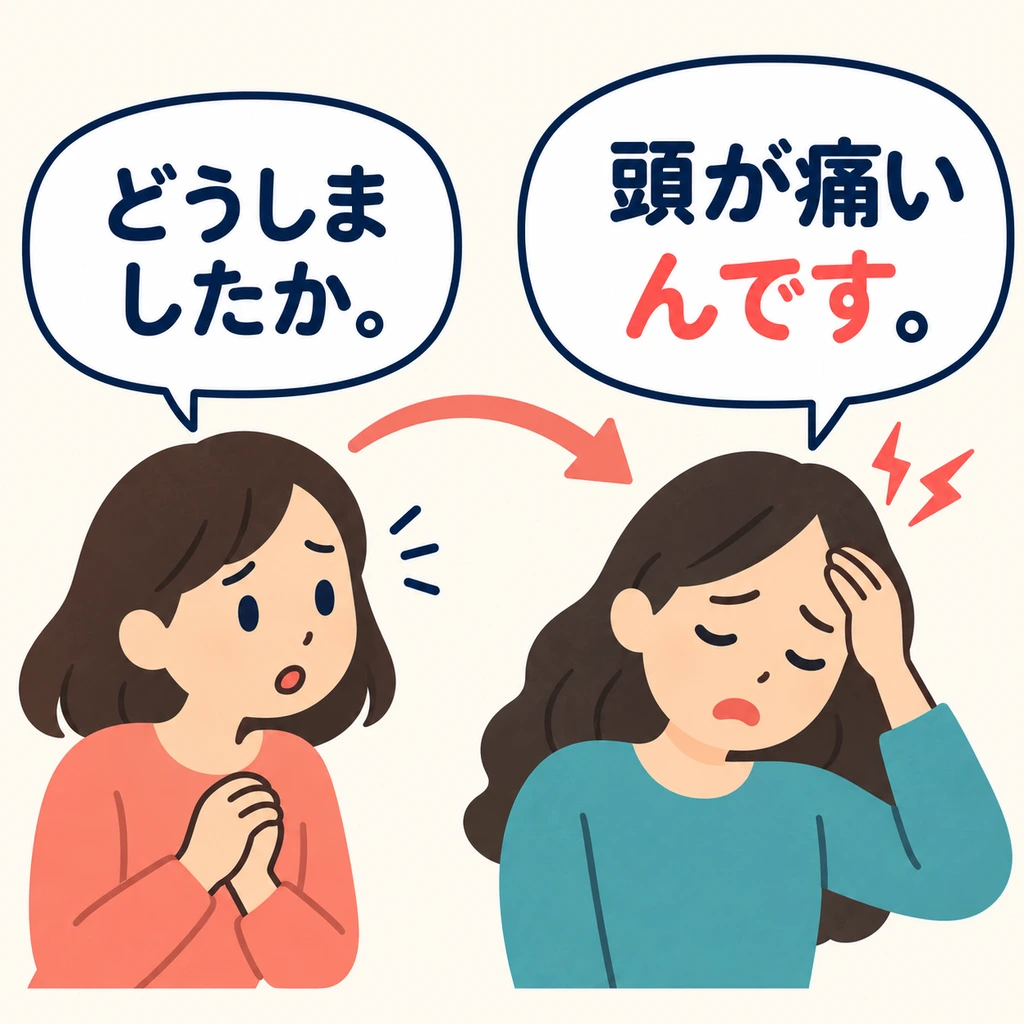
When someone notices you are unwell, use 「んです」 to explain what is going on.
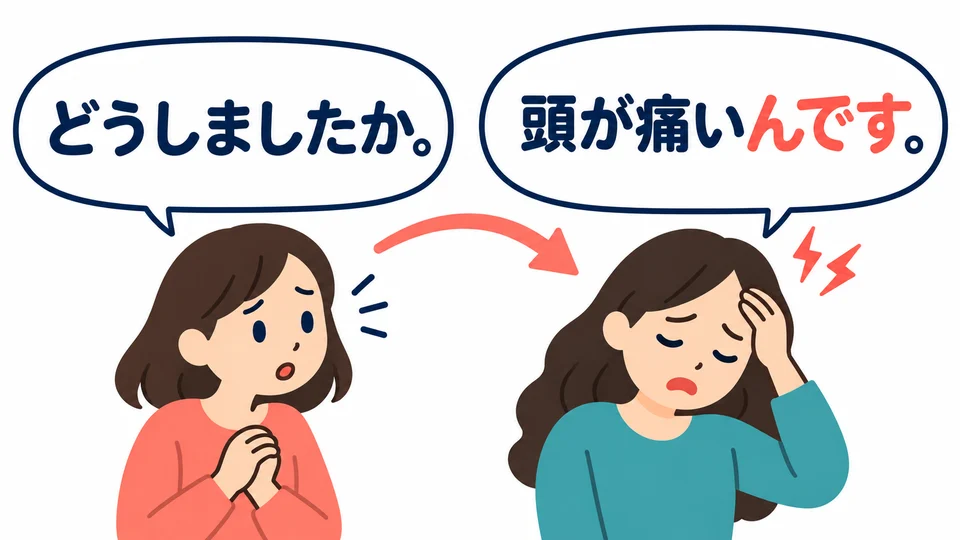
When someone wants to know what happened, use 「んです」 to add details or explain the reason.
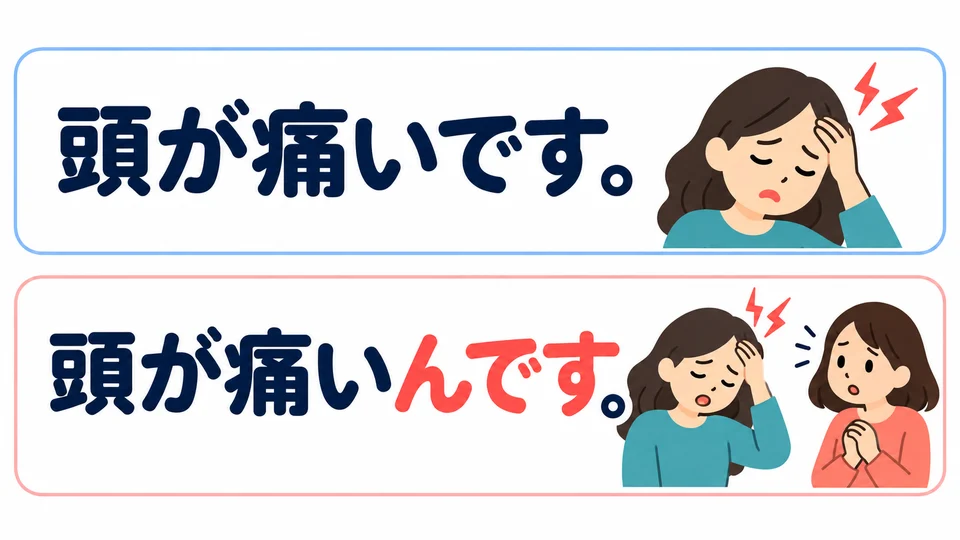
「頭が痛いです」 tells someone you have a headache. Adding 「んです」 explains the situation they are seeing.
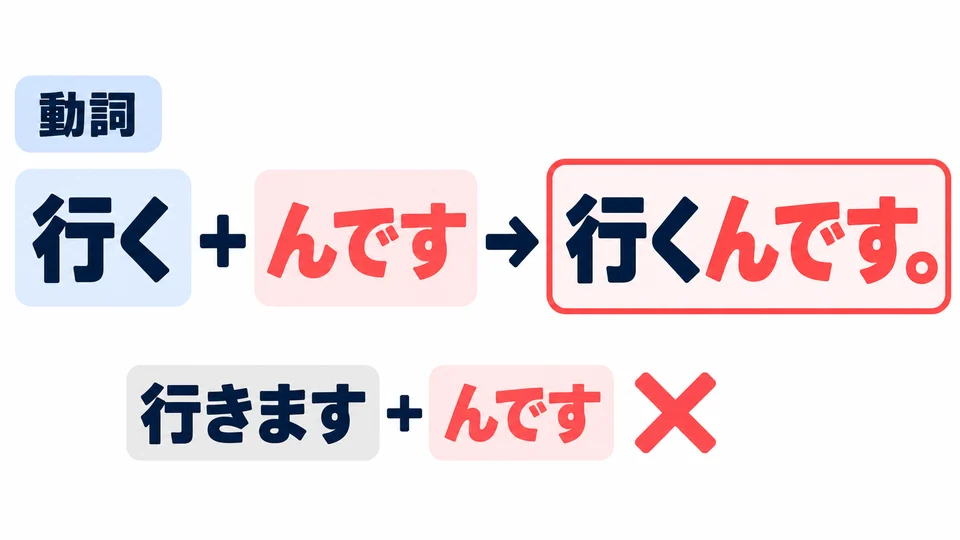
Attach 「んです」 to a verb’s plain form: 行く+んです, not 行きます+んです.
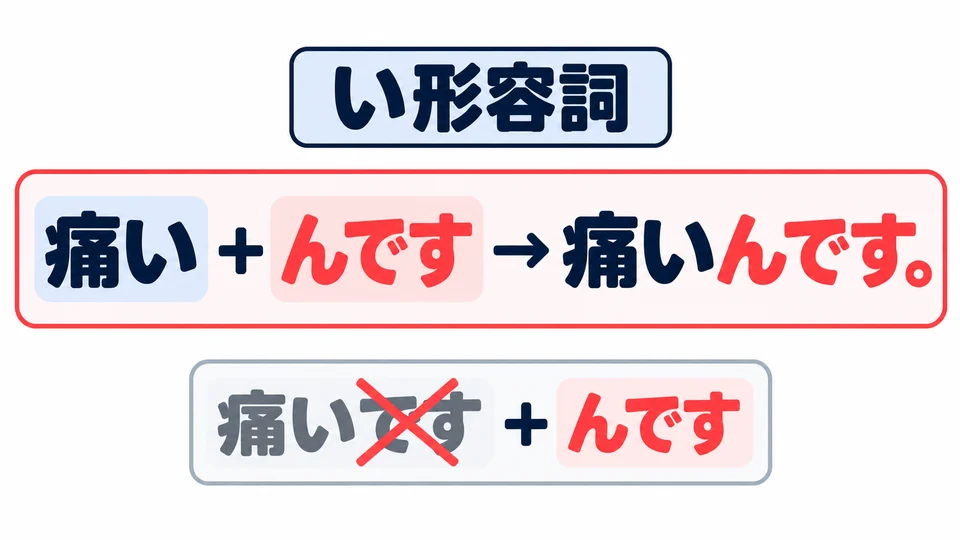
Attach 「んです」 directly to an い-adjective: 痛い+んです. Do not keep the final です.
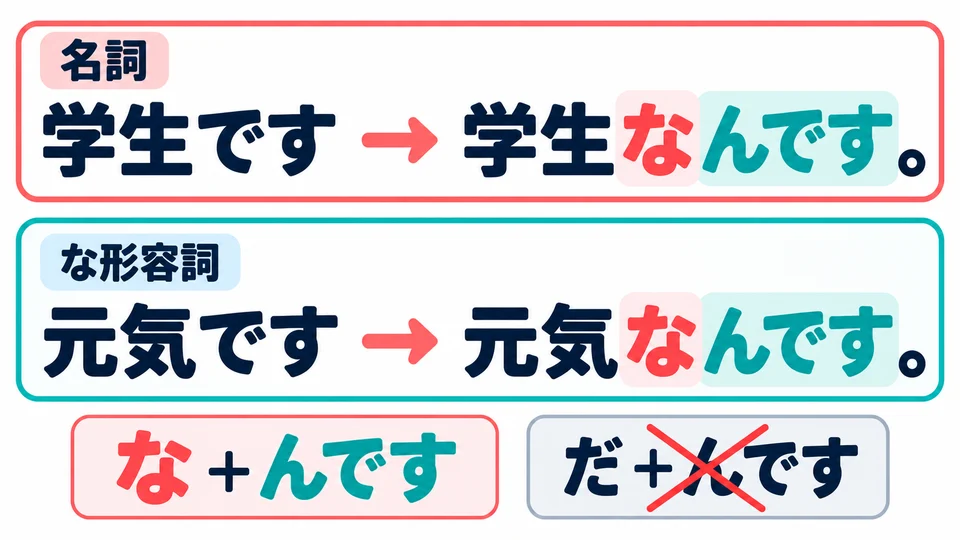
For nouns and な-adjectives in the affirmative present form, use 「な+んです」. Do not use だ here.
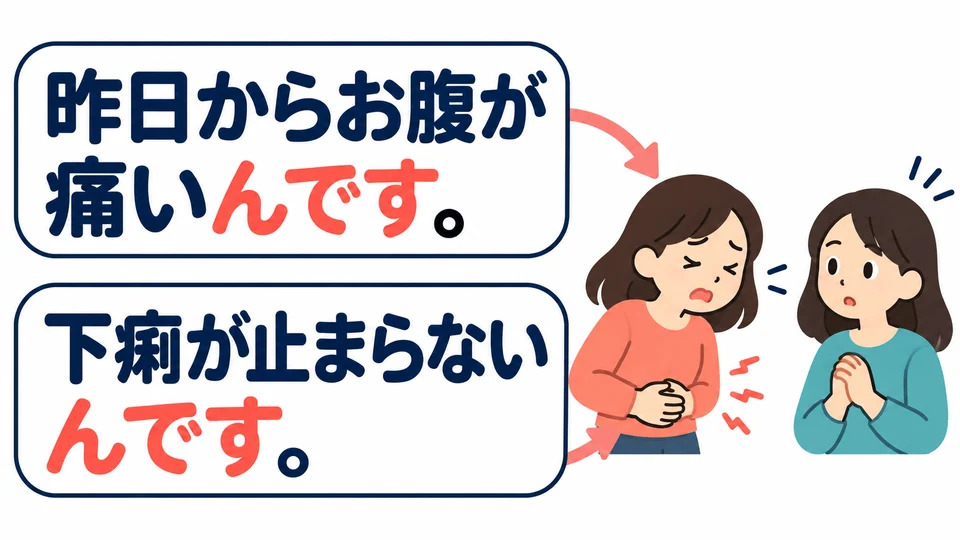
The example explains stomach pain and then diarrhea. 「んです」 adds details about the symptoms so the listener understands the situation.
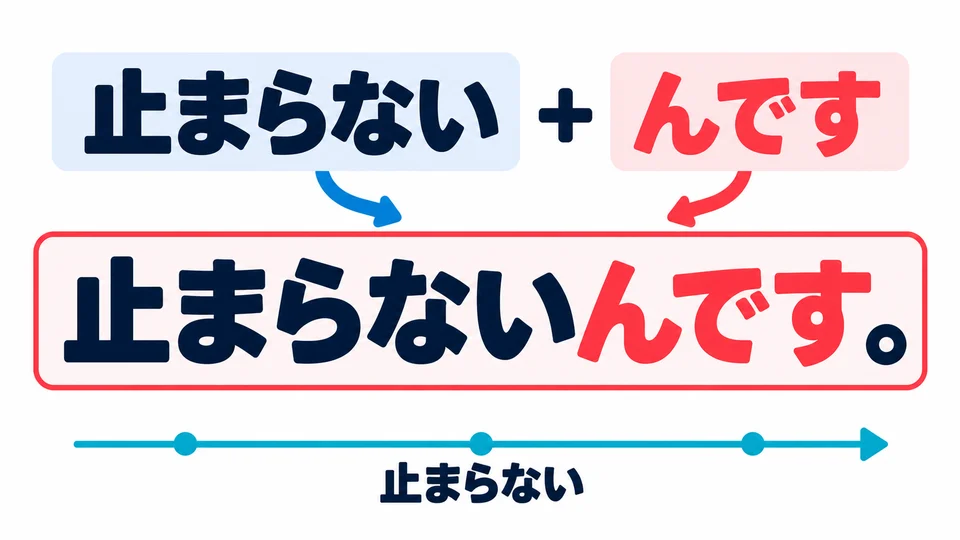
「止まらないんです」 explains that the symptom is continuing. The negative plain form can also take 「んです」 directly.
Example sentences
- 昨日kinouからkaraお腹onakaがga痛いitaiんnです。下痢desu.geriがga止まらないtomaranaiんnです。desu
My stomach has been hurting since yesterday. I can't stop having diarrhea.
In a conversation

- Aどうしましたか。
A: What seems to be the problem?
- B頭が痛いんです。
B: I have a headache.
- A熱は
Check yourself
Level 0 · Conjugate
Change to 〜んです to explain the situation. 普通形+んです
咳がたくさん(出ます)んです。
Level 1 · Recognise
Which sentence is correct?
Level 1 · Recognise
Listen and choose the meaning
Level 2 · Build
Put the words in order
My head is throbbing with pain.
Level 3 · Use
What goes in the blank?
仕事が 。
I still have work left to do.
More grammar in this theme
- 〜んですexplaining a situation