
〜と、〜~to, ~
To, (〜と、〜) means “condition and result”.
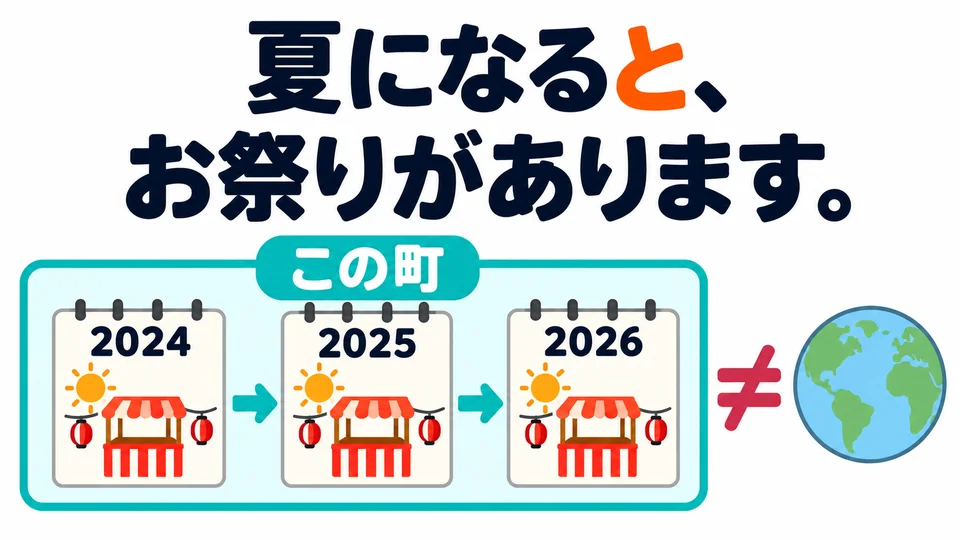
When summer comes, there are festivals.
Use 「と」 for a condition that leads to a regular or natural result, such as what happens when you press a button.
In the course
How it works
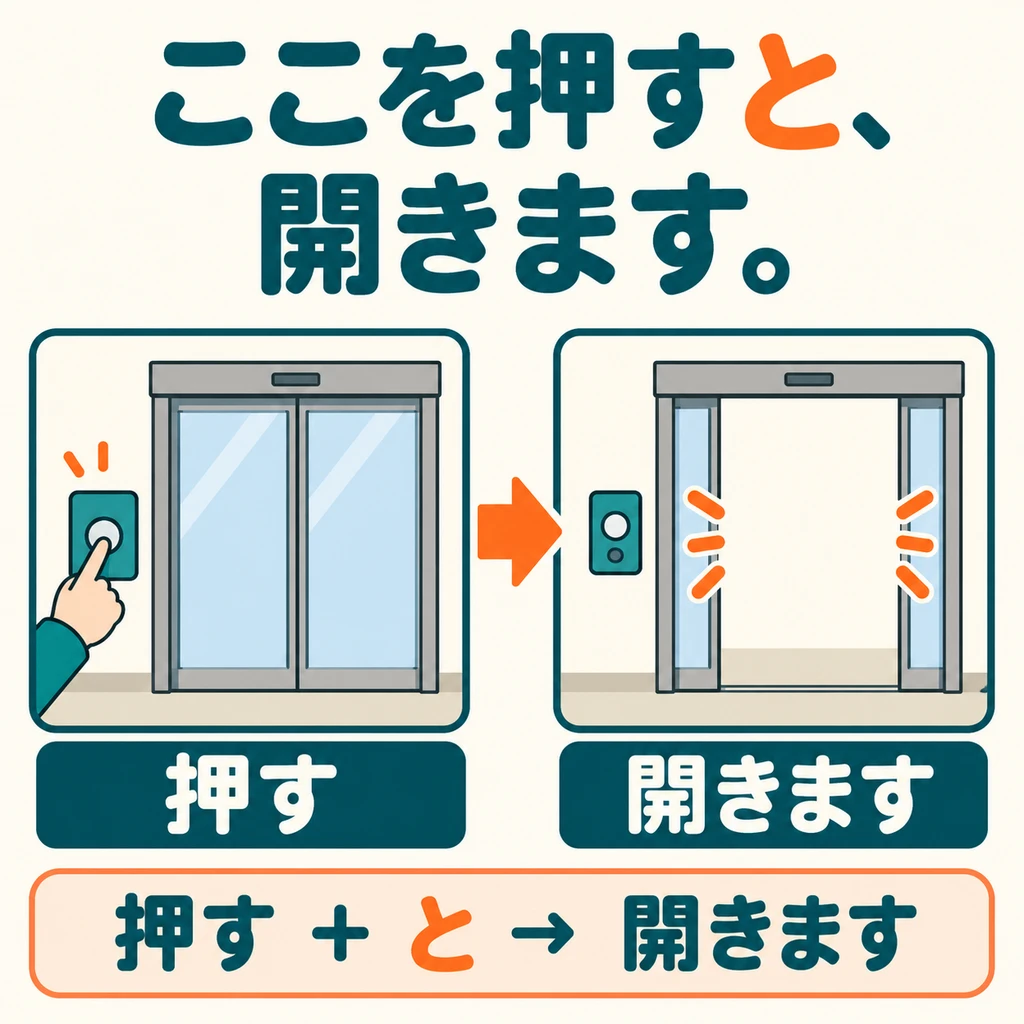
Press the button and the door opens automatically. 「と」 links a condition to the result that follows.
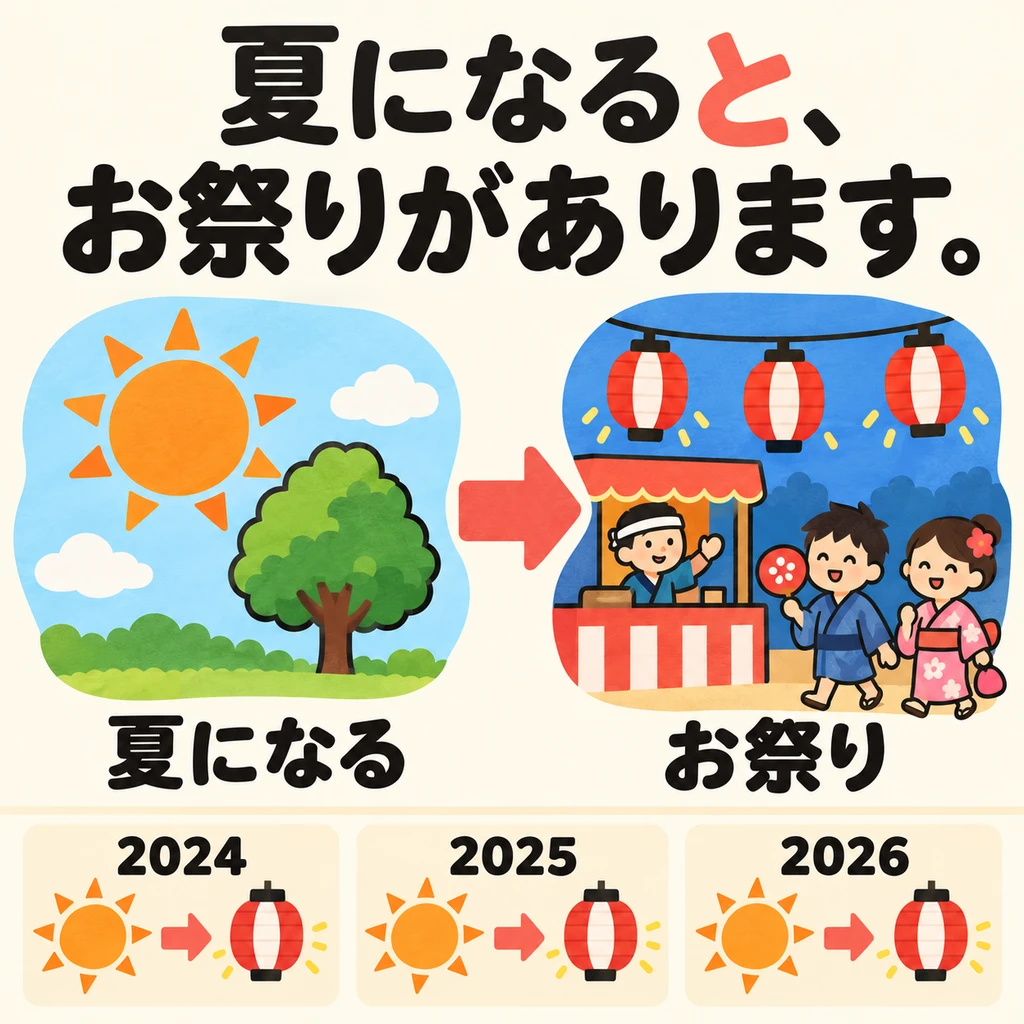
There is a festival every summer. 「と」 also describes regular events like this.
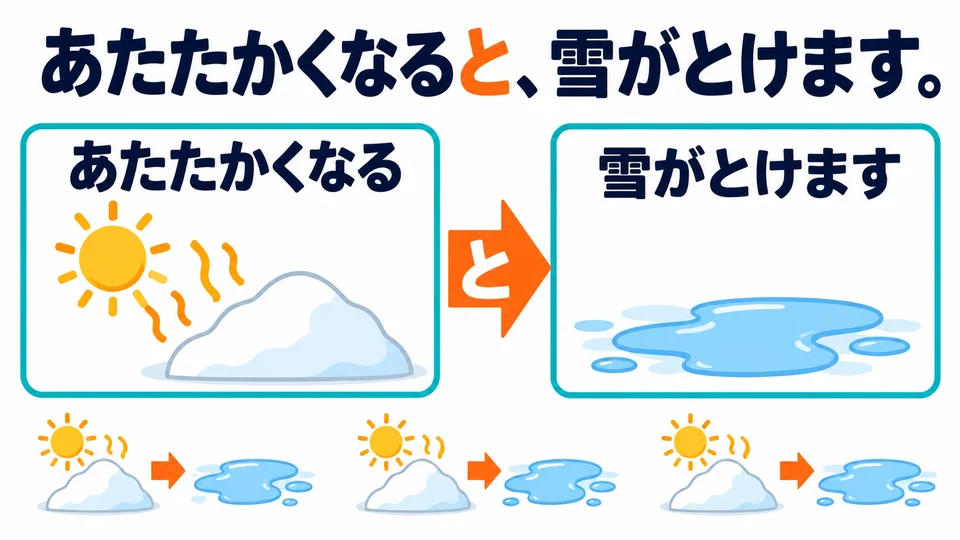
With the same condition, the result is usually the same. 「と」 often describes laws of nature.
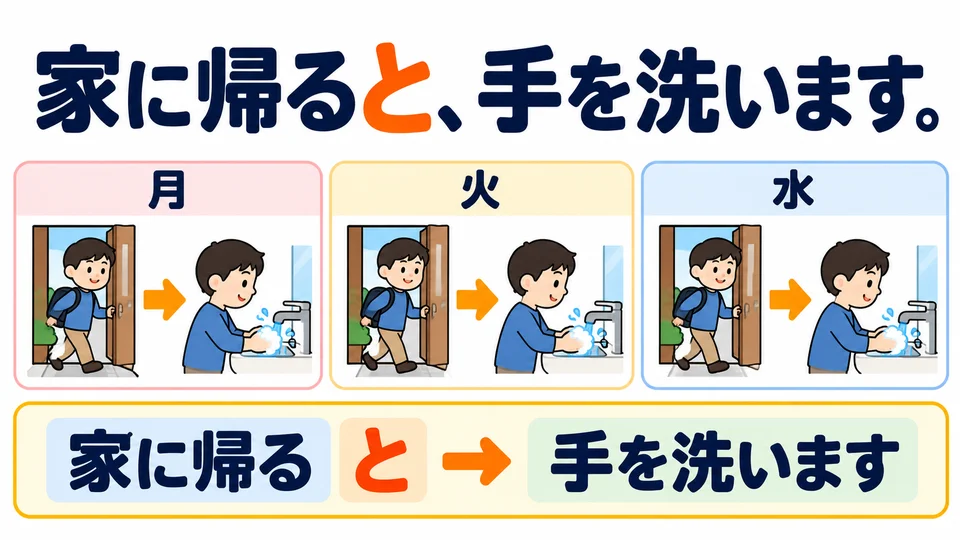
When describing your own habits, you can also use 「と」 for something you do every time.
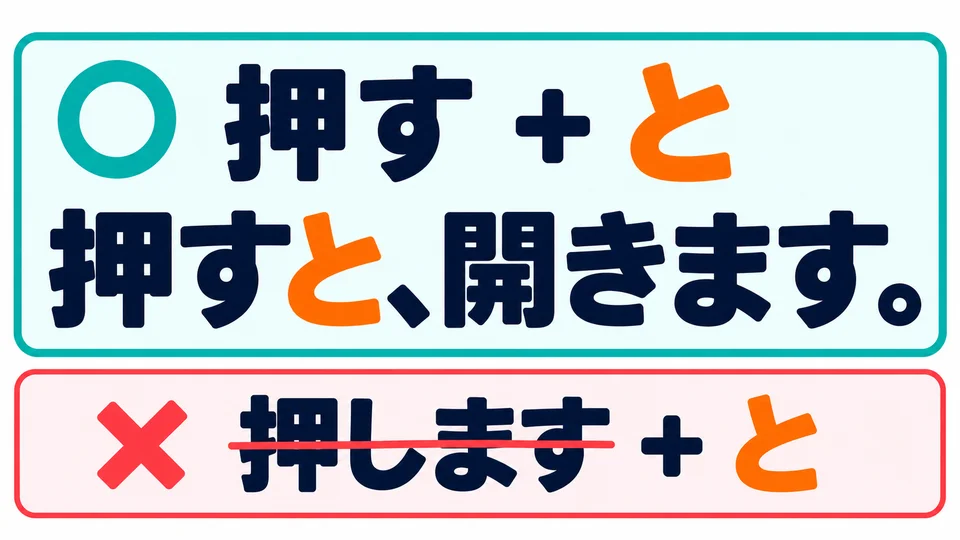
Before 「と」, use the verb’s non-past plain form: 押す+と, not 押します+と.
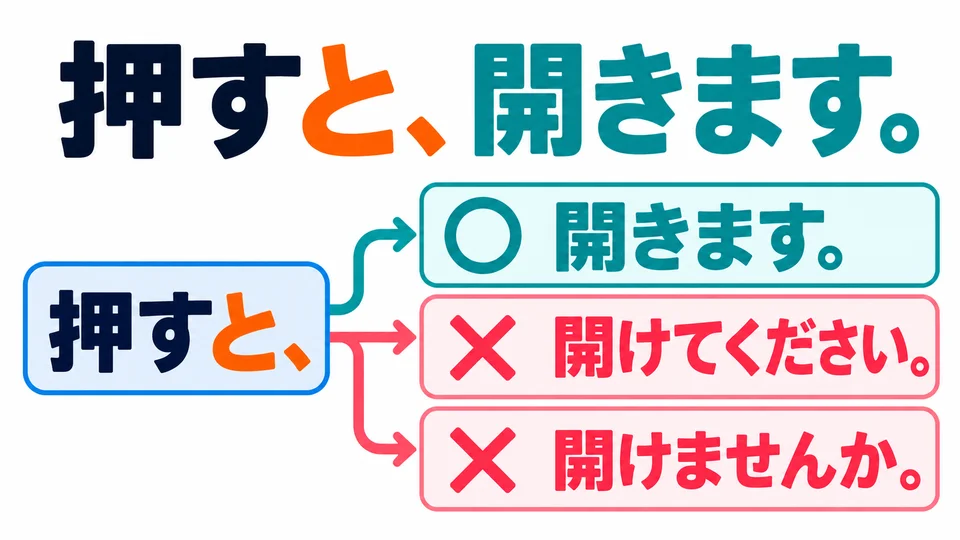
The second clause states the result. In this use, 「と」 is generally not followed by a request or invitation.
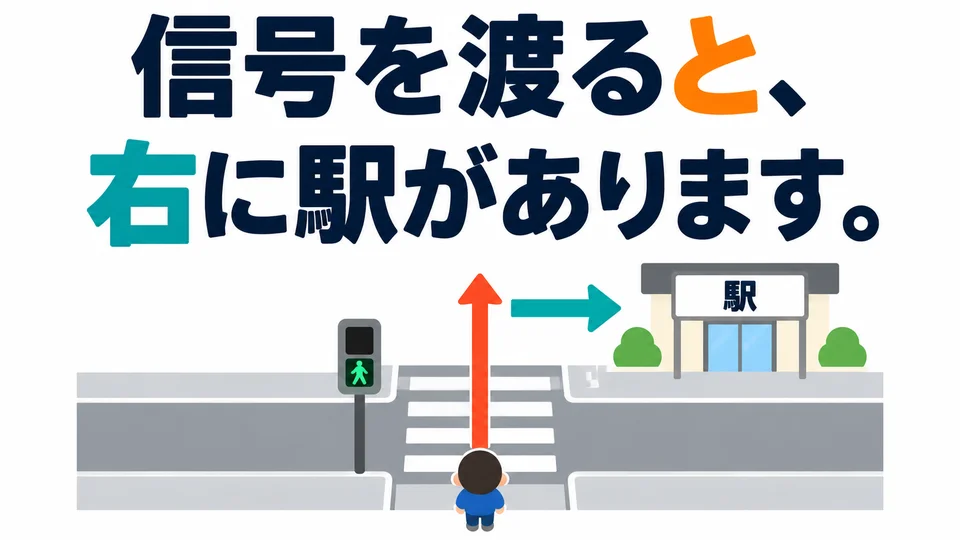
「と」 is also common in directions: when you reach a certain place, you can see or find your destination.
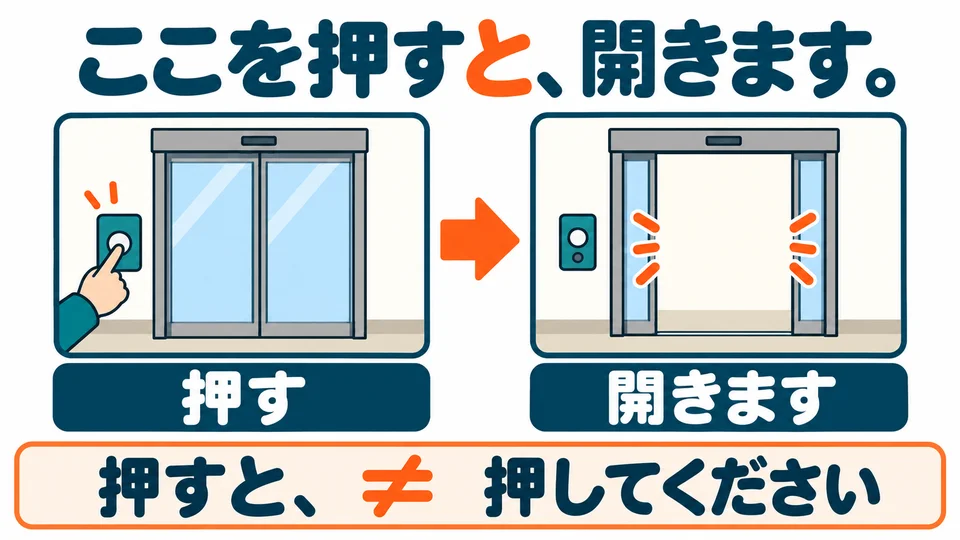
「押すと」 explains what the button does. The first clause itself is not an instruction to press it.
Example sentences
- 夏natsuにniなるnaruと、toお祭りomatsuriがgaあります。arimasu
When summer comes, there are festivals.
- ここkokoをo押す
In a conversation

- Aすみません、駅はどこですか。
A: Excuse me, where is the station?
- Bまっすぐ行って、信号を渡ると、
Check yourself
Level 0 · Conjugate
Change to 〜と: “when …, this happens”. 辞書形+と
窓から外を(見ます)と、海が見えます。
Level 1 · Recognise
Which sentence is correct?
Level 1 · Recognise
Listen and choose the meaning
Level 2 · Build
Put the words in order
When spring comes, cherry blossoms bloom.
Level 3 · Use
What goes in the blank?
このボタンを 電気がつきます。
If you press this button, the light turns on.
More grammar in this theme
- 〜と、〜condition and result