〜て/〜で~te/~de
Te (〜て) means “cause and result”.
The match was cancelled due to rain.
Use a verb in the て-form or a cause noun with 「で」 to explain a resulting event.
In the course
How it works
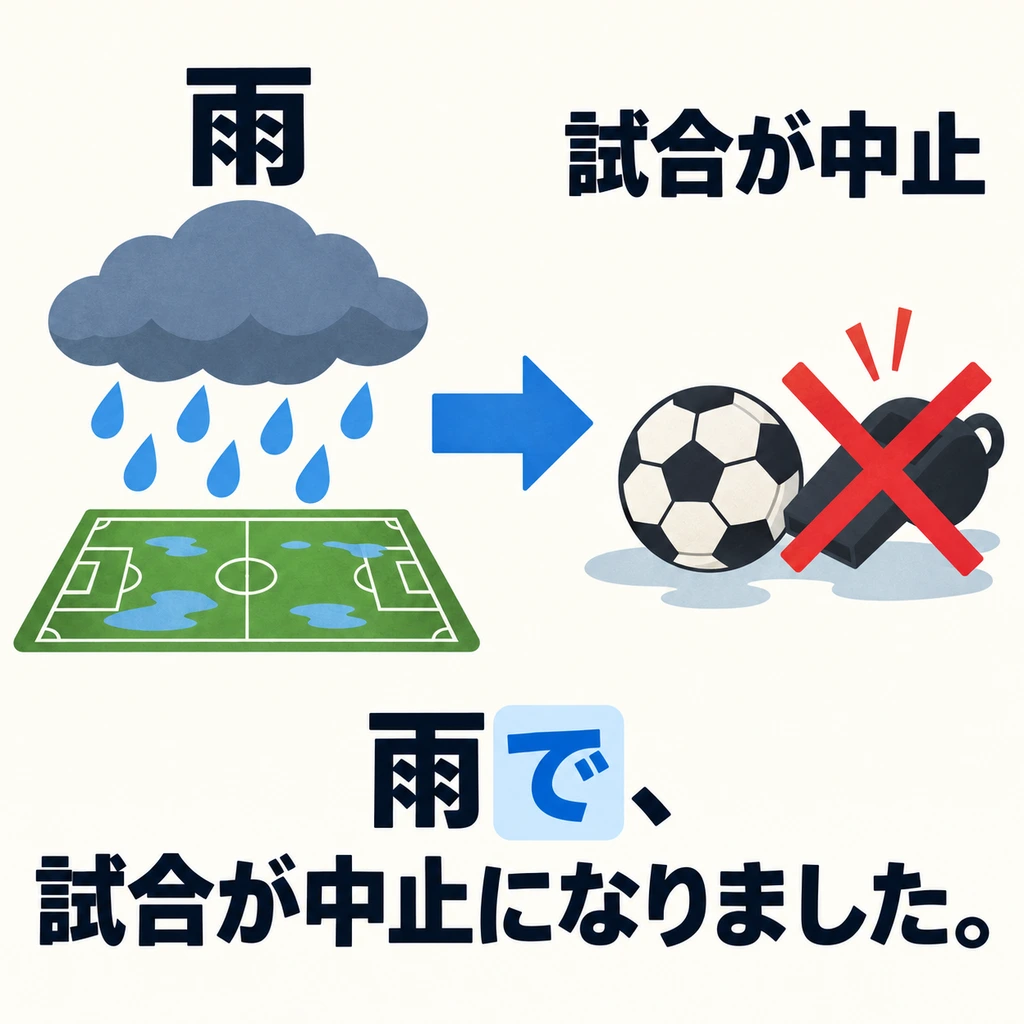
Why was the match cancelled? Look at the arrow: rain is the cause, and the cancellation is the result.
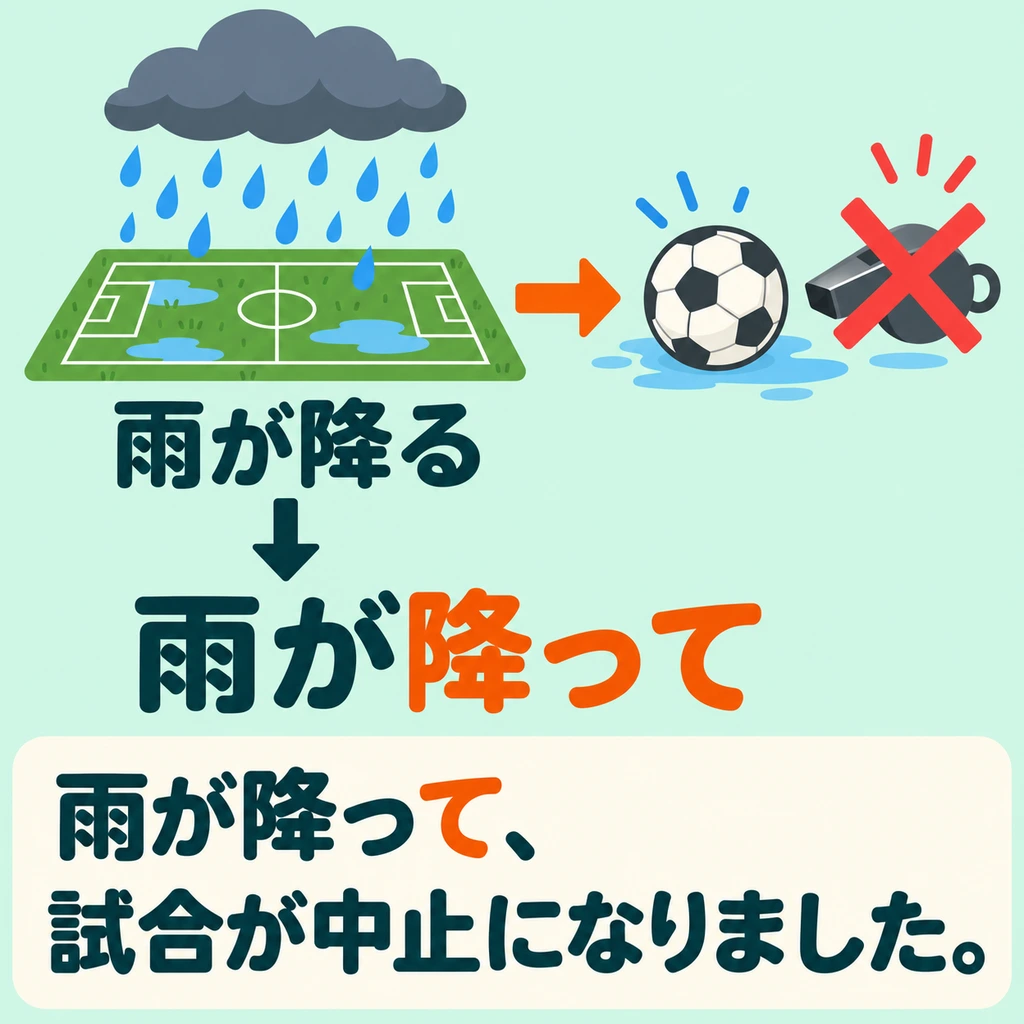
To express a cause with a verb, use the て-form. 「降る」 becomes 「降って」.
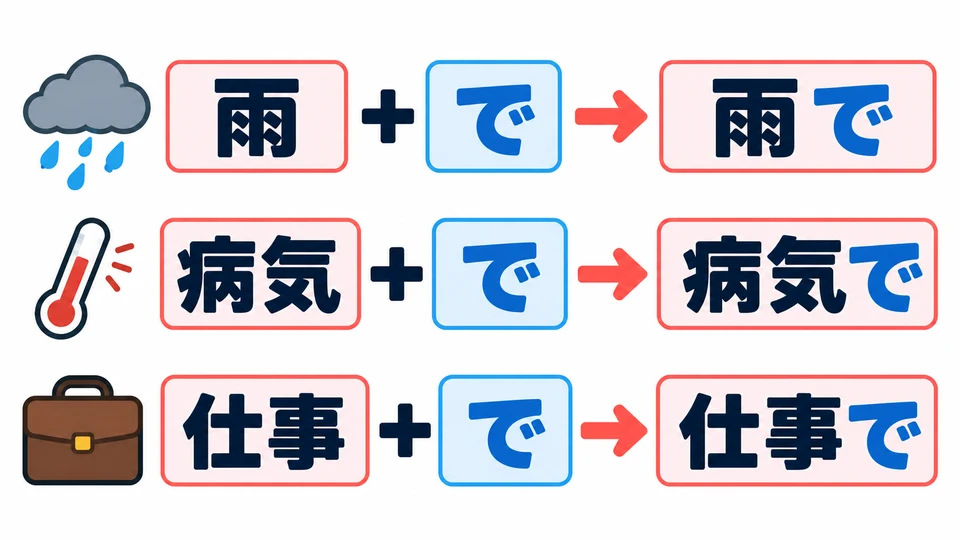
When the cause is a noun, add 「で」 directly. 「雨」, 「病気」 and 「仕事」 can all express causes.
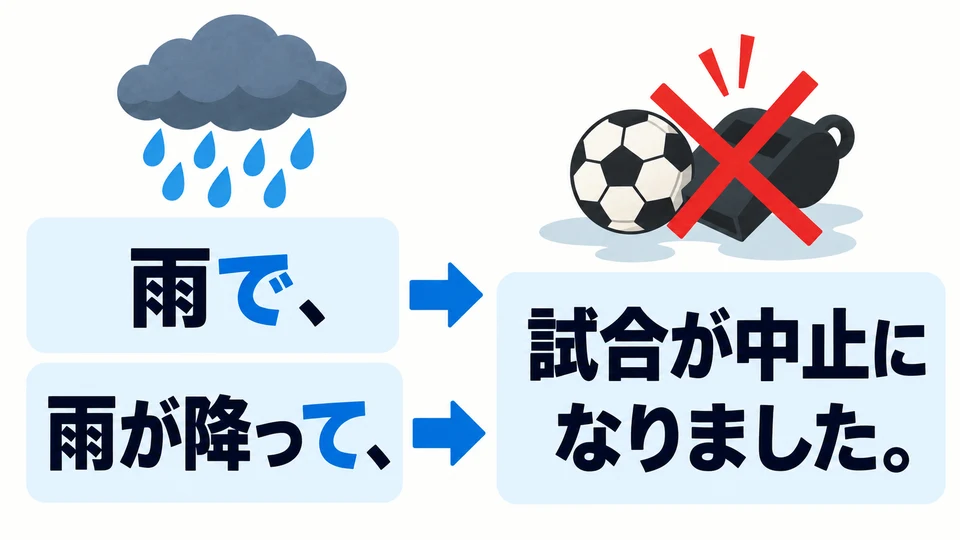
State the cause first, then the result. 「雨で」 and 「雨が降って」 express the same cause.
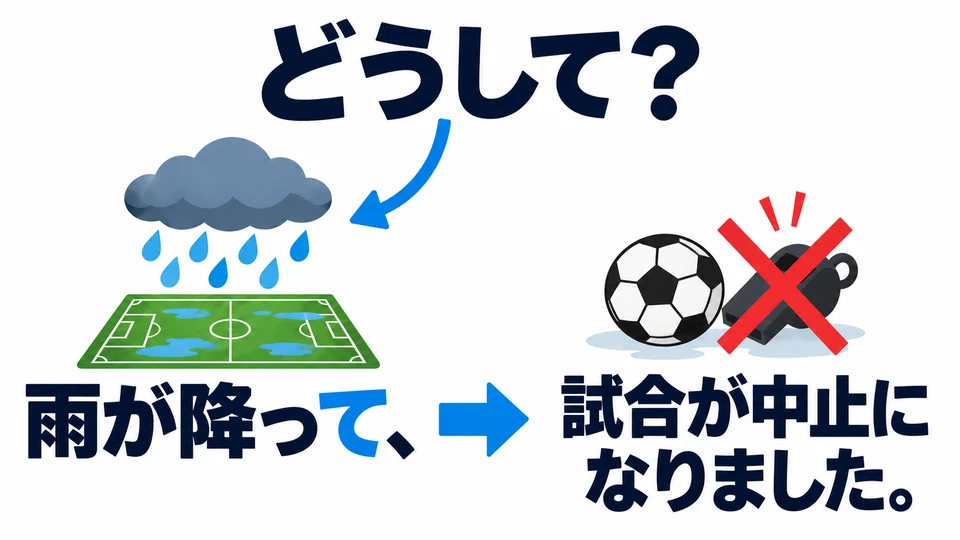
Here, 「て」 shows cause and effect, not just a sequence. The rain caused the match to be cancelled.
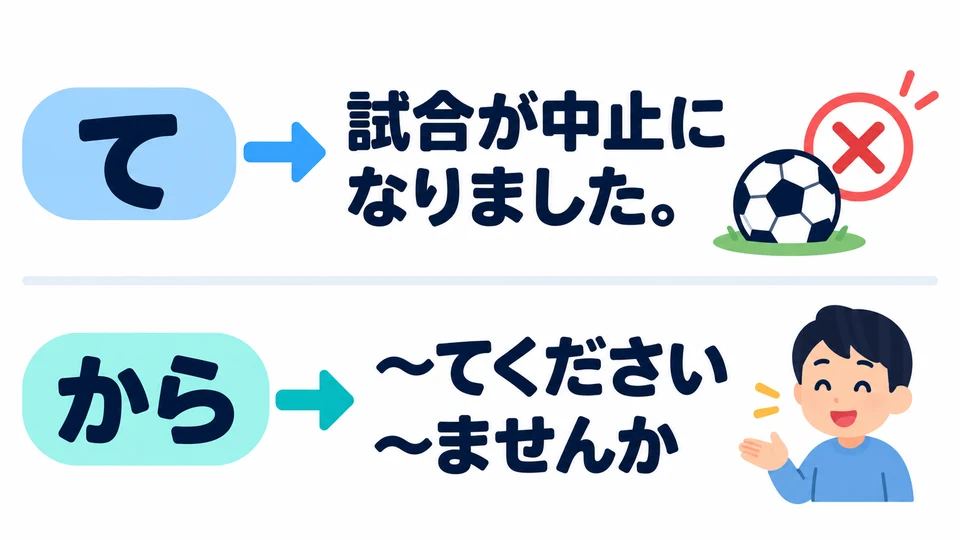
What follows is often a result that arises naturally. For a request or suggestion, usually use 「から」.
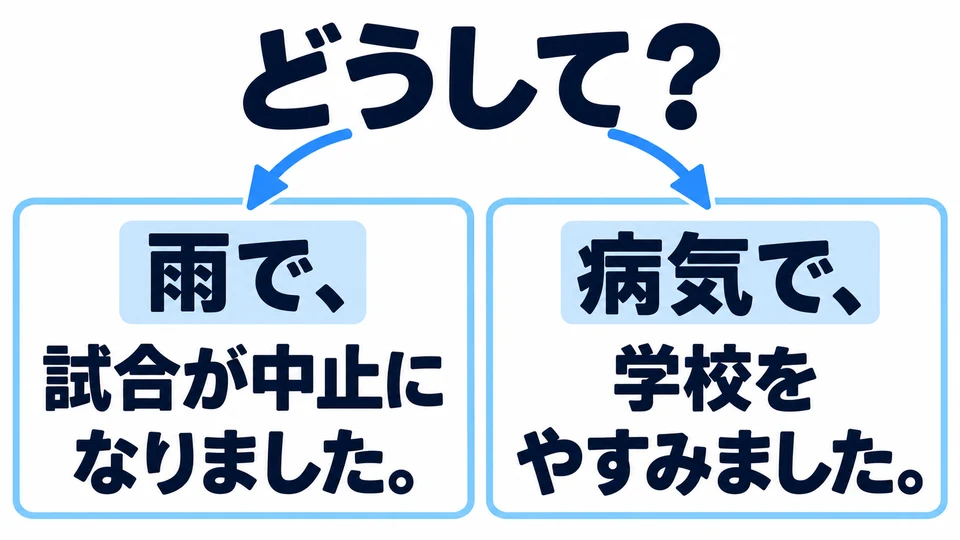
In both sentences, 「で」 answers “why,” rather than showing where the action takes place.
Example sentences
- 雨ameで、de試合shiaiがga中止chuushiにniなりました。narimashita
The match was cancelled due to rain.
- 病気byoukiで、de
In a conversation

- Aどうして昨日のパーティーに来ませんでしたか。
A: Why didn't you come to the party yesterday?
- Bすみません。仕事で、行けませんでした。
Check yourself
Level 0 · Conjugate
Change to 〜て / 〜で to give a cause. て形(原因)
バスが(遅れる)、会議に間に合いませんでした。
Level 1 · Recognise
Which sentence is correct?
Level 1 · Recognise
Listen and choose the meaning
Level 2 · Build
Put the words in order
The match was canceled due to rain.
Level 3 · Use
What goes in the blank?
雨 試合が中止になりました。
The game was canceled due to the rain.
More grammar in this theme
- 〜て/〜でcause and result