JPEdLab iconJPEdLab
Save history

Create an account and play

Explore first, then save your progress whenever you are ready. No email address is required.

Start free
  1. Japanese grammar
  2. JLPT N4 grammar
  3. 〜ので/〜なので

〜ので/〜なので~no de / ~na no de

No de (〜ので) means “reason; gentle explanation”.

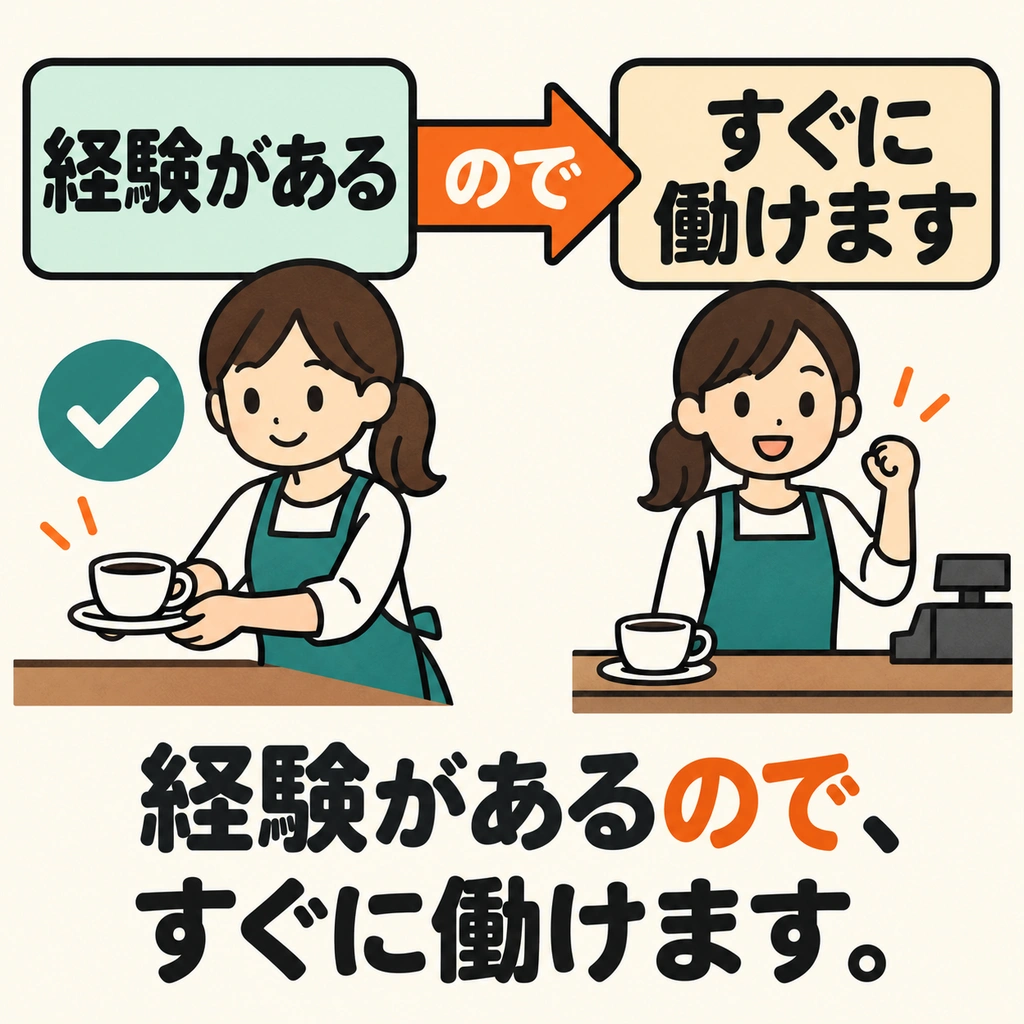
経験けいけんkeikenがgaあるaruのnoで、でdeすぐsuguにni働けます。はたらけますhatarakemasu

Since I have experience, I can start working immediately.

Use 「〜ので/〜なので」 to give a reason before a result or view in a gentle, objective tone.

In the course›

How it works

  1. Why can she start work right away? 「ので」 connects the reason before it to the conclusion after it.
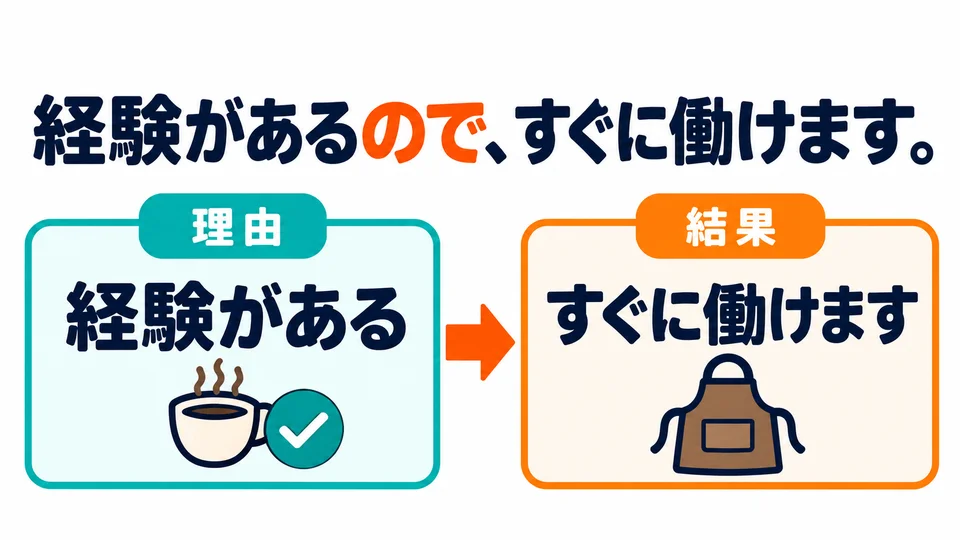
    Why can she start work right away? 「ので」 connects the reason before it to the conclusion after it.

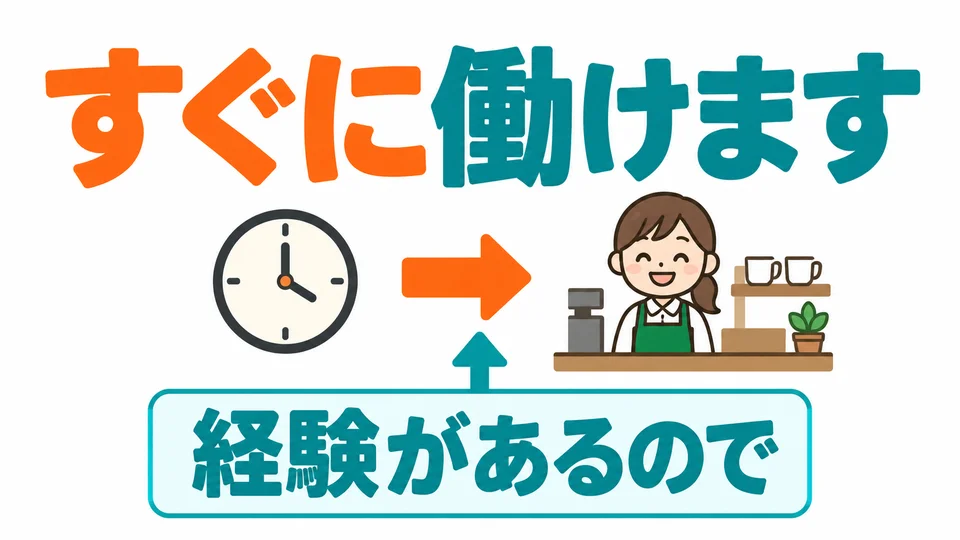
  2. Give the reason first, then the result or your view. In the picture, her experience supports her ability to start work right away.
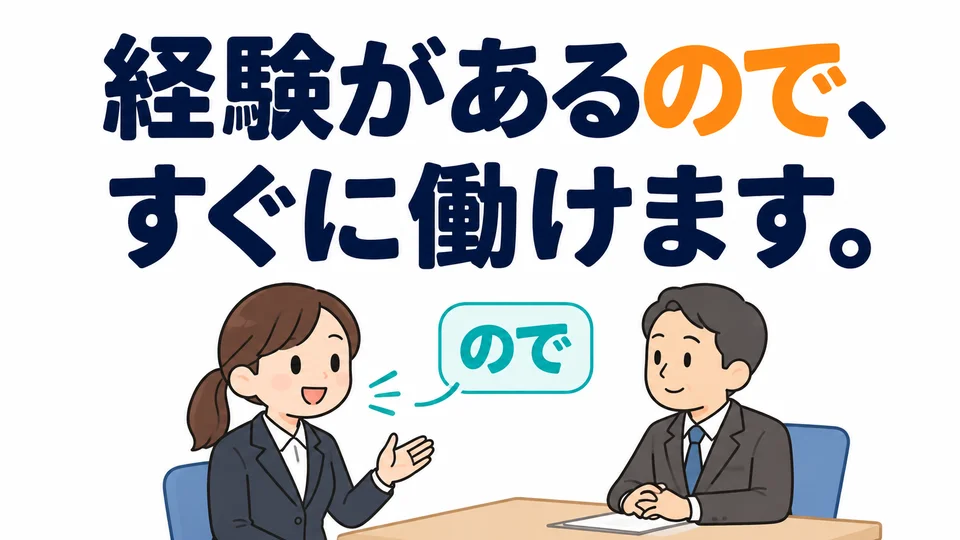
    Give the reason first, then the result or your view. In the picture, her experience supports her ability to start work right away.

  3. When explaining your situation to an interviewer, 「ので」 makes the reason sound gentler and more objective.
    When explaining your situation to an interviewer, 「ので」 makes the reason sound gentler and more objective.

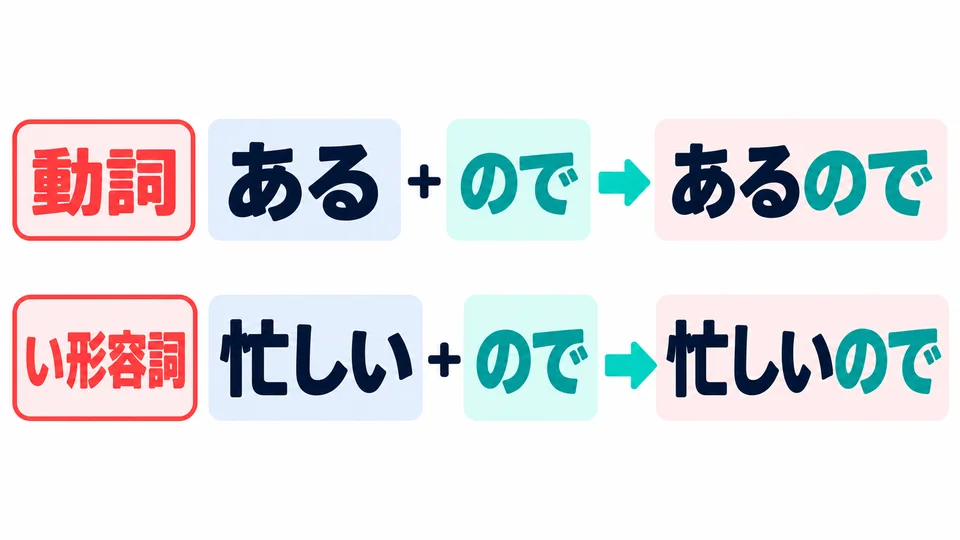
  4. Use the plain form of verbs and い-adjectives before 「ので」, as in 「あるので」.
    Use the plain form of verbs and い-adjectives before 「ので」, as in 「あるので」.

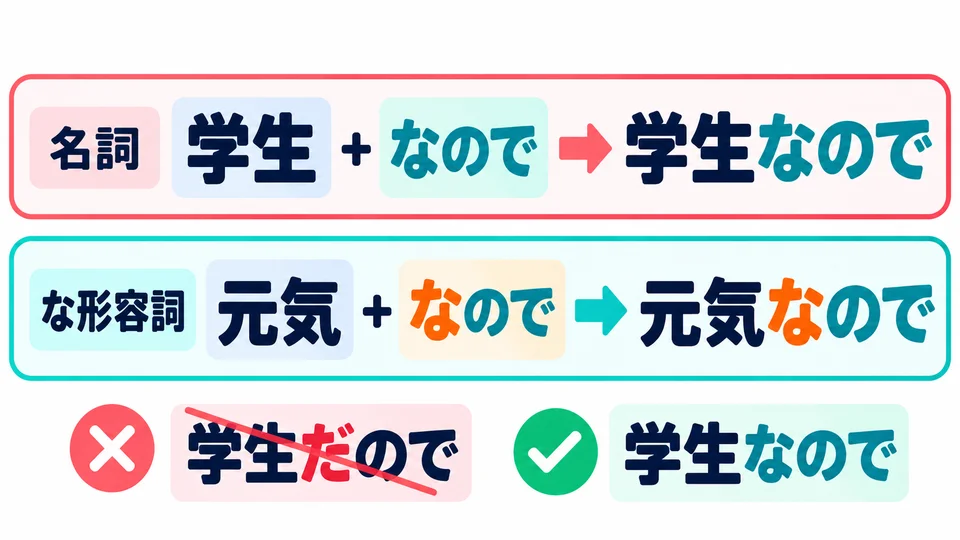
  5. After nouns and な-adjectives, use 「なので」. Do not attach 「ので」 directly to the plain-form 「だ」.
    After nouns and な-adjectives, use 「なので」. Do not attach 「ので」 directly to the plain-form 「だ」.

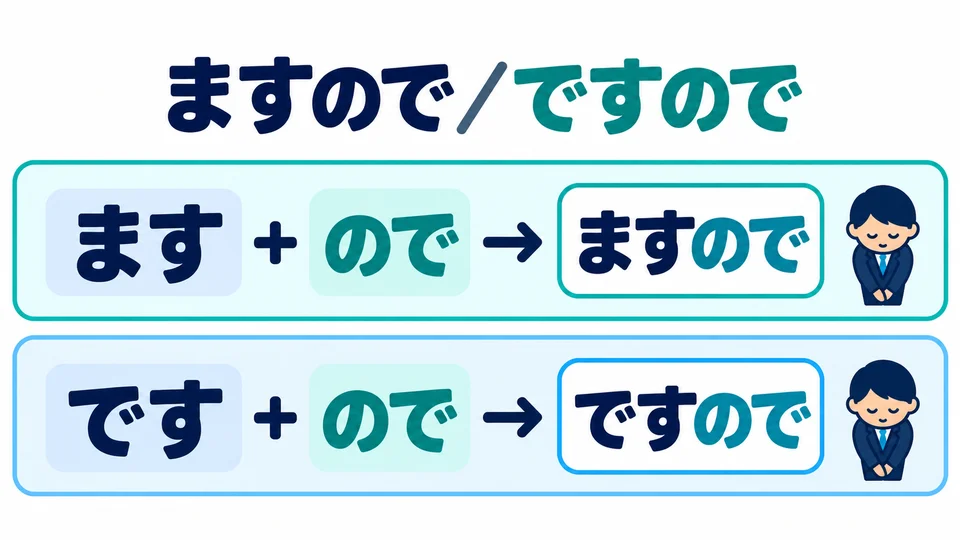
  6. To explain a reason politely, you can also use 「ますので/ですので」 for a more formal tone.
    To explain a reason politely, you can also use 「ますので/ですので」 for a more formal tone.

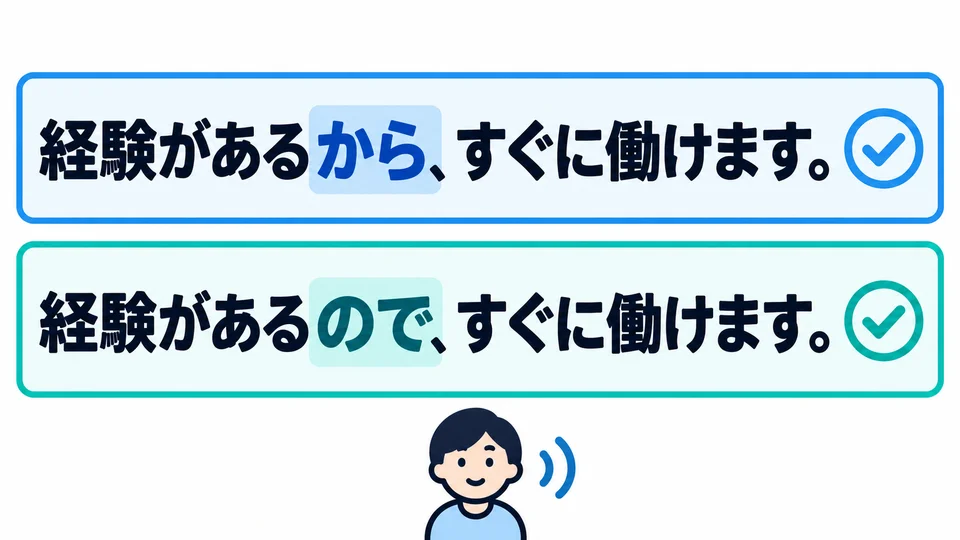
  7. 「から」 also gives a reason. 「ので」 tends to present the situation calmly, helping the listener understand.
    「から」 also gives a reason. 「ので」 tends to present the situation calmly, helping the listener understand.

  8. 「すぐに働けます」 means “I can start working right away.” The experience mentioned before it supports this judgment.
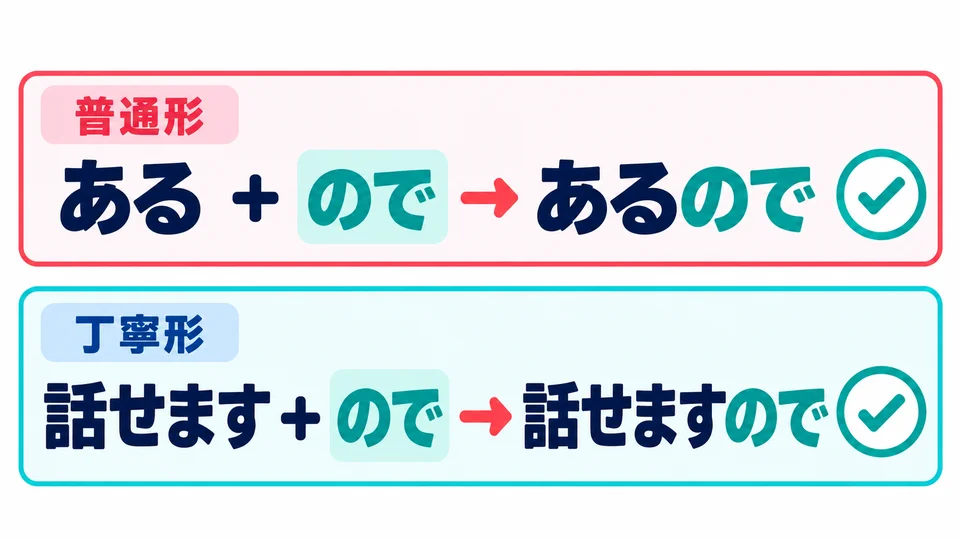
    「すぐに働けます」 means “I can start working right away.” The experience mentioned before it supports this judgment.

  9. Both sentences work: 「あるので」 uses the plain form, while 「話せますので」 uses the polite form.

Example sentences

  • 経験けいけんkeikenがgaあるaruのnoで、でdeすぐsuguにni働けます。はたらけますhatarakemasu

    Since I have experience, I can start working immediately.

  • 日本にほんnihon語

In a conversation

  • A
    なぜこの仕事しごとを希望きぼうしましたか。か

    Why did you apply for this job?

  • B
    接客せっきゃくの経験けいけんがあるので、でカフェ

Check yourself

  1. Level 1 · Recognise

    Which sentence is correct?

  2. Level 1 · Recognise

    Listen and choose the meaning

  3. Level 2 · Build

    Put the words in order

    I have part-time experience, so I can start working immediately.

  4. Level 3 · Use

    What goes in the blank?

    経験がある に働けます。

    Since I have experience, I can start working right away.

More grammar in this theme

  • 〜ので/〜なのでreason; gentle explanation

More JLPT N4 grammar

Keep practising

Test your Japanese vocabulary12 adaptive questions, freeCheck your pronunciationRead aloud and get a scorePractise verb forms10-question conjugation quizSee the whole courseGrammar, vocabulary and quizzes by theme

Both sentences work: 「あるので」 uses the plain form, while 「話せますので」 uses the polite form.

ご
go
がga
話せますはなせますhanasemasu
のno
で、でde
大丈夫です。だいじょうぶですdaijoubudesu

I can speak Japanese, so I'll be fine.

かふぇ
で
働きたいです。はたらきたいです

I have experience in customer service, so I want to work at a cafe.

  • A
    そうですか。かいつから来られますこられますか。か

    I see. When can you come?

  • B
    来週らいしゅうから来られますこられますので、で大丈夫です。だいじょうぶです

    I can come from next week, so it's no problem.

Beginner 3
New Life
More quizzesOpen this lesson’s quizzes in the course
いらっしゃいますrespectful be, come, go
〜と申しますformal humble self-introduction
可能形ability or possibility
参りますhumble go or come
〜ならif; under that condition
〜のが好きですlike doing; be good at
〜のは〜ですmake an activity the topic
〜ようになりますbecome able; develop a habit
Previous可能形
Next参ります
See all 138
〜たらif; imagined condition
〜と思いますI think; give an opinion
〜ても/〜でもeven if; still
〜ていますresulting state still holds
〜そうですlooks / seems
〜てみますtry doing
〜てもらえませんかcould you do for me?
〜やすい・〜にくいeasy / hard to do