
JPEDLAB iconJPEDLAB
Save history

Create an account and play

Explore first, then save your progress whenever you are ready. No email address is required.

Start free
Read as articleCards
See the whole course›Beginner 3›New Life

Japanese grammar · ≈ JLPT N5 · Beginner 3

〜のが好きです~no ga suki desu

like doing; be good at

Use 「〜のが好きです」 to treat an action as an activity you like; the same structure can describe being good at it.

Start the interactive lessonIllustrated cards, audio and speaking practiceTake the quiz
Pattern
〜のが好きです
Romaji
~no ga suki desu
JLPT (approx.)
≈ N5
Course level
Beginner 3
Theme
New Life

How it works

  1. When talking about hobbies, use this pattern to say what you like doing. In the picture, she likes reading books.
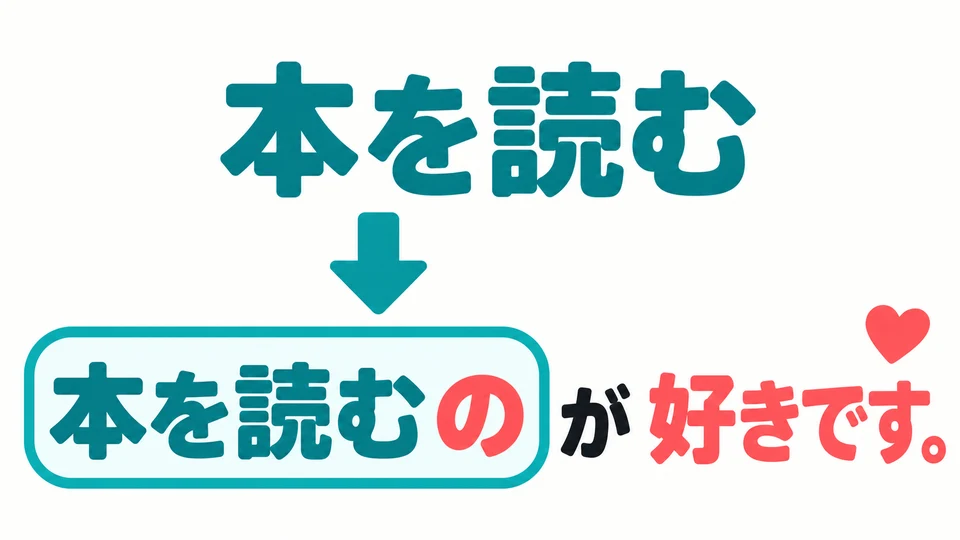
    When talking about hobbies, use this pattern to say what you like doing. In the picture, she likes reading books.

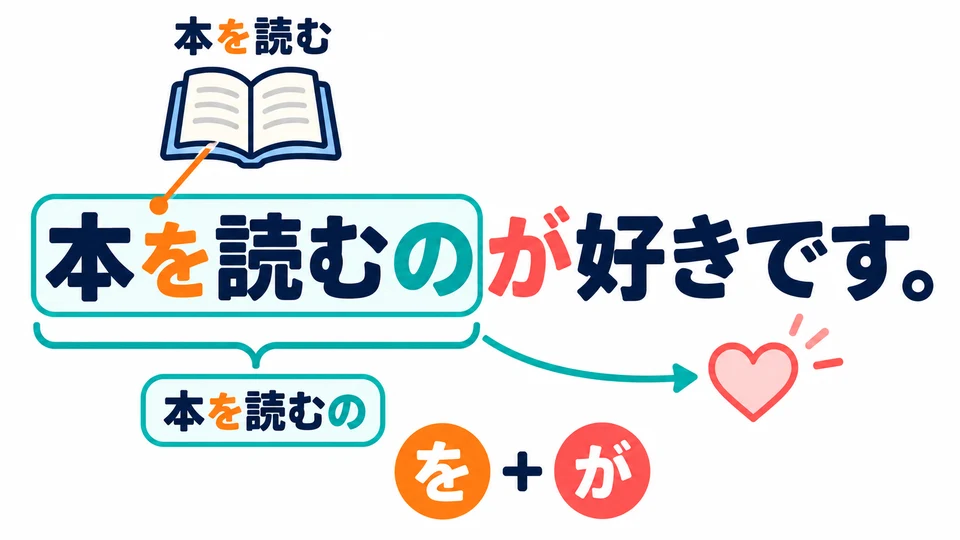
  2. 「の」 turns the whole action 「本を読む」 into an activity that you can say you like.
    「の」 turns the whole action 「本を読む」 into an activity that you can say you like.

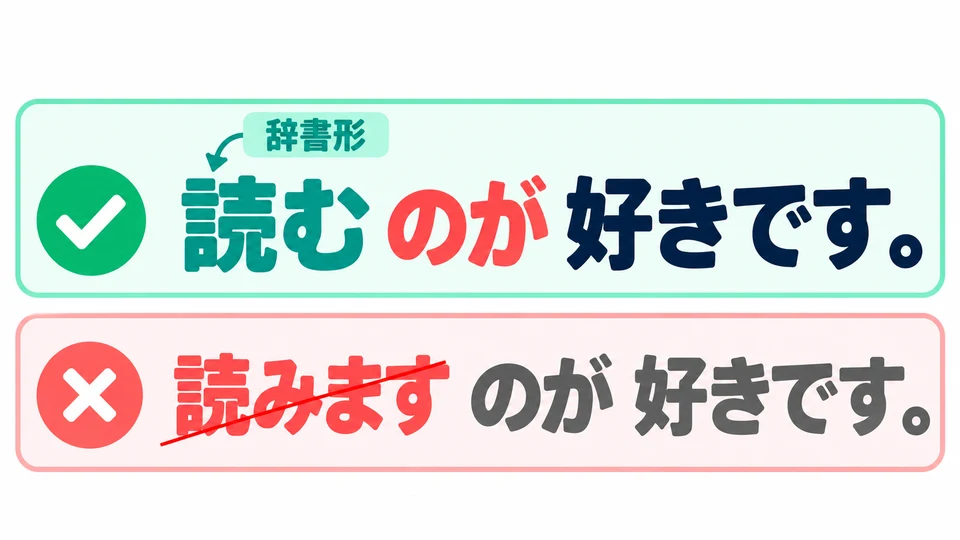
  3. Use the dictionary form of the verb before 「のが」: 読むのが, not 読みますのが.
    Use the dictionary form of the verb before 「のが」: 読むのが, not 読みますのが.

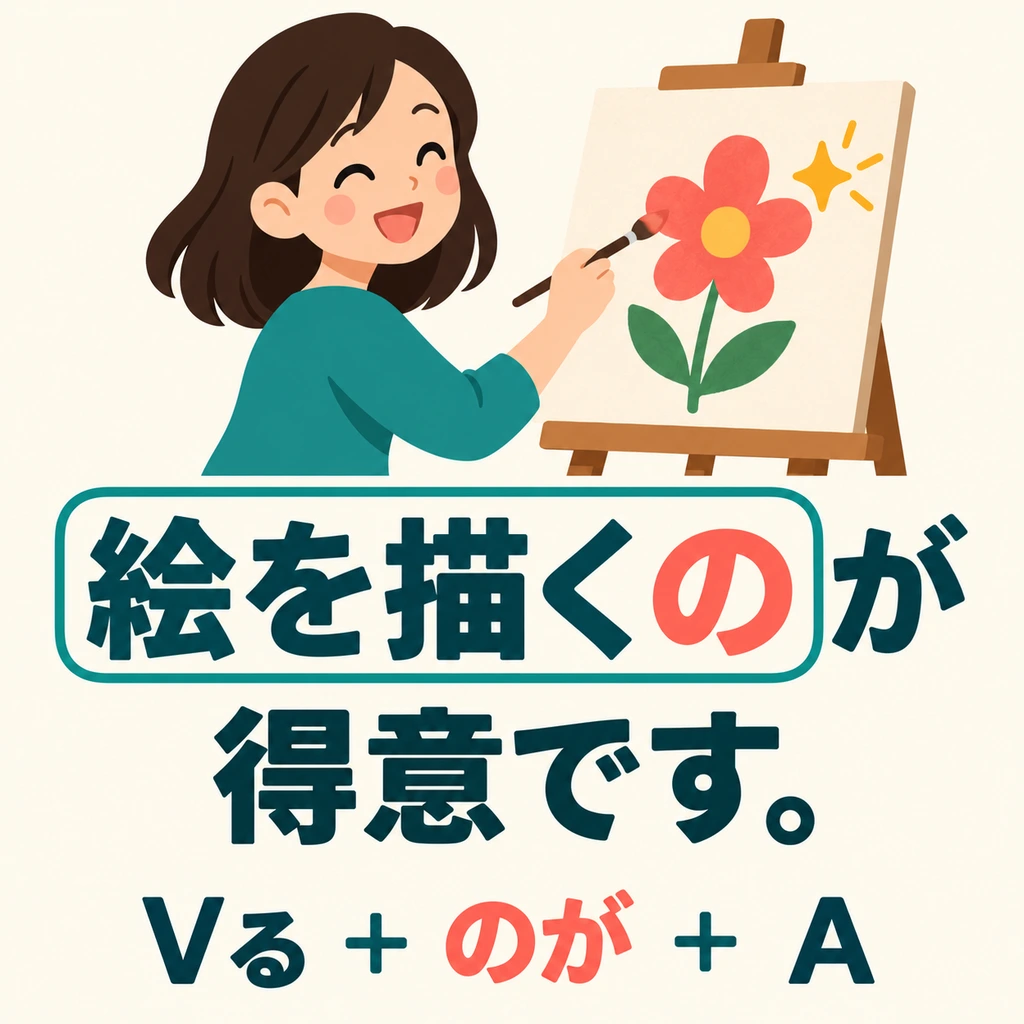
  4. Use the same structure to say what you are good at doing. The picture shows 「絵を描くのが得意です」.
    Use the same structure to say what you are good at doing. The picture shows 「絵を描くのが得意です」.

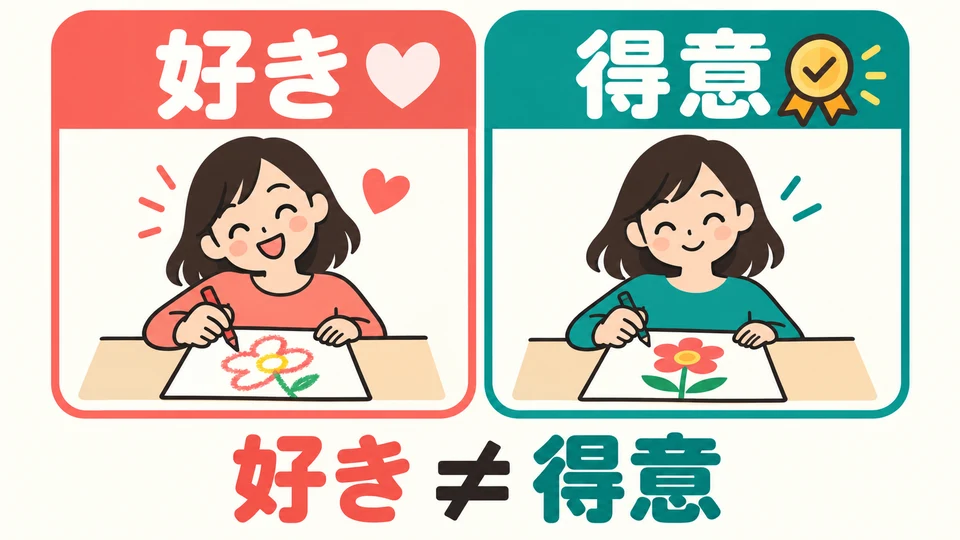
  5. 「好き」 means you like something; 「得意」 means you are good at it. Liking an activity does not always mean being good at it.
    「好き」 means you like something; 「得意」 means you are good at it. Liking an activity does not always mean being good at it.

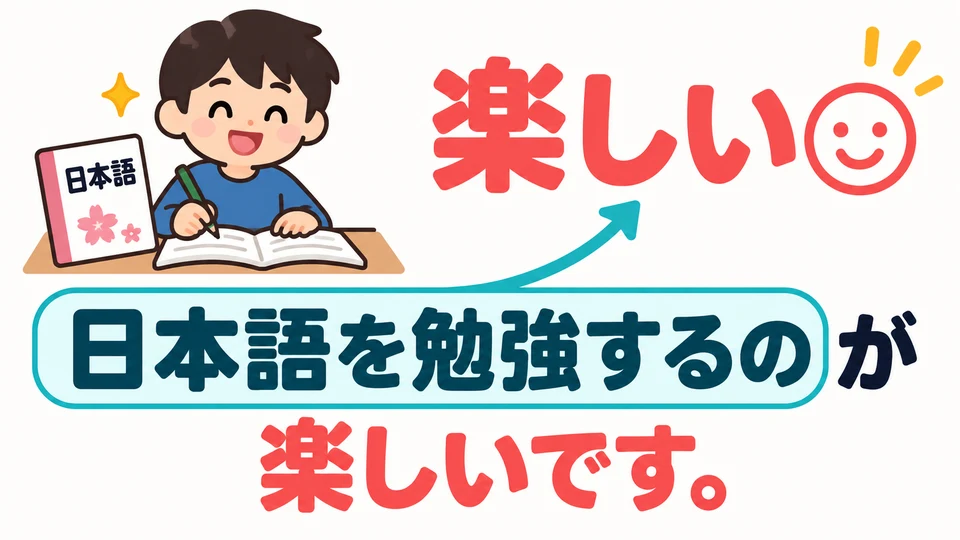
  6. In the example, 「楽しい」 describes the activity of studying Japanese: doing it is enjoyable.
    In the example, 「楽しい」 describes the activity of studying Japanese: doing it is enjoyable.

  7. In the reading example, 「を」 marks what is read; 「が」 marks the whole activity that is liked. Keep both particles.

    In the reading example, 「を」 marks what is read; 「が」 marks the whole activity that is liked. Keep both particles.

Example sentences

  • 本ほんhonをo読むよむyomuのnoがga好きです。すきですsukidesu

    I like reading books.

  • 日本にほんnihon語ごgoをo

In a conversation

  • A
    趣味しゅみはわ何なんですか。か

    A: What are your hobbies?

  • B
    山やまを登るのぼるのが好きです。すきです

    B: I like climbing mountains.

  • A

Check yourself

  1. Which sentence is correct?

    1. 山を登るのが好きです。
    2. 山を登るのが好きます。
    3. 山を登るが好きです。
    4. 山が登るのが好きです。
    Show answer

    Answer: A 山を登るのが好きです。

  2. Which sentence is correct?

    1. ピアノを弾くのが楽しいです。
    2. ピアノを弾くのが楽しくです。
    3. ピアノが弾くのが楽しいです。
    4. ピアノを弾くの楽しいです。
    Show answer

    Answer: A ピアノを弾くのが楽しいです。

  3. Which sentence is correct?

    1. 絵を描くのが得意です。
    2. 絵を描くのが得意ます。
    3. 絵に描くのが得意です。
    4. 絵を描くのが得意の。
    Show answer

    Answer: A 絵を描くのが得意です。

More grammar in this theme

  • 〜のが好きですlike doing; be good at

Keep practising

Test your Japanese vocabulary12 adaptive questions, freeCheck your pronunciationRead aloud and get a scorePractise verb forms10-question conjugation quizSee the whole courseGrammar, vocabulary and quizzes by theme
勉強べんきょう
benkyou
するsuru
のno
がga
楽しいです。たのしいですtanoshiidesu

Studying Japanese is fun.

そうですか。か私わたしはわ絵えを描くえがくのが得意とくいです。です

A: I see. I'm good at drawing.

  • B
    絵えを描くえがくのはわ楽しいですたのしいですか。か

    B: Is drawing fun?

  • A
    はい、はいとても楽しいです。たのしいです

    A: Yes, it's very fun.

  • Take the quiz
    いらっしゃいますrespectful be, come, go
    〜と申しますformal humble self-introduction
    可能形ability or possibility
    〜ので/〜なのでreason; gentle explanation
    参りますhumble go or come
    〜ならif; under that condition
    〜のは〜ですmake an activity the topic
    〜ようになりますbecome able; develop a habit
    Previous〜なら
    Next〜のは〜です