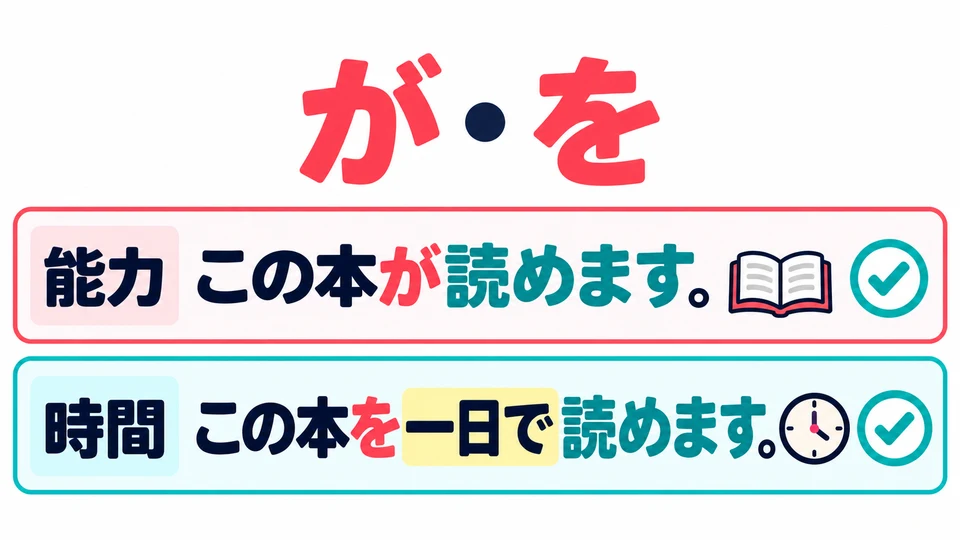
可能形kanoukei
Kanoukei (可能形) means “ability or possibility”.
I can speak Japanese.
「可能形」 expresses an ability or something conditions make possible, not an action happening now.
In the course
How it works
The potential form expresses the ability to do something, or the possibility of doing it under the current conditions.
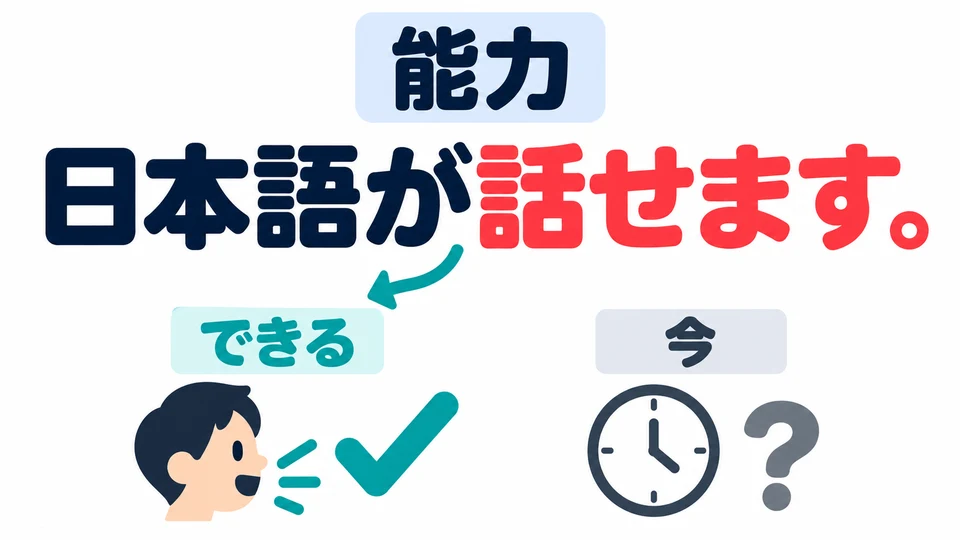
It means “can do,” without saying that the action is happening now. First, think about what you can do.
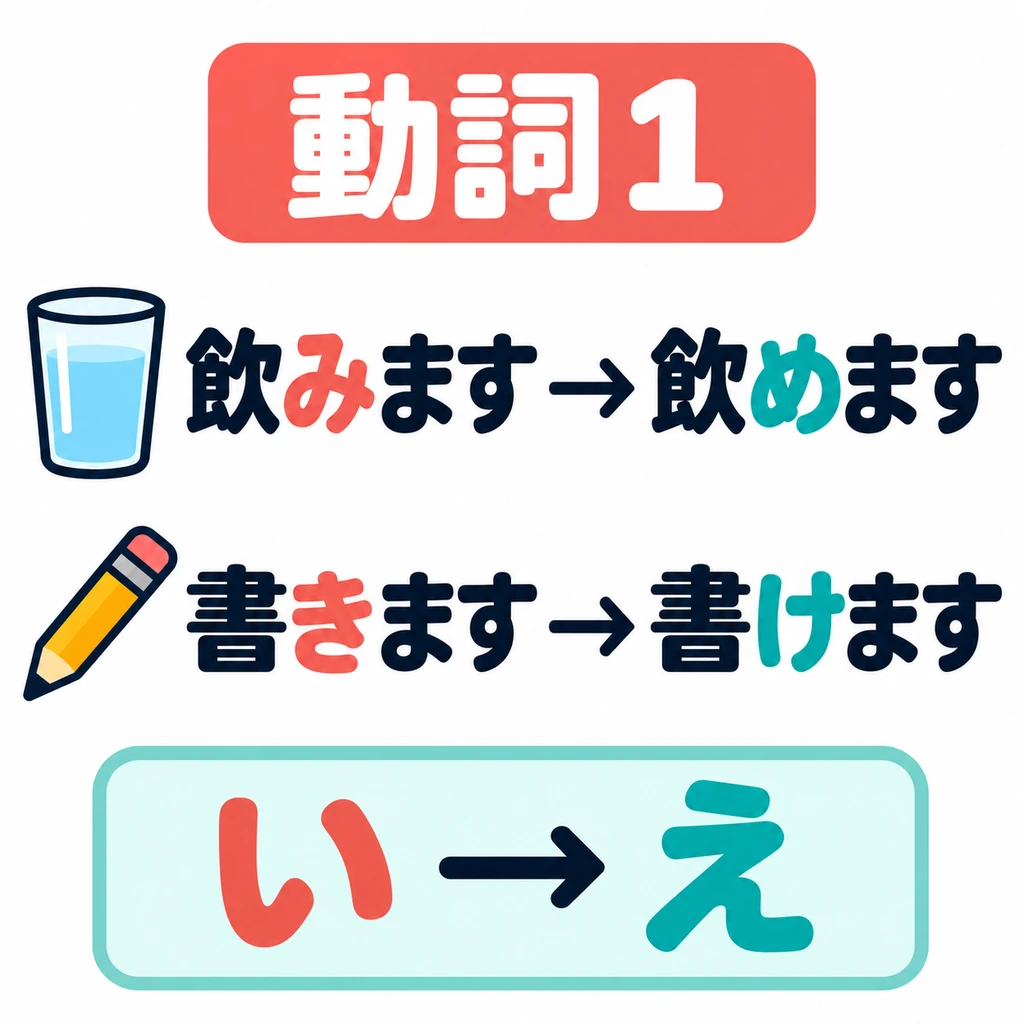
For Group 1, change the sound before 「ます」 from the い row to the え row, then add 「ます」.
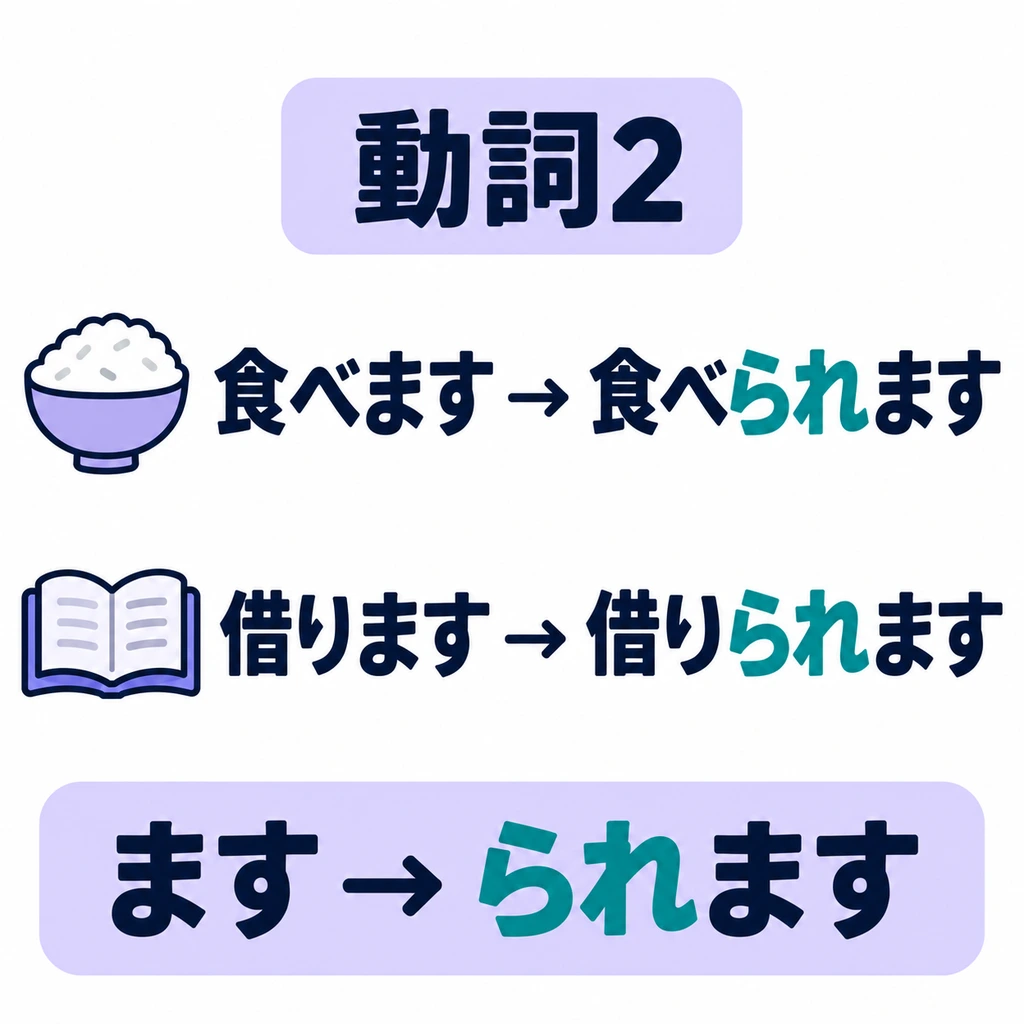
For Group 2, remove 「ます」, keep the part before it, and add 「られます」.
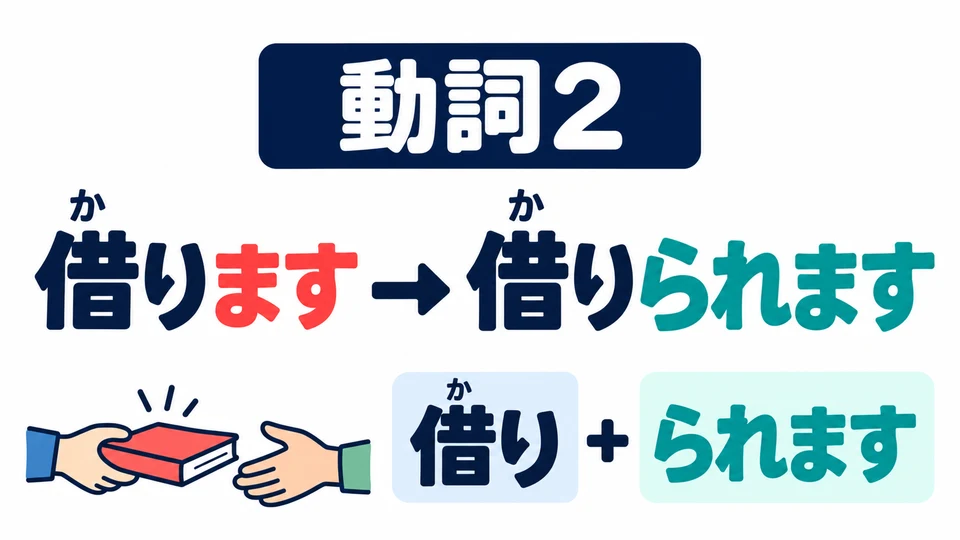
「借ります」 belongs to Group 2 and becomes 「借りられます」. Remember its group.
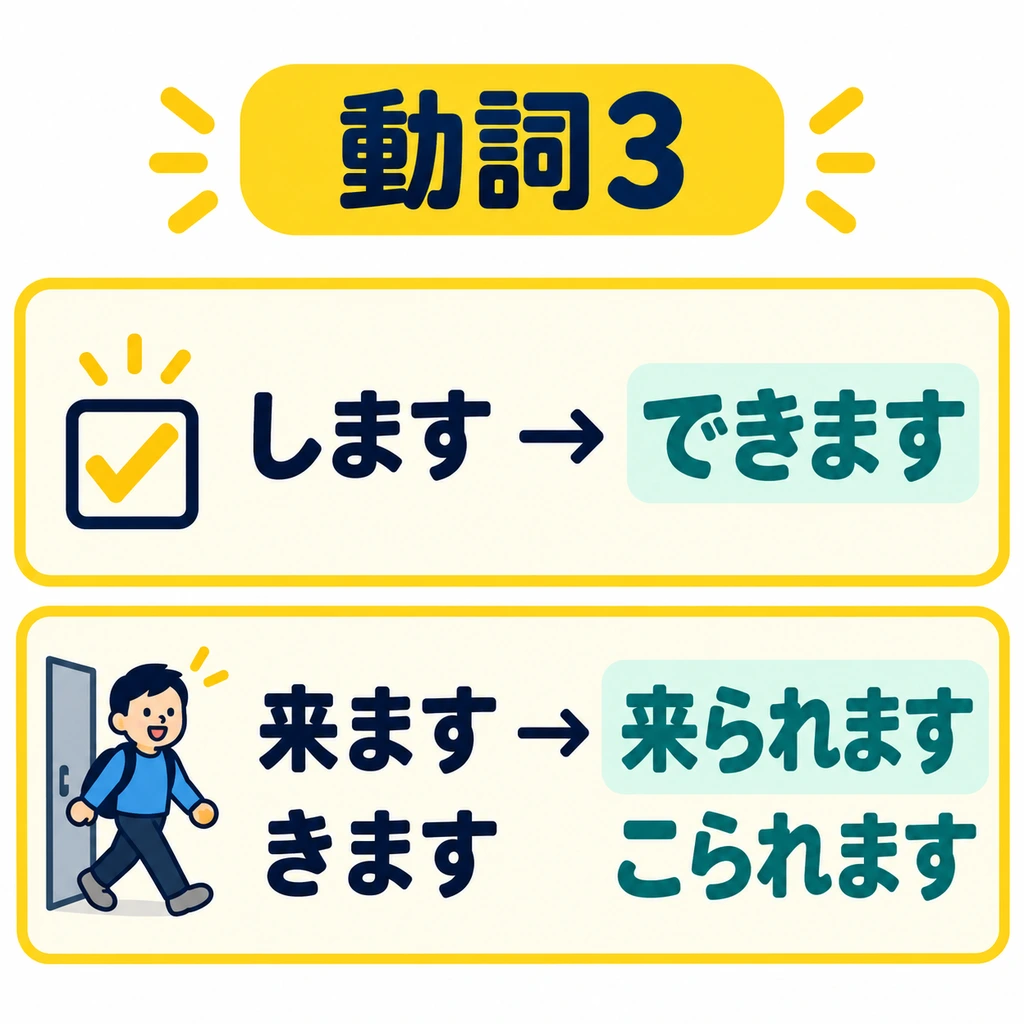
Group 3 does not follow the first two patterns: 「します」 becomes 「できます」.
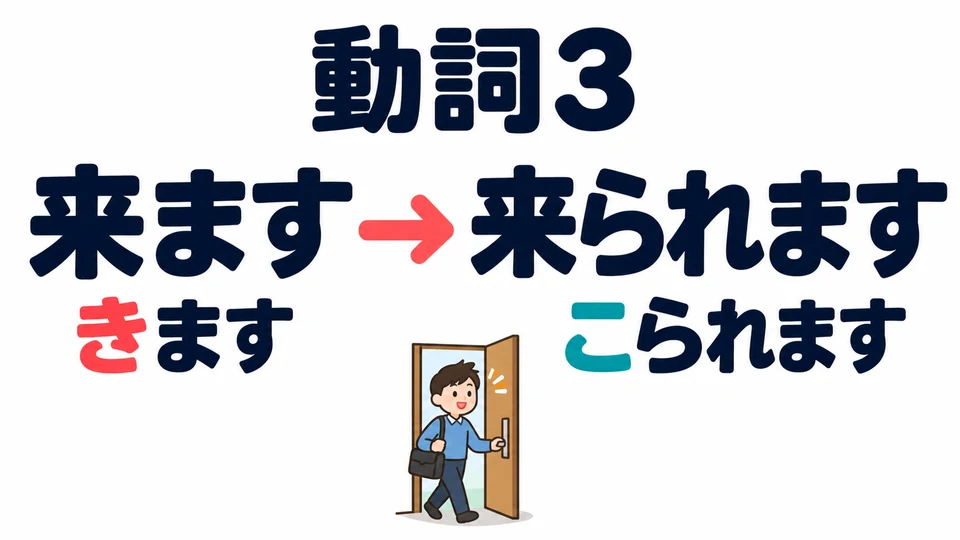
「来ます」 is read きます; its potential form 「来られます」 is read こられます.
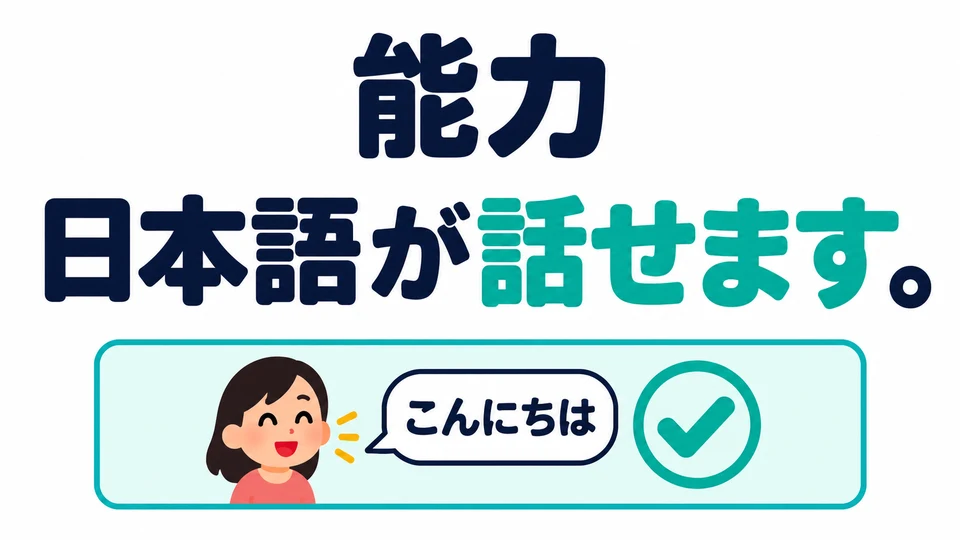
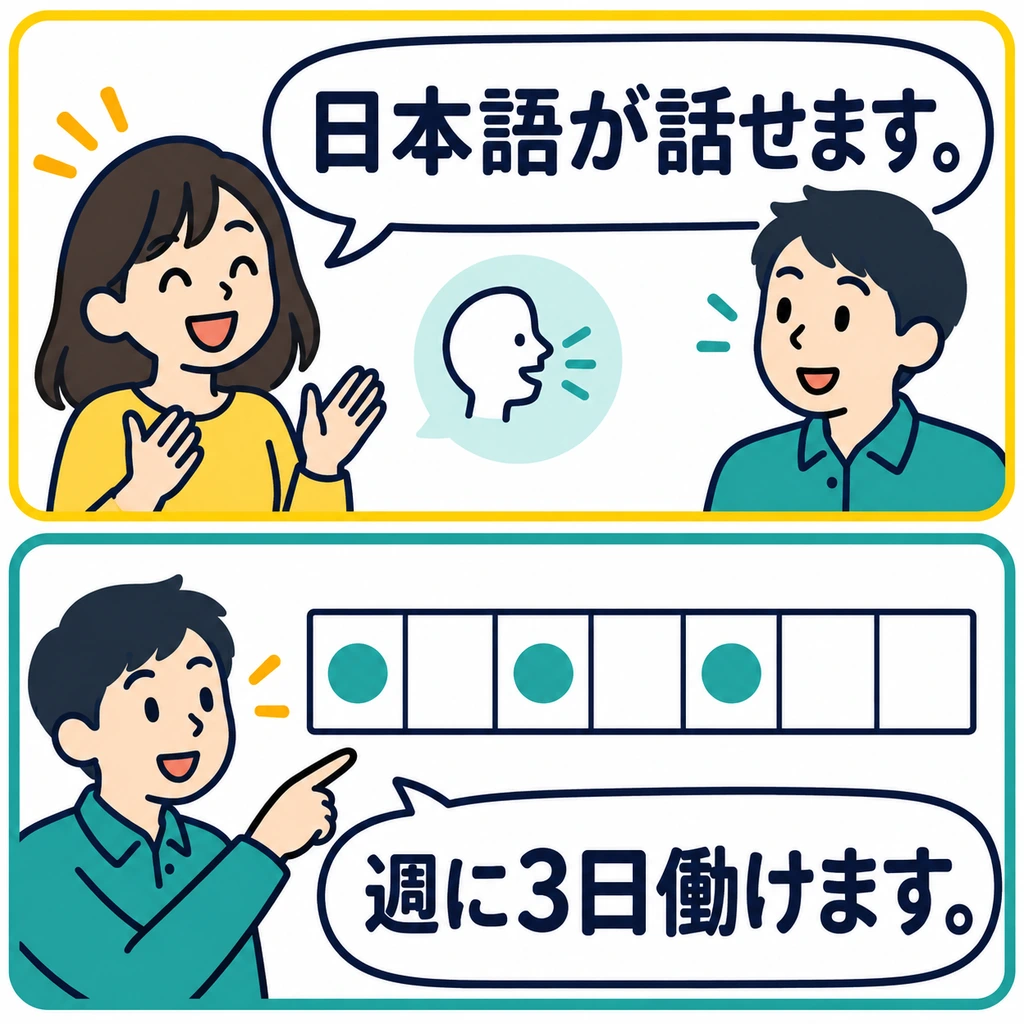
The example 「日本語が話せます」 expresses the ability to speak Japanese.
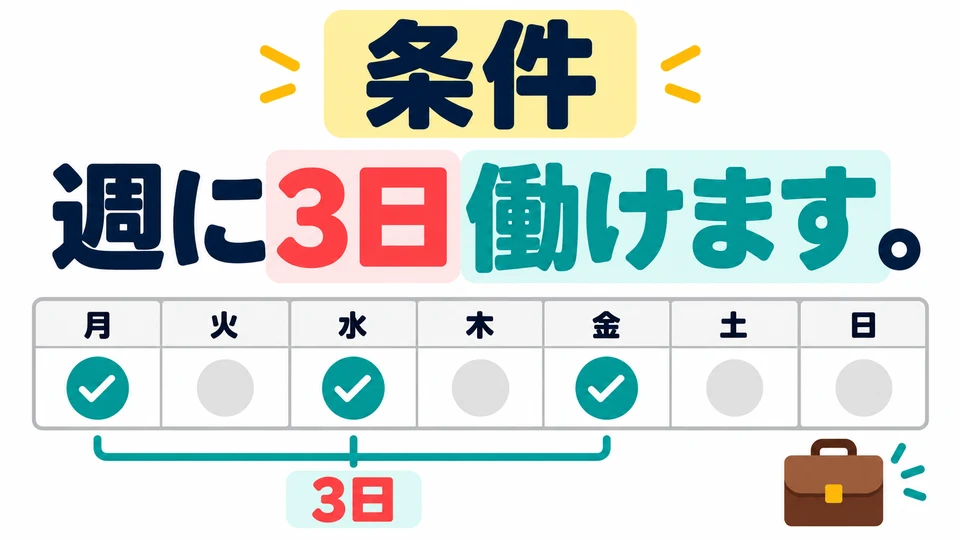
「週に3日働けます」 gives the number of days one can work each week: the conditions allow it.
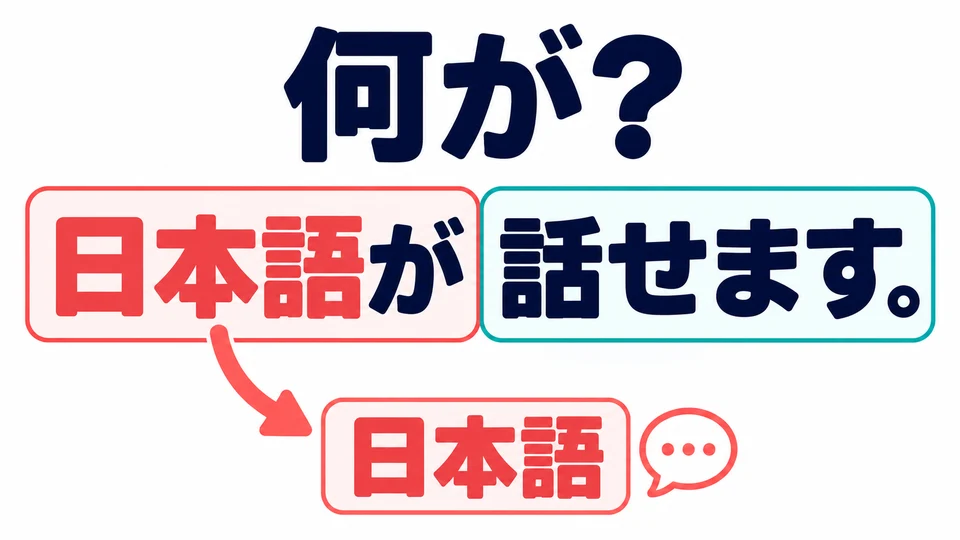
Example sentences
- 日本nihon語goがga話せますhanasemasu
I can speak Japanese.
- 週shuuに ni3日sannichi働けますhatarakemasu
I can work three days a week.
In a conversation

- A日本語が話せますか。
Can you speak Japanese?
- Bはい、日本語が話せます。
Yes, I can speak Japanese.

Check yourself
Level 0 · Conjugate
Change to the “can” form (読む→読める). 可能形
私は辛い料理も(食べる)。
Level 1 · Recognise
Which sentence is correct?
Level 1 · Recognise
Listen and choose the meaning
Level 2 · Build
Put the words in order
I can speak English.
Level 3 · Use
What goes in the blank?
日本語が (話す)
I can speak Japanese.
More grammar in this theme
- 可能形ability or possibility